
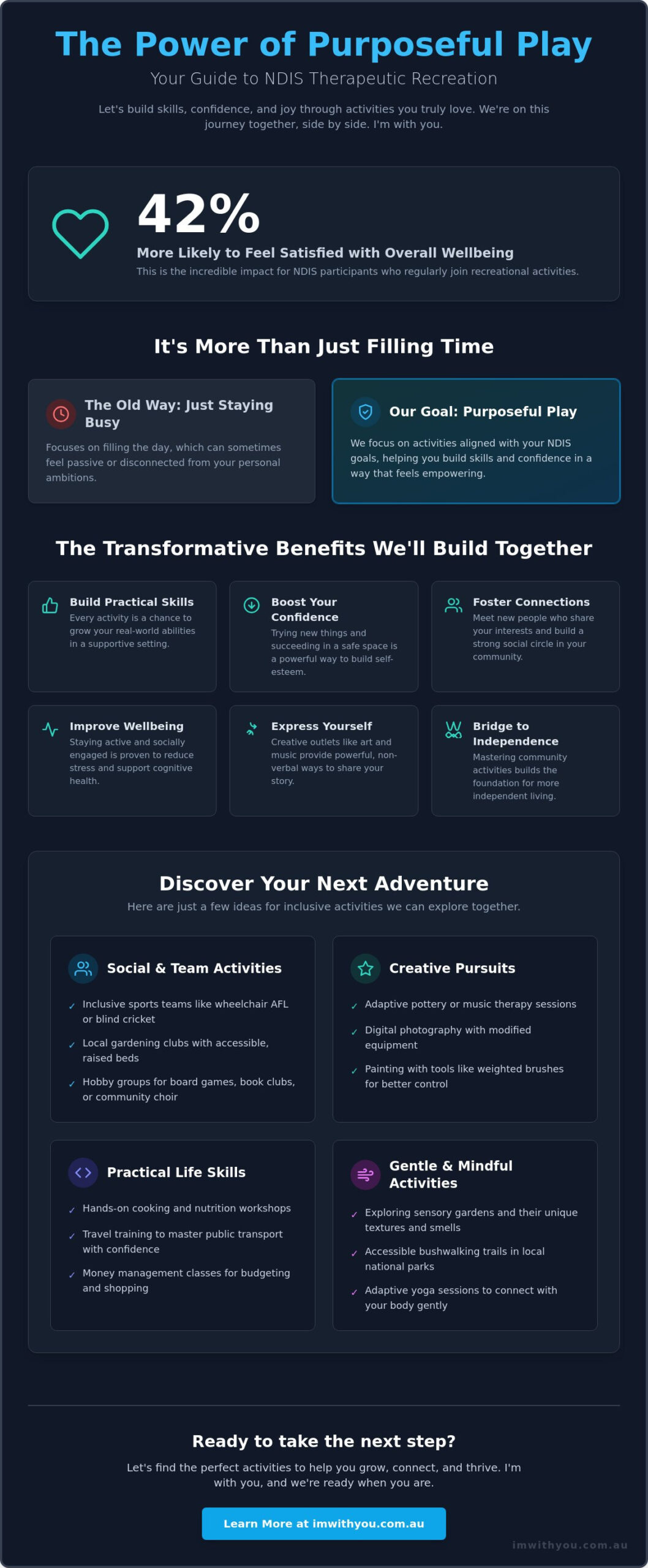
Did you know that NDIS participants who regularly join in recreational activities are 42% more likely to feel truly satisfied with their overall wellbeing? It’s a powerful reminder that having fun and staying active isn’t just a luxury; it’s a vital part of a healthy, independent life. When you’re looking for ways to build skills and confidence, ndis therapeutic recreation offers a path that focuses on your strengths rather than your limitations. I know that finding the right community programmes can feel like a challenge, especially when the system feels complex or clinical. Im with you, and I want to help make this journey feel simpler and more rewarding.
You deserve to feel connected to your community and excited about your personal goals for 2026. In this guide, I’ll share a curated roundup of meaningful activities designed to foster your independence and bring more joy into your daily routine. We’ll look at how these inclusive options can help you develop new skills while making sense of your support categories. From adaptive sports to creative workshops, you’ll discover practical ways to grow your social circle and take full advantage of the opportunities available to you this year.
Key Takeaways
- Learn how purposeful play helps you move beyond just staying busy to choosing activities that truly align with your personal NDIS goals.
- Explore a variety of inclusive community options, from local hobby groups to adaptive arts, designed to build your confidence and social circles.
- Understand how ndis therapeutic recreation acts as a bridge to independence by focusing on your unique strengths and skill development.
- Discover how I’m with you to advocate for your interests and ensure every venue you visit meets your specific accessibility needs.
The Heart of NDIS Therapeutic Recreation: Why Purposeful Play Matters
Many people think of recreation as simply filling time. However, ndis therapeutic recreation is about much more than just staying busy. It’s a purposeful approach that uses activities to help you build skills, gain confidence, and foster genuine connections with others. This practice draws from the established field of Recreational therapy, which focuses on using play and leisure as tools for personal growth. I’m with you to ensure that every outing or hobby you choose isn’t just an item on a schedule, but a meaningful step toward the life you want to lead.
Choosing the right leisure activities means aligning your interests with your personal NDIS goals. This creates a powerful psychological shift. You’re no longer just a service recipient waiting for a support worker; you’re an active community member taking charge of your day. This collaborative support makes participating in the community feel less overwhelming because we’re doing it together, side by side.
To better understand this concept, watch this helpful video:
The Connection Between Activity and Wellbeing
Regularly engaging in activities you love does wonders for your mental and physical health. Consistent social and physical engagement reduces stress and supports cognitive growth for participants. I believe that person-centred planning is the foundation of every successful outing. We start with what you love, then build a plan that feels safe and supportive. It’s about finding that delicate balance between a gentle challenge and a sense of total security.
Setting Goals for Community Participation
Every social interaction is an opportunity for Capacity Building. Whether it’s learning to navigate a local café or joining a community garden, these moments build the practical skills you need for everyday life. Inclusive activities provide the social foundation and confidence needed to bridge the gap to supported independent living. By focusing on your strengths today, we’re managing the path toward your independence tomorrow.
A Roundup of Inclusive Activities for Connection and Skill-Building
Finding activities that spark genuine joy can sometimes feel like a daunting task. I’m with you in this search. It’s about moving away from clinical settings and into the heart of your local community. Whether you’re interested in the arts or the outdoors, ndis therapeutic recreation provides a structured yet flexible way to explore these passions. Professional bodies like the American Therapeutic Recreation Association highlight how these purposeful engagements improve functional independence and overall quality of life.
Social Activities That Foster Friendship
Building a social circle is one of the most rewarding parts of community participation. Inclusive “Meetup” groups are fantastic because they’re often specifically tailored for intellectual disability support. These spaces allow you to practise social cues and communication in a safe, supportive environment. You might consider:
- Inclusive sports teams like blind cricket or wheelchair AFL.
- Local gardening clubs that offer raised beds for easy access.
- Hobby groups focused on board games or community choir.
These groups aren’t just about the activity itself; they’re about the morning tea and the laughs shared between tasks.
Creative Pursuits for Self-Expression
Sometimes, words aren’t enough to express how we feel. Non-verbal creative outlets are vital for emotional regulation and building a strong sense of identity. Exploring adaptive pottery or music therapy allows you to share your story through touch and sound. Many Australian community centres now provide adaptive equipment, such as weighted brushes or digital photography programmes with modified shutters. These tools ensure that artistic expression is accessible to everyone, regardless of physical ability.
Beyond the arts, you can focus on practical growth through cooking workshops, travel training, and money management classes. These activities build your capacity in real-world settings. For those who prefer a quieter pace, nature offers sensory gardens and accessible bushwalking trails throughout our national parks. Adaptive yoga sessions can also help you connect with your body in a gentle, unhurried way. If you’re feeling a bit unsure about where to start, looking into Disability Support Services can help you find a steady companion to walk alongside you as you explore these new horizons.
Managing Your Activity Schedule with NDIS Support
Organising a weekly routine that balances skill-building with genuine enjoyment can feel like a lot to manage. I’m with you in this process, helping to ensure your schedule feels like a source of excitement rather than a list of chores. When we look at ndis therapeutic recreation, the goal is to weave these activities into your life in a way that respects your energy and your personal pace. Through dedicated advocacy, I work to make sure your NDIS plan truly reflects your interests, providing the support you need to step out into the community with confidence.
Practical management is key to a successful outing. When you’re trying something new, it’s helpful to have a strategy for your sensory needs and energy levels. We can work together to:
- Vet new providers to ensure their programmes are truly inclusive.
- Check that venues meet high accessibility standards before you arrive.
- Schedule “quiet days” between high-energy social events to prevent burnout.
- Collaborate with support workers so every trip helps you practice a specific independence goal.
This rhythmic approach ensures you stay in control of your journey while having a steady companion to handle the logistics.
Funding Your Activities Through Your NDIS Plan
Understanding how to pay for these experiences is a common concern. Generally, funding for NDIS social and recreation supports is split between different budget pools. Your “Core Supports” might cover the assistance you need while at an event, while “Capacity Building” often funds the specific training or therapy that helps you learn a new skill. To prepare for your next plan review, I recommend documenting your wins. Keeping a simple journal of how a pottery class improved your fine motor skills or how a sports team boosted your mood provides the evidence needed to keep these vital supports in your plan.
Choosing the Right Support Partner
Finding an NDIS provider who values partnership is essential for your growth. You deserve to work with people who see your potential and treat you with dignity. This starts with the use of person-first language, which ensures the focus stays on you as an individual rather than a diagnosis. By choosing a partner who walks alongside you, you create an empowering environment where your goals are always the priority.
Embracing Your Path to Connection and Growth
Choosing to step into new community spaces is a brave and rewarding decision. We’ve looked at how purposeful play turns simple hobbies into powerful tools for independence. You now have a clearer picture of how to manage your energy and navigate your NDIS funding categories with confidence. Remember that your journey is unique, and your support should always reflect your individual voice and choices.
Finding the right balance in ndis therapeutic recreation is much easier when you have a steady companion by your side. As specialists in NDIS Support Coordination and recipients of the 2026 Award for Excellence in Disability Care, we’re dedicated to compassionate, person-centred advocacy. I’m here to help you vet providers and ensure your plan truly works for you. You deserve a partner who listens and acts with your best interests at heart.
I’m with you – let’s find the perfect activities to help you grow together.
Your goals for 2026 are within reach, and you don’t have to navigate the path alone. I’m excited to see you thrive as you connect, learn, and grow in the community.
Frequently Asked Questions
Can my NDIS plan pay for the entry fees to activities like the cinema or zoo?
Your NDIS plan generally doesn’t cover the cost of entry fees, tickets, or meals at venues like the cinema or zoo. The NDIA considers these to be everyday living expenses that all Australians pay regardless of disability. However, your plan can cover the cost of a support worker to attend with you. I’m with you to help you understand how to use your funding for the specific assistance that makes these community experiences accessible.
How do I find accessible community activities in my local area?
You can find accessible activities by checking your local council’s community directory or using the NDIS provider finder tool. Many regional and city councils now publish “inclusion guides” that highlight venues with sensory rooms, ramps, or hearing loops. When we explore options for ndis therapeutic recreation, I can help you research these local groups to ensure every venue you visit feels safe, welcoming, and truly inclusive.
What happens if I want to try an activity but I am nervous about going alone?
It’s very common to feel a bit anxious about new environments, and you never have to navigate those feelings alone. You can use your community participation funding to have a support worker join you for as long as you need. This support is designed to build your confidence at your own pace. We can start with short trial runs or smaller groups until you feel comfortable and secure in your new routine.
Is community participation considered a core support or capacity building?
Community participation can be funded under either category depending on whether you need immediate assistance or long-term skill development. Core Supports usually cover the cost of a support worker to help you join an activity today. Capacity Building funds the specific training that helps you learn to participate more independently in the future. I’ll help you document how ndis therapeutic recreation supports your growth so your plan stays focused on your goals.