

Finding the right support shouldn’t feel like a cold transaction or a series of administrative checkboxes. Too often, navigating the NDIS can leave you feeling like just another case number, lost in a sea of rigid service agreements and confusing fine print. You deserve to feel safe, respected, and truly heard in your own home. Understanding the key signs of a good disability support provider is the first step toward reclaiming your agency and ensuring your journey is defined by empowerment rather than mere compliance.
In this guide, we walk side-by-side with you to explore seven essential qualities to look for in 2026. We move beyond the technicalities of capacity building to focus on what really matters: your dignity and your personal dreams. You will gain a clear framework for evaluating potential partners and the confidence to ask the right questions during an intake, ensuring there are no hidden A$ costs or surprises. Whether you are anxious about the quality of support workers or simply want a partner who aligns with your specific goals, we are here to help you find a provider that treats your Choice and Control as a sacred promise.
Key Takeaways
- Discover why NDIS registration is only the starting point and how to look deeper into a provider’s adherence to the latest Australian practice standards.
- Learn how to identify the signs of a good disability support provider by evaluating their ability to listen and their commitment to matching support workers with your unique personality.
- Gain clarity on the essential transparency you should expect regarding A$ service agreements and fee structures to ensure your choice and control are always protected.
- Access a practical checklist to audit potential partners, including how to conduct a meaningful “Meet and Greet” with supervisors before you sign.
- Understand how to move beyond simple compliance to find a team that truly walks alongside you, prioritizing your personal goals and dignity at every step of your journey.
Beyond the NDIS Badge: Why Choosing the Right Provider Matters
Navigating the NDIS landscape in Australia can feel overwhelming. With more than 17,000 providers currently operating across the country, the quality of care and the philosophy of support can vary significantly. While many organisations carry the official NDIS logo, true excellence goes beyond a badge. Recognising the signs of a good disability support provider early on ensures that your funding is transformed into real-world independence and a higher quality of life.
The impact of this choice is profound. A provider who sees you as a partner-rather than a “case” to be managed-can dramatically improve your NDIS plan outcomes. We believe in moving away from a clinical “service delivery” mindset and toward a relationship where Direct Support Professionals (DSPs) act as knowledgeable companions who walk alongside you, rather than leading from the front.
To better understand what sets a truly exceptional provider apart, watch this helpful video:
One of the most important signs of a good disability support provider is their recognition that your journey is unique. What works for one person might be the “wrong” fit for you. A quality provider listens first, ensuring that the supports provided are tailored to your specific goals, personality, and lifestyle.
The Role of Choice and Control in 2026
In today’s NDIS environment, “Choice and Control” is more than just a regulatory term; it is a sacred promise of dignity. A quality provider empowers you to lead your own support journey, ensuring you remain the primary architect of your life. When a provider prioritises your autonomy and encourages you to make your own decisions, it is the clearest sign of a healthy, person-centred relationship.
The Emotional Weight of the Decision
Inviting support into your private life is a significant step that often comes with a mix of hope and anxiety. It is important to acknowledge that your “gut feeling” is a valid data point in this process. A provider that truly “stands beside” you will offer a sense of warmth and safety, making you feel heard and understood. Finding a trusted advocate who balances professional expertise with a gentle, human touch is essential for your long-term wellbeing.
The 5 Non-Negotiable Signs of a Quality Disability Support Provider
Choosing a partner for your NDIS journey is a deeply personal decision. It is about finding a team that doesn’t just manage services, but truly stands side-by-side with you. When you are looking for the right fit, there are several non-negotiable signs of a good disability support provider that indicate they are committed to your empowerment and safety.
- Active NDIS Registration: A provider must demonstrate strict adherence to the latest NDIS Practice Standards, ensuring they meet the highest benchmarks for service delivery in Australia.
- Transparent Communication: You should receive clear information regarding A$ fees, service agreements, and cancellation policies without any hidden surprises.
- Robust Feedback Systems: A quality provider maintains an accessible incident management and complaints process, treating every concern as an opportunity to listen and improve.
- Staff Consistency: Rather than a “revolving door” of workers, a good provider focuses on meaningful matching. They understand that the role of a DSP is built on trust, requiring a consistent face who knows your preferences and goals.
- Ongoing Professional Development: A commitment to regular staff training ensures your support team is equipped with the latest skills to support your holistic wellbeing.
Transparency in Service Agreements
In 2026, a service agreement should be more than a contract; it should be a clear, easy-read map of your partnership. We believe signs of a good disability support provider include agreements that use plain language and transparent A$ pricing. Watch for “red flags” like unexplained travel surcharges or a lack of flexibility in your hours. Your provider should proactively offer regular plan reviews, ensuring your supports evolve as your life and aspirations do.
Quality and Safety Benchmarks
Your peace of mind is paramount. Always check a provider’s history with the NDIS Quality and Safeguards Commission to ensure they have a clean record of care. While “minimum compliance” is the legal baseline, a truly person-centered provider aims for “best practice.” Look for those who have been recognised with industry honours, such as a 2026 Excellence Award, which signals a culture that goes above and beyond to protect your dignity and choice and control.
Evaluating the Human Side: Empathy, Advocacy, and Cultural Safety
Beyond checkboxes and compliance, the true heart of support lies in how a provider connects with your unique humanity. One of the clearest signs of a good disability support provider is their willingness to listen more than they speak. During your initial consultation, pay attention to the balance of the conversation. Are they rushing through a standardized intake form, or are they taking the genuine time to understand your dreams, your fears, and your daily rhythms?
A quality provider adopts a “Relationship First” approach. This means they don’t simply assign the first available staff member on the roster; they carefully match support workers to your personality, hobbies, and communication style. They should also demonstrate a deep commitment to cultural safety and inclusion, ensuring your heritage, identity, and values are respected and celebrated. True support also involves advocacy-having a partner who is willing to stand beside you and fight for your rights when the complexities of the NDIS system become overwhelming.
The Power of Person-Centered Language
The vocabulary a provider uses is a direct window into their internal culture. Providers who speak in terms of “managing cases” or “placing clients” often view their work through a clinical, detached lens. Instead, look for a team that uses person-first language and focuses on your strengths. By shifting the conversation away from limitations and toward “supporting lives” and “empowerment,” they affirm your agency. This linguistic shift is a sacred promise that you are a partner in your own journey, not a transaction on a spreadsheet.
Building Immediate Trust
Trust begins the moment you reach out. A “warm” intake process feels like a supportive conversation with a knowledgeable friend, rather than a cold, clinical interrogation. While you can use the NDIS registered provider directory to verify credentials and compliance, the “human feel” is what determines long-term success. One of the most vital signs of a good disability support provider is the provision of a dedicated point of contact. Knowing exactly who to call-and knowing they understand your history-creates a sense of security and ensures you never have to navigate your challenges alone.
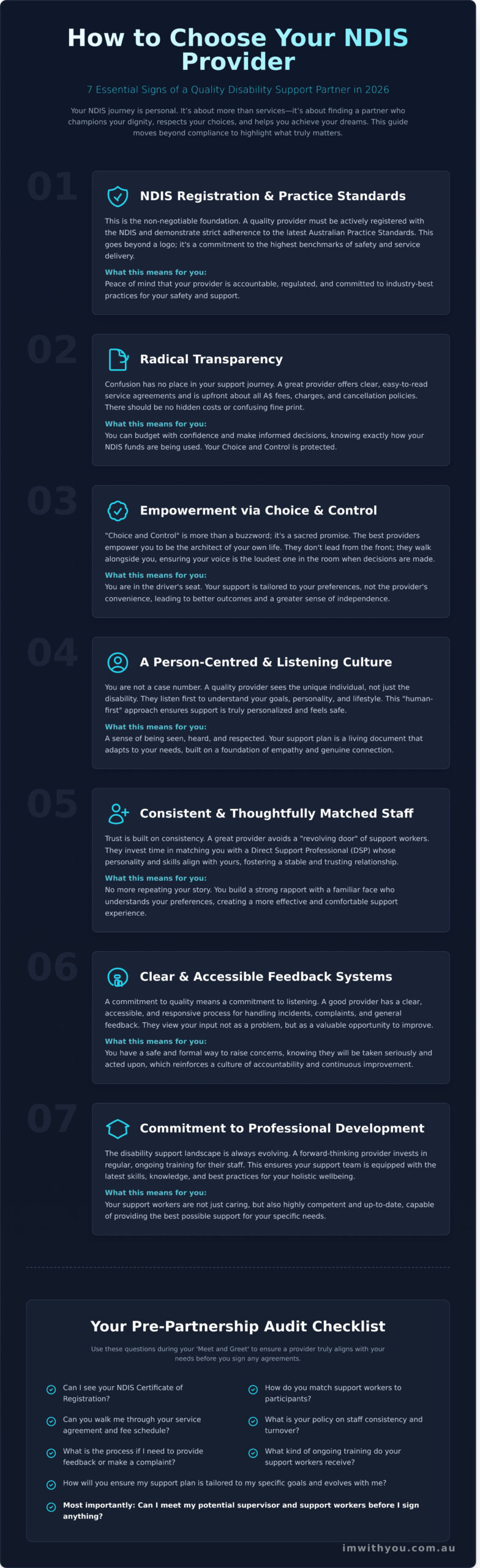
How to Audit a Provider Before You Sign: A Practical Checklist
Choosing a partner to walk alongside you on your NDIS journey is a significant decision that deserves time and care. Identifying the signs of a good disability support provider involves looking past the glossy brochures and into their daily heart-centered practices. Before you sign a service agreement, use this practical checklist to ensure the provider truly aligns with your unique needs and values.
- Step 1: Request a “Meet and Greet”: You deserve to know who will be entering your home and your life. Ask to meet potential support workers and their supervisors to see if the personal connection feels safe and supportive.
- Step 2: Explore Psychosocial Support: Ask for specific examples of how they handle complex psychosocial needs. A quality provider focuses on holistic recovery and emotional well-being, not just “managing a case.”
- Step 3: Verify Safety Checks: Your peace of mind is our priority. Ensure the provider can verify that all staff have current NDIS Worker Screening Checks and Working With Children Checks (WWCC).
- Step 4: Seek Authentic Feedback: Look for online reviews or ask for de-identified participant testimonials. These stories offer a window into how the provider treats people when no one is watching.
- Step 5: Confirm 24/7 Reliability: Life doesn’t always happen between 9 am and 5 pm. Review their emergency procedures and ensure they have a reliable system for after-hours support and crisis management.
The Trial Period Strategy
One of the clearest signs of a good disability support provider is their willingness to offer a trial shift before you commit to a long-term agreement. This is a vital way to exercise your choice and control. During the first 48 hours, observe the “vibe”-is the worker punctual, empathetic, and engaged? Pay close attention to how the provider receives your feedback; a team that is truly “with you” will listen deeply and adjust their approach to match your preferences.
Questions to Ask the Intake Manager
Empower yourself by asking these direct questions to see if the provider is ready to stand beside you as a trusted advocate:
- “How do you handle staff absences or last-minute cancellations to ensure I am never left without the support I need?”
- “Can I choose my own support workers and interview them first to ensure our personalities click?”
- “How do you measure and celebrate progress toward my specific NDIS goals in a way that feels meaningful to me?”
At I’m With You, we believe in building partnerships based on transparency and trust. We are here to help you navigate these choices, ensuring you feel empowered every step of the way.
Im With You: A Partnership Built on Excellence and Empathy
Choosing a provider is one of the most significant decisions you will make on your NDIS journey. At Im with you, we believe that the most important signs of a good disability support provider are found in the balance between professional rigour and genuine human connection. Our 2026 award-winning approach to disability support is built on the foundation that you should never have to navigate this path alone. Our name is more than just a brand; it is our daily promise to walk alongside you, offering a steady hand and expert guidance every step of the way.
We specialise in bridging the gap between high-level professional expertise and a gentle, person-centred touch. Whether you require complex Support Coordination to unlock the potential of your plan or seek meaningful Community Participation to broaden your horizons, our services are designed to empower your agency. We move away from the cold, clinical detachment of traditional healthcare, focusing instead on a holistic “Side-by-Side” philosophy that treats your goals as our own.
Our Commitment to Quality
Quality at Im with you is defined by our drive to exceed NDIS Practice Standards through constant innovation and empathy. We don’t just hire carers; we hand-pick advocates who share our vision for social inclusion. Our team undergoes specialised training to ensure they provide more than just assistance-they provide companionship and respect. Our commitment includes:
- Values-Based Recruitment: Selecting team members who demonstrate innate empathy and a commitment to your dignity.
- Continuous Innovation: Regularly updating our practices to reflect the latest in psychosocial recovery and capacity building.
- Holistic Focus: Ensuring every support worker understands your unique story, not just your support plan.
Start Your Journey with a Trusted Advocate
When you have your first conversation with our team, you will notice the difference immediately. We take the time to listen to your aspirations before we talk about logistics. We are experts at helping participants navigate the complexities of the NDIS to maximise their plans, ensuring that every dollar of your funding is used to foster your independence. We treat “Choice and Control” as a sacred promise, helping you build a life that reflects your strengths and passions.
If you are looking for a partner who values your journey as much as you do, we are ready to listen. Experience the difference of a provider who is truly with you.
Choosing a Partner Who Truly Stands With You
Navigating the NDIS landscape in 2026 requires more than just finding a service; it is about finding a dedicated companion for your journey. As we have explored, the signs of a good disability support provider lie in the delicate balance of professional excellence and deep, human empathy. By prioritizing advocacy, cultural safety, and a sacred commitment to your individual choice and control, you ensure that your support is built on a foundation of dignity and partnership rather than just regulation.
At I’m With You, we pride ourselves on being 100% NDIS Registered and compliant, offering specialized psychosocial recovery support that honors your unique path. Having been recently recognized with the 2026 Excellence in Disability Support Award, our team is dedicated to walking beside you with transparency, patience, and warmth. You deserve a partnership that feels safe, non-judgmental, and deeply empowering.
Book a gentle, no-obligation chat with our award-winning team today.
Remember, your goals are within reach and your voice is the most important one in the room. We are here to listen, to support, and to walk with you every step of the way.
Frequently Asked Questions
What are the red flags to watch out for when choosing an NDIS provider?
Choosing the right partner is vital for your peace of mind. Some red flags include a lack of transparency in service agreements, poor communication, or a “one-size-fits-all” approach that ignores your unique goals. If a provider seems more interested in your funding than your personal journey, they may not be the right fit. Recognizing the signs of a good disability support provider early on helps protect your independence and safety.
Can I change my disability support provider if I am not happy?
Yes, you always have the right to exercise choice and control over who supports you. If you feel your current relationship isn’t working, you can change providers at any time. Most service agreements require a notice period-typically 14 to 28 days. We believe in standing beside you during these transitions, ensuring your supports continue seamlessly while you move toward a partnership that feels truly supportive and respectful.
Does a good provider have to be NDIS registered?
While registration provides an extra layer of oversight from the NDIS Commission, a provider doesn’t always have to be registered if you are plan-managed or self-managed. However, one of the signs of a good disability support provider is their commitment to high standards regardless of registration. Ensure they have comprehensive insurance, valid police checks, and follow the NDIS Code of Conduct to ensure your safety and quality of care.
How do I know if a support worker is the right fit for my family?
Finding the right person is about more than just qualifications; it is about a genuine human connection. During a meet-and-greet, notice if they listen actively and show empathy toward your family’s routine. The right fit is someone who makes you feel comfortable and empowered. It’s okay to trial different workers until you find that steady companion who truly understands your needs and respects your home environment.
What is the difference between a support worker and a support coordinator?
These roles work side-by-side to support your life. A support worker provides direct, hands-on assistance with daily activities, community participation, or personal care. In contrast, a support coordinator acts as a knowledgeable guide who helps you navigate the complexities of your NDIS plan. They help you connect with therapists and providers, ensuring your funding is used effectively to build your capacity and reach your long-term goals.
Are there extra costs for weekend or after-hours disability support?
Yes, under the NDIS, support delivered on weekends or after hours (usually after 8:00 PM) incurs higher hourly rates to cover Australian Fair Work requirements. For instance, a Sunday rate is significantly higher than a standard Monday-to-Friday rate. Always ensure these A$ costs are clearly detailed in your service agreement so there are no surprises, allowing you to manage your budget with confidence and clarity.
How can I verify a provider’s reputation in the local community?
A provider’s reputation is often best reflected in the voices of those they support. You can check local community forums, ask for word-of-mouth recommendations in advocacy groups, or look for testimonials on their website. Additionally, the NDIS Quality and Safeguards Commission website lists any compliance actions taken against providers. A trustworthy provider will be open about their history and proud of the positive impact they have made in the community. For a good example of how a provider presents its services and values, you can visit Accessible Care, which serves the Melbourne and Adelaide areas.