
The biggest difference in ILO vs SIL under the NDIS isn’t simply whether you live alone or share a home. SIL funds a package of paid support in your home for regular help with daily tasks, while ILO is a flexible support model built around your chosen living arrangement and can combine paid and informal support. Neither option funds rent or everyday household costs.
It’s understandable if these terms feel confusing, especially as both relate to where and how you live. The right fit depends on the support you need and the living arrangement you prefer. This article explains Supported Independent Living, compares ILO and SIL, and outlines evidence that may support an application for either option.
Key Takeaways
- Separate the living arrangement from the support: ILO, SIL and SDA each play a different role in planning where and how you live.
- Build an application around clear evidence of daily support needs, personal goals and preferred living arrangements.
- Consider the level and flexibility of support you need when weighing shared living against a more individual arrangement.
- Use support coordination or advocacy to help clarify your options and bring your housing goals into the planning conversation.
What Is the Difference Between ILO and SIL?
For an Australian NDIS participant, ILO and SIL fund different kinds of support at home. SDA is different again: it funds the physical dwelling, not the support delivered there.
Independent Living Options (ILO)
Individualised Living Options (ILO) is a support model, not a type of accommodation. It involves two stages: exploring and designing an arrangement, then putting supports in place. A participant can consider living alone, sharing a home or living with a host, with a package that may combine paid and informal support. Participants can express preferences about housemates and providers, although the final arrangement depends on the supports in their NDIS plan. ILO is flexible, but it isn’t staffed around the clock and doesn’t fund housing or daily assistance in the same way as SIL.
Supported Independent Living (SIL)
Supported Independent Living (SIL) funds a package of paid support at home, including help with daily tasks. It can be delivered in a shared home or an SDA dwelling, and support workers may be shared between housemates. Participants can state their preferences about living arrangements and providers, though shared settings may shape how support is organised. SIL can suit someone who needs regular, ongoing assistance, but a shared arrangement may involve coordinating routines and support with housemates. SDA, by contrast, funds the dwelling itself, not SIL support.
Moving between ILO and SIL means aligning the NDIS plan with the participant’s goals and support needs. A plan review may be needed when changing from SIL to ILO; the same planning considerations apply if needs change in the other direction.
| Option | What funding supports | Accommodation |
|---|---|---|
| ILO | Flexible paid and informal supports | Chosen living arrangement |
| SIL | Paid in-home support | Shared or other home |
| SDA | Physical dwelling | Specialist housing |
Choose by matching your preferred home and level of support to your NDIS plan.
Evidence for SIL and ILO applications
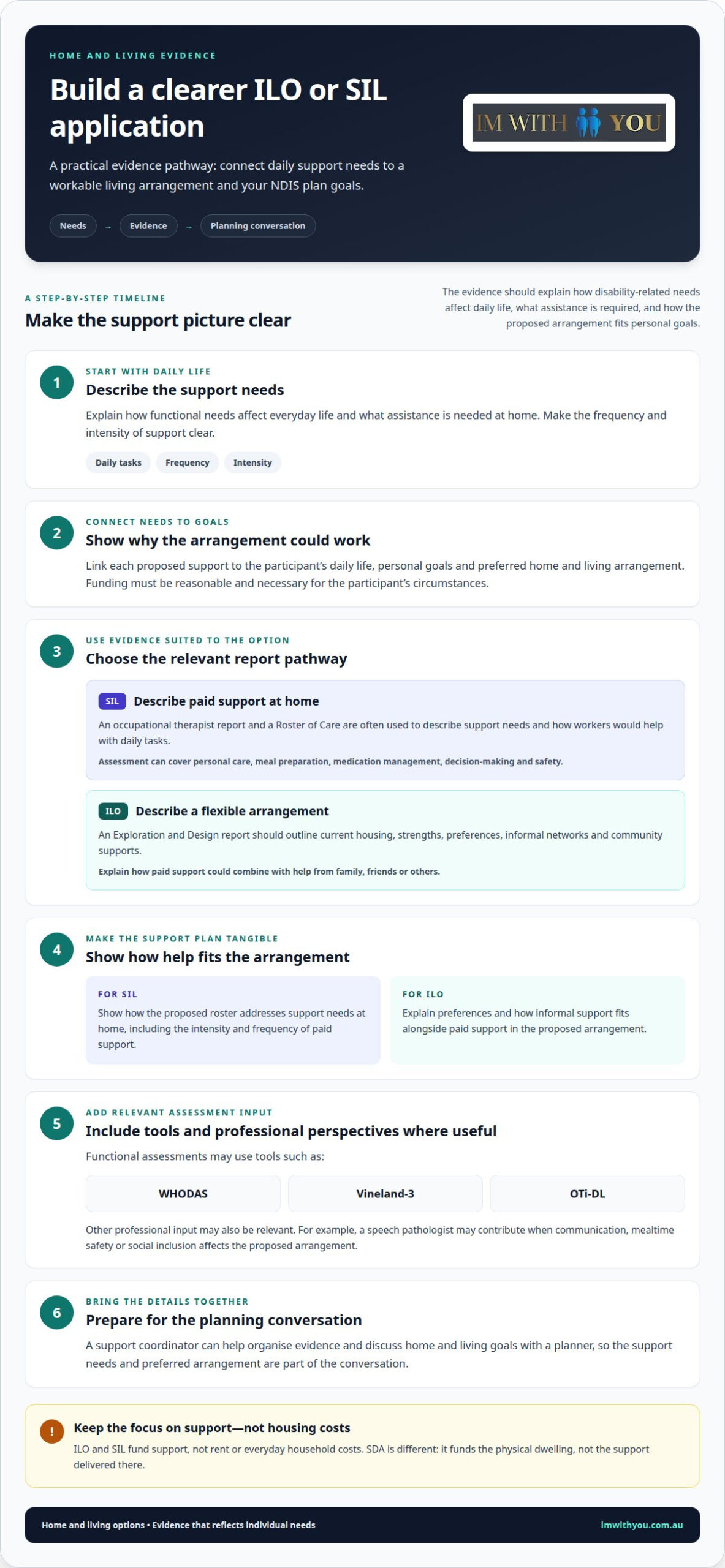
A strong application links disability-related support needs to a workable home and living arrangement. Evidence should explain how the participant’s functional needs affect daily life, what assistance they require, and how the proposed living supports align with their NDIS plan goals. Funding must also be reasonable and necessary for the participant’s circumstances.
For SIL, an occupational therapist report and a Roster of Care are often used to describe support needs. An assessment can cover personal care, meal preparation, medication management, decision-making and safety. It should make the intensity and frequency of paid support clear, including how support workers would help with daily tasks at home.
An ILO application needs an Exploration and Design report. It should describe the participant’s current housing and living arrangement, strengths, preferences, informal networks and community supports. This helps show how a flexible arrangement could combine paid support with help from family, friends or others, while supporting independent living and personal goals.
Functional assessments may use tools such as WHODAS, Vineland-3 or OTi-DL. Reports can also draw on other professional input where it relates to the person’s needs. For example, a speech pathologist may contribute when communication, mealtime safety or social inclusion affects the proposed arrangement.
- Describe the support needed, including its frequency and intensity.
- Connect each proposed support to the participant’s goals and daily life.
- For ILO, explain preferences and how informal support fits the arrangement.
- For SIL, show how the proposed roster addresses needs at home.
A support coordinator can help organise evidence and discuss home and living goals with a planner. NDIS support coordination can help bring these details together for the planning conversation.
What support and accommodation options are included in ILO versus SIL?
ILO and SIL can support different ways of living at home. The key difference is how each package organises paid assistance, informal help and ongoing support around the participant’s needs.
With ILO, a participant can explore living alone, sharing a home or living with a host. The package may combine paid support with help from family, friends or neighbours, as well as coaching to build skills. A support person might visit regularly, including daily, depending on the arrangement. ILO funding pays for support, not rent, board or utilities, and the package can adapt to the participant’s preferences.
SIL funds paid support in the participant’s home, including help with personal care, cooking, cleaning, medication, social activities and supervision. It can provide support around the clock when the participant’s needs call for it. In shared accommodation, support workers may assist housemates together, or support may be organised at different ratios, such as 1:1 or 1:2. Overnight support is also considered when assessing needs.
SDA is separate from both: its funding covers the physical dwelling, not support. A participant approved for SDA may also receive SIL or other support, depending on their circumstances. This distinction separates a home’s design from the assistance delivered inside it.
- Consider ILO if flexibility and combining informal help with paid support matter to your preferred arrangement.
- Consider SIL if you need regular, ongoing assistance with daily tasks at home.
- Consider SDA separately if the physical features of your home are part of your needs.
If you’re weighing these options, talk with a support coordinator about how your home and living goals connect with your support needs.
Im with you
Im with you can help you make sense of your home and living options and connect your goals with the support that matters in daily life. If you’re weighing ILO against SIL, our NDIS Support Coordination can help you organise questions, understand your plan and prepare for conversations about your preferred arrangement. Disability Advocacy Services can also help you express your choices and have your perspective heard during planning discussions.
Support needs can change as your circumstances and goals evolve. We can support you as you consider what feels workable, from the assistance you need at home to the community participation you want to maintain. You remain at the centre of those decisions, with support shaped around your goals and circumstances.
If you’d like to talk through your living support options, contact Im with you.
Shape a living plan around what matters to you
Your preferred home and daily routines can guide your next planning conversation. Consider what you want more of in everyday life, what assistance would help make that possible, and which people you’d like involved in decisions. These priorities can help keep your living arrangement connected to your goals.
The ILO-versus-SIL NDIS decision is personal, and your circumstances may change over time. I’m With You offers Disability Support Services, Community Participation Support and NDIS Support Coordination to help you work towards the support and participation goals that matter to you.
You don’t have to organise every part of the conversation alone. Bring your priorities and questions, and take the next step at a pace that feels right for you. Contact Im with you to discuss how we can support you. Your choices can lead the way.
Frequently Asked Questions
What is SIL (Supported Independent Living)?
Supported Independent Living (SIL) is NDIS-funded assistance for participants who need regular, ongoing help with everyday activities at home. Support can include personal care, meal preparation, medication assistance or supervision. For example, someone who needs help getting ready, preparing meals and staying safe can document these needs in functional evidence and connect them to their home and living goals.
What is ILO (Individualised Living Options)?
Individualised Living Options (ILO) is a flexible support approach shaped around where and with whom a participant wants to live. For example, someone considering living with a host can plan how paid assistance and help from trusted people fit together. The exploration and design process helps map the arrangement before ongoing support begins.
How Does Funding for SIL and ILO Work?
NDIS funding for either option is considered against the participant’s goals, functional support needs and whether proposed supports are reasonable and necessary for their circumstances. For SIL, the provider presents a quote for the whole house, while the participant’s needs inform the proposed support. ILO planning sets out the arrangement and supports. Funding covers support, not household living costs. Keep evidence tied to daily tasks.
How is ILO different from SIL?
In an ILO vs SIL NDIS comparison, focus on how each model organises support around a person’s home life. Someone who wants to live with a host and draw on trusted relationships could explore ILO. A participant who needs regular, structured assistance at home could consider SIL. Compare how each arrangement fits daily routines, support needs and the person’s preferences.
ILO vs SIL: Which One Is Right for You?
For an ILO vs SIL NDIS decision, consider your preferred living arrangement, the assistance you need at home and how much flexibility matters to you. Think about routines such as preparing meals, personal care and feeling safe overnight. Then discuss your home and living goals with a support coordinator or planner. This can help connect your preferences and everyday support needs with your NDIS plan.