
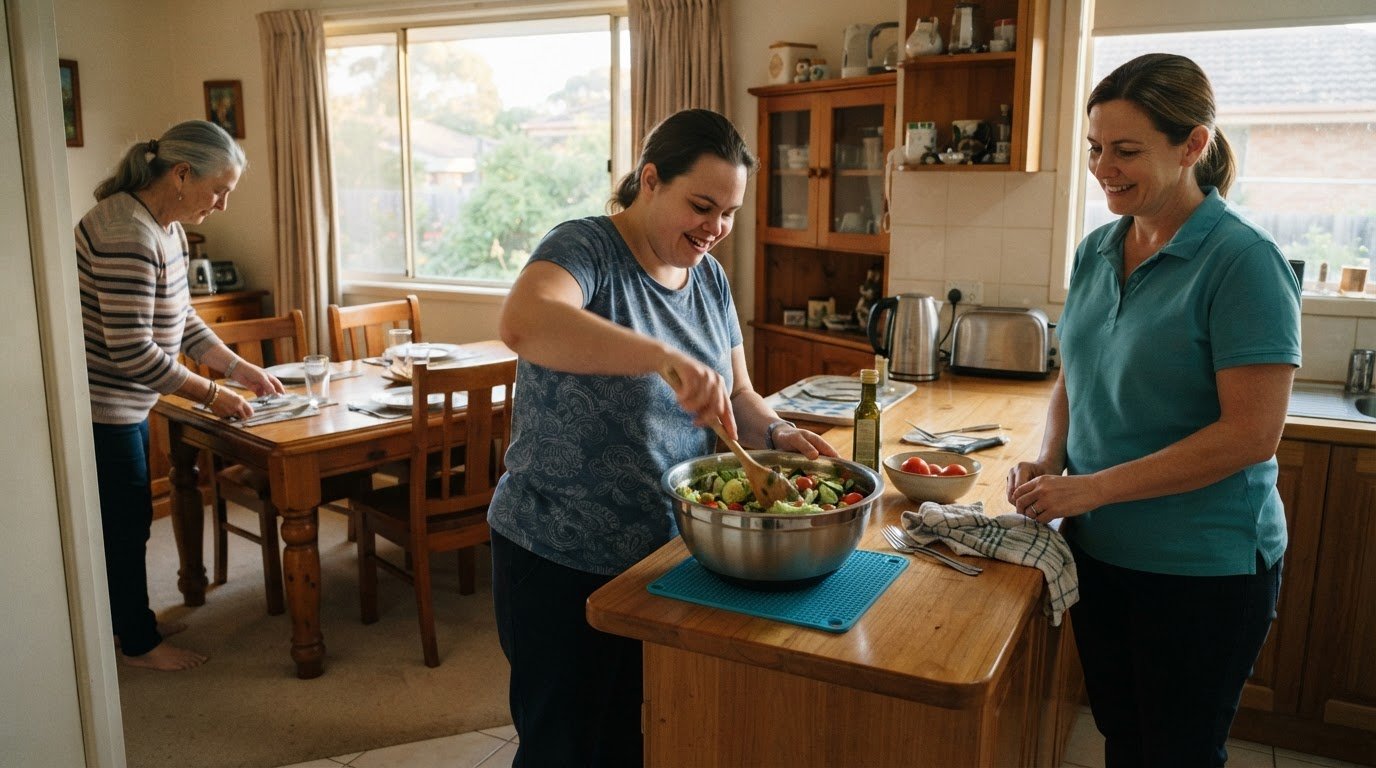
The NDIS can affect more than the supports a person receives. It funds disability-related supports for eligible participants and recognises the important role of family, carers and other significant people in their lives. The NDIS and its impact on family life can be seen in everyday routines, shared decisions and the way caring responsibilities fit alongside work and finances.
It’s understandable if the system feels complicated. Families often share what they know about daily life and help support a participant’s goals, but they don’t have to manage every role alone. This article explains how NDIS planning works and how informal support is considered alongside funded supports. It explores the roles families and communities can play, how supports may help build independence and participation, and how caring can affect employment and household finances. The focus is on balancing family involvement with formal support while keeping the participant’s choices and wellbeing at the centre.
Key Takeaways
- Understand how NDIS supports can complement family and community involvement while keeping the participant’s goals at the centre.
- Learn how existing informal support can inform planning, and how to describe changing needs and routines in planning discussions.
- Explore how caring responsibilities can affect work and household finances, and why balancing informal care with formal supports matters.
- Consider how support coordination, advocacy and community participation support can help families manage practical challenges and support connection.
Family and community roles in supporting a good life
At home, NDIS supports may assist with daily living and therapy. In the community, they may help with transport to activities and participation in everyday life.
Building Family Capacity
Family capacity building develops the practical skills and confidence families use to support a participant’s goals. According to the Australian Government Federal Register of Legislation, the Australian National Disability Insurance Scheme was legislated in 2013. The National Disability Insurance Scheme Act 2013 says families, carers and other significant people must be acknowledged and respected (s4(12)). Supports may help families build skills in communication, behaviour management and navigating community services. These skills can make routines clearer and help families support greater independence.
Community Participation and Social Connection
Community participation means taking part in social activities, pursuing interests and engaging in community life, with support when needed. NDIS-funded community participation support may help participants practise social skills, explore interests and connect with others. For example, a participant might receive support to travel to a regular group activity, take part and build connections. Families can share which activities matter to the participant, while support can create opportunities to engage more independently.
Effects on Sibling and Family Relationships
NDIS supports can affect how family members share time, care and everyday responsibilities. A participant’s needs may shape household routines, while siblings may value time together that isn’t centred on appointments or support tasks. Families can discuss these needs and plan individual activities, such as a sibling outing or shared meal. The NDIS generally doesn’t pay immediate family members to provide supports, helping preserve natural family relationships and promote participant independence. Formal support may ease some caring tasks, while relatives remain family first.
The role of families and informal supports in NDIS planning
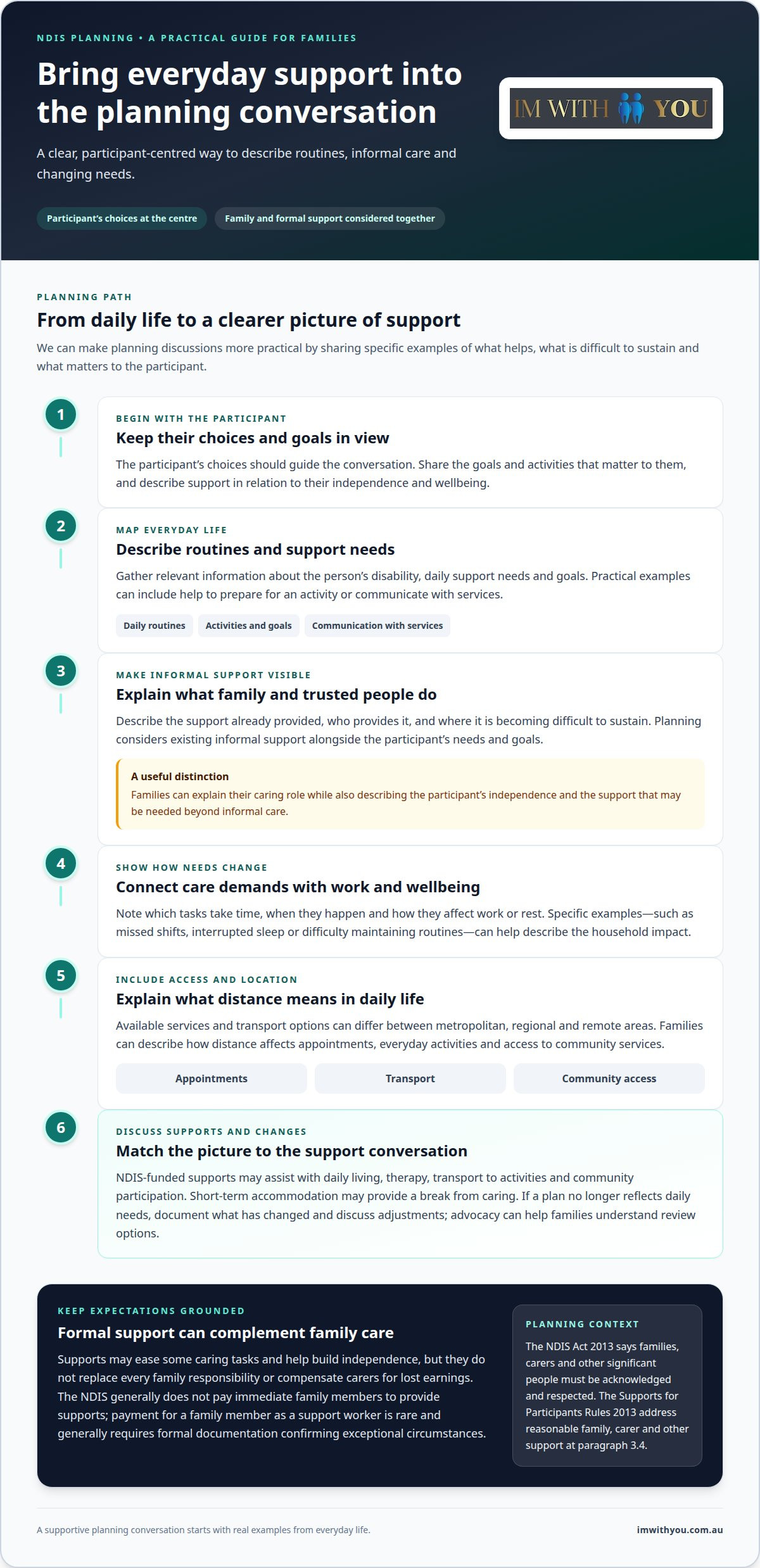
Families and other trusted people can help explain a participant’s daily routines, goals and changing support needs. NDIS planning considers existing informal support when deciding which formal supports to fund. The National Disability Insurance Scheme (Supports for Participants) Rules 2013 address reasonable family, carer and other support at paragraph 3.4.
Access is assessed for each individual, and NDIS planning operates across Australia. In practice, available supports can differ between metropolitan, regional and remote areas because local services and transport options vary. Families can explain how distance affects appointments, daily activities and access to community services.
Families can help prepare for an application and planning discussion by gathering relevant information about the person’s disability, everyday support needs and goals. The participant’s choices should guide the conversation. Share practical examples, such as support needed to prepare for an activity or communicate with services, and explain how needs may change over time.
Families have a role in providing reasonable informal support, but planning should also recognise the participant’s independence and goals. Carers can describe what they currently do and where support is difficult to sustain. The NDIA’s Participant Service Improvement Plan 2020-21 stated an intention to establish a carer connect network for ageing parents of people with disability. Succession planning can also identify trusted people and future support needs.
Respite-related support may include short-term accommodation, which can give families a break from caring. If a plan changes or no longer reflects daily needs, families can document what has changed and discuss adjustments through planning. They can also seek advocacy to understand review options. For example, a change in a carer’s health or availability may affect the informal support considered in a plan.
Carers’ employment and financial pressures
Care can shape a parent’s working day before a shift even begins. Appointments, transport, personal support and unexpected changes may mean arriving late, turning down extra hours or rearranging work. Over time, reduced hours can affect household income and career opportunities. The pressure varies according to the participant’s support needs, available formal supports and workplace flexibility.
The NDIS may fund assistance with daily living, transport to activities and therapy services. These supports can ease some caring tasks and help participants build independence, but they don’t replace every family responsibility or compensate carers for lost earnings. A practical first step is to note which tasks take time, when they happen and how they affect work or rest. This can help families explain their support needs in planning discussions.
Parents and carers may face emotional strain as well as scheduling demands. Coordinating appointments, paid work and care at home can leave little room for rest or time with other family members. Describe the pressure through specific examples, such as missed shifts, interrupted sleep or difficulty maintaining routines. This gives a clearer picture of how support needs affect the household.
Payment for a family member to work as a support worker is rare. The NDIA generally requires formal documentation confirming exceptional circumstances. Families can outline the support involved and how it relates to the participant’s independence and goals, rather than assuming family payment will provide income.
If health-related support at home is part of the caring load, explore community nursing under the NDIS as one way to consider formal support alongside family care.
Im with you
Im with you can help families understand how NDIS supports fit into everyday life. If coordinating services, building community connections or advocating for a participant’s needs feels difficult, NDIS Support Coordination, Community Participation Support, Disability Support Services and Disability Advocacy Services can help. These supports can bring planning conversations and daily goals into clearer focus while keeping the participant’s choices at the centre.
You don’t need to have every detail worked out before seeking guidance. We’re here to listen, understand what matters to your family and explore how support could align with the participant’s goals. Contact Im with you to discuss the support your family is looking for.
Make space for the next step
The NDIS and its impact on family life can change as a participant’s goals, routines and support needs evolve. A useful next step is to identify one pressure point the family wants to address, such as making time for work, strengthening community connections or clarifying who supports a daily routine. Bring that priority to the next planning conversation, alongside the participant’s preferences and what feels manageable for everyone involved.
Support should strengthen the participant’s choices while helping family members find a sustainable role. Im with you offers Disability Support Services, Community Participation Support and NDIS Support Coordination to help families work towards those everyday goals. If you’d like to explore what support could look like for your family, start a conversation with Im with you. One considered step can help make the way forward feel clearer.
Frequently Asked Questions
How does the NDIS work?
The NDIS provides eligible participants with funding for disability-related supports, set out in an individual plan. Participants can use their plans to pursue goals and arrange supports that meet their needs. For example, a plan may help organise assistance with daily activities or community access. Families can contribute to planning discussions while keeping the participant’s preferences central.
What is the NDIS and who is eligible in Australia?
The NDIS, Australia’s National Disability Insurance Scheme, funds disability-related supports for eligible people. Eligibility is determined through an access process that considers the person’s circumstances and disability-related support needs. Families can help explain how those needs affect everyday activities, such as communication, getting around or managing routines. Each person’s circumstances are assessed individually.
How does NDIS funding affect family finances and out-of-pocket costs?
NDIS funding is intended for disability-related supports, not general household expenses or lost wages. The NDIS and its impact on family life can therefore include financial pressures beyond the participant’s funded supports. Out-of-pocket costs depend on whether an expense relates to an approved support or falls outside the plan. Families can separate support costs from everyday household spending when planning a budget.