
Leaving hospital doesn’t always mean you’re ready to manage everyday life without extra help. NDIS support after hospital discharge can assist with disability-related needs such as personal care, meals, mobility and reconnecting with the community, when those supports are included in your plan and meet NDIS requirements. Community nursing may also be funded for some participants, but the NDIS doesn’t replace hospital treatment or acute care.
It can be difficult to work out what help is available while you’re adjusting to being home. This guide explains what NDIS Hospital to Home Support can involve, when nursing care may be relevant, and what can affect discharge planning.
You’ll also learn how support coordination, daily assistance and community participation can help make the transition home more manageable, with your needs and routines at the centre.
Key Takeaways
- Understand which disability-related supports may be funded after hospital discharge and where the NDIS’s role ends.
- See how practical help and a thoughtfully prepared home can make the transition back to everyday routines easier.
- Learn what can shape discharge planning and why coordinating supports before leaving hospital matters.
- Explore how therapeutic supports can contribute to your next steps as you adjust to life at home.
Does NDIS cover medical or nursing care after discharge?
NDIS support after hospital discharge may assist with disability-related needs when the supports are included in a participant’s plan and meet NDIS requirements. Hospital staff can help distinguish ongoing supports from treatment provided during admission.
Disability Support Versus Medical Care
Disability support assists with everyday needs, while medical treatment addresses health conditions and recovery. This distinction matters because the health system generally funds clinical treatment, acute and subacute care, medical services and short-term post-surgery rehabilitation. Hospitals are generally responsible for treatment, nursing care, medications and personal care during admission. NDIS support doesn’t replace these services.
Adjusting Supports After Discharge
Adjusting supports means reviewing arrangements as a participant’s needs change at home. Planning NDIS support after hospital discharge can draw on a discharge summary, medical reports and allied health assessments. For example, new mobility needs may mean everyday assistance needs adjusting. If you’re home without adequate supports, contact the National Disability Insurance Agency on 1800 800 110 to explain the situation and request urgent assistance.
Personal Care and Daily Living Assistance
In-home assistance can help participants manage disability-related daily activities after leaving hospital. Depending on the plan and assessed needs, this may include personal care, mobility, meals, household tasks, communication or community access. A support worker can assist with routines such as preparing a meal or moving around the home. Community nursing may support monitoring, clinical care or established health-related routines, according to individual needs.
Complex Needs and Support Arrangements
Complex arrangements coordinate approved supports around significant needs. NDIS high-intensity support may be relevant when requirements go beyond standard daily assistance, with supports tailored and delivered safely and respectfully. A discharge summary, medical reports and allied health assessments can help explain changed needs and the practical assistance required.
NDIS support after hospital discharge may include personal care or support workers when these supports relate to disability needs, are included in the plan and meet NDIS requirements. Short-term accommodation funding depends on approved supports and assessed needs.
What is NDIS Hospital to Home Support?
Hospital-to-home support coordinates disability-related assistance for the move from hospital back to everyday life. Planning can connect hospital staff, support coordinators, providers and the participant before they leave hospital.
Planning the Hospital-to-Home Transition
Transition planning brings together the people and supports needed for a safe return home. The treating hospital determines when someone is medically ready and safe to leave, while NDIA Health Liaison Officers work within Australia’s health system to connect hospitals with the NDIA and support discharge planning. Existing participants may continue some supports, including support coordination and discharge planning, while in hospital. Tell hospital staff about your NDIS participation so they can discuss your needs with relevant professionals. State and territory health-service arrangements can sit alongside NDIS supports, which address disability-related needs.
Preparing a Safe and Accessible Home
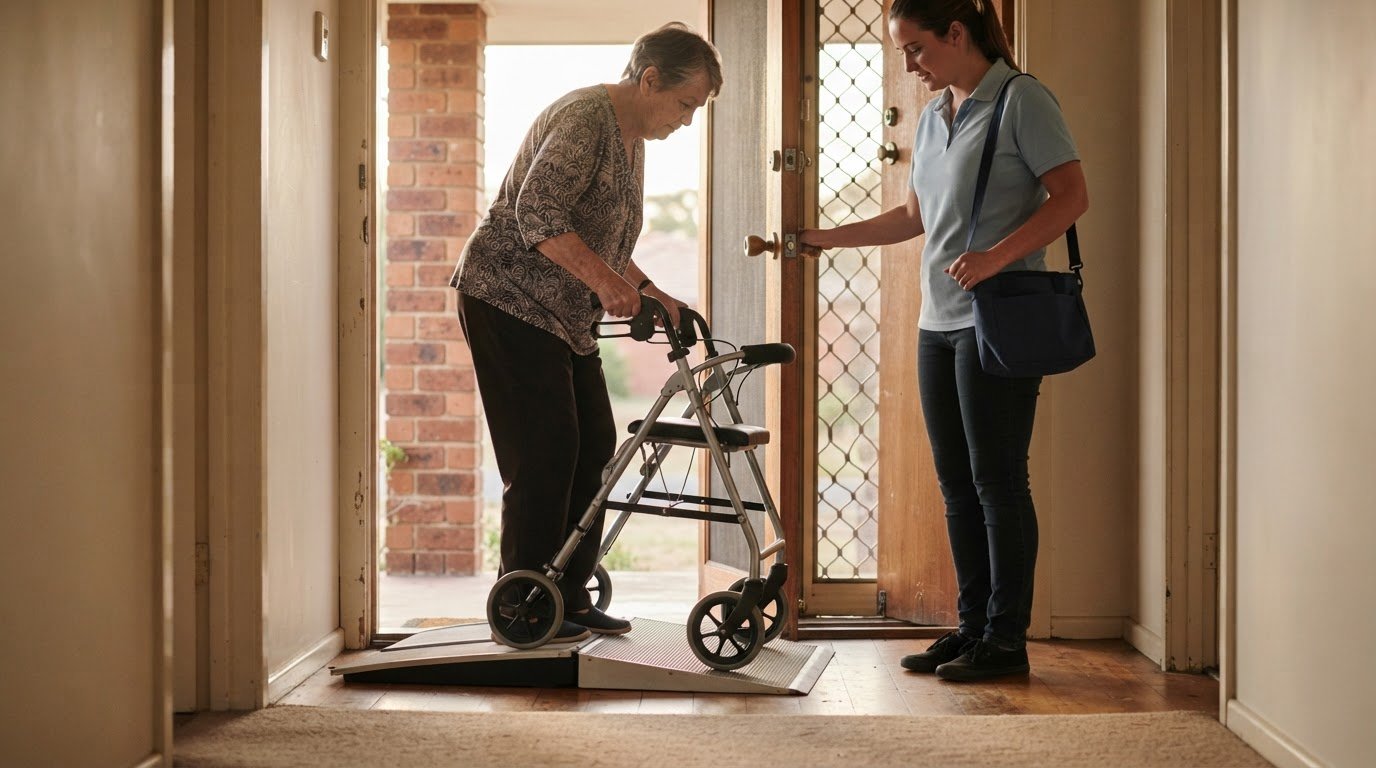
Preparing the home involves considering whether the person can move around and manage essential routines after returning. An occupational therapist can help identify support needs before discharge. They may consider access through the entrance, movement between rooms and whether the bathroom or kitchen suits the person’s current needs. This assessment can inform discussions about home modifications or assistive technology, such as equipment that supports mobility. Planning early helps identify practical barriers before discharge.
Daily assistance can also be organised around the person’s routines and NDIS plan. For example, flexible in-home support may help with meal preparation, household tasks or getting to appointments while routines settle. Support coordinators can connect providers and discuss how arrangements fit together. If planning feels fragmented, talking through the transition home can help bring those support needs into one conversation.
How long does NDIS hospital discharge planning take?
There’s no single timeframe for every transition. Timing depends on support needs, plan changes and available arrangements. Starting coordination before discharge gives families and professionals more time to connect funded supports.
Coordinating Supports Around Discharge
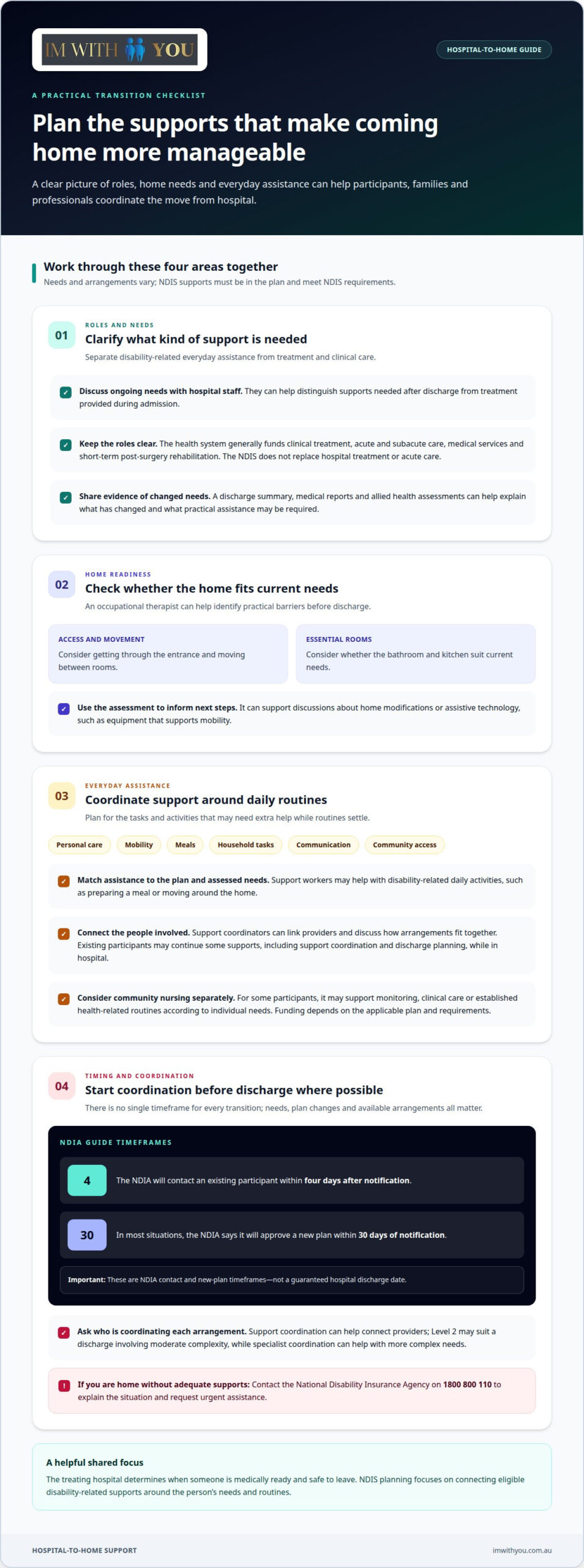
Discharge coordination brings the participant, family, hospital team and relevant providers together around returning home. It matters because everyday support needs may change after treatment, including help with personal care or community access. The NDIS hospital-stay guide says the NDIA will contact an existing participant within four days after notification. In most situations, it says the NDIA will approve a new plan within 30 days of notification.
These timeframes relate to NDIA contact and new plans, not a guaranteed discharge date. Existing funded supports and the complexity of arranging additional help can also shape the transition.
Support Coordination and Referrals
Support Coordination helps connect NDIS supports and providers around a participant’s needs. Participants may continue support coordination and discharge planning while in hospital, helping maintain continuity before and after returning home. Level 2 Support Coordination may suit a discharge involving moderate complexity. Where needs are more complex, specialist coordination can help bring multiple services and professionals together.
Referrals and clear communication help families understand who is arranging each support. The NDIA decides whether a plan variation or reassessment request meets the applicable criteria.
Urgent Discharge Coordination
Urgent coordination brings hospital staff, families and relevant professionals together when discharge arrangements need prompt attention. The treating hospital determines when someone is medically ready and safe to leave; support coordination helps organise disability-related supports for the transition. Share current needs, existing funding and supports already arranged so everyone can identify gaps.
NDIA Health Liaison Officers work within the health system to connect hospitals with the NDIA and support planning. For help coordinating NDIS supports around discharge, discuss your support coordination needs.
Im with you: Therapeutic Supports
Im with you can support you as you shape your care around life after hospital. Our Therapeutic Supports can help you work towards personal goals and build routines that reflect what matters to you. If coordinating services feels difficult, NDIS Support Coordination can help connect the supports in your plan. Disability Support Services and Community Participation Support may also assist with everyday activities and taking part in your community.
These supports complement your transition home; they don’t replace hospital treatment or medical care. The right next step depends on your goals, current plan and the assistance you want to organise. Contact Im with you to discuss support that could suit your next chapter.
Shape a transition around what matters to you
Returning home can be an opportunity to rebuild familiar routines at your own pace. Think about what you want daily life to look like, from feeling comfortable at home to reconnecting with community activities. The right NDIS support after hospital discharge should centre your goals and help make those next steps more manageable.
I’m With You offers Disability Support Services, Community Participation Support and NDIS Support Coordination. Together, we can focus on support that fits your needs and priorities, so you feel more prepared to move forward.
Contact Im with you for support and start a conversation about your next steps. Your goals can guide the way forward, and you don’t have to work through the planning alone.
Frequently Asked Questions
What Happens to Your NDIS Plan When You’re Admitted to Hospital?
Some NDIS supports may continue while you’re in hospital, including support coordination and discharge planning. Talk with hospital staff and your support coordinator about which arrangements remain useful during admission and what you’ll need at home. For example, they can keep community support plans in view while the hospital focuses on treatment and your discharge needs.
What Support May Be Needed After Hospital Discharge?
Support depends on what has changed for you and what your plan covers. You might need help with a familiar task that has become harder, such as preparing breakfast, getting dressed or communicating your needs. Start by identifying which parts of an ordinary day feel different, then discuss those changes with your support team.
What kind of help is most useful after leaving hospital?
The most useful help often addresses your immediate daily priorities. If getting to follow-up appointments feels difficult, practical support with travel or getting out into the community may be useful. If mornings are challenging, assistance with personal routines may matter more. Set priorities based on your own goals, then consider how available NDIS supports can fit around your preferred routine.
Can a support coordinator or hospital team refer someone?
Yes. Hospital staff and a support coordinator can work with you, your family and relevant professionals to identify needs and connect supports. They can help organise communication between providers and discuss referrals related to your transition home. If a plan variation or reassessment is needed, the NDIA decides whether the request meets the applicable criteria.
How Can Families and NDIS Providers Work Together After Discharge?
Families and providers can agree on who will assist with particular routines and share relevant updates about changing needs. A discharge summary can help providers understand the participant’s current situation. For example, families can explain which daily routines matter most, while providers describe how their supports fit those routines. This shared understanding can help avoid relying on family for every care need.