
There is no single average cost of supported independent living in Australia. NDIS SIL funding pays for support, not rent or the cost of a home.
It’s understandable to want a clear figure when weighing up living arrangements and everyday expenses. The key distinction is that approved SIL funding covers support workers and the assistance they provide, while residents pay ordinary living costs separately.
This guide explains what SIL funding can cover, which expenses sit outside it, and why shared and individual support arrangements can differ. It also outlines how the level and timing of support shape funding, helping you prepare to explore options that suit your circumstances.
Key Takeaways
- SIL funding pays for eligible in-home support, not rent, utilities, groceries or other everyday living expenses.
- Separate support funding from housing costs so you can build a clearer picture of the expenses you’ll need to manage.
- Support arrangements and funding depend on individual needs, including the timing and level of assistance and whether support is shared.
- Understanding how SIL works can help you explore suitable support, coordination or advocacy as you consider your next steps.
Costs excluded from SIL funding
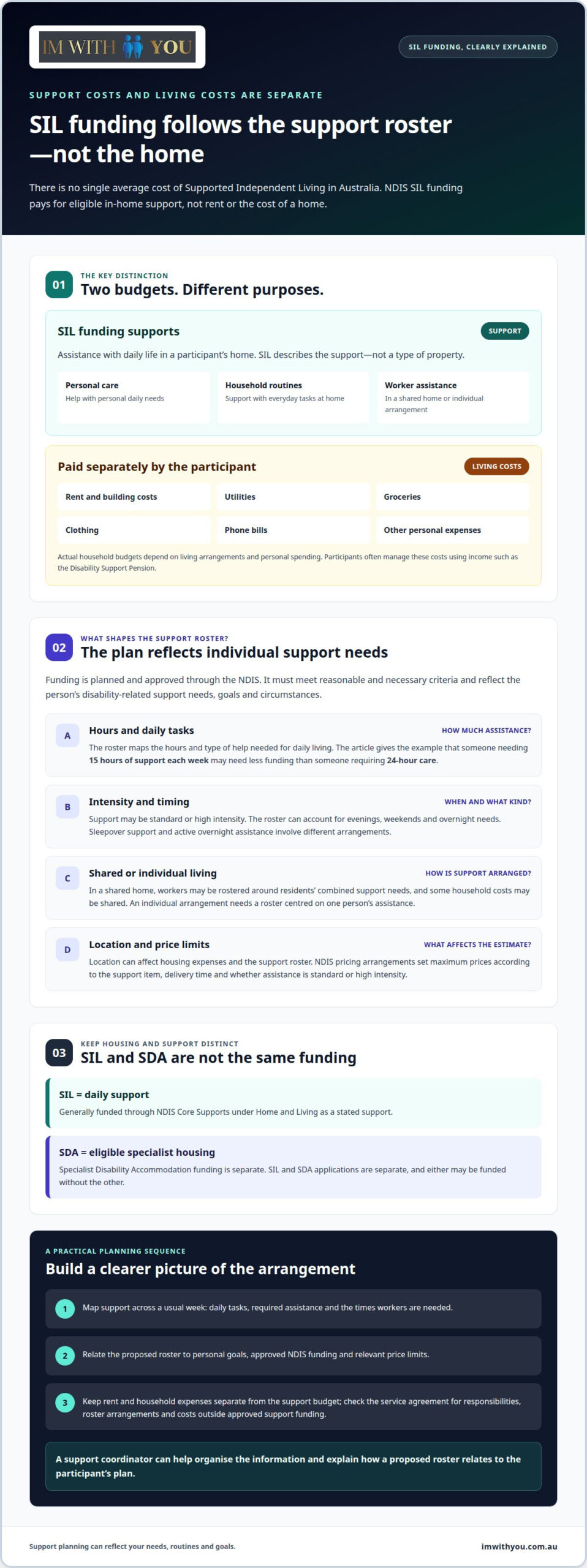
NDIS SIL funding pays for support services in a participant’s home, not rent, utilities or building costs. It also excludes groceries, clothing, phone bills and other personal expenses. SIL describes the daily support, not the housing itself. Specialist Disability Accommodation funding is separate and applies to eligible specialist housing.
Participants pay household expenses themselves, often using income such as the Disability Support Pension. Actual budgets depend on living arrangements and personal spending.
Support worker rates are separate from living expenses. NDIS pricing arrangements set maximum prices according to the support item, delivery time and whether assistance is standard or high intensity. Overnight support also affects the roster: sleepover support and active overnight assistance involve different arrangements and may result in different funding needs.
Location can affect housing expenses and the support roster. A participant sharing a home may divide some household costs, while a different living arrangement changes which expenses are shared. The roster should also reflect when assistance is needed, including evenings, weekends or overnight.
Individual needs shape the amount of SIL support. For example, a person needing 15 hours of support each week may need less funding than someone requiring 24-hour care. The roster accounts for daily living tasks, the intensity of assistance and when workers are needed. This is why household budgets and SIL funding should be considered separately.
What is Supported Independent Living?
Supported Independent Living (SIL) is NDIS-funded assistance with daily life, not a type of property. It can include personal care, help with household routines and worker support in a shared home or individual living arrangement. SIL is generally funded through NDIS Core Supports under Home and Living as a stated support.
Participants can choose their SIL provider when the provider’s roster of care fits within approved funding limits. To shape an estimate, map the assistance needed across a usual week, including personal care, routines and the times support is required. A support coordinator can help organise this information and explain how the proposed roster relates to the participant’s plan.
Providers and properties serve different purposes. SIL describes the support; Specialist Disability Accommodation (SDA) relates to eligible specialist housing. SIL and SDA funding applications are separate, and either may be funded without the other. In a shared home, workers may be rostered around residents’ combined support needs. An individual arrangement needs a roster based on one person’s assistance.
Mandatory registration for SIL providers begins on 1 October 2026, according to the NDIS Quality and Safeguards Commission. Quality also shows in whether workers understand the person’s preferences and provide consistent disability support. Before choosing, discuss who covers roster changes, how support is delivered, and how the arrangement reflects personal goals. Continuity matters because familiar workers can better understand established routines.
Check the service agreement for responsibilities, roster arrangements and any costs outside approved support funding. Clarify how housing and household expenses are handled separately, and how changes to support are discussed. For help organising NDIS support needs, explore support planning options.
How are NDIS SIL support costs calculated and funded?
The NDIA bases SIL funding on a person’s disability-related support needs, goals and circumstances. Funding must be planned and approved through the NDIS and meet reasonable and necessary criteria. The estimate reflects the support roster, including when assistance is needed and whether it is standard or high intensity.
These are broad planning ranges, not a standard amount for every participant. The person’s roster and circumstances shape the actual funding decision.
Shared arrangements can use workers across residents’ support needs, while an individual roster may require assistance centred on one person. The NDIS considers the hours and type of support needed, including overnight assistance. Its pricing arrangements set maximum prices according to the support item, delivery time and whether the support is standard or high intensity. The SIL pricing schedule is effective from 1 July 2026.
To understand a proposed amount, map the weekly support roster against the person’s goals and daily assistance needs. Compare the planned supports with approved NDIS funding and relevant price limits. Keep housing and household expenses separate from the support budget.
NDIS funding decisions reflect individual needs, goals and circumstances. If you’re organising support needs or working through funding questions, explore NDIS support options.
SIL funding must be planned and approved through the NDIS, meet reasonable and necessary criteria, and reflect the person’s disability-related support needs, goals and circumstances. The estimate is based on the support roster, including the hours and type of assistance needed, such as high-intensity or overnight support.
Im with you: Disability Support Services
Im with you can support you as you make sense of disability supports and plan what comes next. If you’re working through NDIS arrangements, Support Coordination can help you understand your options and organise supports around your goals. Disability Advocacy Services can also support you to express your preferences or raise concerns.
For everyday assistance and connection beyond the home, Disability Support Services and Community Participation Support can help you pursue the routines and activities that matter to you. These services do not replace SIL funding decisions, but they may form part of a broader support journey. Explore them when you’re ready to discuss your needs and priorities.
If you’d like to talk through your support options, contact Im with you or visit imwithyou.com.au.
Take the next step at your pace
Understanding the average cost of supported independent living can help you prepare, but your next step is more personal than comparing figures. Consider the routines, choices and connections you want your support arrangements to make possible. Sharing those priorities can help clarify what to explore.
Im with you offers Disability Support Services, Community Participation Support and NDIS Support Coordination. If you’d like a supportive conversation about your needs and goals, contact Im with you about SIL. You can take the time you need and move forward one considered step at a time.
Frequently Asked Questions
How Much Does SIL Cost?
The average cost of supported independent living depends on the support a person needs. This is a guide to support funding, not a standard personal bill or provider quote. For a useful budget, consider the approved support arrangement separately from rent and everyday household spending.
What does SIL funding cover?
SIL funding can cover support workers who assist with daily routines, personal care and other disability-related support at home. Depending on the person’s requirements, the roster may include scheduled daytime help or overnight assistance. It describes the funded support arrangement, not every cost of living there. Keep the support plan separate from the household budget when reviewing expenses.
How can I compare SIL costs without relying on a standard price?
Compare proposed rosters rather than headline totals. Note assistance by time of day, distinguish shared worker coverage from one-to-one support, and identify whether overnight assistance is active or a sleepover. Then consider how each arrangement fits the participant’s goals, approved funding and service agreement. This helps explain whether a cost difference reflects a different support model or different tasks.
How may the new NDIS legislative changes affect SIL costs and service delivery?
Mandatory registration for SIL providers began on 1 October 2026. SIL support item code 0138 is used from 1 July 2026. These changes affect provider registration requirements and how SIL support is identified, but they don’t set one funding amount for every participant. Individual funding continues to reflect the person’s disability-related support needs, goals and circumstances.
What can participants discuss when reviewing an SIL arrangement?
Participants can review whether the roster still matches their routines, goals and preferred living arrangements. Discuss changes to daily assistance, overnight support and shared-house arrangements, as well as how workers communicate roster changes. Clarify responsibilities in the service agreement and keep housing or household expenses separate from funded supports. Bring specific examples of what works well or needs adjustment.