
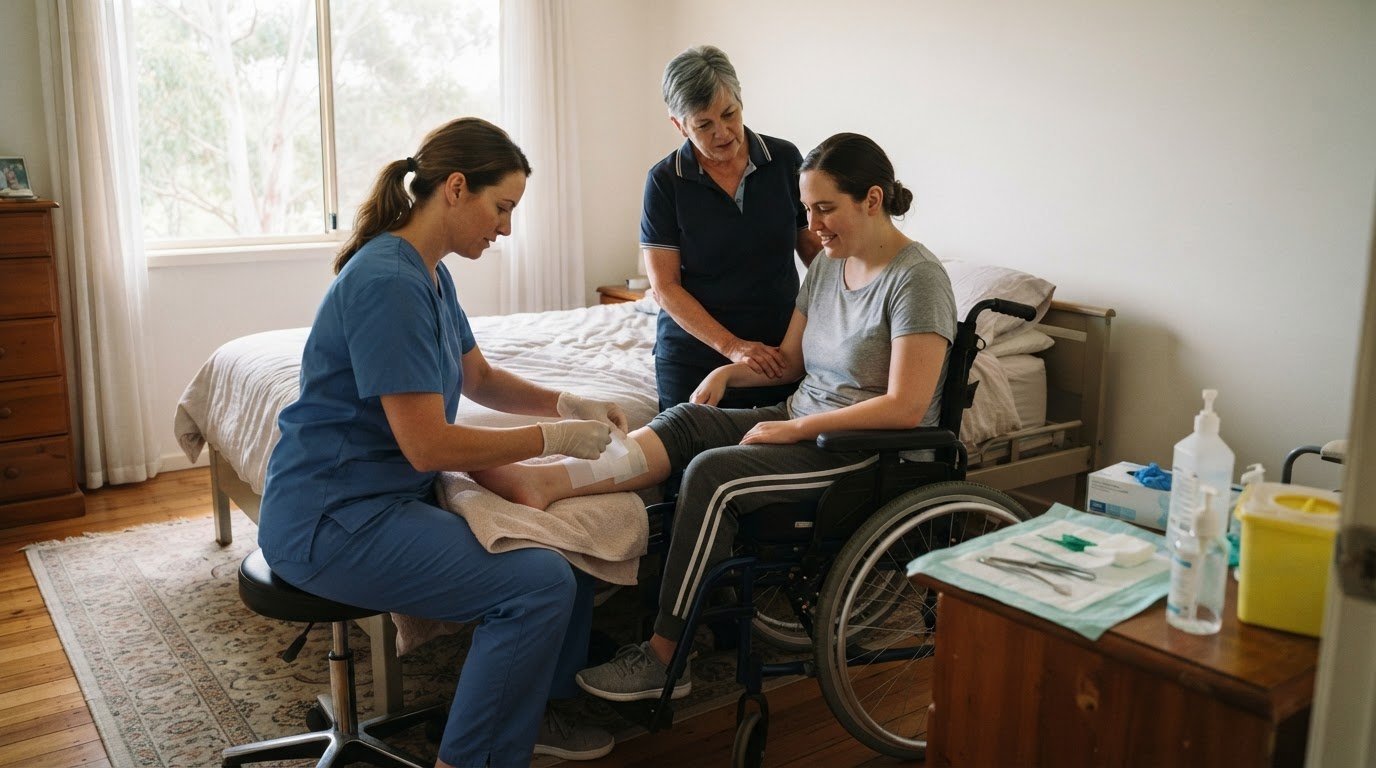
NDIS wound management at home may be funded when the support relates to your disability and is necessary and reasonable. A chronic wound is generally one that has not healed within the expected timeframe, often six weeks or more. A qualified nurse can guide dressing-change frequency based on the wound and dressing.
It’s understandable to want to know how often a nurse will change your dressing, especially when wound care is part of everyday life. The schedule depends on the wound type and stage of healing, rather than a single routine that suits everyone.
This guide explains what may count as a chronic wound, when disability-related wound support may fit NDIS funding, and who may be eligible across Australia. It also explains how wound-care needs are considered alongside the health system’s responsibilities, so you can understand the options and what information may support your request.
Key Takeaways
- Learn how wound type, healing progress and dressing choice shape home-care techniques and dressing schedules.
- Understand how nursing support may fit within an NDIS plan and what information can help describe your support needs.
- Separate disability-related wound support from treatment that belongs to the health system, so you can better understand potential funding eligibility.
- Explore how support coordination or disability advocacy can help you make sense of your options and plan your next steps.
What counts as a chronic wound?
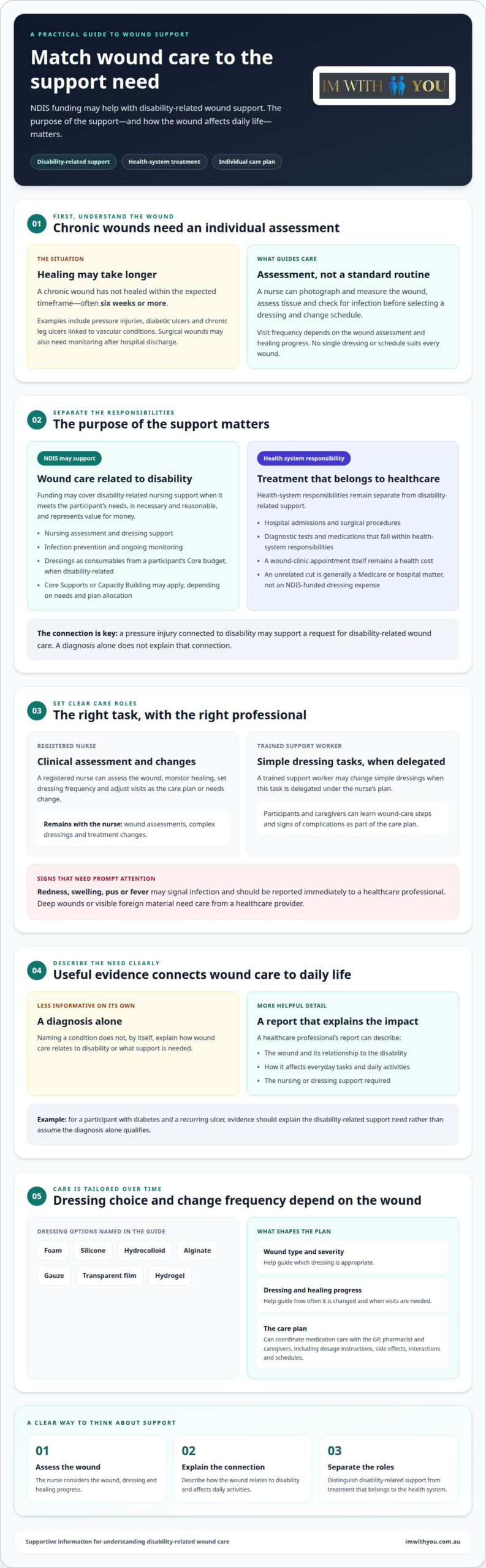
A chronic wound has not healed within the expected timeframe, often six weeks or more. Examples include pressure injuries, diabetic ulcers and chronic leg ulcers linked to vascular conditions. Surgical wounds may also need monitoring after hospital discharge. These wounds can affect comfort and recovery, particularly when dressing care is complex. Because recovery often involves managing broader health needs, clinical AI platforms like MayaMD can help patients track and manage underlying chronic conditions alongside their healthcare providers.
Advanced wound care starts with an assessment, not a one-size-fits-all dressing. A nurse can photograph and measure the wound, assess the tissue, check for infection, then select a dressing and schedule changes. Foam, silicone, hydrocolloid, alginate, gauze, transparent film and hydrogel dressings each serve different needs. The right choice depends on the wound type and severity. Dressings can protect against contaminants, absorb fluid and cushion tender areas.
For disability-related wounds, dressings are usually funded as consumables from a participant’s Core budget. Core Supports and Capacity Building may also cover wound care, depending on the support needed and the plan allocation. Keep track of dressing supplies and discuss nursing needs as part of your plan. No single product or schedule suits every wound. A nurse can coordinate medication care with the GP, pharmacist and caregivers, including dosage instructions, side effects, interactions and schedules.
At home, follow the nurse’s care plan and dressing schedule. A trained support worker may change simple dressings when delegated under the nurse’s plan, while wound assessments, complex dressings and treatment changes remain with the registered nurse. Participants and caregivers can learn wound-care steps and signs of complications. Redness, swelling, pus or fever may signal infection and should be reported immediately to a healthcare professional. Deep wounds or visible foreign material need care from a healthcare provider.
Does the NDIS cover wound management services across Australia?
NDIS funding may cover disability-related nursing support when it meets the participant’s needs. Visit frequency and dressing schedules depend on the wound assessment and healing progress.
Nursing Support Through an NDIS Plan
NDIS nursing support uses a participant’s plan to organise disability-related clinical support. A clear plan connects wound-care needs with daily living goals. Discuss healthcare needs with an NDIS planner or support coordinator, using medical reports to describe how the wound affects you. A registered NDIS nursing provider can develop a care plan based on assessment findings and changing needs as the wound heals.
Home and Community Nursing Services
Home and community nursing brings assessment and wound support into a person’s living environment. A registered nurse can assess wounds, monitor healing and adjust visits as the care plan changes. At the first assessment, the nurse sets dressing frequency based on the wound and dressing. Public wound care services are delivered through state and territory health systems.
Funding for Wound Care Nurses
NDIS funding may cover a community nurse or wound care nurse at home when the support relates to disability. It may cover assessment, dressing support and infection prevention, with nursing visits matched to the person’s needs. This can support people with chronic wounds that need ongoing monitoring. Treatment that falls within the health system’s responsibilities is separate from disability-related support. A tailored care plan helps describe the nursing support needed alongside daily living goals.
NDIS eligibility for disability-related wound support
Eligibility depends on the connection between your wound-care needs and your disability. The NDIS may fund disability-related supports when they are necessary and reasonable and represent value for money. To plan NDIS wound management at home, describe how wound care affects your daily activities and what support would help you manage them. A diagnosis alone does not explain that connection.
Responsibilities can overlap, but the purpose of each support matters. The health system covers hospital admissions, surgical procedures, diagnostic tests and medications that fall within its responsibilities. For example, an unrelated cut is generally a Medicare or hospital matter, not an NDIS-funded dressing expense. A pressure injury connected to disability may support a request for disability-related wound care.
Medical assessments or reports from healthcare professionals can support a plan request. Ask the report to describe the wound, its relationship to your disability, its effect on everyday tasks, and the nursing or dressing support required. For a participant with diabetes and a recurring ulcer, the evidence should explain the disability-related support need rather than assume the diagnosis alone qualifies. These details help make the request clear.
Wound dressings may be funded as consumables from a participant’s Core budget when the wound relates to disability; Capacity Building supports may also apply to wound care. NDIS funding may cover transport or support worker assistance to attend a wound clinic, while the appointment itself remains a health cost. If you’re preparing to request NDIS wound management at home, discuss your NDIS support options.
Im with you: Disability Support Services
Im with you offers Disability Support Services to help you work towards your goals and manage everyday support needs. If wound-related needs make your NDIS plan difficult to navigate, NDIS Support Coordination can help you understand and coordinate disability supports. Disability Advocacy Services can help you express your needs and take part in discussions about your support.
These supports complement, rather than replace, wound treatment from health professionals. They may help when organising your supports feels complicated or you want support to make your voice heard. Im with you can support you as you explore next steps that feel right for your circumstances.
Contact Im with you or visit imwithyou.com.au to discuss support options.
Shape support around the life you want
Managing a wound is only one part of daily life. Your support should leave room for the routines, relationships and activities that matter to you, while giving you space to speak up when your needs change. As you consider NDIS wound management at home, think about what would make everyday care more manageable and how you want to be involved in decisions.
You don’t have to work through those conversations alone. I’m With You can support you as you explore disability supports and consider a next step that fits your goals. Start a conversation at a pace that feels comfortable, and bring the questions that matter most to you.
Contact Im with you to talk about your support options. You can move forward one considered step at a time.
Frequently Asked Questions
How often will the nurse change my dressing?
The dressing schedule depends on the wound, its stage of healing and the dressing product. Some modern dressings can stay in place for several days, while infected or heavily draining wounds may need daily changes. If a dressing leaks, comes loose or causes discomfort, note what happened and tell the nurse. These observations can help the nurse review the schedule as your needs change.
What Does An NDIS Wound Care Nurse Do?
An NDIS wound care nurse assesses and monitors wounds, plans dressing care and shares relevant findings with the participant’s GP. The nurse can also guide participants and caregivers through care tasks. For example, after hospital discharge, a nurse can monitor a surgical wound and share changes with the GP, helping keep the care team informed during recovery.
Can Wound Care Be Done At Home?
Yes, wound care can take place at home for wounds such as cuts, burns, surgical wounds and pressure sores. A nurse can plan care around the person’s home routine and comfort. A support worker may perform simple dressing changes when delegated under the nurse’s plan, while wound assessments and treatment changes remain with the registered nurse.
Does the NDIS pay for the dressings?
The NDIS may fund wound dressings as consumables from a participant’s Core budget when the wound relates to their disability. For example, a participant can discuss dressings for a disability-related pressure injury as part of their support needs. Keep track of the products used and how they relate to wound care, so the details are clear during plan discussions.
What types of wound related supports might be funded?
Disability-related supports may include nursing assessment, dressing assistance and infection prevention at home. A nurse may delegate simple dressing changes to a trained support worker under the nurse’s plan. If a wound clinic visit is needed, NDIS funding may cover disability-related transport or support-worker assistance, while the clinic appointment itself remains a health cost.