

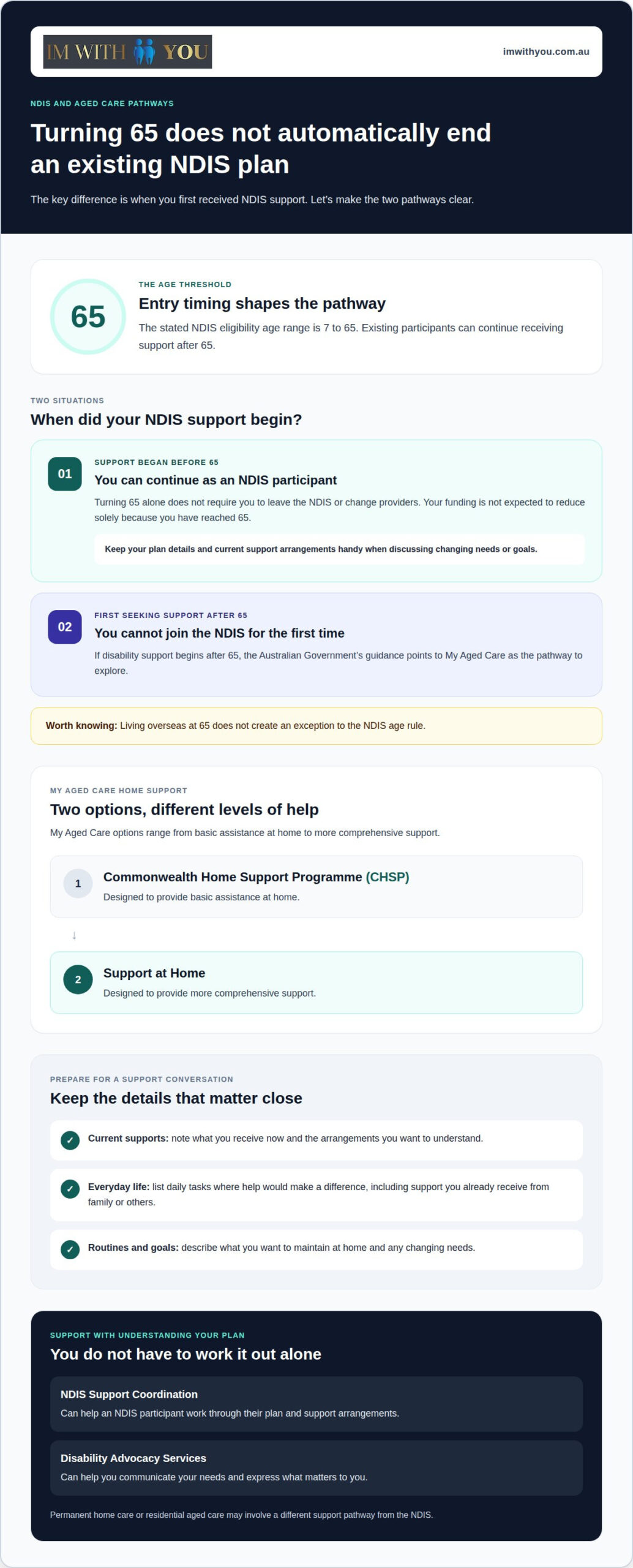
Turning 65 doesn’t automatically end an existing NDIS plan. If you’re wondering what happens to the NDIS when you turn 65, you can continue receiving NDIS support if you became a participant before 65, and you don’t need to change providers or expect your funding to be reduced. However, you can’t become an NDIS participant after turning 65.
It’s understandable to want clear answers when support systems overlap. The pathway depends on when your disability began: according to the Australian Government Department of Health, Disability and Ageing, people who develop a disability after 65 need to access My Aged Care. This article explains how an existing NDIS plan is affected by turning 65, what options apply if disability begins later, and how My Aged Care services differ from NDIS supports, so you can better understand what may fit your circumstances.
Key Takeaways
- Your age when disability support begins shapes which system may be relevant, so identify whether NDIS or My Aged Care is the pathway to explore.
- My Aged Care offers different levels of help, from basic assistance at home through CHSP to more comprehensive support through Support at Home.
- Understand how entering permanent residential aged care or starting permanent home care after 65 can affect NDIS eligibility.
- NDIS Support Coordination and Disability Advocacy Services can help you understand and work through support arrangements connected to your NDIS plan.
What if I acquire a disability after turning 65?
If you already receive NDIS support before turning 65, you can continue as a participant afterwards. A person cannot become an NDIS participant after turning 65, so the key difference is whether support began before that birthday.
Continuing NDIS participation
Continuing participation means keeping NDIS status after 65 when your support began earlier. This matters because turning 65 does not end existing participation. The stated NDIS eligibility age range is from 7 to 65 years, but existing participants can continue beyond 65. Your entry timing is central: receiving support before 65 differs from making a first application after 65. Keep your plan details and current support arrangements handy when discussing your needs and goals.
Ongoing NDIS support
Ongoing support means an existing participant can continue receiving NDIS supports after 65. You don’t need to change providers or expect funding to reduce solely because you’ve reached that age. This can help maintain familiar support arrangements and routines. As your needs or goals change, discuss whether your current supports still fit your everyday life. The important point is that turning 65 alone doesn’t require you to leave the NDIS or replace your provider.
Exceptions to the age limit
The age limit means a person cannot become an NDIS participant after turning 65. Living overseas at 65 does not create an exception to that age rule. The key distinction remains whether NDIS support began before your 65th birthday. If you were already receiving support, you can continue after 65; if you’re seeking to join for the first time after 65, you can’t become an NDIS participant. Keeping these two situations separate can help you understand which support pathway to explore next.
What is the difference between the NDIS and the commonwealth age care system?
In Australia, a person who develops a disability after age 65 needs to access My Aged Care systems, according to the Australian Government Department of Health, Disability and Ageing. The key difference is the pathway: the NDIS supports eligible participants with disability-related needs, while My Aged Care connects older people with aged care services.
Age and timing help clarify which system applies. Someone already receiving NDIS support can continue after turning 65. By contrast, a person who first develops a disability after 65 needs to look to My Aged Care for support. The systems have different entry pathways and service arrangements, so identify when support began and what help is needed in daily life.
My Aged Care services range from basic help at home through the Commonwealth Home Support Programme (CHSP) to more comprehensive support through the Support at Home program. These options provide aged care assistance, rather than continuing an NDIS pathway for someone who first needs support after 65. Residential aged care may involve a different support pathway from the NDIS.
Before your 65th birthday, make a clear record of your current NDIS supports, daily routines, goals and any changing needs. Discuss your plan and future support needs with the people who help you understand your NDIS arrangements. If you may need aged care assistance, learn how My Aged Care’s home support options differ from your current plan. In addition, aligning your broader financial and retirement strategy with planners such as True North Lifestyle can ensure your long-term living arrangements are well supported. This preparation can make the transition easier to discuss and help you explain what matters in your everyday life.
Choosing a pathway starts with your circumstances: whether you already receive NDIS support, when disability support began, and the type of assistance you need. Starting permanent home care may affect which support pathway is available. Understanding that distinction can help you focus on the relevant system and the kind of support it provides.
My Aged Care services
My Aged Care is the Australian aged-care pathway for people seeking support as they get older. Its home support options include the Commonwealth Home Support Programme (CHSP) and Support at Home. Knowing what each program is designed to provide can help you explain the assistance you need.
CHSP provides basic assistance at home, while Support at Home offers more comprehensive support. Consider what you need to manage everyday life: are you looking for a smaller amount of help or more comprehensive assistance? This distinction can guide your questions when exploring My Aged Care.
Before discussing your options, list the specific areas where support would make a difference. This can help you explain your situation and clarify the level of assistance you’re seeking.
- Note daily tasks where you’d value assistance.
- Record what support you already have from family or others.
- Describe the routines and goals you want to maintain at home.
Use your list to explain the practical outcome you want, such as more support with your home routine. My Aged Care and the NDIS are separate pathways, so be clear about your current arrangements and future needs when discussing options. If you’re already an NDIS participant, distinguish the supports you receive now from the assistance you may need through aged care. This can make conversations about next steps more focused.
If you need help making sense of disability-related support alongside aged care, speak with a disability advocate about your options.
Im with you: Disability Support Services
Im with you provides disability-related support through Disability Support Services, NDIS Support Coordination and Disability Advocacy Services. If you’re an NDIS participant and want help understanding your supports as you get older, Support Coordination can help you work through your plan. Advocacy can help you communicate your needs and express what matters to you.
Community Participation Support may also help you stay involved in activities that matter to you. The right support depends on your NDIS plan and goals. Start by identifying what you’d like help with, such as understanding your arrangements or taking part in more community activities.
If you’d like to talk through your disability support options, contact Im with you.
Make your next support conversation count
Knowing what happens to the NDIS when you turn 65 can help you feel more prepared, but your priorities are personal. Take time to consider what helps you feel confident, connected and supported in everyday life. You might note the routines you want to maintain, the activities you value, or the questions you still want answered.
These reflections give your next conversation a clear starting point. You don’t need to have every answer before reaching out. A thoughtful discussion can help you explore support that fits your goals and identify a practical next step.
Im with you is here to listen and walk alongside you as you consider your support needs. Contact Im with you to talk through your options, at a pace that feels right for you. Your goals matter, and you can take the next step with support.
Frequently Asked Questions
What happens to my NDIS plan when you turn 65?
If you were already an NDIS participant before turning 65, your plan doesn’t automatically end on your birthday. Your existing supports can continue, and you don’t need to change providers because of age alone. For example, if your plan supports everyday routines, you can keep using those supports after 65. Keep discussing your goals and changing needs through your usual NDIS planning conversations.
Can you apply for the NDIS if you’re over 65?
No. You can’t become an NDIS participant for the first time after turning 65, even if you have a disability. The key distinction is whether you became a participant before reaching that age. If disability support begins later, explore My Aged Care instead. According to the Australian Government Department of Health, Disability and Ageing, people who develop a disability after 65 need to access My Aged Care systems.
What happens to NDIS funding when a participant turns 65?
Turning 65 alone doesn’t mean an existing participant’s NDIS funding is reduced. You can continue receiving NDIS supports after that birthday, without needing to change providers solely because of age. For instance, if you rely on an approved support to take part in daily activities, reaching 65 by itself doesn’t require you to stop using it. Discuss changing support needs in your NDIS planning conversations.
Can you join the NDIS after turning 65 in Australia?
No. A person cannot become an NDIS participant for the first time after turning 65 in Australia. This applies even when a disability begins after that age. In that situation, My Aged Care is the relevant aged-care pathway to explore. For example, someone seeking help with daily life at home can look into aged-care support options rather than applying to join the NDIS.
Can someone stay on the NDIS after age 65 if they were eligible before turning 65?
Yes, someone who became an NDIS participant and began receiving support before turning 65 can continue receiving NDIS supports afterwards. The important point is existing participation, not simply having met disability criteria earlier. For example, if you had already joined the NDIS before your 65th birthday, you can remain supported after it. Your age alone doesn’t require you to leave the scheme.