

A strong support network brings together several trusted relationships, rather than relying on one person to do everything. Building a support network for my child means connecting them with people who can offer encouragement, friendship, practical help, or professional and community support. The mix can change as your child grows and their needs shift.
It can be hard to know who to involve or how to help your child feel comfortable asking for support. You don’t need to build the whole network at once. Start with people your child already trusts, then consider which connections could help them feel understood, included and more independent. This guide offers practical ways to identify emotional, peer, professional and community support, strengthen relationships over time, and help your child take an active role in asking for help.
Key Takeaways
- Start by noticing who your child already turns to, then talk together about the support they’d like to add.
- Use your child’s interests to create natural chances to meet peers and build connections over time.
- Think beyond family: trusted adults, friends, professionals and community connections can offer different kinds of support.
- When coordinating disability supports or building community participation, Im with you can help you explore support options that fit your child’s needs.
1. How can I build a strong support network?
When building a support network for my child, I start by mapping the people already in their life. Ask, “Who helps you feel safe, understood or ready to try?” Think about relatives, friends, teachers, coaches and other trusted adults. This can highlight dependable connections and areas where your child would like more support.
Use your child’s interests to help them meet peers naturally. An art group may suit a child who loves drawing, while a community sports club could connect a football fan with teammates. Shared activities give children an easy topic for conversation and a reason to meet again. Regular contact can help friendships grow.
In Australia, schools, families, community groups and interest-based activities can all help build connections. Choose an activity that suits your child’s interests and access needs. Prepare together by discussing what to expect, then talk afterwards about what felt enjoyable or challenging. A parent can join at first and gradually step back.
Support emotional connection through small, manageable steps. Suggest a game with a friend or time together after an activity. Let your child decide what personal feelings to share and when. Listening without pressing for details can help them feel respected and build trust over time.
To protect your child’s privacy, explain what information you plan to share, with whom and why. Involve them in deciding what they feel comfortable sharing, and limit details to what the support person needs.
Building a support network for my child also means involving them in choosing trusted adults. List possible people together, such as a teacher, aunt or coach, and ask whom they would approach for different kinds of help. Include your child’s preferences when planning next steps.
2. Emotional, peer, professional, and community support
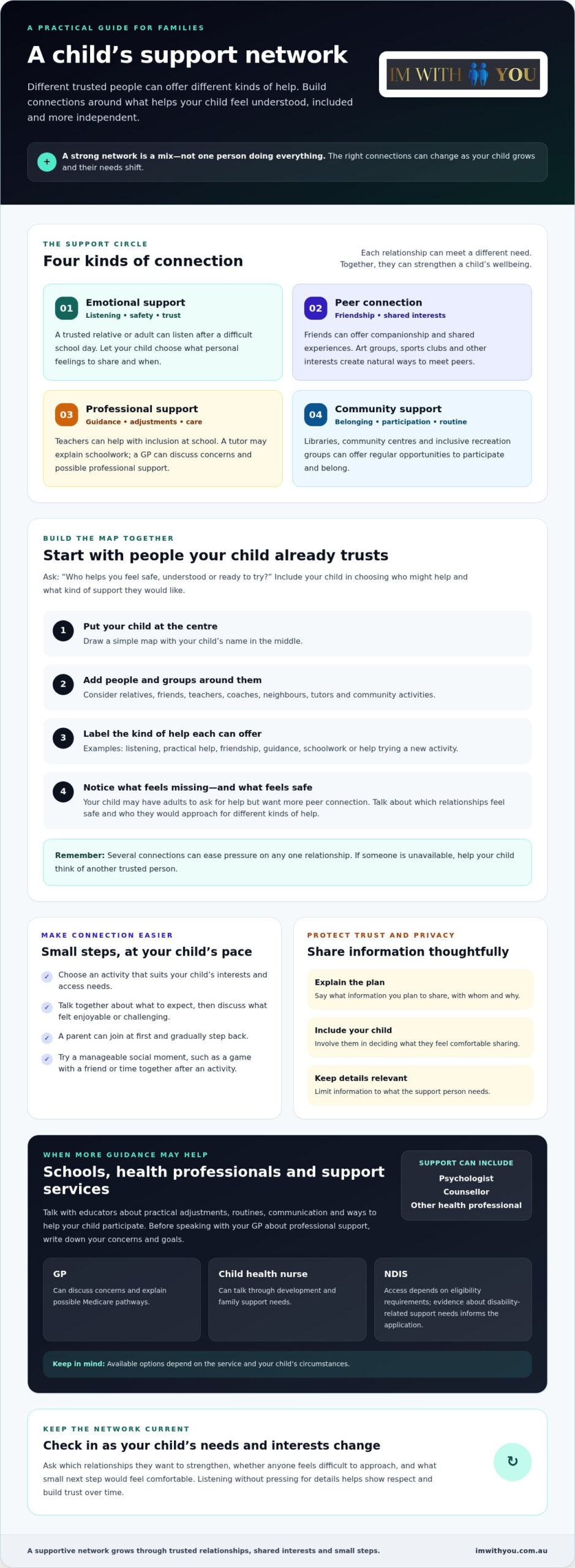
Different relationships can meet different needs. A trusted relative may listen after a difficult school day, while a friend offers companionship. A teacher can help your child feel included at school. Together, emotional, peer, professional and community support can strengthen a child’s wellbeing. Notice what your child finds helpful, especially when anxiety or challenging experiences affect daily life.
Build community at a pace that feels comfortable. Try an activity, such as an accessible sports group or library program, then talk about how it felt. Online communities may also connect families with shared experiences. Explore them together, protect your child’s personal information, and choose spaces with clear moderation and respectful conversations.
Schools and childcare centres can be part of your child’s support circle. Talk with educators about practical adjustments, routines, communication and ways to help your child participate. Before discussing professional support options with your GP, write down your concerns and goals. Ask how a psychologist, counsellor or another health professional might support those needs.
NDIS access depends on meeting its eligibility requirements. Evidence about a child’s disability-related support needs informs the application. A GP can discuss your concerns and explain possible Medicare pathways, while a child health nurse can talk through development and family support needs. Available options depend on the service and your child’s circumstances.
Remember, asking for help is part of the journey, not a failure. If you or your child need support, consider reaching out to a trusted person or an appropriate support service like Pursue Ability. Providing support to peers can also help children feel connected, not only supported.
3. Examples and components of children’s support networks
A useful network includes different relationships, each offering a distinct kind of support. An aunt might listen after a stressful day, while a neighbour helps your child practise a new routine. A tutor can explain schoolwork, and a trusted adult can help your child navigate an unfamiliar activity. These varied sources mean no single relationship has to meet every need.
Family, friends and community services can all support a child. A grandparent may provide a familiar presence, a friend offers shared experiences, and a dance teacher or tutor can encourage skills and confidence. Libraries, community centres and inclusive recreation groups can create regular opportunities to belong. Choose connections your child enjoys, rather than adding groups for their own sake.
Try drawing a simple network map with your child. Put their name in the centre, then add people and groups around it. Beside each one, note the support they offer, such as listening, practical help, friendship or guidance. This makes gaps easier to spot. Your child may have adults to ask for help but want more peer connection.
Review the map together as your child’s needs and interests change. Ask which relationships feel safe, which connections they want to strengthen, and whether anyone feels difficult to approach. If someone is unavailable, help your child think of another trusted person. Building several connections can ease pressure on any one relationship and support mental wellbeing.
For help exploring community connections, find support for your child’s participation.
Im with you: Disability Support Services
Im with you offers Disability Support Services tailored to your child’s needs and goals. If you’re coordinating several supports or finding it difficult to navigate next steps, NDIS Support Coordination can help bring those supports together.
Community Participation Support can help your child connect with activities and take part in community life. Disability Advocacy Services may be relevant when your child needs support to express their views and have their rights recognised. These services can complement the relationships your family, school and community already provide.
You don’t have to work out every next step alone. Contact Im with you to talk about your child’s support needs, or visit imwithyou.com.au.
Take the next step at your family’s pace
As you continue building a support network for your child, let your child’s voice guide what comes next. Choose a small action together, such as talking with a trusted adult, exploring an activity, or identifying what would make a new connection feel easier. Then give your child time to share what worked and what they’d like to change. Their needs and preferences can shift, so treat the network as something you shape together, not a plan that must be perfect from the start.
If you’d value support as you consider your child’s next steps, contact Im with you. You can begin with the questions that matter most to your family and explore a way forward together. Each thoughtful connection can help your child feel heard, included and ready to grow.
Frequently Asked Questions
How can I build a strong support network?
A practical first step in building a support network for your child is agreeing on a simple plan. Choose a phrase your child can use when they need a quiet conversation, and decide which trusted person they can approach. Review the plan together after a difficult day or a change in routine.
What are examples of support networks for children?
A child’s network might include a sibling who enjoys board games, a family friend who can accompany them to a new activity, and a trusted adult who helps them practise speaking up. These relationships offer different kinds of connection. Ask your child which people they enjoy spending time with and what makes those relationships feel supportive.
What is a support system for kids?
A support network is a child’s circle of people who can listen, encourage them or help with everyday challenges. It can include people at home, school and in the community. Your child should know they can ask for help, while still having room to make choices and build confidence in their own abilities.
How can I find local parenting groups and child support services in Australia?
To find groups while building a support network for your child, ask the school, GP or community health centre about parent groups and family programs. A council or library may also share information about community activities. Before attending, contact the group about its focus and accessibility, then discuss with your child whether it feels comfortable.