
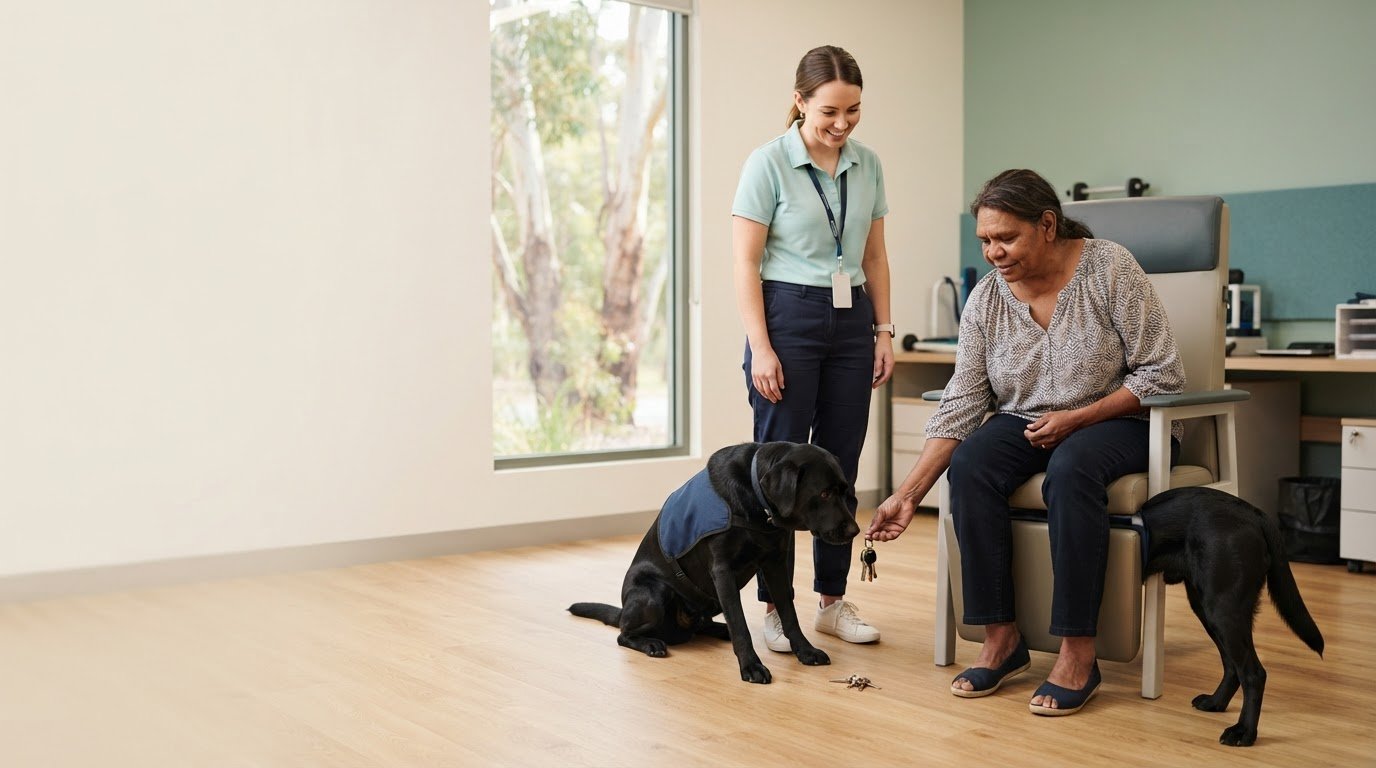
The NDIS generally doesn’t fund a therapy dog kept for comfort or companionship. Whether it can fund a therapy dog depends on the animal’s role: animal-assisted therapy may be funded when an allied health professional delivers it as a reasonable support, while an assistance dog may qualify under strict criteria. What matters is the support the animal provides, not simply the label used.
It makes sense to look for support that helps you feel safer, more connected or more independent. This article explains how the NDIS distinguishes therapy, assistance and emotional support animals, and how its reasonable and necessary criteria shape funding decisions. It also covers what an assistance dog must do to support disability-related needs, so you can understand which pathway may fit your goals.
Key Takeaways
- Identify whether the animal provides task-based assistance, professional therapy or companionship, as its role affects how the NDIS considers support.
- Understand why an assistance dog must relate directly to disability needs and support goals in your NDIS plan.
- See how reasonable and necessary criteria, including evidence and value for money, shape funding decisions.
- Learn what information can help explain the support you need and how it relates to your daily life.
Differences between emotional support, assistance and therapy animals
An animal’s role matters: comfort, trained disability-related tasks and professional therapy are different supports. Understanding the distinction helps clarify what the NDIS may consider.
Roles of Support and Therapy Animals
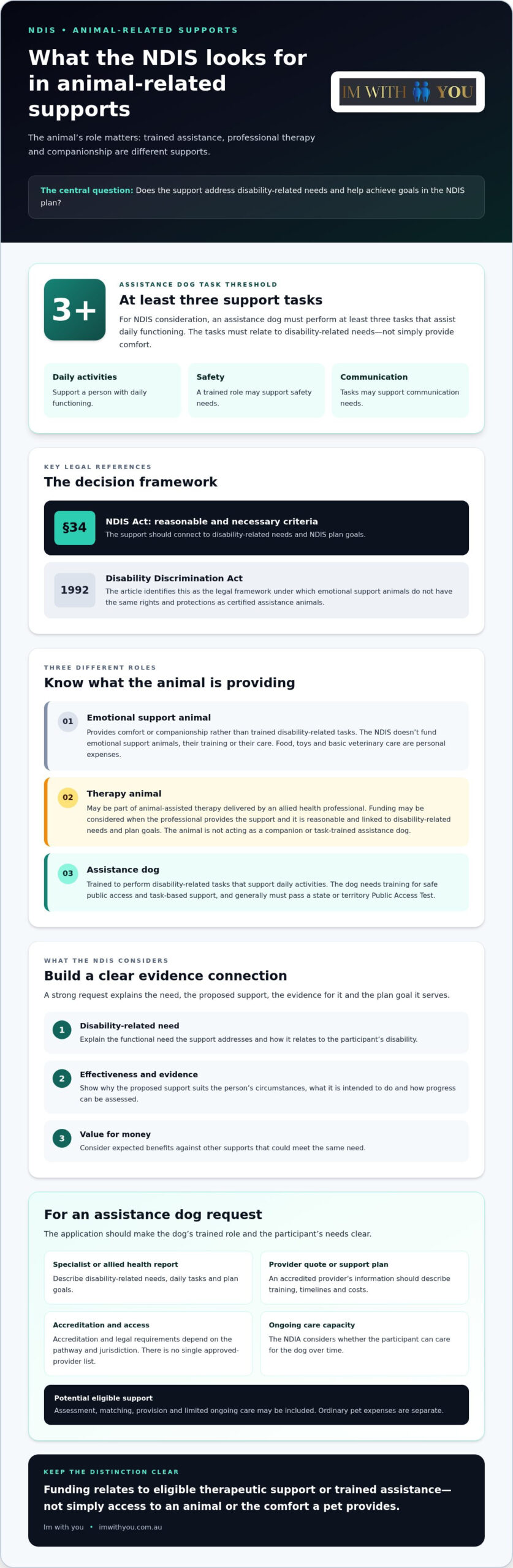
An emotional support animal offers comfort, while a therapy dog usually supports interaction or wellbeing without performing trained tasks for one handler. An assistance dog is trained to complete disability-related tasks, such as helping someone with mobility or neurological needs manage daily activities. The Australian Government identifies the Disability Discrimination Act 1992 as the legal framework under which emotional support animals do not have the same rights and protections as certified assistance animals. For NDIS consideration, the assistance dog must perform at least three support tasks that assist daily functioning.
Allied Health Animal-Assisted Therapy
Animal-assisted therapy is delivered by an allied health professional who uses an animal as part of a therapeutic support. The professional provides the therapy; the animal is not acting as a companion or a task-trained assistance dog. The NDIS may fund animal-assisted therapy when it is delivered by an allied health professional and considered reasonable. Depending on the disability-related goals, alternatives may include eligible assistance-dog support or therapy delivered by an allied health professional.
Assistance Dog Applications and Providers
Support coordination can help organise information about the participant’s disability-related needs, daily tasks and plan goals. In Australia, an assistance animal may be accredited by an animal training organisation prescribed by the Australian Government, and the dog must also meet relevant state or territory requirements. An assistance dog needs training for safe public access and task-based support. There is no single approved-provider list: accreditation and legal requirements depend on the pathway and jurisdiction.
NDIS funding for therapy dogs and therapy animals
NDIS funding depends on whether an animal provides trained assistance or forms part of professional therapy. Emotional support animals and ordinary pet care generally aren’t funded.
Emotional Support Animals and Funding
An emotional support animal provides comfort or companionship rather than performing trained disability-related tasks. The NDIS doesn’t fund emotional support animals, their training or their care. It also generally excludes pets and companion animals, which are unlikely to meet funding criteria. Everyday costs such as food, toys and basic veterinary care remain personal expenses. A pet’s calming effect alone doesn’t make its upkeep an NDIS-funded support.
Funding Criteria for Therapies
Animal-assisted therapy involves an animal in therapy delivered by a qualified allied health professional. Funding may be considered when the professional provides the support and it is reasonable for the participant. Puppy or goat therapy on its own isn’t considered an NDIS support. The distinction is practical: funding relates to eligible therapeutic support, not simply access to an animal. The therapy must relate to the person’s disability-related needs and plan goals.
Approval Rules for Animal Supports
Assistance-animal funding is assessed against the participant’s disability, plan goals and the animal’s trained role. The dog must support daily tasks, safety or communication, and generally pass a state or territory Public Access Test. Applications should include a detailed specialist or allied health report, plus an accredited provider’s quote or support plan describing training, timelines and costs. The NDIA also considers whether the participant can care for the dog over time. Eligible support may include assessment, matching, provision and limited ongoing care, rather than ordinary pet expenses. If organising application evidence feels difficult, support coordination can help bring the relevant information together.
NDIS Act reasonable and necessary support criteria
Section 34 of the NDIS Act sets out the criteria for reasonable and necessary supports. For an animal-related request, the central question is whether the support addresses your disability-related needs and helps achieve goals in your NDIS plan. A strong personal preference alone doesn’t establish that connection.
The NDIS considers how a proposed support relates to your disability, whether it is effective and evidence-based, and whether it represents value for money. Evidence should explain what the support is intended to do, why it suits your needs and how progress can be assessed. For example, a report could link a trained dog’s specific tasks to a participant’s daily activities and plan goals.
- Disability-related: Explain the functional need the support addresses.
- Effective and evidence-based: Show why the proposed support is suitable for your circumstances.
- Value for money: Consider expected benefits against other supports that could meet the same need.
Animal-based therapy isn’t automatically accepted or excluded based on its label. The NDIS considers the therapeutic support itself, who delivers it and the evidence linking it to the participant’s disability-related goals. Alternative or complementary therapies without evidence aren’t funded. Supports that are primarily medical treatment, available through Medicare or the public health system, or not recognised as disability-related support also fall outside NDIS funding.
Make the connection clear: describe the need, the proposed support, its evidence and the goal it serves. If you need help organising that information around your plan, speak with a support coordinator.
Im with you: Disability Support Services
Im with you offers Disability Support Services and NDIS Support Coordination to help you understand your options and connect your plan goals with the supports you need. If you are considering an animal-related request, a support coordinator can help organise relevant information and understand how the request fits alongside other supports in your plan.
Community Participation Support can help you work towards taking part in activities and building connections in your community. Disability Advocacy Services can also help you understand your rights and communicate your needs as you navigate the NDIS. These supports do not change the funding criteria, but they can help you approach the next conversation with clearer priorities.
For support understanding your NDIS options, contact Im with you or visit imwithyou.com.au.
Take your next step with confidence
Start by clarifying what support could make a practical difference in your daily life, then connect that need with your plan goals. If you’re still considering whether the NDIS can fund a therapy dog for you, focus on the support you need and the outcomes you want to work towards. You don’t have to organise every part of that conversation alone.
I’m With You offers Disability Support Services, Community Participation Support and NDIS Support Coordination. These supports can help you consider your priorities, understand your options and plan your next steps. Choose a next step that reflects your circumstances and helps you feel prepared to communicate your needs.
Connect with Im with you to talk through a way forward. Your goals matter, and support is available as you work towards them.
Frequently Asked Questions
What Is an Assistance Dog Under the NDIS?
An NDIS assistance dog is trained to perform disability-related tasks for its handler. For example, a dog might guide a person with vision impairment or assist someone with mobility needs. The tasks should address practical support needs, rather than provide comfort alone. Public access training matters too, so the dog can accompany its handler safely in community settings.
What does NDIS funding cover?
Whether the NDIS can fund a therapy dog depends on the support requested. Funding may cover eligible assistance-dog assessment, matching, provision and handler training, as well as limited maintenance training and specialised veterinary care. Other eligible ongoing costs can include food, grooming and yearly accreditation reviews. General pet expenses, such as toys and pet insurance, aren’t covered as assistance-dog supports.
What is an Assistance Animal?
An assistance animal is a trained working animal that helps a person with disability perform specific tasks. Examples include guide dogs, hearing assistance animals and physical assistance dogs. The animal’s work relates to its handler’s needs, such as responding to hearing-related cues or supporting mobility. This task-based role distinguishes assistance animals from pets and animals present during therapy.
Can I use NDIS funds to train my pet for service?
No. NDIS funding doesn’t cover training a participant’s own pet to become an assistance animal. Funding is considered for assistance-animal supports that meet the participant’s disability-related needs, with an animal supplied or trained by an accredited provider or meeting relevant state or territory requirements. Owning a pet or teaching it some tasks doesn’t, by itself, make it an eligible funded support.
What is a Therapy Animal?
A therapy animal participates in a therapeutic setting, where a qualified allied health professional guides the support. For example, an animal may be included in a structured therapy session focused on a participant’s goals. Whether the NDIS can fund a therapy dog depends on the therapy provided and its eligibility, not simply the animal’s presence. It isn’t automatically funded as a standalone support.