
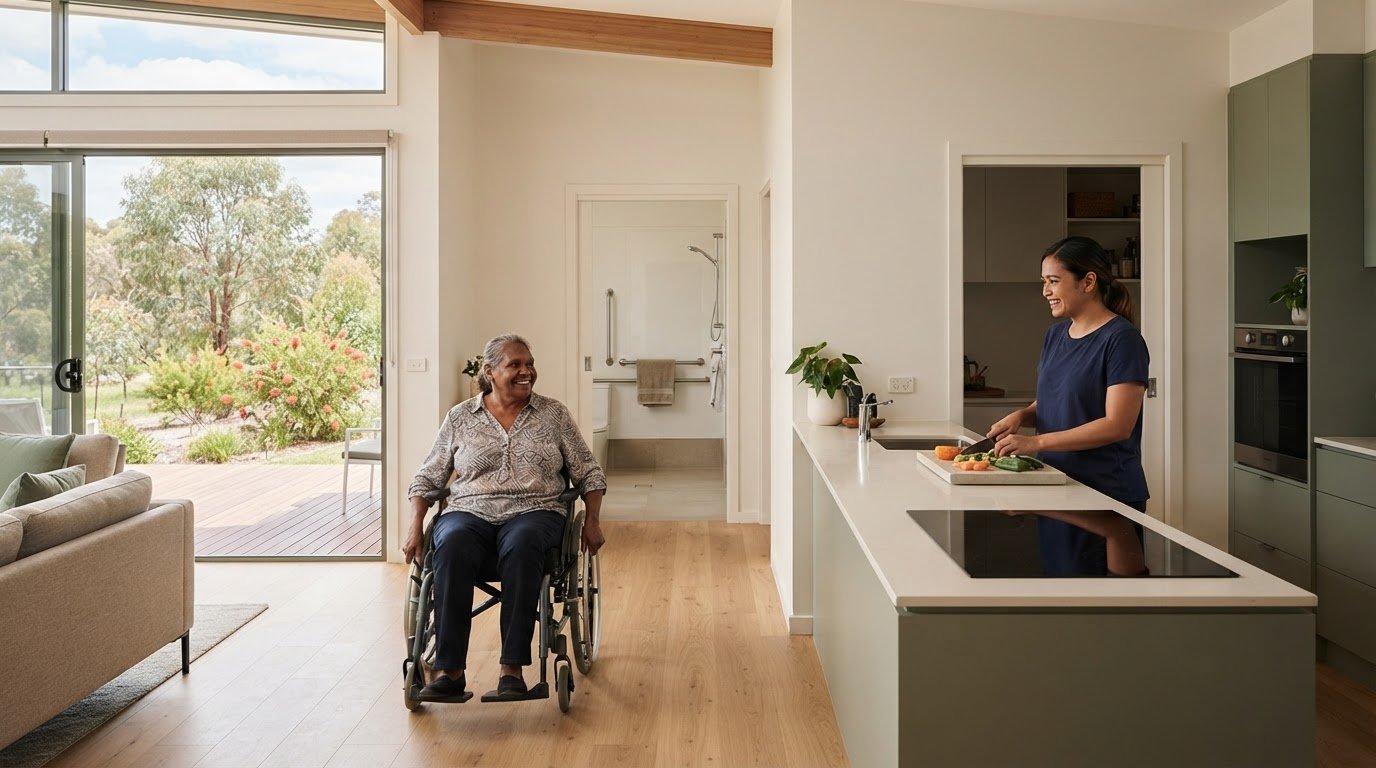
The home and the support are funded separately. If you’re asking what the difference is between SIL and SDA, SIL funds assistance with everyday living, while SDA funds specialised housing for eligible NDIS participants. You may receive either or both, with each funding type recorded separately in your plan if you qualify for both.
It’s understandable that the terms can be confusing: they may relate to the same living arrangement, but they fund different things. Knowing the distinction can help you consider what would support your daily life and independence.
Here, we compare what SIL and SDA cover, how they can work together or separately, and who each may suit. You’ll also find a practical guide to considering your support needs, housing features and living goals.
Key Takeaways
- Separate housing needs from daily support needs when considering which option may fit your goals.
- Think about the home features and level of assistance that would help you live more independently.
- Explore whether you may need one funding type or both, as they can be provided separately.
- Use the decision guide to organise your questions about living arrangements, support and your NDIS plan.
Choosing between SIL and SDA
Start with the support you need at home. SIL funds help with everyday tasks, while SDA funding supports specialised housing. You may need daily assistance without needing a specialised home, or both.
Australia has four SDA design categories: Improved Liveability, Robust, Fully Accessible and High Physical Support. SDA homes can include houses, apartments, villas, duplexes or townhouses. Their design features address different access and support needs.
SIL generally suits participants with higher or more complex support needs who need help each day. Support may include personal care, meals or household tasks, tailored to the person’s goals.
SDA eligibility centres on high support needs and extreme functional impairment. An application requires reports from allied health professionals that provide evidence of those needs.
SIL funding is based on support needs, with assessments and recommendations informing the amount. SDA funding is included in the NDIS plan, while residents still need to account for housing contributions and everyday household expenses.
To apply, gather evidence about daily support needs and functional impairment, including allied health reports for SDA. A support coordinator can help you identify suitable options and prepare for NDIS planning discussions.
| Option | Funding focus | Consider when |
|---|---|---|
| SIL | Everyday support workers | Daily tasks need assistance |
| SDA | Specialist housing | Home design must address significant access needs |
| Both | Housing and support separately | Both needs apply |
Choose by matching your daily assistance needs and home requirements to the purpose of each funding type.
In Australia, the NDIS funds SIL more commonly than SDA because SDA is intended for people who need specialised housing and very high levels of person-to-person support.
Receiving SIL and SDA together or separately
NDIS participants can receive SIL and SDA together when both types of funding suit their assessed needs. If approved, each is recorded separately in the NDIS plan: one funds daily assistance, and the other relates to specialist disability accommodation.
Receiving one doesn’t automatically mean you qualify for the other. A person may live in an SDA home without SIL if they can arrange their day-to-day assistance another way. They could receive individual in-home support, including personal care, instead of a SIL arrangement.
SIL can also be provided without SDA. For example, someone may receive support in a family home or regular rental property that isn’t specialised housing. Not everyone receiving SIL is funded for SDA, which relates to specific accommodation needs, including extreme functional impairment.
Housing and support can involve separate providers. A participant may receive SIL from one organisation while another manages the SDA property. This separation can offer more choice: changing SIL providers doesn’t necessarily mean leaving the home.
To clarify the options, map out two things separately: the assistance you need each day and the features your home needs. Then consider whether a shared SIL arrangement, individual in-home support or another living setup fits your routine and preferences. This can help show how each funding type relates to your circumstances.
A support coordinator can help organise these questions around your NDIS plan and living goals. If you’d like guidance with that planning, explore NDIS plan support.
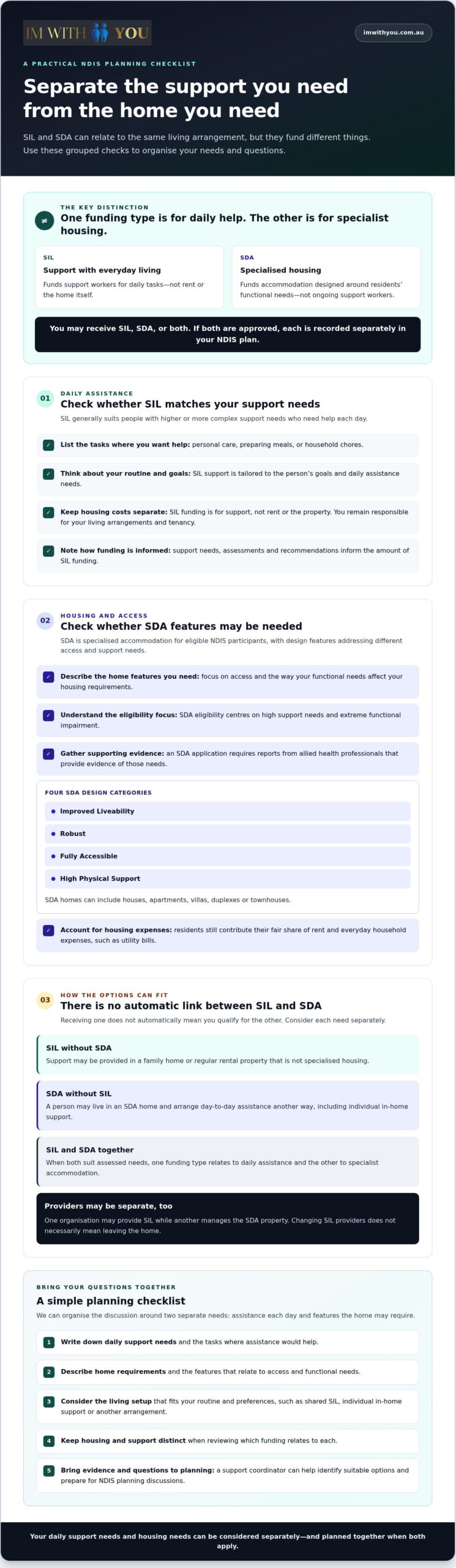
Differences between SIL and SDA
The practical difference is what NDIS funding pays for. Supported Independent Living (SIL) funds support workers to assist with daily living, while Specialist Disability Accommodation (SDA) funding relates to the physical home.
SIL funding can cover help with personal care, preparing meals and household chores. It doesn’t pay for your rent or the home itself. SIL participants remain responsible for their living arrangements and tenancy, whether they live in a rental or another home.
SDA funding supports specialised accommodation designed around residents’ functional needs. The SDA provider manages the physical property, while a SIL provider arranges support staffing, training, planning and service delivery. These roles may be handled by separate providers.
SDA funding is separate from ongoing disability support funding, and the SDA payment goes to the SDA provider. Residents still contribute their fair share of rent and everyday household expenses, such as utility bills. People receiving SDA are tenants with protections under tenancy laws.
- SIL: support with daily tasks, not rent or the property.
- SDA: specialised housing, not ongoing support workers.
For example, a participant may receive SIL in a regular rental home, while someone eligible for SDA may need housing features suited to their impairment. If both apply, the plan separates housing funding from daily assistance. This distinction helps clarify which costs relate to accommodation and which relate to support.
Review your plan by listing housing costs separately from support tasks, then identify which funding relates to each. Get guidance with your NDIS options as you work through those responsibilities.
Im with you: Disability Support Services
Im with you offers NDIS Support Coordination to help you understand your plan, organise funded supports and connect your choices with everyday goals. If you’re weighing up living arrangements or coordinating several supports, a coordinator can help you map out practical next steps.
Disability Support Services and Community Participation Support can help you work towards daily routines, build skills and take part in your community. Disability Advocacy Services can support you to express your preferences and have your voice heard during NDIS-related discussions.
You don’t need to have every decision settled before seeking support. We can walk alongside you as you clarify what matters and consider your options. Contact Im with you to discuss support that may suit your goals.
Take your next step with confidence
Your preferences can guide the next conversation. Before planning, note what a good day at home looks like for you, which routines you want to manage yourself and where you’d welcome support. Write down questions as they arise, then bring them to a discussion with the people supporting your planning.
If you’d like help turning those priorities into practical next steps, Im with you offers NDIS Support Coordination. Together, you can work through your questions and keep your goals in view as you consider your options.
Take the process one step at a time. Your voice belongs at the centre of decisions about your life and home.
Frequently Asked Questions
What is the Difference Between SIL and SDA?
The distinction is whether you need to plan support arrangements or the home itself. To clarify your priorities, write down what you want your living routine to look like, which choices matter to you and what questions you’d like answered. Bringing these points to a planning conversation can help keep the discussion focused on your preferences and independence.
What is Supported Independent Living (SIL)?
Supported Independent Living (SIL) is an NDIS support arrangement for assistance with living at home. Before discussing it, note the parts of your routine where you’d value help, alongside tasks you’d like to practise doing more independently. This can help you describe the balance of assistance and skill-building that feels right for you.
What do SIL and SDA stand for?
SIL stands for Supported Independent Living, and SDA stands for Specialist Disability Accommodation. In forms or conversations, write the full term before using its abbreviation. This can make your notes easier to follow, especially when collecting questions or discussing recommendations with family, a support person or someone helping you understand your NDIS plan.
Can I have both SIL and SDA?
Yes, an NDIS participant may receive both if eligible for each. As you plan, record who you’ll contact about different parts of your living arrangement, such as tenancy questions and changes to support schedules. Keeping those roles clear can help you raise an issue with the right person and distinguish housing matters from day-to-day assistance.
Can You Receive Funding for SIL and SDA?
Yes, an NDIS plan can include funding for both if the participant qualifies for each. After reviewing your plan, compare the listed supports with the arrangements you expect to use. Note any questions about how those supports connect with your goals, then bring them to a planning conversation to discuss the details clearly.