

What if the most exhausting part of living with Tourette Syndrome isn’t the tics themselves, but the constant uncertainty of whether you’re entitled to help? You may have spent years wondering, “is tourettes a disability,” while simultaneously managing social anxiety or navigating complex systems that don’t seem to fit your experience. I’m with you, and I want you to know that your challenges are seen and valid. Whether you’re a parent of one of the 1 in 100 Australian children affected or an adult among the 50,000 Australians living with this condition, you don’t have to carry the weight of advocacy alone.
This article provides a gentle, practical guide to understanding how Tourette Syndrome is recognized under the NDIS and the Disability Discrimination Act 1992. You’ll discover how to shift the focus from a diagnosis to the functional impact on your daily life, which is the key to securing meaningful funding. We’ll also explore empowering strategies for managing tics at school or work, ensuring you have a clear path toward independence and dignity. By the end of this guide, you’ll have the tools to navigate the NDIS application process with confidence and a sense of partnership.
Key Takeaways
- Understand how the Disability Discrimination Act 1992 protects you and why the answer to “is tourettes a disability” depends on how it impacts your daily life.
- Discover practical ways to create tic-friendly environments at home and work to help manage stress and support your well-being.
- Learn how to navigate the NDIS application process by focusing on your functional needs rather than just a medical diagnosis.
- Find out how support coordination and advocacy services can help you secure the right funding, and remember that I’m with you in every step.
Defining Tourette Syndrome as a Disability Under Australian Law
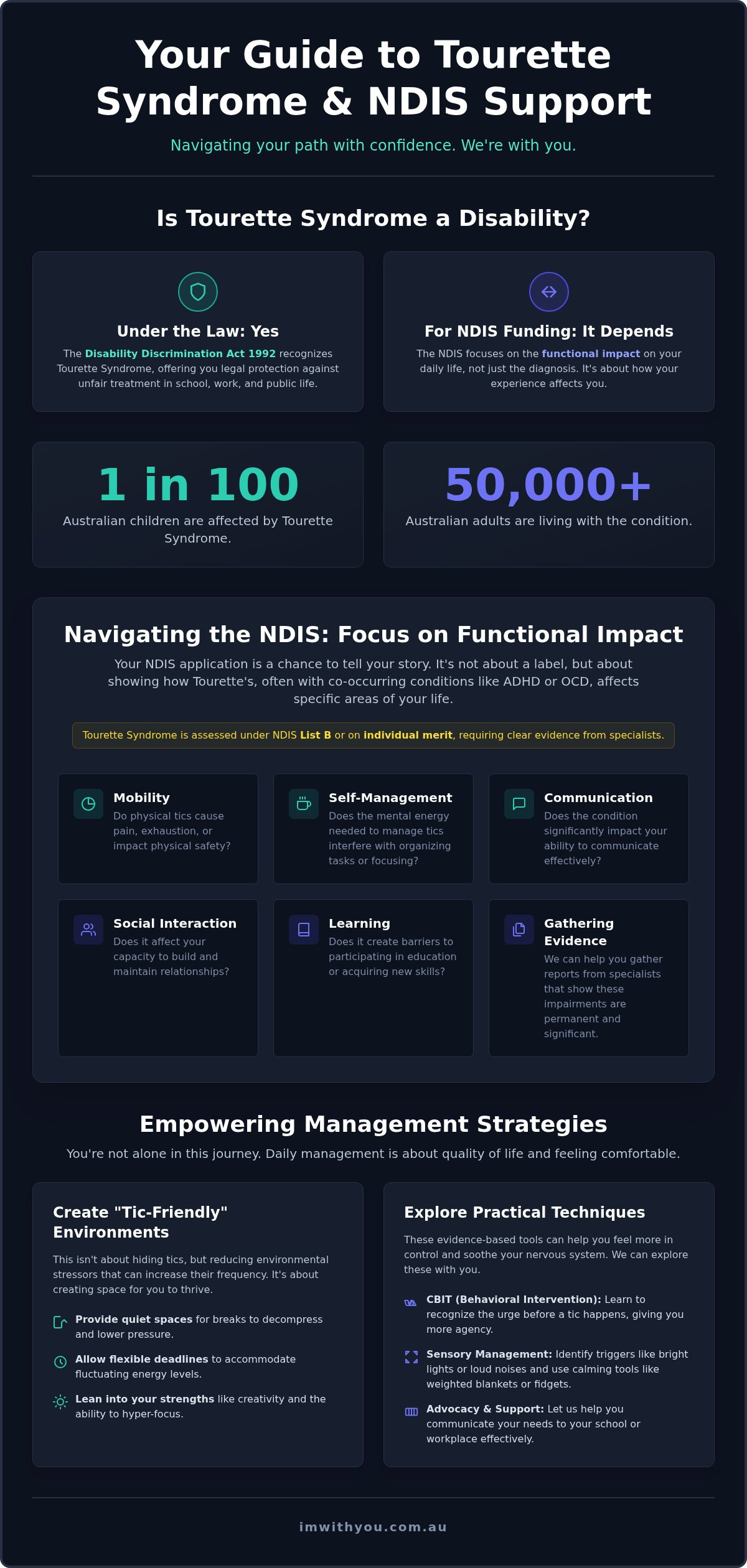
Understanding the legal landscape is often the first step toward feeling empowered. In our local context, Tourette Syndrome is recognized as a disability under the Disability Discrimination Act 1992. This means you’re legally protected from unfair treatment in schools, workplaces, and public spaces. However, when you ask, “is tourettes a disability” in relation to the NDIS, the focus moves away from a clinical label toward your lived experience. Tourette Syndrome meets disability criteria when it significantly impacts your ability to communicate, interact socially, or engage in learning. I’m with you in this process of identifying these impacts, as they’re the key to unlocking the support you deserve. Embracing Person-First Language: A Compassionate Guide to Respectful Communication is a vital part of this journey. It reminds us that you’re a person who has a condition, rather than being defined by it.
The Role of Functional Impact
The NDIS doesn’t just look at the presence of tics; it looks at how they affect your life. For many, the challenge isn’t just a physical movement, but the cumulative disabling effect when paired with co-occurring conditions like ADHD or OCD. When we document your needs, we look at specific domains where you might need a helping hand:
- Mobility: Do physical tics cause pain or exhaustion that limits your movement or physical safety?
- Self-management: Does the mental energy required to manage tics interfere with your ability to organize daily tasks or focus at school?
I’ll help you gather the evidence that shows these functional impairments are permanent and significant, ensuring your application reflects the true reality of your day.
Tourettes and the NDIS: Is it a “List A” Condition?
Tourette Syndrome isn’t currently on “List A” for automatic NDIS eligibility. Instead, it’s typically assessed under List B or on individual merit. This means you need to provide clear evidence from specialists like neurologists or psychologists. While this might feel like an extra hurdle, I see it as a chance to tell your story fully. It’s a way to ensure the funding you receive is tailored to your unique goals for independence and social inclusion. When we tackle the question “is tourettes a disability” through this lens, we focus on the solutions and supports that will help you thrive.
Empowering Management Strategies: You’re Not Alone in This Journey
Managing the daily reality of tics is a collaborative effort, and I’m with you as you explore what works best for your unique situation. While the legal question of is tourettes a disability is important for funding, your daily management is about quality of life and feeling comfortable in your own skin. Creating a “tic-friendly” environment at home or work is a wonderful place to start. This doesn’t mean you have to hide your tics. Instead, it involves reducing the environmental stressors that often make tics more frequent. Simple adjustments, like providing a quiet space for breaks or allowing for flexible task deadlines, can significantly lower the pressure you feel.
I also encourage you to lean into your strengths. Many individuals I support possess remarkable creativity and an incredible ability to hyper-focus on complex projects. When you explain your tics to others with confidence and dignity, you aren’t just sharing information; you’re teaching them how to be a better ally. If you’re feeling overwhelmed by how to start these conversations, our disability advocacy services can help you communicate your needs to your school or workplace effectively.
Practical Daily Management Techniques
There are several evidence-based tools that can help you feel more in control. Many people find success with Comprehensive Behavioral Intervention for Tics (CBIT), which teaches you how to recognize the urge before a tic happens. You can find more Facts about Tourette Syndrome regarding these therapies through health resources. Sensory management is another powerful tool. Identifying triggers like bright lights or loud noises and using calming sensory inputs, such as weighted blankets or fidget tools, can help soothe your nervous system.
Support for Families and Carers
The emotional toll on a family unit is real, and it’s okay to admit when things feel heavy. Sharing the load of care and management is what I’m here for. If your loved one also manages other challenges, you might find our guide on Understanding Intellectual Disability: A Gentle Guide for Families helpful for navigating co-occurring conditions. When you ask “is tourettes a disability,” remember that the answer is a gateway to the partnership and support your whole family deserves.
Accessing NDIS Support and Advocacy for Tourette Syndrome
Securing the help you need shouldn’t feel like a battle. While we’ve already explored the legal framework of whether is tourettes a disability, the practical reality is that you need a plan that truly reflects your life. Tourette syndrome is a neurological disorder that can present unique challenges, but it also comes with unique strengths. I’m with you to help translate your personal goals into a funded NDIS plan through professional support coordination. We’ll work together to ensure your voice is heard, whether that’s in a school meeting or a workplace review. My goal is to make sure you have the resources to not just manage, but to thrive in your community.
As you or your child transition into different stages of life, finding joy and social connection becomes even more vital. Engaging in leisure activities is a wonderful way to build confidence and find a sense of belonging outside of a clinical setting. Community participation support can help you explore these interests, ensuring that the question of is tourettes a disability never limits your potential for happiness and friendship.
Steps to Securing Your NDIS Funding
- Step 1: Gathering evidence. We’ll help you collect reports from neurologists and allied health professionals that clearly show how tics impact your daily activities.
- Step 2: Defining your goals. What does a better life look like for you? We’ll identify the specific supports, like capacity building skills, that will help you get there.
- Step 3: Finding the right partner. It’s essential to choose a provider who understands your journey and respects your agency.
Why Award-Winning Support Matters
Choosing who walks alongside you is a big decision. I’m proud to share that Im with you received the 2026 award for excellence, which reflects our commitment to high quality advocacy and person-centered care. This recognition is your guarantee that we’ll provide the steady, expert guidance you deserve. If you’re ready to take the next step, please read our guide on how to choose an NDIS provider to find a partner who aligns with your values.
Finding Your Path to Confidence and Connection
You’ve seen how the question of is tourettes a disability is answered through the lens of your daily life and the functional impact of your condition. We’ve explored the importance of documenting your needs to unlock NDIS funding and the power of creating tic-friendly environments. These steps aren’t just administrative tasks. They’re the building blocks for a life where you feel understood and empowered. I’m with you as you navigate these systems, ensuring your voice remains at the heart of every decision.
As national advocacy specialists with a compassionate, person-centered approach, we’re dedicated to your growth. Our 2026 Award for Excellence in Disability Care is a testament to the quality of support we provide to every individual we walk alongside. Let us walk alongside you; explore our NDIS Support Services today. Your journey is unique, and your potential is limitless. With the right support and a steady companion by your side, you can handle any challenge that comes your way.
Frequently Asked Questions
Can I get NDIS funding specifically for Tourette Syndrome?
You can definitely receive NDIS funding for Tourette Syndrome if the condition significantly impacts your ability to perform daily tasks. While it isn’t on the automatic access list, I’m with you to help gather evidence that shows how your tics affect your independence. We’ll focus on how your symptoms create barriers in areas like social interaction or self-management. This evidence helps the NDIS understand why specific supports are necessary for your unique journey.
Is Tourettes considered a permanent disability in Australia?
Yes, Tourette Syndrome is recognized as a neurological disability under Australian law. When asking “is tourettes a disability” for NDIS purposes, the agency requires proof that the impairment is likely to be permanent and has a significant impact on your life. I’ll walk alongside you to document your history of symptoms and treatments. This helps establish that your need for support is ongoing and essential for your long-term well-being and community participation.
How do I prove the functional impact of my tics to the NDIS?
Proving functional impact involves collecting detailed reports from your treating specialists, such as neurologists or occupational therapists. These documents should describe how tics interfere with specific life domains like communication or learning. I suggest keeping a diary of how tics affect your daily routine to provide concrete examples. This practical evidence shows the NDIS exactly where you need assistance to build your capacity and reach your personal goals.
What kind of support services can an NDIS provider offer for Tourettes?
A dedicated provider can offer a range of services tailored to your needs, including NDIS Support Coordination and Disability Advocacy Services. We can help you access therapeutic supports or develop capacity building skills to manage daily challenges more effectively. Additionally, community participation support helps you engage in social and leisure activities with confidence. I’m with you to ensure your plan includes the specific services that will help you live a fulfilling life.