

Imagine waking up to a ringing phone and a stack of NDIS paperwork that feels like a full-time job you never applied for. It’s incredibly draining when you feel more like a clinical project manager than a person with your own dreams; especially when complex care coordination ndis feels like another weight on your shoulders. I know the stress that comes from juggling multiple health services and the constant fear that something vital will slip through a communication gap. You shouldn’t have to feel like a case number in a cold, administrative system.
I’m with you in this challenge, and I want to show you how the right support can transform that heavy administrative mountain into a clear, supportive journey toward wellbeing. Finding a specialist guide isn’t about adding more clinical layers; it’s about building a circle of care that truly sees you and respects your dignity. In this guide, we’ll explore how to streamline your providers and reduce your daily stress using the latest 2025-26 NDIS frameworks. We’ll look at practical ways to ensure your support team works in harmony, allowing you to focus on living your life while we walk alongside you as your steady companion.
Key Takeaways
- Learn how specialized support synchronization ensures that every part of your health and social care works in perfect harmony.
- Discover how complex care coordination ndis transforms a confusing plan into a clear, manageable path that places your wellbeing at the center.
- Gain practical strategies for building a collaborative care team that communicates effectively to keep your supports on track.
- Find out why choosing an empathetic partner is vital for creating a supportive environment where you feel truly heard and seen.
- Understand the role of integrated living supports in fostering long-term independence and a sense of belonging within your community.
What is Complex Care Coordination in the NDIS?
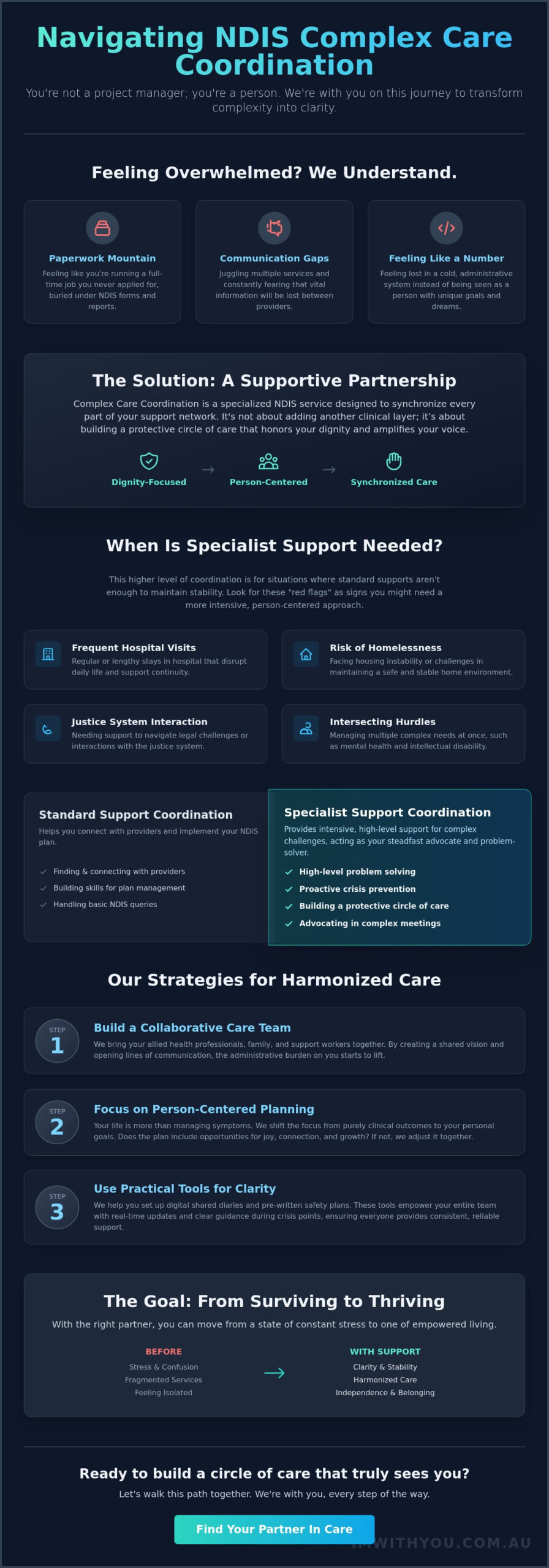
When life presents you with multi-layered challenges, a standard support plan can sometimes feel like it’s missing the bigger picture. I’m with you in those moments when you feel overwhelmed by the sheer volume of health, social, and disability services that need to talk to each other. This is where complex care coordination ndis becomes a vital lifeline. It’s a specialized level of support designed specifically for participants who face intersecting hurdles, such as mental health concerns, housing instability, or frequent transitions between care settings. This isn’t just about ticking boxes; it’s about synchronizing every part of your life so you never feel left behind by the system.
At its heart, this service is a commitment to your dignity and agency. Within the framework of the National Disability Insurance Scheme (NDIS), the “Complex Support Needs Pathway” exists to provide a more intensive, person-centered approach. We focus on ensuring your voice remains the loudest in every meeting and every decision. By acting as your steady companion and advocate, we help translate the clinical language of the system into a clear, actionable plan that focuses on your strengths and personal goals.
To better understand how a support coordinator helps you manage these moving parts, watch this helpful video:
When do you need specialist support coordination?
You might wonder if your situation requires this higher level of care. There are often “red flags” that signal a need for specialized intervention, such as frequent hospital visits, risk of homelessness, or interactions with the justice system. For families navigating an intellectual disability, the need for a nuanced, coordinated approach is often much higher. Standard support coordination handles the basics, but the specialized advocacy we provide through complex care coordination ndis focuses on high-level problem solving and crisis prevention. We don’t just find providers; we build a protective circle around you to ensure your support remains stable and reliable, no matter what challenges arise.
Effective Strategies for Managing Complex Support Needs
Managing high-support needs often feels like conducting an orchestra where every player is in a different room. I’m with you in the daily effort of bringing these voices together to create harmony. To achieve a sense of calm, we need to build a collaborative care team. This group includes your allied health professionals, family members, and dedicated support workers. When these people talk to each other regularly, the administrative burden on you starts to lift. It’s about creating a shared vision for your life.
Effective complex care coordination ndis relies on clear communication protocols. This means setting expectations so every provider knows the overarching goal. We move away from purely clinical outcomes and focus on person-centered planning. Does the plan include opportunities for joy and social connection? If it doesn’t, we adjust it. Your life is about more than just managing symptoms; it’s about thriving. We review your plan regularly to adapt to any changes in your health or living situation, ensuring your supports stay as flexible as you are.
Navigating the Complex Support Needs Pathway
The NDIA identifies participants for specialized planning based on the intensity of their requirements. This transition usually happens when standard supports aren’t enough to maintain stability. Having an experienced advocate during these planning meetings is essential. We help you articulate your needs clearly to secure the funding levels required for comprehensive care. If you feel overwhelmed by the planning process, our support coordination team can walk alongside you to ensure your voice is heard.
Practical tools for daily coordination
Staying organized doesn’t have to be a struggle. Digital shared diaries and care logs allow your entire team to see real-time updates without constant phone calls. These tools ensure that vital details, such as the six rights of medication administration, are always followed correctly. We also recommend creating a pre-written safety and support plan. This document acts as a guide during crisis points; it ensures everyone knows exactly how to provide comfort and stability when things get difficult. These practical steps empower you to handle challenges with confidence and clarity.
Moving Forward: Finding a Partner in Your Care Journey
Choosing a provider is about more than just checking a list of technical qualifications. While industry expertise ensures the paperwork is correct and the funding is secure, empathy ensures you feel safe and respected throughout the entire process. I’m with you in the belief that your care journey should be defined by partnership, not just transactions. When you look for complex care coordination ndis, you’re looking for a guide who understands your history and values your future. Technical knowledge is the foundation, but a gentle, human touch is what truly transforms a plan into a life well-lived.
A comprehensive strategy often includes looking at your home environment. This is where supported independent living ndis plays a vital role. By integrating specialized living arrangements with high-level coordination, we create a stable base for your independence. Working with a national provider offers the added benefit of consistency and a broad network of specialist resources. It means that no matter where you are, you have access to a wealth of knowledge and a team dedicated to your social inclusion and personal growth.
The transition from feeling overwhelmed to feeling empowered happens when you have the right management tools and a steady companion by your side. You don’t have to carry the administrative weight alone. Through active, gentle management, we turn complex challenges into manageable steps. This shift allows you to move away from the stress of coordinating services and toward the joy of connecting with your community and pursuing your passions.
The ‘Im with you’ difference in coordination
Our commitment is simple: we walk alongside you. You’ll never have to navigate the NDIS maze without a trusted advocate. We’re incredibly proud that our dedication to high-standard, person-first advocacy was recognized with a 2026 award for excellence in the disability sector. This honor reflects our promise to treat every individual with the dignity they deserve. If you’re ready to move toward a clearer, more supportive path, I invite you to reach out for a gentle conversation about your unique needs. We’re here to listen, to understand, and to help you thrive.
Embracing a Path of Clarity and Support
Navigating high-support needs doesn’t have to be a journey you take alone. We’ve explored how a synchronized care team and person-centered planning can turn a confusing system into a clear roadmap for your life. By focusing on joy and independence rather than just clinical management, you can reclaim your energy for the things that truly matter. I’m with you in every step of this transition. My goal is to ensure that your voice remains at the heart of every decision made about your future.
Our national specialist advocacy network is built on the foundation of our 2026 Award for Excellence in Disability Care, reflecting a deep commitment to high-standard support. Effective complex care coordination ndis is about more than just managing services; it’s about building a partnership that values your dignity and personal growth. We use our expertise to handle the administrative weight so you don’t have to. We’re here to walk this path with you; let’s discuss your complex care needs today. You’ve the strength to move forward, and we’re honored to be your steady companion along the way.
Frequently Asked Questions
What is the difference between Support Coordination and Specialist Support Coordination?
Specialist Support Coordination is a higher level of assistance for participants whose situations are more volatile or involve high risks. While standard coordination helps you find and connect with providers, the specialist level focuses on reducing barriers in complex environments. This often involves managing multiple service systems, such as health or justice, to ensure your care remains consistent. I’m with you to help navigate these technical layers so your support never falls through.
Can the NDIS Complex Support Needs Pathway help with housing or justice issues?
The Complex Support Needs Pathway is specifically built to assist people facing multi-layered challenges like housing instability or justice system issues. This pathway connects you with a specialized NDIA team that understands how to bridge the gap between disability supports and other government services. It’s about ensuring you have a coordinated circle of care that addresses every part of your life. We work alongside you to make sure these services talk to each other effectively.
How do I request a change to my NDIS plan if my needs have become more complex?
You can request a change to your plan by notifying the NDIA of a change of circumstances if your life situation becomes more difficult to manage. It’s vital to include supporting letters from your health team that explain why complex care coordination ndis is essential for your safety and independence. We can guide you through this process, helping you collect the right evidence so the NDIA understands the level of professional advocacy you truly need to thrive.
Who pays for complex care coordination in an NDIS plan?
Your NDIS plan funds this support through the Capacity Building budget category, so there’s no out of pocket cost to you. When the NDIA recognizes that your needs require a higher level of management, they allocate specific funding for Specialist Support Coordination. This allows you to partner with an expert who can handle the administrative stress of your care. It’s a core promise of the scheme to ensure you have the right help to manage complex requirements.