

What if the most overwhelming part of your recovery isn’t the treatment itself, but the moment the doctor says you’re ready to go home? It’s a heavy realization, especially when you’re trying to figure out how post-hospital disability support ndis actually works while still in a hospital ward. You might feel caught between the hospital’s discharge date and the NDIS’s complex rules; it’s natural to worry you’ll be left without the care you need to manage your daily life safely.
I’m with you in this transition. You don’t have to face the stress of coordinating therapists or support workers alone. This guide provides a clear roadmap to help you bridge the gap between clinical care and home life with total confidence. We’ll look at how to distinguish between health system and NDIS responsibilities, manage your new daily challenges, and build a support team that truly values your independence and dignity during your recovery.
Key Takeaways
- Understand where hospital care ends and your NDIS journey begins so you can transition home with a clear sense of security.
- Discover a practical timeline starting 72 hours before discharge to ensure your support team is ready when you arrive home.
- Learn how to access post-hospital disability support ndis to bridge the gap between clinical treatment and living independently.
- I’m with you in building a collaborative strategy that turns your discharge plan into a reliable roadmap for long-term growth.
- Explore how to monitor and adjust your NDIS plan as you gain strength, moving beyond recovery to truly thriving in your community.
What is Post-Hospital Disability Support within the NDIS?
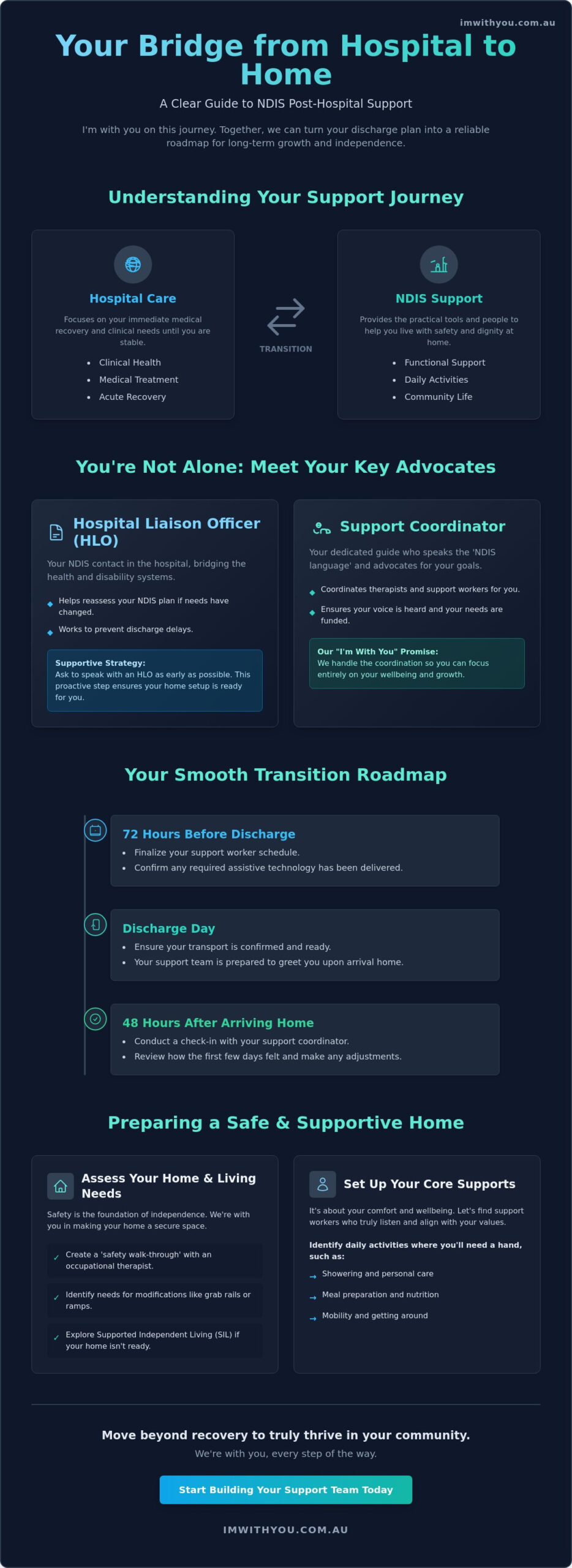
Leaving the hospital feels like a massive milestone, yet it often comes with a flood of questions about how you’ll manage at home. Think of post-hospital disability support ndis as a gentle bridge. It connects the acute clinical care you receive in a ward to the long-term, vibrant life you’ll lead back in your community. While the hospital focuses on your immediate medical recovery, the National Disability Insurance Scheme (NDIS) steps in to ensure you have the practical tools and people by your side to live with safety and dignity.
To better understand how these systems work together, watch this helpful video:
The Vital Role of Hospital Liaison Officers (HLOs)
Your primary NDIS contact while you’re still in the ward is the Hospital Liaison Officer, or HLO. They are instrumental in securing post-hospital disability support ndis that fits your new circumstances. These specialists understand both the health and disability systems. They help trigger a plan reassessment if your support needs changed during your stay. I recommend asking to speak with an HLO as early as possible. This proactive step helps avoid discharge delays and ensures your home setup is ready before you leave the hospital doors.
Support Coordination: Your Guide Through the System
I’m with you as you navigate this complex landscape. Having NDIS support coordination acts as a reliable roadmap for your entire transition. Your coordinator is a dedicated advocate who speaks the ‘NDIS language’ during meetings, making sure your goals are heard and funded. They handle the coordination of multiple therapists and workers so you can focus entirely on your own wellbeing and growth. It’s about having a partner who walks alongside you, ensuring continuity of care from the moment you arrive home.
Steps to a Smooth Hospital-to-Home Transition
Moving from the hospital ward back to your own front door is a journey that works best when we treat it as a team effort. I’m with you as we move from clinical planning into practical action. A successful transition isn’t just about a discharge summary; it’s a collaborative process involving you, your family, and your providers. By working as one unit, we ensure that your post-hospital disability support ndis plan focuses on your personal goals and your vision for life at home.
Timing is everything to ensure a safe return. Here is a clear roadmap for your management strategy:
- 72 hours before discharge: Finalize your support worker schedule and confirm that any required assistive technology has been delivered to your home.
- Discharge day: Ensure your transport is confirmed and your support team is ready to greet you upon arrival.
- 48 hours after: Conduct a check-in with your support coordinator to review how the first few days felt and make any necessary adjustments to your routine.
As you discuss these new requirements with the NDIA, remember to use person-first language. This approach keeps the focus on your agency and identity, ensuring the system sees the person, not just the medical event. You can find more official details regarding NDIS support for hospital discharge to see which funding categories best fit your situation.
Assessing Your Home and Living Needs
Safety is the foundation of your independence. Before you leave the ward, I recommend creating a ‘safety walk-through’ with your occupational therapist. They can identify if you need minor home modifications, such as grab rails or ramps, for a safe entry. If your home isn’t ready for your return, supported independent living ndis might be a helpful temporary or permanent solution where you can receive care in a dedicated environment.
Setting Up Your Core Supports
Identifying the specific daily activities where you’ll need a hand is vital for a smooth transition. This might include help with showering, meal preparation, or mobility. It’s about more than just checking off tasks; it’s about your comfort and emotional wellbeing. Choosing support workers who truly listen and align with your values is a core part of the “I’m with you” promise. If you’re looking for a partner to help manage these new challenges, our disability support services are designed to walk right alongside you.
Collaborative Strategies for Long-Term Management
Once you’ve settled back into your home routine, the focus naturally shifts from immediate recovery to truly thriving within your community. Managing your post-hospital disability support ndis plan is a shared responsibility, and I’m here to ensure the weight doesn’t rest solely on your shoulders. This stage of the journey is about steady, unhurried accompaniment as you rediscover your independence and set new goals for the future.
It’s vital to monitor your plan as you get stronger. Your needs today might look very different in six months. When your capacity increases, we can work together to request ‘Plan Variations’ that reflect your progress. This ensures your funding always aligns with your current life, rather than being stuck in the past. For deeper insight into your ongoing rights, the Official NDIS Hospital Transition Guide provides a helpful foundation for managing these changes.
Building a Sustainable Support Network
A resilient network balances formal NDIS supports with the informal connections of family and friends. I’ve found that the most successful management strategies involve open, honest communication. You deserve a team that listens more than it speaks. By setting clear expectations with your support workers, you ensure your post-hospital disability support ndis stays focused on what matters most to you. This balance prevents burnout for your loved ones while keeping you at the center of your own care.
Advocacy and Empowerment in Your Journey
Disability advocacy services are there to protect your rights and ensure your transition remains person-centered. While your team provides the roadmap, you’re always the one in the driver’s seat. I encourage you to lead your own care meetings whenever you feel ready. This shift from being a ‘patient’ to being a leader in your own life is the ultimate goal of empowerment. If you’re feeling overwhelmed, remember that we’re here to walk this path with you. Connect with our supportive team today.
Embrace Your Future with a Steady Partner
Leaving the hospital is the start of a beautiful new chapter, not just the end of a medical stay. We’ve explored how a clear timeline and the right home safety assessments create a foundation for your independence. By shifting your focus from clinical recovery to thriving in your community, you reclaim your agency and your voice. Managing your post-hospital disability support ndis works best when it’s a shared journey, allowing you to focus on your strengths while your team handles the complex coordination.
I’m with you as you navigate these changes. As specialists in complex transition advocacy and recipients of the 2026 Award for Excellence in Disability Support, we provide compassionate, person-centered NDIS Support Coordination that puts you first. You deserve a guide who understands the system and values your dignity above all else. Let us walk alongside you on your journey home. Your path forward is full of possibility, and you have the strength to reach every milestone ahead.
Frequently Asked Questions
Can I get NDIS support if my disability is a result of my recent hospital stay?
Yes, you can certainly apply for NDIS access if your hospital stay has resulted in a permanent and significant impairment that impacts your daily life. I’m with you as you navigate this process; we can work with your clinical team to gather the evidence needed for your application. The scheme is designed to provide post-hospital disability support ndis based on your functional needs and your goals for living independently in the community.
What happens if my NDIS plan doesn’t have enough funding for post-hospital care?
You can request an urgent plan variation or a reassessment if your current funding doesn’t meet your new support needs after leaving the hospital. This is a common challenge during a transition, and I’m with you to ensure your voice is heard by the NDIA. We’ll focus on demonstrating how your circumstances have changed, ensuring you have the necessary resources for a safe, supported, and dignified return to your home.
Who is responsible for providing medical equipment when I leave the hospital?
The state health system generally provides short-term medical equipment and clinical aids for the first few weeks following your discharge. For long-term needs related to your disability, the NDIS will fund assistive technology that helps you achieve your goals and maintain your independence. It’s a collaborative hand-off; your hospital therapists should coordinate with your NDIS team to ensure you aren’t left without the essential tools you need for your daily routine.
How long does it take for the NDIS to approve a hospital discharge support plan?
The NDIA has established dedicated pathways to prioritize hospital discharges, often aiming to make decisions within days or a few weeks to prevent discharge delays. While timelines can vary based on the complexity of your requirements, having a Hospital Liaison Officer involved early is a proven strategy to speed up the process. I’m with you to help monitor this progress, ensuring your post-hospital disability support ndis is ready the moment you’re cleared to head home.