

NDIS behavioural funding is a tool for empowerment and dignity, not just a mechanism for managing challenges. You might feel overwhelmed by technical jargon or worried about how to secure ndis funding for behavioural support in a way that feels safe. It’s completely natural to feel anxious about plan reviews or the fear of restrictive practices when all you want is a calmer, happier home life. We understand that managing these moments alone is exhausting. You deserve a partner who sees the person, not just the behaviour.
We are here to help you understand your options with confidence and heart. This guide walks you through the 2026 pricing updates, including the new national rate of $232.99 per hour for specialist interventions and behaviour management plans. We will explore how the 23 new intensive support items focus on complex needs to ensure your “Choice and Control” is a sacred promise rather than a regulatory requirement. We are with you on this journey toward a life of genuine belonging and peace.
Key Takeaways
- Learn exactly where to find ndis funding for behavioural support within your plan and how it serves as a bridge to greater independence.
- Master the art of writing Impact Statements that clearly communicate your needs to the NDIS while honouring your unique personal journey.
- Explore the 2026 pricing updates and new support items designed to provide more intensive, person-centered care for complex situations.
- Find out how to choose a support companion who prioritizes empathy and emotional chemistry as much as professional expertise.
Understanding NDIS Funding for Behavioural Support: A Gentle Introduction
Seeking help for behaviours that feel challenging is a brave and vulnerable step. It’s an act of love and a search for a more peaceful way of life for everyone involved. When you explore ndis funding for behavioural support, it’s helpful to remember that this isn’t about “fixing” a person or managing a problem. Instead, the National Disability Insurance Scheme (NDIS) provides this as a capacity building resource. It is a pathway to help you understand the “why” behind certain actions, creating a foundation for long-term independence and dignity.
We know the emotional weight you carry. The stress of managing difficult moments alone can be exhausting, and the fear of the unknown often makes the journey feel heavier. This funding exists to ensure you don’t have to walk this path by yourself; we are here to stand beside you. To better understand how this funding works compared to other supports, watch this helpful video:
What is Positive Behaviour Support (PBS)?
PBS is an evidence-based framework that puts the individual’s human rights first. It’s a holistic, person-centered approach that focuses on improving quality of life rather than just reacting to “behaviours of concern.” By understanding what a person is trying to communicate through their actions, we can find better ways to support their needs. This approach aims to reduce the need for restrictive practices, replacing them with empathy, better communication strategies, and genuine connection. It’s about supporting a life, not just managing a case.
Why Behavioural Funding is a Sacred Promise of Choice
At its core, this funding is about your right to Choice and Control. We treat this as a sacred promise rather than just a regulatory requirement. When you have access to the right ndis funding for behavioural support, you gain the ability to lead a more social and connected life. It empowers you to build skills that make community participation safer and more enjoyable for the participant. We believe that with the right companion by your side, every person can find their own unique path to empowerment and social inclusion.
Navigating Your NDIS Plan: Where to Find Behavioural Support Funds
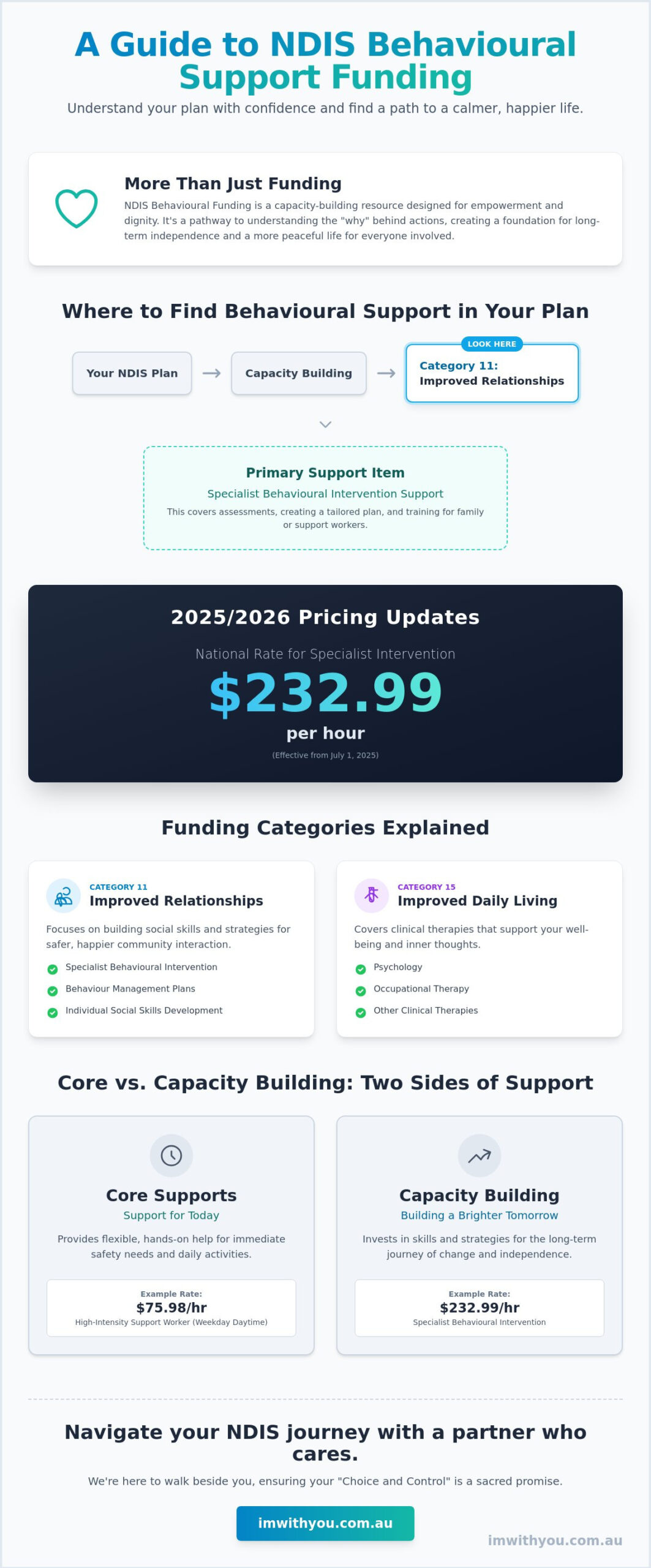
Looking at your NDIS plan for the first time can feel like trying to read a map in a different language. We want to help you find exactly where your ndis funding for behavioural support lives. Most often, you’ll find these funds tucked under the “Capacity Building” section, specifically within the “Improved Relationships” category (Category 11). This category is dedicated to building the skills and strategies that help you connect with the world around you safely and happily.
Within this space, “Specialist Behavioural Intervention Support” is the primary tool. It covers the cost of a practitioner to conduct a functional assessment and create a tailored plan. As of July 1, 2025, the national rate for this support is $232.99 per hour. This funding also pays for training the people in your life, such as family or support workers, so they know how to support you best. If you need help with making friends or interacting in groups, “Individual Social Skills Development” is another vital sub-category here that focuses on your social confidence. We are here to help you explore these options so you feel empowered in every choice you make.
Improved Relationships vs. Improved Daily Living
It’s easy to mix up Category 11 (Relationships) with Category 15 (Improved Daily Living). While Category 15 is where you find clinical therapies like psychology or occupational therapy, Category 11 focuses specifically on social interaction and behaviour strategies. A Support Coordinator can walk side-by-side with you to ensure your plan uses these different buckets correctly. They help you understand that while a psychologist might explore your inner thoughts, a behaviour practitioner looks at how your environment impacts your actions. This distinction ensures your “Choice and Control” remains a reality.
Can You Use Core Supports for Behavioural Needs?
You might wonder if your “Core Supports” budget can help. In 2026, there’s more flexibility to use Core funding for high-intensity support workers if you have immediate safety needs. For example, the rate for a high-intensity support worker during weekday daytime hours is $75.98 per hour. While Core supports provide the hands-on help you need today, Capacity Building funding is about the long-term journey of change. The NDIS Quality and Safeguards Commission ensures that any plan created with this funding protects your rights and dignity. We believe in supporting your life today while building a brighter tomorrow.
How to Secure or Increase Behavioural Support Funding in Your Next Review
Preparing for a plan review can feel like standing at a crossroads. You want to ensure your loved one has the right resources, but the pressure to “prove” their needs is heavy. When you advocate for ndis funding for behavioural support, the most powerful tool you have is the Impact Statement. This is a personal account from family and support workers that paints a heart-felt picture of daily life. With the addition of 23 new “Intensive and Complex Behaviour Support Items” in the 2025-26 price guide, there is more scope than ever to get specialized help. Instead of just listing deficits, focus on how these supports lead to greater community participation. We believe in highlighting potential while being honest about the support needed to unlock it.
Gathering the Right Evidence for the NDIS
Functional impact is the primary metric the NDIS uses to determine how much funding is reasonable and necessary for your situation. To build a strong case, you’ll need professional documentation that follows the NDIS Quality and Safeguards Commission’s guide to behaviour support. This evidence shows the NDIA exactly why current funding levels may need to change to support your safety and growth. Essential reports include:
- Current Behaviour Support Plans (BSP) that show progress or remaining gaps.
- Clinical assessments from an Occupational Therapist or Psychologist.
- Documented incident reports that record the frequency and intensity of Behaviours of Concern.
Preparing for Your Planning Meeting with Confidence
Your planning meeting is an opportunity to voice your vision for the future. You don’t have to walk this path alone. You can bring a friend, a family member, or one of our team members for disability advocacy services to stand beside you. Before the meeting, prepare a simple list of your goals, current barriers, and desired outcomes. Think about how ndis funding for behavioural support will specifically help you overcome those barriers. Remember, this process is about securing the “Choice and Control” you deserve to live a full, connected, and dignified life.
Implementing Your Funding: Choosing a Compassionate Support Companion
Once you’ve secured your ndis funding for behavioural support, the next vital step is choosing the right person to walk this path with you. While professional qualifications are essential, the heart of a successful partnership lies in the chemistry between the participant and the practitioner. You deserve a companion who listens without judgment and sees the person behind the actions. This choice is a significant part of your journey toward empowerment; we want you to feel confident that your voice is always heard.
The Role of the Behaviour Support Practitioner
Think of a practitioner as a “detective of needs.” They don’t view a behaviour as a problem to be solved, but as a message waiting to be understood. Their role involves uncovering what isn’t being said and then training your family and carers to provide consistent, warm support. By identifying environmental triggers and unmet needs, they create a roadmap for a calmer life. This collaborative approach ensures that everyone in your circle of care is moving in the same direction, providing the side-by-side support you need to feel safe and understood.
This support often works hand-in-hand with Supported Independent Living (SIL). When your behavioural strategies and your home environment align, your independence grows. A practitioner can visit your SIL home to ensure your daily support team understands the subtle triggers that might disrupt your peace. It’s about making sure your living space feels like a sanctuary rather than a source of stress, allowing you to focus on your personal goals and community connection.
How Im with you Walks Beside You
At Im with you, we don’t just manage services; we support lives. Our commitment to standing beside you throughout your journey earned us a 2026 excellence award for trust and quality care. We understand that implementing a plan can feel daunting, but you aren’t alone. We are here to guide you through every step, from the first assessment to the daily implementation of your strategies. Your dignity and happiness are our priority. Let us help you navigate your behavioural support funding journey.
Your Journey Toward a Calmer, More Connected Future
You now have the tools to navigate your plan with clarity and heart. We’ve explored how Category 11 acts as a bridge to independence and how gathering specific evidence empowers you during your next review. Securing ndis funding for behavioural support is a vital step toward a life where you feel understood and supported. It’s about moving away from just managing moments and toward building a future filled with genuine connection and peace.
As a Registered NDIS Provider and winner of the 2026 Excellence in Care Award, Im with you specializes in complex behavioural advocacy. We understand the weight you carry and we are ready to stand beside you. You deserve an advocate who treats your “Choice and Control” as a sacred promise rather than a simple rule. Connect with a compassionate NDIS advocate today and let’s walk this path together. Your brighter tomorrow starts with a single, supported step, and we are with you every inch of the way.
Frequently Asked Questions about NDIS Behavioural Support
What exactly does NDIS behavioural support funding pay for?
This funding pays for a specialist practitioner to understand your unique needs through a functional assessment. It covers the cost of creating a personalized Behaviour Support Plan and training your family or support workers to use it. These resources ensure that everyone around you provides consistent, warm care that helps you build new skills for independence.
Can I get behavioural support if it is not currently in my NDIS plan?
You can definitely request support even if it isn’t in your current plan. If your situation changes, you can apply for an unscheduled plan review by providing evidence from a professional. We’re here to help you navigate this process, ensuring you have the right reports to show why ndis funding for behavioural support is essential for your safety and well-being.
What is a “Behaviour of Concern” in the eyes of the NDIS?
The NDIS defines a Behaviour of Concern as any action that impacts your safety or prevents you from joining in community life. We view these behaviours as a way of communicating an unmet need. By identifying what you’re trying to express, we can find holistic ways to support you, reducing stress and opening up new possibilities for social inclusion.
How long does it take to get a Behaviour Support Plan developed?
The timeframe for developing a plan varies based on your individual needs, but it often involves a period of careful observation and collaboration. This steady, unhurried pace is important because it allows the practitioner to truly understand your world. By taking the time to listen and learn, we ensure your plan reflects your Choice and Control and offers a clear path to a better quality of life.
Is behavioural support the same as psychology or counseling?
While they’re related, behavioural support is distinct because it focuses on your external environment and daily interactions. Psychology often deals with internal emotional health, whereas a behaviour practitioner looks at practical strategies for your daily life. ndis funding for behavioural support is designed to provide your support team with the tools they need to stand beside you effectively in every situation.