

A crisis plan isn’t a list of your worst fears; it’s actually a blueprint for your independence that keeps you in the driver’s seat when life feels most uncertain. We know that thinking about emergencies can feel overwhelming, especially with the new NDIS planning framework rolling out from mid-2026 and the shift toward functional capacity assessments. You might worry about being left without support or feel lost in technical jargon while trying to figure out how to create an ndis crisis plan that actually works. We’re here to tell you that your anxiety is valid, but you don’t have to carry it alone.
Our goal is to help you build a compassionate, practical safety net that protects your wellbeing and honors your Choice and Control. We’ll show you how to transform those “what-if” worries into a clear, easy-to-follow document that ensures your voice is heard when it matters most. By the end of this guide, you’ll have the tools to finish a plan that reduces stress and lets you move forward with genuine peace of mind, knowing we’re standing beside you every step of the way.
Key Takeaways
- Learn why a crisis plan is a vital living document that preserves your Choice and Control when you are feeling too overwhelmed to speak for yourself.
- Master the essentials of how to create an ndis crisis plan, including how to document your communication preferences so others know exactly how to support you.
- Discover how to address psychosocial needs and caregiver burnout to ensure your care remains steady and your wellbeing is protected.
- Uncover the collaborative steps to building your plan with your inner circle and your Support Coordinator to keep your safety net strong and up to date.
What is an NDIS Crisis Plan and Why is it Essential?
A crisis plan is a living document that outlines exactly how you want to be supported during unexpected events. It acts as your voice when you might feel too overwhelmed to communicate your needs clearly. While the NDIA often focuses on broad emergencies like floods or bushfires, your personal plan is about the daily rhythm of your life. It’s a compassionate roadmap designed to protect your wellbeing. Understanding What is a Crisis Plan? helps you see that preparation isn’t about dwelling on the negative; it’s an act of empowerment.
Knowing how to create an ndis crisis plan gives you the confidence that your supports won’t crumble if something goes wrong. We believe that planning ahead is how you preserve your agency. With the NDIS moving toward a new planning framework in mid-2026, having a documented plan is more important than ever to ensure your specific support needs are clearly understood by everyone in your circle.
To better understand this concept, watch this helpful video:
The Role of Choice and Control in Safety
We treat Choice and Control as a sacred promise. A crisis plan is a tool for dignity and continuity of care that ensures your personal preferences remain the priority even during high-stress moments. When emergency services or new support workers step in, they shouldn’t have to guess what you need. Your plan tells them exactly how you prefer to be moved, spoken to, or comforted. It keeps you in charge of your own journey, even when the path gets bumpy.
When Should You Use Your Crisis Plan?
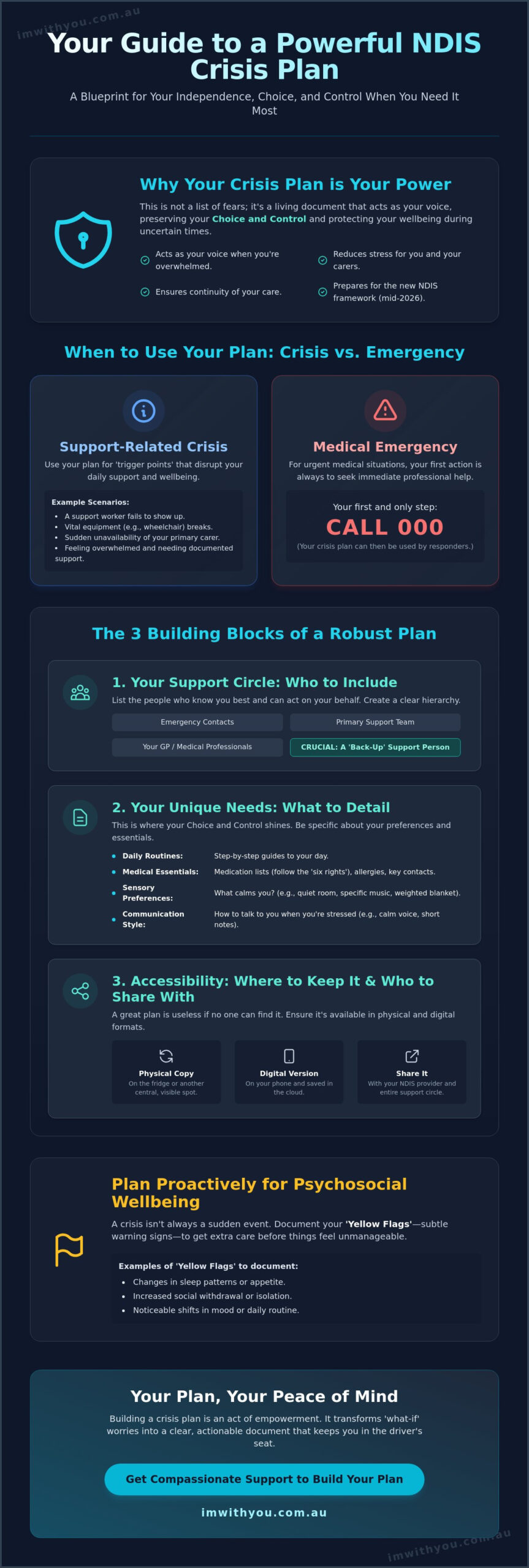
It’s helpful to distinguish between a medical emergency and a support-related crisis. You’ll use this plan when “trigger points” occur, such as a support worker failing to show up or a vital piece of equipment breaking down. While a medical emergency requires a call to 000, a support crisis is about maintaining your daily care and community participation. Having these steps written down reduces the panic that often comes with sudden changes. We’re here to help you identify these moments so you can act with calm and clarity.
The Essential Elements of a Robust NDIS Crisis Plan
A robust plan is more than just a list of phone numbers; it’s a safety net we weave together. When you’re looking at how to create an ndis crisis plan, start with the people who know you best. This includes your GP, your emergency contacts, and your primary support team. It’s also vital to name a “back-up” support person. This is the person who steps in if your regular carer gets sick or needs a break. Having this hierarchy of support clearly defined prevents a gap in your care and keeps your routine steady.
Detailing Your Unique Support Needs
Your plan should detail your daily routines and medical essentials with precision. If you use medication, we recommend following the six rights of medication administration to keep everything safe and consistent. Beyond clinical needs, don’t forget your sensory preferences. Do you need a quiet room when stressed? Does a specific song or texture help you feel grounded? Sharing these details ensures your Choice and Control remains intact even when you’re feeling vulnerable.
Physical vs. Digital Accessibility
Keeping your plan accessible is the final piece of the puzzle. We suggest keeping a physical copy on your fridge and a digital version on your phone. It’s a good idea to share this document with your ndis provider as soon as it’s ready. By keeping your team informed, you create a circle of safety that moves with you. If you need a hand getting these details organized, our team can provide compassionate support coordination to help you feel prepared.
Communication is the heartbeat of your plan. How do you give and receive information when you are under pressure? Some people prefer short, written notes; others find a calm, steady voice most helpful. When you are learning how to create an ndis crisis plan, remember that these human details are what make the document truly effective. They bridge the gap between a technical document and a plan that truly supports your life.
Planning for Psychosocial and Care-Related Crises
A crisis isn’t always a sudden event; sometimes it’s a slow build-up of stress or a dip in mental health. We believe that learning how to create an ndis crisis plan should involve mapping out your ‘yellow flags’. These are the subtle warning signs, like changes in sleep patterns or increased social withdrawal, that tell us you might need extra care soon. By acknowledging these early, we can protect your wellbeing before things feel unmanageable. This proactive approach keeps you in the driver’s seat of your own recovery journey.
If you receive SIL support, your supported independent living ndis provider is a vital partner in this process. They walk alongside you daily and can help spot these changes in your routine. This partnership allows for a holistic approach to safety that values your emotional health as much as your physical needs. It also addresses the reality of caregiver burnout. Your plan should clearly state what happens if your primary family carer needs a break or becomes unwell, ensuring your support remains seamless and steady.
The ‘Safe Person’ Network
Your crisis plan should name your ‘safe people’. These are the friends, family members, or advocates who provide emotional grounding when things feel chaotic. We encourage using person-first language when describing your needs to these individuals or new responders. This ensures they see the person behind the crisis first, protecting your dignity and reinforcing your Choice and Control. It’s about being heard and respected, even when you’re at your most vulnerable.
Respite and Short-Term Options
Sometimes, the best way to handle a crisis is to change your environment temporarily. Pre-identifying respite options creates a proactive safety net for when a primary carer needs a rest or becomes unwell. You can trigger these temporary changes without losing your long-term plan or funding stability. If you’re feeling the weight of planning these details, our team can help you access NDIS Support Coordination to find the right respite fits for your specific journey.
How to Create and Review Your Plan: A Collaborative Journey
Building a safety net isn’t a task you need to tackle alone in a single afternoon. It is a gentle, collaborative process that unfolds over time. When you start thinking about how to create an ndis crisis plan, the first step is to have a quiet conversation with your family or support network. These are the people who stand beside you daily and understand your rhythms. Their insights help ensure the plan reflects your real-world needs rather than just a clinical checklist.
Once you have a rough idea of what you need, it’s time to bring in professional expertise. We recommend these four steps to keep the process manageable:
- Step 1: Chat with your inner circle about what support looks like during a “bad day” or an unexpected change.
- Step 2: Involve your Support Coordinator to align your ideas with your NDIS funding and specific goals.
- Step 3: Draft the document using clear, active language that tells people exactly how to help.
- Step 4: Rehearse the plan every six months to make sure everyone still knows their role.
Working with Your Support Coordinator
Your Support Coordinator is a skilled guide who helps identify gaps in your current safety net that you might not see. They can help link your crisis strategies to specific supports, such as those tailored for an intellectual disability. This ensures every part of your NDIS plan works together to uphold your Choice and Control. We’re here to walk through these details with you, making sure your funding supports your safety and your dignity.
The Living Document: Keeping it Relevant
A crisis plan is never “finished”; it’s only “current.” Life changes quickly. Support workers move on, medications are adjusted, or your goals might shift. Updating your contacts and instructions ensures the plan remains a reliable tool. By reviewing it regularly, you keep your safety net strong and your peace of mind intact. We’ll be with you through every update, ensuring you always feel prepared for whatever comes next.
Your Journey to Lasting Peace of Mind
Taking these steps transforms a simple document into a powerful shield for your Choice and Control. You have now explored the practical steps of how to create an ndis crisis plan by identifying your safe people and mapping out your unique sensory and support needs. This process isn’t just about managing a potential emergency; it is about ensuring your dignity remains the priority during every chapter of your life. By planning ahead, you turn uncertainty into a clear path forward with genuine confidence.
At Im with you, we believe no one should navigate these complexities alone. As specialist NDIS Support Coordination experts and recipients of the 2026 Award for Excellence in Care, we provide compassionate, person-centered advocacy that always puts your voice first. We are here to walk beside you, helping you bridge the gap between stress and empowerment through every life change. Our team is dedicated to supporting your life, not just managing a plan, ensuring you always feel heard and understood.
We are with you, let us help you navigate your NDIS journey with confidence. You have the inner strength to build a secure future, and we are honored to stand beside you as you do.
Frequently Asked Questions
Does the NDIS require me to have a crisis plan?
No, the NDIS doesn’t legally require you to have a personal crisis plan, but we believe it is an essential step for your peace of mind. While registered providers must follow strict emergency management standards, your personal plan is about your individual Choice and Control. It acts as your voice when things feel overwhelming, ensuring your preferences are always respected by those standing beside you during difficult times.
Can my NDIS funding pay for someone to help me write my plan?
Yes, you can certainly use your NDIS funding to get help. If you have Support Coordination or Capacity Building Skills in your plan, these professionals can guide you on how to create an ndis crisis plan that fits your life perfectly. They help you look at your budget and your goals to ensure your safety net is both practical and compassionate, providing the professional expertise you need to feel secure.
What is the difference between a crisis plan and a behavior support plan?
A crisis plan is a general roadmap for handling unexpected events like staff no-shows, equipment failure, or mental health dips. A Behavior Support Plan is a more technical document created by a specialist practitioner to manage specific behaviors of concern. While a crisis plan focuses on your overall routine and safety, a Behavior Support Plan is a clinical requirement that often includes strategies to reduce restrictive practices.
How often should I update my NDIS emergency and crisis plan?
We recommend updating your plan at least every six months. It’s also important to review it whenever you experience a major life change, such as moving to a new home or starting with a new support team. Keeping your plan updated is a key part of knowing how to create an ndis crisis plan that actually works when you need it. Regular check-ins ensure that contact details and medication lists remain accurate.
Should I give a copy of my crisis plan to the NDIS Commission?
You don’t need to provide the NDIS Commission with a copy of your personal plan. The Commission focuses on regulating service providers and maintaining safety standards across the disability sector. Your plan is a personal document designed for your immediate support circle. Sharing it with your family, your GP, and your Support Coordinator is the best way to make sure the right people have the right information during a crisis.