

Reaching for the medicine cabinet is often our first instinct during a health crisis, yet in a stroke emergency, the aspirin that saves a heart can actually cause devastating harm to the brain. It’s natural to feel overwhelmed by the pressure to act quickly, especially when medical advice seems to change depending on the situation. If you’re searching for mayo clinic stroke first aid do not give aspirin, you’re likely looking for a clear answer to keep someone safe. We understand that the fear of doing the wrong thing feels heavy, but we’re standing right here with you.
You deserve to feel confident and prepared when every second counts. This guide explains the critical safety reasons behind the “no aspirin” rule, specifically how it can worsen the 13 percent of strokes caused by bleeding rather than blockages. We’ll walk you through the F.A.S.T. method and show you how to find the right support for the recovery journey ahead. By the end of this article, you’ll have the knowledge to be a steady, capable companion for someone in their greatest time of need.
Key Takeaways
- Understand why you must never administer medication during a suspected stroke, as aspirin can significantly worsen bleeding if a blood vessel has ruptured.
- Learn the critical differences between heart attack and stroke protocols to ensure you follow the mayo clinic stroke first aid do not give aspirin safety directive.
- Master the F.A.S.T. method to identify symptoms quickly and know exactly why calling 000 is the most important step you can take for a loved one.
- Gain clarity on how ischemic and hemorrhagic strokes differ, and why only a clinical scan can determine the safe path forward for treatment.
- Discover how NDIS capacity building and advocacy services can support your family, helping you maintain choice and control throughout the recovery process.
The Critical Rule of Stroke First Aid: Why We Say No to Aspirin
You might feel a desperate urge to help when a loved one shows signs of a stroke. While we often associate aspirin with saving lives during a heart attack, the rules change completely when we suspect a stroke is occurring. The mayo clinic stroke first aid do not give aspirin directive exists because your primary goal is stabilization, not treatment. We want to keep you and your loved one safe while professional help is on the way.
In Australia, our first response is always to call 000. It’s vital to let paramedics take the lead on medication because the wrong pill at the wrong time can have serious consequences. To better understand this concept, watch this helpful video:
The Danger of Self-Diagnosing in a Crisis
It’s impossible to distinguish between a clot-based or bleed-based stroke by looking at someone; only a hospital CT scan can provide that life-saving clarity. When you see someone struggling, you can’t tell if they are experiencing an ischemic vs. hemorrhagic stroke. If the stroke is hemorrhagic, meaning a blood vessel has burst, aspirin will thin the blood and accelerate the bleeding. Beyond the chemical risk, strokes often affect a person’s ability to swallow. Giving anything by mouth, even a sip of water, creates a high risk of choking or aspiration.
Medication Safety and Professional Care
Paramedics bring specialized diagnostic tools that allow them to begin care safely. They follow strict protocols to ensure the person receives the right support at the right time. At I’m With You, we believe in the six rights of medication administration to keep every individual safe. By waiting for professional medical intervention, you’re protecting your loved one’s future and ensuring they have the best chance at a full recovery. We’re here to walk beside you through these stressful moments and into the journey of long-term support.
Ischemic vs. Hemorrhagic: Why Aspirin Can Be Dangerous
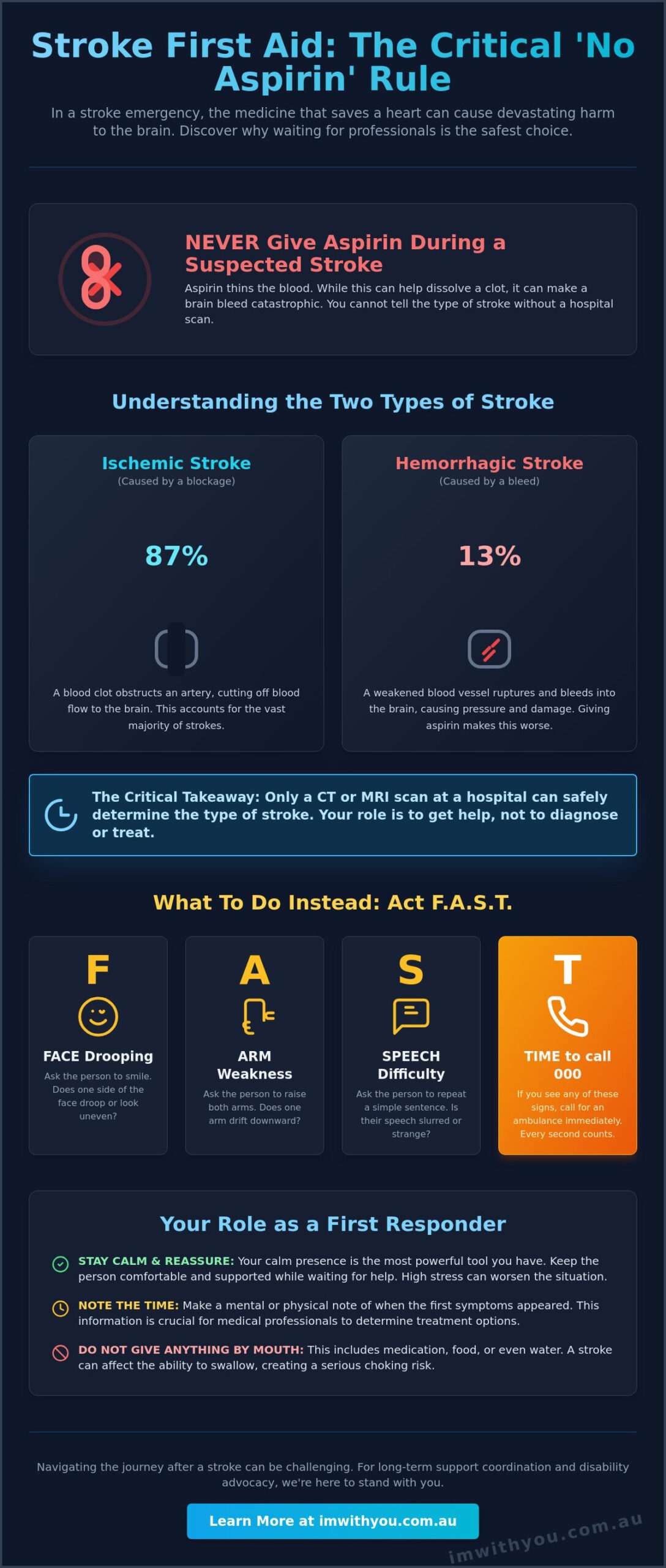
Understanding the two different types of strokes helps us see why the mayo clinic stroke first aid do not give aspirin rule is a lifesaving boundary. While most people associate strokes with a blockage, they actually fall into two distinct categories. About 87% of all strokes are ischemic, which occur when a blood clot obstructs blood flow to the brain. The remaining cases are hemorrhagic, caused by a weakened blood vessel that ruptures and bleeds directly into the brain tissue. Because you cannot tell these apart without a hospital scan, giving aspirin is a gamble where the stakes are far too high.
Aspirin works as an antiplatelet medication, meaning it prevents blood cells from sticking together. In an ischemic stroke, this might help, but in a hemorrhagic stroke, it prevents the body from forming the very clots needed to seal a leaking vessel. This can turn a manageable bleed into a catastrophic event. We believe the safest path is to Act F.A.S.T. and wait for clinical experts to make the diagnosis.
The Mechanism of a Brain Bleed
When a vessel ruptures, the brain is under immense pressure. Thinning the blood at this moment is like opening a floodgate when the body is trying to build a dam. Since 2023, Australian medical guidelines have emphasized that time-sensitive imaging, like a CT or MRI scan, is the only way to safely determine if medication is appropriate. Choosing to wait and see with medication isn’t being passive; it is an active choice to protect your loved one from unnecessary harm.
Supporting the Person Through the Unknown
While you wait for 000, your presence as a steady companion is the most powerful tool you have. Focus on keeping the person calm and comfortable. High stress can lead to spiked blood pressure, which puts even more strain on the brain’s delicate vessels. We understand how frightening this unknown space feels. If you need a partner to help navigate the long-term journey of disability advocacy or support coordination after the emergency, we are ready to stand beside you. Your role right now is to provide reassurance, ensuring they feel safe and heard until the professionals arrive.
Acting F.A.S.T.: What to Do Instead of Reaching for the Medicine Cabinet
In the high-pressure moments of a suspected stroke, your most effective tool isn’t found in a pill bottle; it’s your ability to observe and act. We know the urge to offer immediate relief is strong, but following the mayo clinic stroke first aid do not give aspirin protocol is the kindest thing you can do. Instead of medicating, we focus on the F.A.S.T. method to assess the situation. This simple acronym helps you stay calm while providing the clear information emergency responders need to save a life.
If you see any signs of a stroke, call 000 immediately. You might feel tempted to drive to the hospital yourself, but paramedics can begin specialized care the moment they arrive. They are trained to handle the complex reality of Why Aspirin Can Be Dangerous when administered without a brain scan. Noting the exact time you first noticed symptoms is the most valuable piece of information you can provide to hospital doctors because it determines which life-saving treatments remain available. While you wait, stay by their side and keep them in a comfortable position, typically lying on their side with their head slightly raised.
Using the F.A.S.T. Method Correctly
- Face: Ask the person to smile. Look for an uneven smile or a drooping eye that doesn’t move with the rest of the face.
- Arms: Ask them to raise both arms. Check for weakness or the inability to raise both arms equally; often, one arm will drift downward.
- Speech: Listen for slurred words or difficulty repeating a simple phrase. If their voice sounds strange or they can’t find the right words, it’s a clear warning sign.
Immediate Actions While Waiting for Help
Your presence provides an anchor of safety during a frightening experience. Gently loosen any restrictive clothing, like ties or scarves, to ensure their airway remains clear and they can breathe easily. If they have a list of current medications, gather it together to hand over to the paramedics. This helps the medical team understand their health history without you having to administer anything yourself. If you’re worried about how to manage life after an emergency, our team provides disability advocacy services to help you navigate the next steps with confidence and dignity.
Walking Beside You: Recovery and Long-Term Support
The moments following a stroke are often filled with a whirlwind of emotions, from relief that the immediate crisis is over to uncertainty about what the future holds. Once you’ve followed the mayo clinic stroke first aid do not give aspirin protocol and the medical team has stabilized your loved one, the journey of rehabilitation begins. This transition from hospital to home can feel overwhelming, but you don’t have to navigate it alone. We believe that recovery is about more than just clinical milestones; it is about reclaiming independence and dignity through a holistic approach to care.
In Australia, the NDIS plays a vital role in this new chapter by providing participants with Choice and Control over their support systems. Our support coordination services help bridge the gap between medical discharge and daily life at home. We work side-by-side with you to implement a plan that focuses on capacity building and psychosocial recovery, ensuring that every step forward is a step toward a meaningful life. Whether it’s arranging therapeutic supports or facilitating community participation, we’re committed to standing beside you throughout this entire process.
Navigating Life After Stroke with the NDIS
Rebuilding a life after a stroke often requires practical adjustments to ensure safety and comfort. NDIS funding can be a lifeline, providing resources for essential services and modifications. Some ways we help you utilize this support include:
- Organizing home modifications, such as ramps or rail installations, to maintain accessibility.
- Connecting you with therapeutic supports like occupational therapy to rebuild daily living skills.
- Implementing capacity building strategies that empower you to manage your own journey.
- Providing specialized advocacy for those understanding intellectual disability and other complex co-occurring needs during recovery.
A Steady Companion for the Journey
Choosing a support provider is a deeply personal decision. You deserve a partner who treats you as an individual with unique dreams and strengths, not just a case number to be managed. At I’m With You, our commitment is reflected in our name; we’re a steady, knowledgeable guide walking with you through every challenge. We prioritize your agency and focus on social inclusion, helping you reconnect with your community on your own terms. Recovery takes patience and reliability, and we promise to be there, providing the security and partnership you need to move toward a brighter, more independent future.
Empowering Your Journey Toward Recovery
Navigating the immediate aftermath of a stroke is a journey that requires both courage and a clear plan. By remembering the mayo clinic stroke first aid do not give aspirin rule, you’ve already taken a vital step in protecting your loved one from further harm. You now know that while aspirin is often helpful for hearts, waiting for a professional hospital scan ensures the safest path forward for the brain. Focusing on the F.A.S.T. method and trusting 000 responders remains the gold standard for emergency care.
As the focus shifts from the emergency room to rehabilitation at home, we’re here to help you maintain choice and control. As a national provider awarded for excellence in disability care 2026, I’m With You specializes in compassionate NDIS support coordination and advocacy. We’re committed to your dignity, standing beside you as you navigate the complexities of long-term support. Discover how we walk beside you on your NDIS journey and help you build a life full of possibility. You’re never alone in these challenges; we’re ready to support your recovery every step of the way.
Frequently Asked Questions
Why does Mayo Clinic specifically warn against aspirin for stroke first aid?
Mayo Clinic warns against aspirin because it’s impossible to tell if a stroke is caused by a clot or a bleed without a hospital brain scan. If the stroke is hemorrhagic, meaning a blood vessel has ruptured, aspirin will thin the blood and make the bleeding much worse. This can lead to increased pressure on the brain and more severe long-term damage. It’s always safer to wait for a clinical diagnosis before using any medication.
Can I give the person water if they are thirsty during a stroke?
No, you shouldn’t give the person anything to eat or drink, including water. Strokes often affect the muscles used for swallowing, which creates a high risk of choking or aspiration. If water enters the lungs instead of the stomach, it can cause a serious infection known as aspiration pneumonia. It’s best to keep the person’s mouth clear and focus on keeping them calm until paramedics arrive.
What is the difference between a mini-stroke (TIA) and a full stroke?
A mini-stroke, known as a Transient Ischaemic Attack (TIA), is a temporary blockage of blood flow to the brain that doesn’t cause permanent damage. Symptoms typically resolve within 24 hours, but you must still treat it as a full emergency. A TIA is a significant warning sign, as data shows approximately 33 percent of people who experience one will eventually have a major stroke. Early intervention during a TIA can prevent a more serious event later.
Is a stroke the same as a heart attack in terms of first aid?
First aid for a stroke is quite different from heart attack care, particularly when it comes to medication. While chewing an aspirin is often recommended during a heart attack to break up a clot, the mayo clinic stroke first aid do not give aspirin rule is vital because of the risk of brain bleeding. Both situations require you to call 000 immediately, but you should never assume the treatments are interchangeable. Your most important job is to stay with the person and monitor their symptoms.
How does the NDIS support someone who has had a stroke?
The NDIS provides funding for various supports that help stroke survivors regain their independence and participate in their community. This includes funding for therapeutic supports like physiotherapy and speech therapy, as well as support coordination to help manage the transition back home. We believe in empowering you with choice and control over your recovery journey. Our team stands beside you to help implement your plan and access the capacity building skills you need for a holistic recovery.