

What if your NDIS reassessment felt less like a high stakes audit and more like a supportive conversation about your future? It’s completely natural to feel a sense of dread as your review date approaches, especially with the fear of funding cuts or the weight of complex paperwork hanging over you. We understand these worries deeply, which is why we’ve created this gentle guide on how to prepare for ndis plan reassessment to help you feel steady and secure.
You don’t have to face the National Disability Insurance Agency alone. We’re here to walk beside you, ensuring your voice is heard and your goals remain at the heart of the process. This roadmap explores the new framework planning rolling out in mid 2026, explains the vital Support Needs Assessment, and provides a clear path to maintaining your choice and control. Together, we’ll turn this bureaucratic hurdle into a collaborative step toward the life you want to lead.
Key Takeaways
- Understand the difference between a routine check-in and a full plan reassessment so you can approach your meeting with clarity and peace of mind.
- Discover how to prepare for ndis plan reassessment by focusing your evidence on functional capacity, ensuring your reports accurately reflect your daily life.
- Learn how to shift your focus from “maintenance” to “aspirational” goals, reclaiming your choice and control over your personal journey.
- Explore how having a dedicated advocate or support coordinator by your side can transform a stressful meeting into a collaborative and empowering experience.
What is an NDIS Plan Reassessment and Why Does it Matter?
An NDIS plan reassessment isn’t a test or a hurdle to trip you up; it’s a bridge to your next chapter. Think of it as a scheduled opportunity to sit down and ensure your current supports still match the rhythm of your life. Since its inception, the National Disability Insurance Scheme (NDIS) has grown to support more than 500,000 Australians. These reviews are the mechanism that keeps the scheme person-centered, making sure your funding evolves as you do.
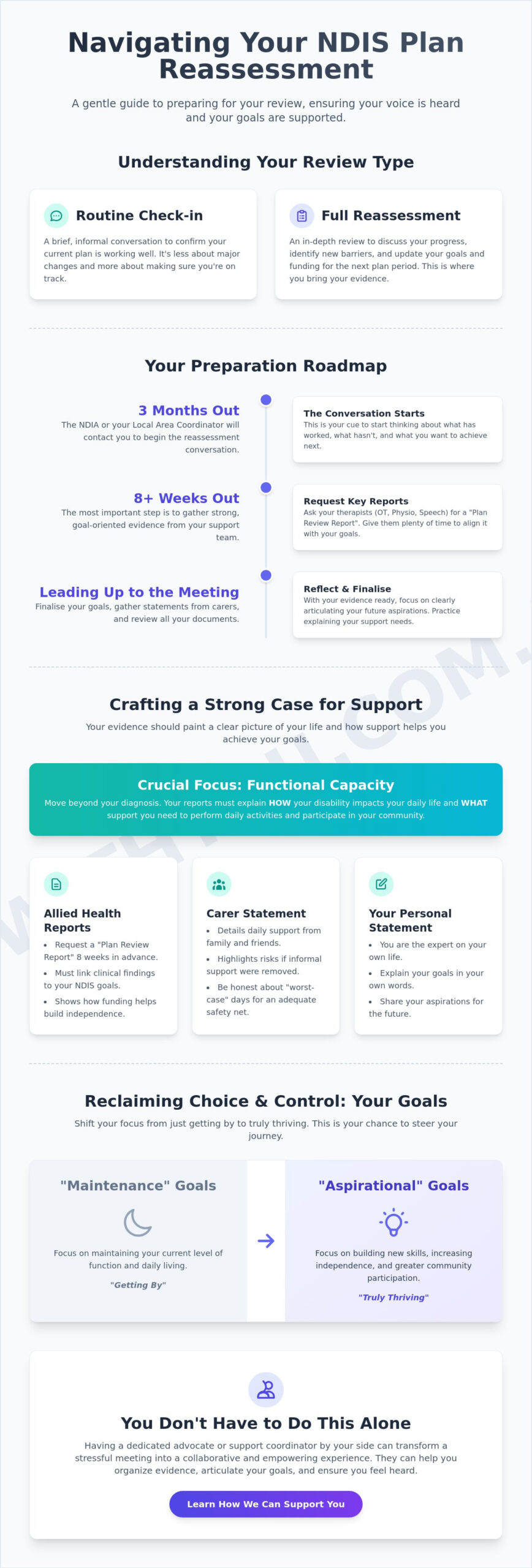
It’s helpful to know the difference between a “check-in” and a full “plan reassessment.” A check-in is often a brief conversation to confirm that your plan is working well. A full reassessment is deeper. It’s a time to look at your progress, identify new barriers, and even rethink your support team. This is often the perfect moment to learn how to choose an NDIS provider that truly aligns with your values if your current services don’t feel like a perfect fit anymore.
To better understand this concept, watch this helpful video:
When do reassessments usually happen?
Most plans follow a 12 month or 24 month cycle. However, the NDIA is moving toward longer plan durations to give you more stability. You’ll typically hear from the agency about 3 months before your plan ends to start the conversation. This lead time is a gift, it gives you space to think about how to prepare for ndis plan reassessment without feeling rushed. If your life changes significantly before your scheduled review, such as a change in your living situation or health, you can request an unscheduled review at any time.
The “Choice and Control” promise
We view Choice and Control as a sacred promise, not just a regulatory pillar. In a reassessment, you have the right to lead the conversation. You aren’t just a participant in a system; you’re the expert on your own life. This is your time to reflect on what’s working and what needs to change. Whether you want to increase your community participation or build new capacity building skills, you have the agency to steer your journey toward the goals that matter most to you.
Gathering Your Evidence: Creating a Strong Case for Support
Gathering documents can feel like a heavy weight, but think of it as weaving a safety net for your future. The quality of your evidence determines the strength of that net. While the official NDIS guide to plan reassessment lists basic requirements, we want to help you go deeper to ensure your needs are truly seen. This is a vital part of how to prepare for ndis plan reassessment because it moves the focus from a medical diagnosis to your actual life experience.
Focus your reports on functional capacity. A diagnosis tells the NDIA why you need help, but functional evidence shows how that help changes your day. This is particularly important for complex living arrangements. For example, if you’re exploring home options, the evidence must be incredibly specific. You can find more detail on this in our SIL guide. Beyond clinical reports, impact statements from family and friends provide a holistic view of your journey.
The power of the Carer Statement
Your family and friends see the parts of your life that a one hour clinical assessment might miss. A Carer Statement should detail the support provided on a typical day, focusing on the risk and impact if that support were removed. We encourage you to be honest about “worst-case” days. Speaking about the moments when things are difficult isn’t a sign of weakness; it’s a vital way to ensure you have an adequate safety net. If you feel overwhelmed by these tasks, our team can stand beside you to help organize your thoughts.
Allied Health and Functional Assessments
We recommend asking your Occupational Therapist, Physiotherapist, or Speech Pathologist for a “Plan Review Report” at least 8 weeks in advance. This lead time gives them space to reflect on your progress and map their clinical findings back to your specific NDIS goals. When reports align directly with what you want to achieve, your case for support becomes much more compelling. It’s about showing the NDIA how their investment helps you build a life of dignity and independence.
Reflecting on Your Goals and Exercising Choice and Control
Your NDIS plan is a living document, and your reassessment is the moment to breathe new life into it. As you look back over the last 12 months, consider what you’ve achieved and where you felt stuck. Did you have enough support to leave the house? Did you feel truly connected to your neighborhood? Reflecting on these questions is a core part of how to prepare for ndis plan reassessment because it helps you move beyond “maintenance” goals toward “aspirational” ones. It’s about shifting the focus from just getting by to truly thriving.
Life is about more than just clinical outcomes; it’s about happiness and connection. You can use your Core Supports to find joy through leisure activities that bring you closer to others. Whether it’s joining a local pottery group or attending a community festival, these goals reflect your right to a full and vibrant life. Identifying these gaps in social participation allows you to ask for supports that facilitate genuine inclusion rather than just basic care.
Brainstorming your new goals
We suggest categorizing your thoughts into four key areas: Health, Social, Independence, and Employment. Think about where you want to be in the next 12 months versus where you’d like to be in five years. To ensure the NDIA understands your vision, try to write a single sentence defining your primary goal using the SMART framework to ensure NDIA clarity. For example, “I want to use my community participation funding to attend a weekly supported swimming group by September 2026 to improve my physical health and social connections.”
Preparing for the reassessment meeting
You have the power to choose how your meeting happens. Whether it’s over the phone, via a video call, or an in-person visit, pick the format that makes you feel most safe and heard. You don’t have to do this alone. Bringing a trusted family member, an advocate, or your Support Coordinator can provide a steady sense of security. For more practical advice on the day, the Endeavour Foundation offers excellent Tips for NDIS Plan Reassessment to help you feel ready.
If you’re feeling unsure about how to frame your future aspirations, we’re here to help you find the right words. Reach out to us at I’m With You to start a conversation about your next journey.
Walking Together: How Professional Support Simplifies the Process
Preparing for a meeting is only one part of the journey. The real magic happens when you have a steady companion to help you implement your vision. NDIS Support Coordination plays a vital role in both plan implementation and review preparation. A coordinator doesn’t just manage a case; they support a life by ensuring your services connect seamlessly with your goals. When you understand how to prepare for ndis plan reassessment with professional backing, the weight of the bureaucracy begins to lift.
Transitioning to a provider that treats you as a partner rather than a case number can change your entire experience of the scheme. We believe in a collaborative approach where your agency is respected at every turn. After your meeting, the journey continues as we help you review the outcome and ensure the NDIA has captured your needs accurately. This partnership ensures you aren’t just navigating a system, but building a foundation for a flourishing life.
The “I’m With You” difference in advocacy
We’re committed to standing beside you throughout this often complex phase. Our team helps translate your daily life needs and aspirations into the specific “NDIS language” that planners use to determine funding. This ensures that your Choice and Control isn’t just a phrase on a page, but a reality in your daily life. We advocate for your right to lead the conversation, making sure the NDIA hears your voice clearly and respects your unique perspective.
What to do when your new plan arrives
When your new plan finally lands, take a quiet moment to read through it carefully. You’ll want to check the three main funding categories for accuracy:
- Core Supports: Funding for everyday activities and immediate needs.
- Capacity Building: Investments in skills to help you live more independently.
- Capital: Funding for assistive technology or home modifications.
If the outcome doesn’t feel right or if a vital support was missed, you have the right to request an Internal Review of a Decision. This must be done within 60 days of receiving your plan. We’ll be right there with you to help navigate that process, ensuring your safety net remains strong and your journey continues forward with confidence.
Embrace Your Future with Confidence and Support
Your journey through the NDIS doesn’t have to be a lonely walk. By focusing on functional evidence and setting goals that spark joy, you’ve already taken the biggest steps in learning how to prepare for ndis plan reassessment. Remember that this process is your chance to reclaim Choice and Control, ensuring your supports reflect the life you truly want to live. Whether you’re refining your capacity building skills or seeking deeper community connection, your voice deserves to be the loudest in the room.
We’re here to ensure you feel heard and respected every step of the way. As a provider awarded for excellence in care in 2026, I’m With You offers national coverage combined with a deeply person-centered approach. Our experts specialize in NDIS Support Coordination and Advocacy, helping you translate your needs into a plan that works for you. Let us walk beside you during your next NDIS reassessment so you can focus on what matters most; living your life to the fullest. You have the strength to navigate this, and we’re honored to stand by your side.
Frequently Asked Questions
What happens if my NDIS plan expires before my reassessment?
Your current plan will automatically continue until your new plan is approved, so your supports won’t stop. This safety net ensures you’re never left without the care you need while the NDIA processes your review. It’s a relief to know that your funding remains accessible as we work together on how to prepare for ndis plan reassessment. You can keep using your existing budget as usual during this period.
Do I need to get new therapist reports for every reassessment?
You generally need updated reports from your therapists to provide a current picture of your functional capacity. The NDIA typically looks for evidence dated within the last 6 months to ensure your funding matches your current needs. Providing fresh Allied Health reports helps us build a strong case for your continued journey and any new aspirational goals you’ve set for your life.
Can I change my NDIS service providers during a plan review?
You have the right to change your providers at any time, including during your plan reassessment. This is often the ideal moment to reflect on whether your current team truly aligns with your values and supports your choice and control. If you feel like a case number rather than a partner, we can help you transition to services that prioritize your individual agency and empowerment.
How long does the NDIS plan reassessment process usually take?
The NDIA typically contacts you 3 months before your plan ends to begin the conversation. Once you’ve had your meeting, the agency aims to complete the reassessment and issue your new plan within 28 days. Knowing this timeline helps us plan how to prepare for ndis plan reassessment with a sense of calm; it ensures we have enough time to gather every piece of vital evidence.
What is the difference between a plan review and an internal appeal?
A plan reassessment is a holistic look at your entire life and supports to create a new plan. In contrast, an internal appeal, also known as a Review of a Decision, is a specific request to change a decision the NDIA has already made. You must lodge this appeal within 60 days of receiving your plan if you feel the funding levels or supports don’t meet your needs.