

What if checking your NDIS balance felt like a moment of empowerment rather than a source of panic? It’s completely normal to feel a heavy weight when you think about your funding, especially with the 3.95% price increase for core supports that took effect in July 2025. You might worry that one extra therapy session at the $232.99 psychology rate will leave you short before your next review. We understand that this isn’t just about numbers; it’s about the life you’re building and the supports that make it possible. We believe you deserve to feel secure in your plan.
We’re here to help you move from uncertainty to clarity. Our compassionate guide to using a tracking ndis budget spreadsheet template is designed to take the guesswork out of your plan management. We’ll show you how to organize your Core, Capacity Building, and Capital funds so you always have a clear visual of what’s remaining. This simple system ensures your supports are sustainable and gives you total choice and control over your journey. We’ll also help you prepare for the computer-generated plans arriving in mid-2026, so you can walk into your next review feeling organized, confident, and completely supported.
Key Takeaways
- Discover why a personalized spreadsheet is a powerful tool for maintaining Choice and Control, offering a level of privacy and customization that standard apps often miss.
- Learn how to build a reliable tracking ndis budget spreadsheet template that keeps your Core, Capacity Building, and Capital supports organized and sustainable.
- Master the simple steps to translate complex NDIS portal line items into a clear, visual map of your spending and remaining balance.
- Explore how professional Support Coordination can help you interpret your budget data, ensuring you feel prepared and empowered for your upcoming plan review.
Why a Spreadsheet is Your Best Companion for NDIS Budget Tracking
Managing your funds through the National Disability Insurance Scheme is about more than just numbers on a screen; it’s about protecting your right to live the life you choose. We know that the administrative side of a plan can feel overwhelming, but budget tracking is actually the most powerful way to maintain your Choice and Control. While many people look for automated apps, an offline tracking ndis budget spreadsheet template often provides the best balance of privacy and deep customization. It’s a personal record that stays with you, ensuring your sensitive data isn’t sitting on a third-party server you don’t control.
To better understand this concept, watch this helpful video:
Using a spreadsheet helps you avoid the “mid-plan funding cliff.” This is that stressful moment when you realize your supports might run dry before your plan ends. By tracking your spending now, you ensure your journey remains steady and sustainable. Plus, you’ll be Review Ready at any moment. As the NDIA moves toward more automated systems in mid-2026, having your own organized data will be your strongest asset during any plan review or audit.
The Power of Visualizing Your Journey
Seeing your spending as a clear graph can instantly lower your anxiety. It transforms a complex list of transactions into a visible path of progress. We recommend tracking your Capacity Building funds in their own section. This allows you to see exactly how your skills are growing over time, turning a budget line into a celebration of your personal empowerment and independence. It’s about seeing the life you’re building, not just the money you’re spending.
Choice and Control in Your Hands
A spreadsheet moves you from being a passive recipient to an active manager of your own life. It gives you the flexibility to plan for significant one-off expenses, like a new piece of assistive technology or a specific capital item, without wondering if you’ll have enough left for your weekly community participation. We’re standing beside you to ensure you have the tools to make these decisions with confidence and dignity. Your tracking ndis budget spreadsheet template becomes a roadmap for your future, keeping you in the driver’s seat of your own support system.
The Essential Components of Your NDIS Tracking Spreadsheet
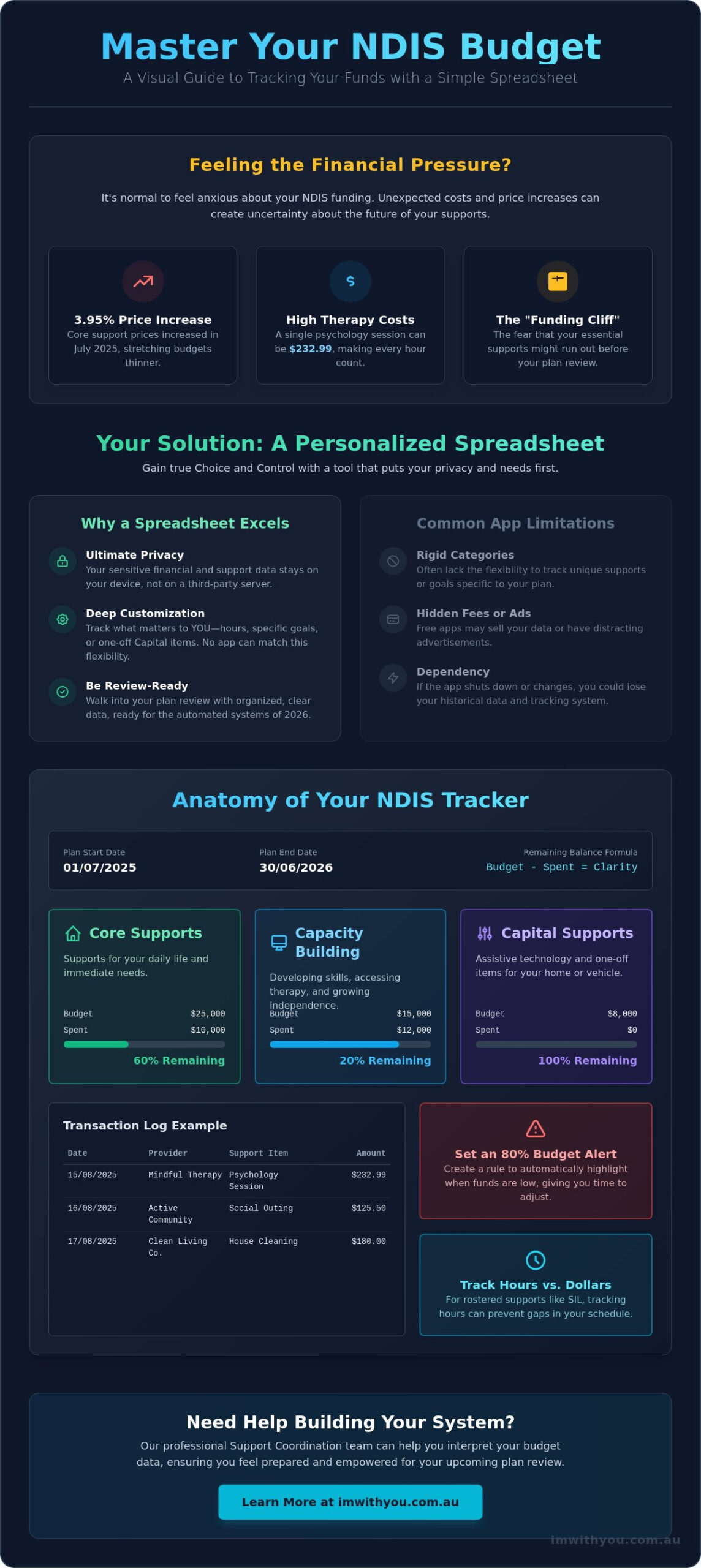
Building your own tool for tracking ndis budget spreadsheet template needs doesn’t have to be a technical chore. We believe that when you create your own system, you gain a deeper understanding of your funding that no proprietary app can provide. This visibility is vital whether you are self-managing your NDIS funding or just want to stay informed about your plan’s health. Start with a clear header that lists your plan start and end dates alongside your total funding amounts. This creates a solid foundation for your journey. Having a personalized tracking ndis budget spreadsheet template ensures you’re never surprised by a low balance.
Your transaction log is the heart of the sheet. It should include columns for the date, the provider name, the specific support item, and the amount spent. The most important cell in your entire spreadsheet is the “Remaining Balance” formula. It’s a simple calculation: subtract your total spent from your initial budget. Seeing this number update in real time provides an immediate sense of security and clarity. It allows you to breathe easier knowing exactly where you stand today.
Mapping Your NDIS Categories
We recommend separating your funds into three distinct sections: Core, Capacity Building, and Capital. Core supports focus on your daily life and immediate needs, while Capacity Building is about developing skills and accessing therapy. Try color-coding these sections. For example, use a gentle green for Core and a calming blue for Capacity Building. This visual distinction helps you recognize where your funds are going at a single glance, reinforcing your sense of Choice and Control over your lifestyle.
Tracking Support Hours vs. Dollars
While tracking dollars is standard, tracking hours is often more helpful for services like supported independent living ndis. If you know you have 20 hours of support scheduled each week, your spreadsheet can help you spot any gaps in your roster before they become a problem. We suggest setting up an “alert” cell that turns red when you reach 80% of your budget. If you find these details a bit overwhelming, our team at I’m With You can help you refine your tracking system through specialized support coordination.
Step-by-Step: Setting Up Your NDIS Tracking Template for 2026
Creating your own system is an act of empowerment that puts you back in the driver’s seat. To begin, log into your participant portal and gather your current plan details. You’ll need to identify the specific budget line items for each category, such as your daily activity costs or therapy allocations. If you need extra guidance on which figures to pull, the official NDIS self-management resources offer excellent checklists to ensure you haven’t missed a single support. Once you have these figures ready, you can start building your tracking ndis budget spreadsheet template with total confidence.
Your spreadsheet needs five essential columns to stay effective: Date, Description, Category, Amount Spent, and Balance Remaining. At the very top of each category column, input your “Total Budget” for that specific fund. To automate the math, set up a simple subtraction formula in the Balance Remaining column. By using the formula (=Total-Spent), your sheet will do the heavy lifting for you. This immediate feedback helps you maintain Choice and Control over every dollar, ensuring you’re never caught off guard by a changing balance.
Automating Your Monthly View
It’s helpful to see your spending patterns over time rather than just a total sum. You can create a monthly summary by using a simple SUM function to total your provider costs for each 30-day period. This allows you to see if you’re on track to make your funding last until your next plan review. If you’re feeling stuck on the technical side of setting this up, we can provide side-by-side assistance through our NDIS support coordination to help you master these tools.
Tips for Consistent Data Entry
Consistency is the secret to lasting peace of mind. We recommend setting a “Gentle Sunday” routine. Take 15 minutes each week to update your records while having a cup of tea; it’s a small way to care for your future self. Make sure to keep a digital folder of your invoices right next to your tracking ndis budget spreadsheet template. Having everything in one place makes it much easier to justify your funding levels, especially as the NDIA prepares to introduce more automated planning systems in mid-2026.
Beyond Numbers: How Support Coordination Makes Budgeting Easier
While a tracking ndis budget spreadsheet template is a brilliant tool for seeing the “what,” we believe that navigating the NDIS is truly about the “how.” A spreadsheet gives you the cold figures, but professional Support Coordination helps you interpret those numbers into a better life. You don’t have to walk this financial path alone. We are here to help you turn your data into a strategic roadmap for your next Plan Review, ensuring your voice is heard loud and clear by the NDIA. Our goal is to lower the stress of administration so you can focus on your journey.
For families navigating an intellectual disability, a budget is more than a list of transactions. It’s a powerful advocacy tool. When you can show exactly how your funding has supported specific outcomes, you build a much stronger case for ongoing support. This evidence-based approach is especially vital given the move toward automated planning systems in mid-2026. We treat your Choice and Control as a sacred promise, standing beside you to ensure your budget reflects your actual lived experience and your future aspirations.
When Your Spreadsheet Shows a Shortfall
Sometimes, your tracking ndis budget spreadsheet template might reveal that your funding is running low faster than expected. This isn’t a reason for panic; it’s a signal that your support needs have evolved. We can help you request a plan variation or identify under-utilised funds that can be pivoted toward new goals. Whether you need to adjust your therapy sessions or find more efficient community participation supports, we help you make those decisions with confidence and dignity, ensuring your supports remain sustainable.
Finding the Right NDIS Provider to Support Your Goals
Your budget data is the best guide when you need to choose an NDIS provider. By knowing your remaining balance for specific line items, you can find a partner who fits your financial plan perfectly. At I’m With You, we focus on supporting a life, not just managing a case. We walk alongside you to ensure every dollar in your spreadsheet is working toward your empowerment and social inclusion. You are the expert in your own life; we are just the steady companions helping you navigate the technical bits with a gentle, human touch.
Take the Next Step Toward Your Independent Future
Your journey toward a life of true independence is paved with small, consistent steps. By mastering your tracking ndis budget spreadsheet template, you’ve taken a significant step toward securing your Choice and Control. You now have the tools to visualize your Core and Capacity Building funds, ensuring your supports remain steady and sustainable throughout the year. These numbers are more than just data; they’re a reflection of your growth and the life you’re choosing to lead.
You don’t have to navigate the complex 2026 NDIS guidelines alone. At I’m With You, our team of expert Support Coordinators brings a compassionate, person-centered approach to every conversation. We’re proud recipients of the 2026 Award for Excellence in Disability Care, and we’re ready to stand beside you as your trusted advocate. Whether you’re interpreting budget data or preparing for a plan review, we’re here to help you turn every challenge into an opportunity for empowerment.
Let us walk beside you—explore our NDIS Support Coordination services today.
You’ve got this, and we’re with you every step of the way.
Frequently Asked Questions
Can I use this spreadsheet template for self-managed plans?
Yes, a tracking ndis budget spreadsheet template is specifically helpful for self-managed participants who need to maintain their own detailed records. The NDIS requires you to keep all invoices and receipts for 5 years to satisfy potential audits. By using your own sheet, you ensure you have a permanent, private record of every transaction that supports your lifestyle and independence.
What happens if my spreadsheet shows I’ve overspent my NDIS budget?
If you notice your balance is dipping too low, the first step is to stay calm and assess your upcoming supports. You can reach out to your Support Coordinator to discuss a plan variation if your needs have changed significantly since your last review. We can help you look for under-utilised funds in other categories that might be moved to cover your immediate requirements.
Do I need to include GST in my NDIS budget tracking spreadsheet?
Most NDIS supports are GST-free, so you usually won’t need to track it separately in your spreadsheet. According to the Australian Taxation Office, disability supports are generally exempt when they are listed in a participant’s plan. If you do encounter a rare item that includes GST, simply record the total amount paid to ensure your remaining balance stays accurate.
How often should I update my NDIS tracking records?
We recommend updating your records at least once a week to keep your data fresh and accurate. While we mentioned a weekly routine earlier, some people find it easier to enter details the moment an invoice arrives in their inbox. Regular updates prevent a backlog of paperwork from becoming a source of stress and keep you in total control of your funding.
Is a spreadsheet better than the official NDIS portal for tracking?
A spreadsheet is a companion to the portal, not a replacement. While the NDIS portal shows claims that have already been processed, your tracking ndis budget spreadsheet template tracks committed funds for future supports. This allows you to see the money you’ve promised to providers but haven’t paid yet, giving you a much more accurate picture of your actual available balance.