
What if the moments you spend on yourself aren’t a luxury, but the very foundation of your health? Many of us feel that taking time for “fun” is something we can’t afford, especially when managing daily challenges or disability supports. You might find yourself resting on the couch but still feeling drained, wondering what the true def of recreation really is. It’s common to feel isolated or confused about how to move from simply getting through the day to actually feeling alive in your community.
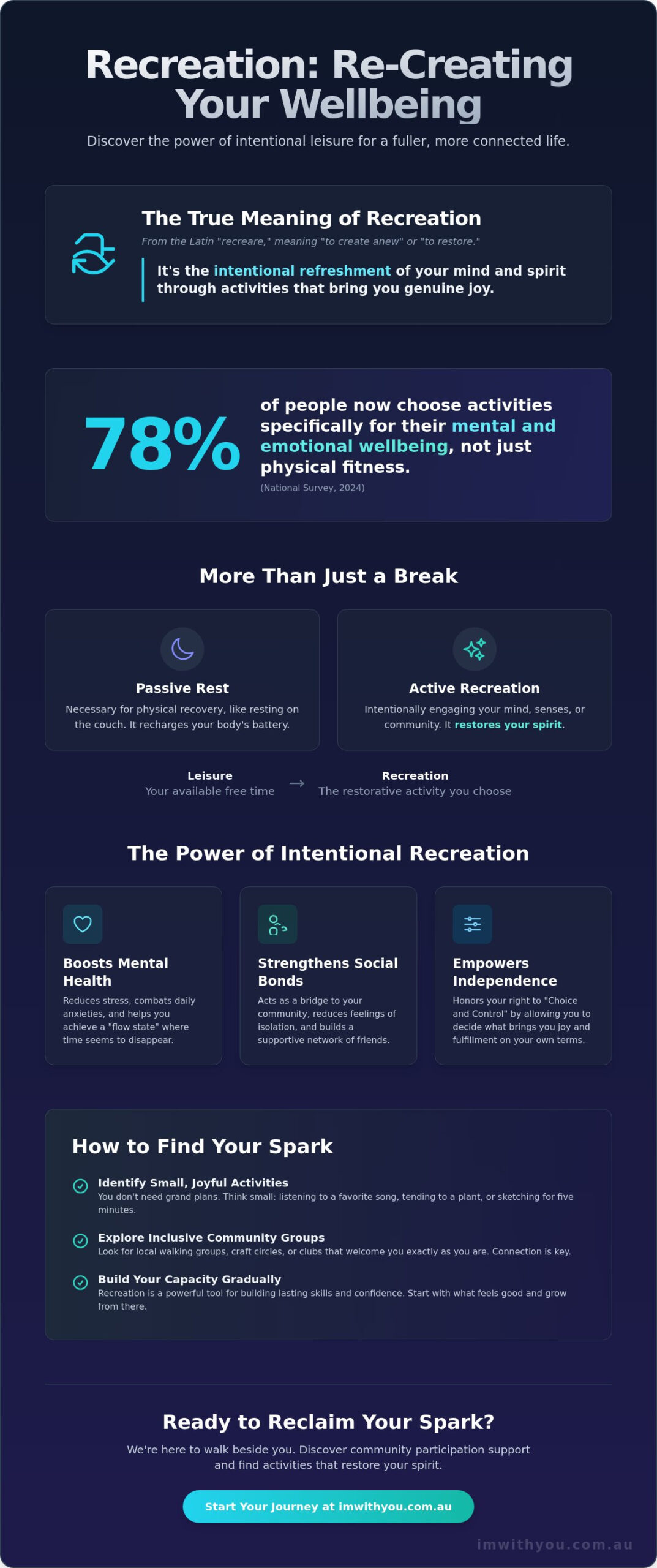
We understand that life can feel overwhelming, and we’re here to walk beside you as you reclaim your spark. A national survey found that 78% of people now choose activities specifically for their mental and emotional wellbeing rather than just physical fitness. In this article, we’ll explore how intentional leisure differs from simple rest and why it’s a sacred part of your choice and control. You’ll discover how to find activities that bring genuine joy and see how recreation fits into a supported, holistic life.
Key Takeaways
- Learn how the true def of recreation goes beyond just resting; it is a vital process of restoring your mind and spirit through activities you love.
- Discover how intentional leisure helps you build social connections and reduces the weight of isolation by bringing you closer to your local community.
- Understand why recreation is a fundamental right that empowers your independence and honors your promise of Choice and Control.
- Get practical tips on how to identify small, joyful activities that fit into your daily life and help you build lasting capacity.
- Explore how to find inclusive community groups that welcome you exactly as you are, ensuring you always have a steady companion on your journey toward social inclusion.
What is the Definition of Recreation?
Recreation is often misunderstood as just a way to pass the time between more “important” tasks. In reality, the true def of recreation is the intentional refreshment of your mind or body through activities that bring you joy. The term actually has deep roots in the Latin word “recreare,” which means to create anew or restore. It’s a beautiful way to think about your day; you aren’t just finishing tasks, you’re literally re-creating your spirit. This Definition of Recreation highlights that these moments are vital for your overall wellbeing and social health.
When we look at the def of recreation through the lens of your NDIS goals, we see it as a powerful tool for capacity building. It isn’t just about being busy. It’s about finding those specific experiences that make you feel whole and connected. Whether it’s a quiet hobby at home or a group activity in your local park, the goal is the same: to leave you feeling more capable and refreshed than when you started.
To better understand this concept, watch this helpful video:
One of the most empowering parts of recreation is that it’s a choice. You don’t do it because you have to; you do it because you want to. This is where your Choice and Control truly shine. We should also distinguish between just resting and engaging in recreation. While passive relaxation like sitting on the couch is necessary for recovery, active recreation involves engaging your senses or your community. It might be joining a local walking group, which saw a 3% increase in participation last year, or starting a new craft. Either way, it’s about being an active participant in your own life journey.
Recreation vs. Leisure: Understanding the Difference
Many people use these words as if they mean the same thing, but they play different roles in your life. Leisure is the “discretionary time” or the window of opportunity you have available. It’s the gap in your schedule where no one is telling you what to do. Recreation is the specific activity you choose to fill that gap with to feel renewed. Essentially, recreation is the active use of leisure time for personal renewal.
The Importance of Recreation for Health and Wellbeing
Recreation is more than a hobby; it’s a lifeline for your mental and physical health. When we look at the definition of recreation, we see it’s about much more than just filling time. It’s about the “refreshment of spirit” that allows you to face the world with renewed energy. Understanding the true def of recreation helps you see that these moments aren’t just “extras” in your life. Engaging in activities you love can lead to a significant drop in stress levels. In fact, a 2024 study showed that 78% of people who exercise regularly do so primarily for their mental wellbeing. Whether it’s the peaceful rhythm of gardening or a gentle walk in your local Australian park, these movements help your body stay strong while calming your mind.
Mental Health and the Power of Play
We often think play is just for children, but it’s a vital part of being a resilient adult. Finding a sense of playfulness in your day helps you build better problem-solving skills. When you’re deeply involved in a craft or a game, you might enter a “flow state.” This is a moment of deep cognitive focus where time seems to disappear. It’s a wonderful way to give your brain a break from the complexities of NDIS planning or daily stressors.
Social Connection through Shared Interests
Shared activities act as a bridge to the people around you. They help build social capital, which is just a professional way of saying you have a network of people who care about you. By finding joy and connection in inclusive environments, you reduce the weight of isolation. This isn’t just about the activity itself; it’s about the chat over a coffee afterward or the shared laugh during a group session. We believe that everyone deserves to feel like they belong in their community. If you’re feeling unsure about how to start, our team can walk beside you with community participation support to find the right fit for your journey.
Recreation as a Tool for Independence and Choice
Some people believe you only deserve a break after a long day of “productive” work. We don’t see it that way. Recreation is a fundamental human need. It’s about your right to enjoy life on your own terms. This connects directly to the NDIS principle of Choice and Control. You decide what brings you joy. When we look at the def of recreation, we see it’s about restoring yourself; that restoration is essential for everyone, regardless of their employment status. We treat Choice and Control as a sacred promise. It means you have the power to decide how your time is spent without feeling like you have to “earn” the right to be happy.
There’s a common myth that spending time on a hobby is unproductive. This couldn’t be further from the truth. For those receiving intellectual disability support, engaging in recreation is a core part of personal development. It builds confidence and teaches you that you can master new things. This sense of achievement often spills over into other parts of your life, making you feel more empowered to tackle daily challenges. Pursuing an interest isn’t just about the activity; it’s about proving to yourself that your preferences and talents matter. When you engage with the world through your interests, you’re taking an active role in your own psychosocial recovery.
Building Capacity through Hobbies
Learning a new skill is a gentle way to build independence. For example, taking up painting or cooking doesn’t just result in a piece of art or a meal. It enhances fine motor skills and helps you practice following sequences. These are capacity building skills that stay with you in everything you do. When you set a goal to finish a project, you’re practicing the same determination needed for broader life aspirations, like finding a job or living more independently. We’ve seen participants grow in confidence simply by mastering a new garden tool or learning a new song. These small wins are the building blocks of a self-directed life.
We’re ready to help you explore these possibilities. If you’re looking for a partner to help you navigate your goals, our team is here to provide NDIS Support Coordination and walk beside you.
How to Incorporate Meaningful Recreation into Your Life
Finding what makes you smile doesn’t have to be a massive project. We suggest starting with small, manageable activities that feel safe and fun. When you look at the true def of recreation, it’s about what restores you personally. You might find that supported independent living ndis arrangements provide the perfect structure to explore these interests in a safe, familiar environment.
Prioritize consistency over intensity in your daily routine. You don’t need to spend hours on a hobby to feel the benefits. Even spending 15 minutes a day on a chosen activity can reset your mood and lower your stress levels. It’s about making a regular commitment to yourself and your own happiness. This steady rhythm helps turn the def of recreation into a lived reality that supports your long-term wellbeing.
Finding Your Supportive Community
Our Community Participation Support is designed to help you access local Australian events that match your unique interests. We know that entering a new group or trying a new skill can feel overwhelming. That’s why having an advocate or a support worker by your side can make all the difference. They help bridge the gap to new experiences, ensuring you feel heard and included from the very first moment you step out into your community.
Examples of Inclusive Recreation
There are so many ways to engage with the world around you. You might consider these inclusive options:
- Adaptive sports: Many local clubs offer modified versions of sports like tennis or swimming.
- Sensory-friendly arts: Look for workshops that prioritize a calm, accessible environment for creativity.
- Nature immersion: Gentle walks in local parks or botanical gardens can be incredibly grounding.
- Digital connection: Gaming and online communities are valid forms of recreation that foster deep social inclusion.
At I’m With You, we believe recreation is a journey we walk side-by-side with you. We’re here to help you exercise your Choice and Control so you can build a life filled with joy, connection, and genuine renewal.
Your Journey Toward Renewal Starts Here
Reclaiming your time is the first step toward a more vibrant, connected life. We’ve explored how the true def of recreation isn’t just about passing the time; it’s about the active restoration of your spirit and health. By choosing activities that align with your personal interests, you’re exercising your sacred right to Choice and Control. Whether you start with a short walk or a new creative hobby, these moments build the capacity you need to live your life to the fullest.
We understand that navigating these choices can feel daunting, but you don’t have to do it alone. As recipients of the 2026 Award for Excellence in Disability Care, we’re committed to providing compassionate, person-centered support that puts you first. Our team is dedicated to social inclusion, ensuring you have a steady companion as you explore new ways to connect with your community. Your goals and your joy are our priority.
Discover how our Community Participation Support can help you find joy. We’re ready to walk beside you on this journey toward renewal and happiness.
Frequently Asked Questions
What is the simplest definition of recreation?
Recreation is any activity you choose to do during your free time that refreshes your mind or body. While a dictionary might provide a technical def of recreation, we see it as a way to “create anew” your energy and spirit. It is the opposite of work or chores; it is something you do purely for the joy and renewal it brings to your life.
Is recreation the same as a hobby?
A hobby is a specific type of recreation, but recreation is a much broader category. While a hobby usually involves a structured interest like bird watching or painting, recreation includes any experience that restores you. This can include one-off events, like attending a local festival, or daily habits like a short stretch in the morning. Both are vital for your journey toward independence and wellbeing.
Can recreation be done alone or must it be social?
You can enjoy recreation either by yourself or with others, depending on what makes you feel most refreshed. Some people find renewal in quiet moments like reading or gardening, while others prefer the energy of a group. The NDIS focuses on social and community participation because it builds social capital. However, your Choice and Control mean you decide which environment feels most supportive for you.
How does the NDIS define recreation and social participation?
The NDIS views these activities as essential tools for building your capacity and independence. They often use the term “social and community participation” to describe activities that help you engage with the world around you. This is a core part of your plan designed to reduce isolation and foster inclusion. By pursuing your interests, you are developing skills that support a more holistic and self-directed life.
What are some examples of low-cost recreational activities?
You don’t need a large budget to find joy in your day. Many Australian councils provide free accessible parks, community gardens, and library programs. You might enjoy bird watching, joining a local walking group, or participating in a free community art class. Digital recreation, such as joining online interest groups, is also a valid and often low-cost way to find connection and renewal from your own home.