

What if community participation wasn’t just another confusing line item in your plan, but a bridge to the life you’ve always wanted to lead? It’s easy to feel overwhelmed by technical jargon or worry about “doing it wrong” when you’re just trying to find your place in the world. You deserve to feel connected rather than isolated, yet figuring out what is considered community participation ndis often feels like solving a puzzle without the box lid. We understand that stress, and we want you to know that you don’t have to navigate these complexities alone.
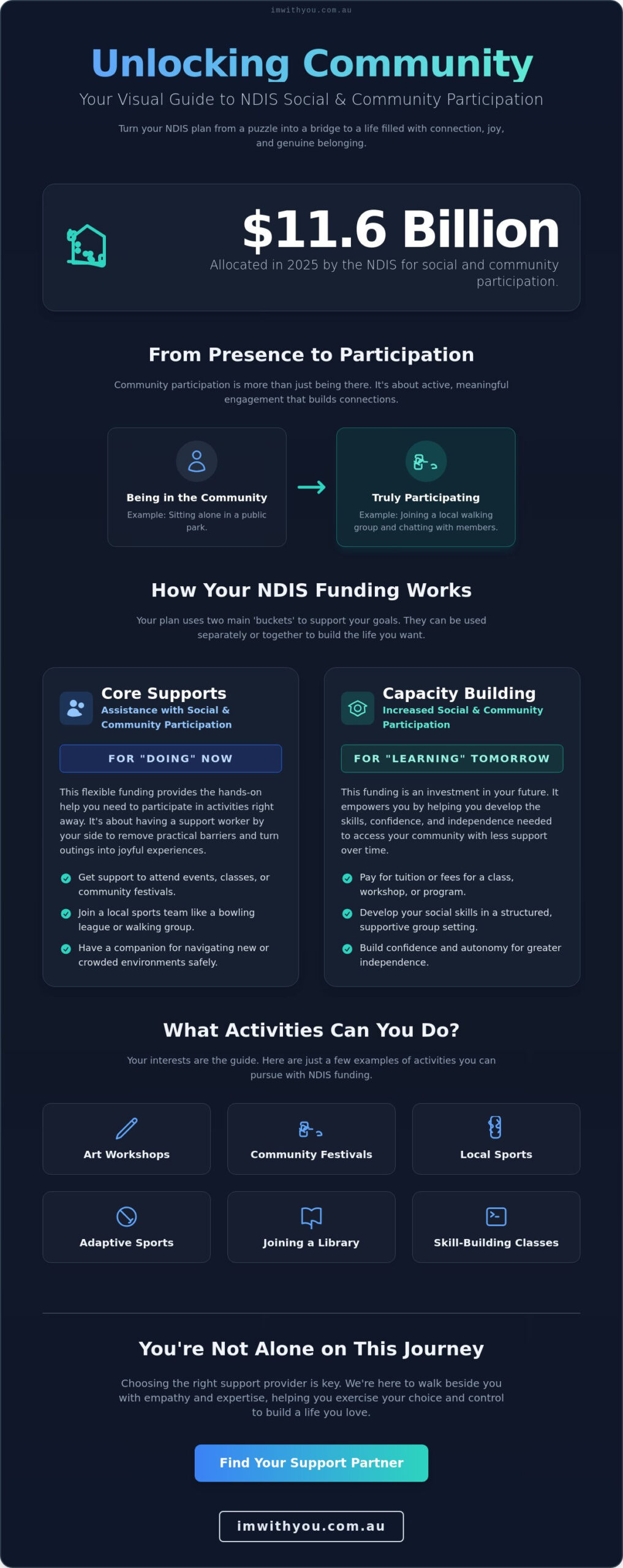
In 2025, the NDIS allocated $11.6 billion to social and community participation, proving just how vital these connections are for your well-being. This guide will help you discover exactly how to use your funding to build a life full of joy and genuine belonging. We’ll walk through the transition to “flexible” funding starting July 1, 2026, and share inspiring ways to use your supports for everything from local sports to art workshops. By the end, you’ll have the clarity and confidence to exercise your choice and control with a partner who stands right beside you.
Key Takeaways
- Discover how community participation empowers you to build a life of belonging through the sacred promise of Choice and Control.
- Gain clarity on what is considered community participation ndis by exploring how both Core and Capacity Building budgets support your social goals.
- Explore inspiring examples of recreational and social activities, such as adaptive sports and community festivals, tailored to your unique interests.
- Learn how to choose a support provider who acts as a steady companion, walking beside you with empathy and professional expertise.
Defining Community Participation in the NDIS Context
At its heart, community participation is your ability to connect with others and take part in local life. It’s about more than just being physically present in a room; it’s about the feeling of being seen, heard, and valued by those around you. Understanding what is considered community participation ndis helps you unlock the support needed to bridge the gap between isolation and belonging. Within the National Disability Insurance Scheme, this support is designed to ensure you aren’t just an observer in your own community. We view “Choice and Control” as a sacred promise to you, ensuring you have the agency to decide exactly how you want to interact with the world.
To better understand this concept, watch this helpful video:
Understanding what is considered community participation ndis requires a look at the difference between simply “being in the community” and “truly participating.” Being in the community might mean sitting in a park, but participating means joining a local walking group or chatting with a neighbor. True participation involves active engagement, like sharing a laugh with a teammate or contributing to a local garden project. Community participation is an NDIS support that removes barriers to social, recreational, or economic life.
Why Social Inclusion Matters for Your Wellbeing
Connection is a powerful tool for your holistic health. Engaging with others often leads to improved mental health and builds the confidence you need to pursue your goals. This isn’t just about “getting out”; it’s about living a dignified, independent life where you feel empowered. Every interaction is an opportunity to strengthen your sense of self and your place in the world. Exploring what are leisure activities can be a beautiful first step toward these deeper social connections. We’re here to walk beside you as you find the activities that spark joy and bring you closer to your community. Whether you’re trying a new hobby or returning to an old passion, you aren’t alone on this journey.
Understanding NDIS Funding: Core vs. Capacity Building
Navigating your plan budget can feel like learning a new language, but it’s simpler when we look at the two main “buckets” of funding. When asking what is considered community participation ndis, it helps to distinguish between the support you need today and the skills you’re building for tomorrow. In 2025, the NDIS allocated $11.6 billion to these areas, reflecting how essential they are for a full life. Generally, your funding falls into two categories: Core Supports and Capacity Building.
Core Supports, specifically “Assistance with Social and Community Participation,” is for the “doing.” This is where you find the support to attend an event or join a group right now. Capacity Building, labeled “Increased Social and Community Participation,” is for the “learning.” It focuses on developing the independence you need to eventually access the community with less help. You don’t have to choose just one. Many participants use both buckets to reach a single goal, such as using a support worker to attend a class while also using capacity building funds to pay for the tuition itself.
Using Your Core Supports for Daily Connection
Your Core budget is often the most flexible part of your plan. It allows you to have a support worker stand side-by-side with you as you explore new environments. Whether it’s helping you navigate a crowded festival or providing the physical assistance needed to join a local bowling league, this funding ensures you aren’t held back by practical barriers. We believe having someone with you can turn a stressful outing into a joyful experience of connection. This support is about presence and partnership, ensuring you feel safe and supported while you’re out and about.
Building Skills for Future Independence
Capacity Building is about empowerment. This funding can cover specialized programs, social skills workshops, or even camps designed to boost your confidence. These activities help you grow the tools needed for a more autonomous life. This is particularly important for those exploring supported independent living ndis, where social skills are vital for thriving in a shared home environment. If you’re feeling unsure about how to allocate your budget, we’re here to help you explore your options so you can make the most of every dollar in your plan.
What Activities Count? Real-World Examples of Participation
Understanding the theory of funding is one thing, but seeing how it transforms your daily life is where the real excitement begins. When we talk about what is considered community participation ndis, the possibilities are as varied as your own interests. Your funding is a tool designed to help you engage with the world in ways that feel meaningful to you. We’ve seen participants use their supports to move beyond their front door and into vibrant, active roles within their neighborhoods.
To give you a clearer picture, here are common activities that often qualify for support:
- Recreational pursuits: Joining an adaptive sports team, enrolling in a local pottery class, or participating in a community gardening group.
- Social connections: Meeting friends at a café, attending local music festivals, or joining a monthly book club at the library.
- Growth and education: Volunteering at a local animal shelter, gaining work experience in a community shop, or attending a TAFE course to learn a new skill.
Before you commit to an activity, it’s helpful to check if it meets the NDIS “Reasonable and Necessary” criteria. You might ask yourself: Does this help me reach the goals in my plan? Is it value for money? Is it something that a family member or friend would not typically be expected to provide? Having these answers ready gives you confidence when choosing how to spend your budget.
Exploring New Hobbies and Interests
We often find that trying something new is the spark that lights up a participant’s journey. You might discover a hidden talent for painting or a love for inclusive swimming that you never knew existed. The NDIS is designed to help you not just exist in your community, but to thrive within it. We encourage you to look at your local community center’s calendar and see what catches your eye. If you’re ready to start this journey, contact our team today to see how we can support your first steps.
The Role of a Support Companion
A support worker is more than just a person who drives you to an appointment. They are a companion who provides the gentle encouragement needed to step into new and sometimes intimidating environments. Their role is to facilitate your engagement, helping you introduce yourself to new people or navigate the social “rules” of a club. They stand side-by-side with you, ensuring you have the support to be an active participant rather than a quiet observer. This partnership is built on trust and a shared goal of increasing your independence over time.
Finding a Trusted Partner for Your Journey
Choosing the right support provider is a deeply personal step in your journey. It’s about finding a team that values your dignity and understands that your goals are the compass for everything we do. A great partner knows exactly what is considered community participation ndis for you specifically, whether that’s joining a local choir or learning to use public transport independently. You deserve a provider that balances professional NDIS expertise with a gentle, human touch. Empathy and reliability aren’t just traits; they’re the foundation of a safe and supportive relationship. Consulting an experienced ndis provider ensures you have a guide who truly listens to your story and respects your agency.
How ‘I’m with you’ Supports Your Community Goals
At “I’m with you,” we’re honored to have received the 2026 Excellence Award for our commitment to participant-led support. This recognition reflects our belief that you should always remain in the driver’s seat of your life. We take the time to learn about your passions and interests before matching you with a support worker. If you love art, we’ll find a companion who shares that spark. This collaborative matching process ensures that your time in the community feels natural and rewarding. We don’t just manage a case; we support a life.
Taking the First Step Together
Navigating your NDIS plan can feel like a heavy weight, but you don’t have to carry it by yourself. We’re here to stand beside you, providing the steady support and expert guidance you deserve. If you’re ready to explore how community participation can bring more joy into your life, we invite you to have a quiet, low-pressure conversation with us. We’ll listen to your needs and help you map out a path that feels right for you. Our promise is simple: we’re with you. You’re never alone on this journey.
Embrace Your Path to Connection
Finding your place in the world is a journey of discovery, and you now have the tools to navigate it with confidence. We’ve seen how understanding what is considered community participation ndis allows you to turn your funding into real-world experiences, whether through social clubs or skill-building workshops. By distinguishing between the support of a companion and the empowerment of new skills, you can make choices that truly reflect your personal goals. Your plan is more than a document; it’s a doorway to a life of belonging and purpose.
As the recipient of the 2026 Award for Excellence in Disability Support, we are deeply committed to standing side-by-side with you. We treat Choice and Control as a sacred promise, offering expert Support Coordination and Advocacy to ensure your voice is heard. Our team is ready to walk this path with you, providing the professional expertise and gentle touch you deserve. Let’s start your journey together—connect with our supportive team today. You have the strength to build a beautiful life, and we’re honored to be by your side.
Frequently Asked Questions
Can NDIS funding pay for club membership fees or tickets?
NDIS funding typically doesn’t cover club membership fees, movie tickets, or meal costs. These are considered everyday living expenses that any Australian would pay regardless of their disability. Instead, your plan covers the specific support you need to access these spaces, such as a support worker’s time or specialized transport. This ensures the focus remains on removing the barriers created by your disability rather than paying for the activity itself.
What is the difference between social and community participation?
Social participation focuses on building relationships with friends and family, while community participation involves engaging with the broader public in places like libraries or local events. When looking at what is considered community participation ndis, the goal is often to help you move from being a spectator to an active member of your neighborhood. Both categories work together to reduce isolation and foster a sense of belonging in your daily life.
Do I need a support worker to participate in community activities?
You don’t always need a support worker to engage with your community. While Core funding often pays for a companion to stand side-by-side with you, Capacity Building funds can help you learn the skills to navigate activities independently. We support your right to Choice and Control, meaning you decide whether you want a worker with you or if you’d prefer to use your funding for skill development or assistive technology—you can visit Mobility and You to see how a folding power wheelchair can support your autonomy. The choice is always yours.
Can I use my NDIS funding for a holiday under community participation?
NDIS funding cannot pay for your flights, hotel stays, or meals while on a holiday. However, it can cover the disability related costs of your trip, such as the wages for a support worker to travel with you or the hire of specialized equipment. This ensures you can enjoy your journey with the same level of support you have at home without the scheme paying for the leisure components of the trip. It’s about equity of access to travel.
How do I get community participation funding added to my NDIS plan?
You can request community participation funding during your planning meeting or a plan reassessment by linking the request to a specific goal. If you want to join a local group, clearly state this as a goal for your social or economic life. Providing supporting evidence from a therapist or a support coordinator can help demonstrate why this funding is reasonable and necessary. We recommend preparing a list of the activities you’re interested in before your meeting to show clear intent.