

What if a few days away from home wasn’t a luxury, but a vital part of maintaining your long term independence and wellbeing? You’ve likely felt the heavy weight of carer burnout or the nagging worry that the NDIS might view your need for a break as a “holiday” rather than a necessity. It’s a common fear that keeps many families from seeking the support they need to stay strong together. Understanding the ndis short term accommodation criteria is the first step toward replacing that anxiety with a clear path forward. We’re here to walk with you through this process, ensuring you feel heard and supported.
In this guide, we’ll help you understand exactly how the NDIS assesses these requests so you can access the respite you deserve. You’ll gain a clear perspective on the “Reasonable and Necessary” test and how it applies to the standard 28 days of STA funding typically allowed per year. We’ll explore how to successfully include this support in your plan to ensure a safe, restorative break for both the participant and their loved ones. By focusing on your choice and control, we can turn a complex regulatory hurdle into a journey toward empowerment and renewed energy.
Key Takeaways
- Understand why the NDIS is moving toward the term “Short Term Respite” and how this funding supports your needs away from home for up to 14 days.
- Learn how to navigate the ndis short term accommodation criteria by aligning your request with the “Reasonable and Necessary” framework for a successful outcome.
- Discover how to document the vital role of your primary carers, ensuring the NDIA recognizes the essential need for a supportive break for your whole network.
- Identify how to link your stay to specific capacity-building goals, allowing you to build independence and confidence while enjoying a change of scenery.
- See how we walk beside you to translate your unique life goals into a clear plan that protects your right to choice, control, and dignity.
What is NDIS Short Term Accommodation (STA) and Respite?
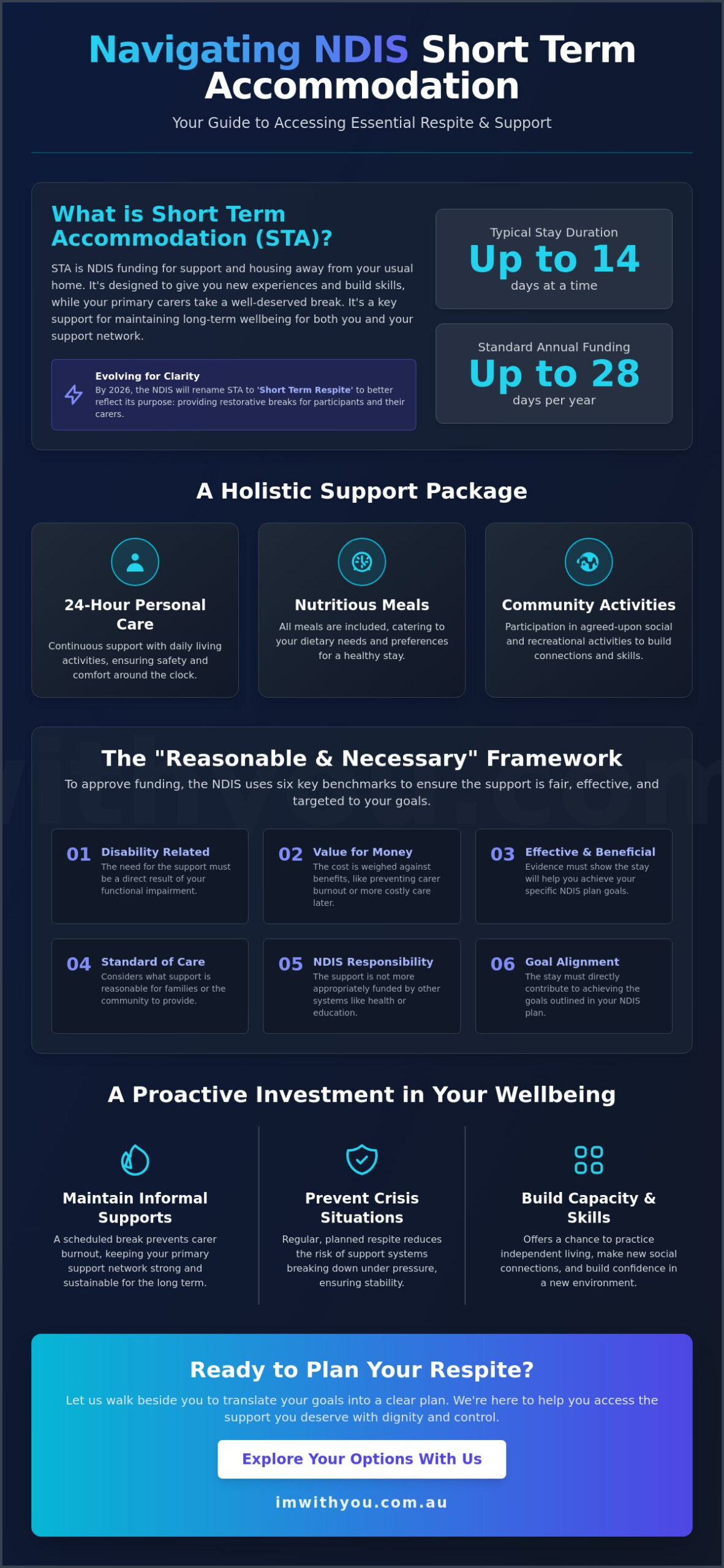
We understand that everyone needs a change of pace to recharge and grow. Within the National Disability Insurance Scheme (NDIS), Short Term Accommodation (STA) provides funding for support and housing away from your usual home. This support typically covers stays for up to 14 days at a time. It’s a gentle way for you to enjoy new experiences while your regular support system takes a breath. We see this as a vital part of your journey toward greater independence.
The NDIS is evolving to be even clearer about the purpose of this support. By 2026, the agency plans to transition the terminology from STA to ‘Short Term Respite.’ This naming shift emphasizes that the stay is as much about your personal growth as it is about giving your family or friends a rest. Meeting the ndis short term accommodation criteria ensures you have access to a safe, nurturing environment that feels like a true home away from home.
To better understand how these stays work in practice, you might find this video helpful:
When you access STA, your funding is designed to be holistic. It covers much more than just a bed for the night. Your package typically includes 24-hour personal care, all nutritious meals, and agreed-upon community activities. Whether you choose a group setting or individual support, the goal is to ensure you’re fully supported. We’re here to help you find a space where you feel empowered and valued.
Why the NDIS Funds Short Term Stays
The NDIS views these stays as a proactive investment in your long-term wellbeing and your ndis short term accommodation criteria eligibility often hinges on these goals:
- Maintaining Informal Supports: Your family and friends provide vital care; a scheduled break helps prevent their burnout and keeps your support network strong.
- Building New Skills: These stays offer a wonderful opportunity for capacity building. You can practice independent living skills and make new social connections in a fresh environment.
- Preventing Crisis: By providing regular, scheduled support, the NDIS reduces the likelihood of support systems breaking down under pressure.
We believe that by stepping away for a short time, you’re actually taking a big step toward a more sustainable and independent life. We’re with you every step of the way to ensure these breaks are meaningful and restorative.
Decoding the NDIS Short Term Accommodation Criteria
We understand that looking at the ndis short term accommodation criteria can feel like a lot to take in while you are managing your daily life. Our team is here to walk beside you through this process. To receive funding, every request must fit within the “Reasonable and Necessary” framework. This means the NDIA looks at whether the support is effective and represents value for money. They weigh the cost of the stay against the long-term benefits, such as preventing a caregiver burnout crisis or reducing the need for more expensive 24/7 care later. This support is now called short term respite because its primary purpose is to give you and your carers a necessary break to recharge.
A vital part of the assessment is the “Sustainability of Care” test. This ensures that by giving your family or informal supports a rest, they can continue their role in the long term. Your stay must also align directly with your specific NDIS plan goals. If your goal is to build independence or social skills, we help you show how a short stay makes that happen. If you’re feeling unsure about your eligibility, we can explore your options together to find a path that honors your needs.
The 6 Rights of Respite Funding
The NDIA uses six specific legal benchmarks to justify funding for your stay. These ensure the support is fair and targeted to your individual journey:
- Disability Related: The support must be directly linked to your functional impairment.
- Value for Money: The cost must be competitive and the benefits must justify the A$ spend.
- Effective and Beneficial: There must be evidence that the stay helps you achieve your goals.
- Standard of Care: The NDIS considers what is reasonable for families or the community to provide.
- NDIS Responsibility: The support shouldn’t be something more appropriately funded by the health or education systems.
- Goal Alignment: The stay must help you move toward the outcomes listed in your current plan.
It’s important to distinguish between a holiday and respite. The NDIS won’t fund a vacation just for leisure. Respite is funded because it provides clinical or developmental support, capacity building, and essential relief for your support network. Under the 2026 NDIS guidelines, Reasonable and Necessary support is defined as evidence-based funding that specifically addresses disability-related needs while fostering social and economic participation in a cost-effective manner.
How to Demonstrate Your Need for Short Term Support
Proving your eligibility involves more than just filling out forms; it’s about telling your story with clarity and heart. To meet the ndis short term accommodation criteria, we focus on a four-step process that highlights your unique journey. First, document the impact on your primary carers. Data from the Australian Bureau of Statistics indicates that informal carers provide billions of hours of unpaid care annually, and the NDIS recognizes that for this support to remain sustainable, carers need regular, planned breaks.
Next, identify specific capacity-building goals. A short stay isn’t just a holiday; it’s an opportunity to practice living independently or to build social skills in a new environment. You’ll then gather supporting evidence. When the NDIA reviews your request, they look closely at how the support aligns with NDIS funding criteria to ensure the investment is both reasonable and necessary. Finally, prepare a ‘respite statement’ for your plan review. This personal account describes exactly how a break helps you maintain your current living arrangements and prevents burnout.
Evidence That Makes a Difference
The words we use carry immense weight. We recommend using person-first language in all reports to ensure the focus remains on your strengths and agency rather than just a diagnosis. A skilled Support Coordinator acts as your advocate during this time, helping you bridge the gap between your daily needs and the technical requirements of the ndis short term accommodation criteria.
Occupational Therapy (OT) reports are often the most vital piece of the puzzle. An OT can provide a detailed Functional Capacity Assessment that justifies the need for 24/7 care during your stay. This professional insight demonstrates to the NDIA why standard community participation isn’t enough to meet your needs. We understand that gathering this evidence can feel like a mountain to climb, but you don’t have to do it alone. If you’re ready to explore how these supports can change your life, contact our friendly team to start your journey today.
Finding the Right Path with I’m With You
We understand that the NDIS can feel like a maze. At I’m With You, we don’t just point the way; we walk right beside you through every step. Meeting the ndis short term accommodation criteria involves more than just ticking boxes on a form. It’s about ensuring your funding creates a meaningful impact on your daily life. We help you translate your long-term goals into a practical plan that includes essential respite, making sure you get the support you deserve.
Our approach focuses on joy and connection. We don’t see respite as a clinical transaction. We see it as an opportunity for you to thrive in a safe, welcoming environment. Whether you need a short break to recharge or a space to practice new skills, we’re here to make it happen with dignity and warmth. You aren’t just another participant to us; you’re a person with unique dreams and preferences.
Beyond Just a Room: A Holistic Approach
We believe your stay should be an enriching experience that goes far beyond basic care. This involves integrating leisure activities into your time with us, which helps build your confidence and social connections. Every activity is chosen to help you grow while you relax, ensuring your stay contributes to your overall capacity building.
Safety is the foundation of everything we do. Our expert staff are trained in safe medication administration, ensuring your health needs are met with precision and care. This professional oversight allows you and your family to have total peace of mind, knowing you’re in capable hands. We manage the technical details so you can focus on your journey.
We hold the principle of Choice and Control as a sacred promise. You are the architect of your respite experience. From the meals you enjoy to the way you spend your afternoon, you stay in the driver’s seat. Our role is to provide the steady, expert support that makes your choices possible, upholding your independence at every turn.
Starting the conversation is easy. We’re ready to listen to your needs and help you explore how short-term support can fit into your life. Reach out to the I’m With You team today to begin your journey with a companion who truly stands by you.
Taking the Next Step Toward Your Independence
Navigating the ndis short term accommodation criteria doesn’t need to feel like a hurdle. You now understand that STA is a powerful resource for building your skills while giving your carers a much-needed rest. By showing how these supports help you meet your personal goals, you create a clear path toward a more independent and connected life. It’s about ensuring you have the space to grow in an environment that feels safe and supportive.
At I’m With You, we believe you shouldn’t have to manage these complexities alone. Our expert Support Coordination team provides the steady guidance you need to secure the right funding and services. We’re honored to hold the 2026 Award for Excellence in Disability Care, reflecting our deep dedication to the people we support. Our work also includes active national advocacy for participant rights because we believe your choice and control are sacred promises that must be protected.
Let’s explore your NDIS journey together—contact our friendly team today
We’re ready to stand beside you and turn these possibilities into your reality. You have a bright future ahead, and we’re truly lived to be part of it.
Frequently Asked Questions
Can I use my Core Supports budget for Short Term Accommodation?
Yes, you can typically use your Core Supports budget for STA if it’s funded under the ‘Assistance with Daily Life’ category. This flexibility gives you the choice and control to use your funding for a short stay that supports your well-being. We’ll stand beside you to help check if your current plan has the right budget flexibility for this support.
What is the maximum number of days the NDIS will fund for STA?
The NDIS usually funds up to 28 days of Short Term Accommodation per year for participants. Most people use this in blocks of 14 days or less to enjoy a weekend away or a holiday break. This 28-day limit is a standard benchmark used by the NDIA to ensure you have regular opportunities for respite and skill-building throughout the year.
Does the NDIS pay for my food and transport during a respite stay?
Yes, your STA funding is a bundled rate that includes the cost of your 24-hour support, food, and local transport. When you meet the ndis short term accommodation criteria, your provider manages these daily costs as part of the service. It’s a holistic approach that ensures you don’t have to worry about extra out-of-pocket expenses for meals while you’re away from home.
What happens if I need more than 28 days of Short Term Accommodation per year?
If you need more than 28 days, you’ll need to provide the NDIS with specific evidence showing that your needs have changed. This might involve a new assessment from a healthcare professional or a formal plan review to look at your circumstances. We’re here to guide you through these steps, making sure you aren’t alone when navigating the complexities of requesting additional support days.
Is Short Term Accommodation the same as Supported Independent Living (SIL)?
No, Short Term Accommodation is a temporary support for up to 14 days at a time, whereas Supported Independent Living is for your permanent home. STA is often used for respite or to try new things, while SIL provides daily help for people living in a long-term arrangement. Knowing the ndis short term accommodation criteria ensures you choose the right support for your current stage of life and independence goals.