
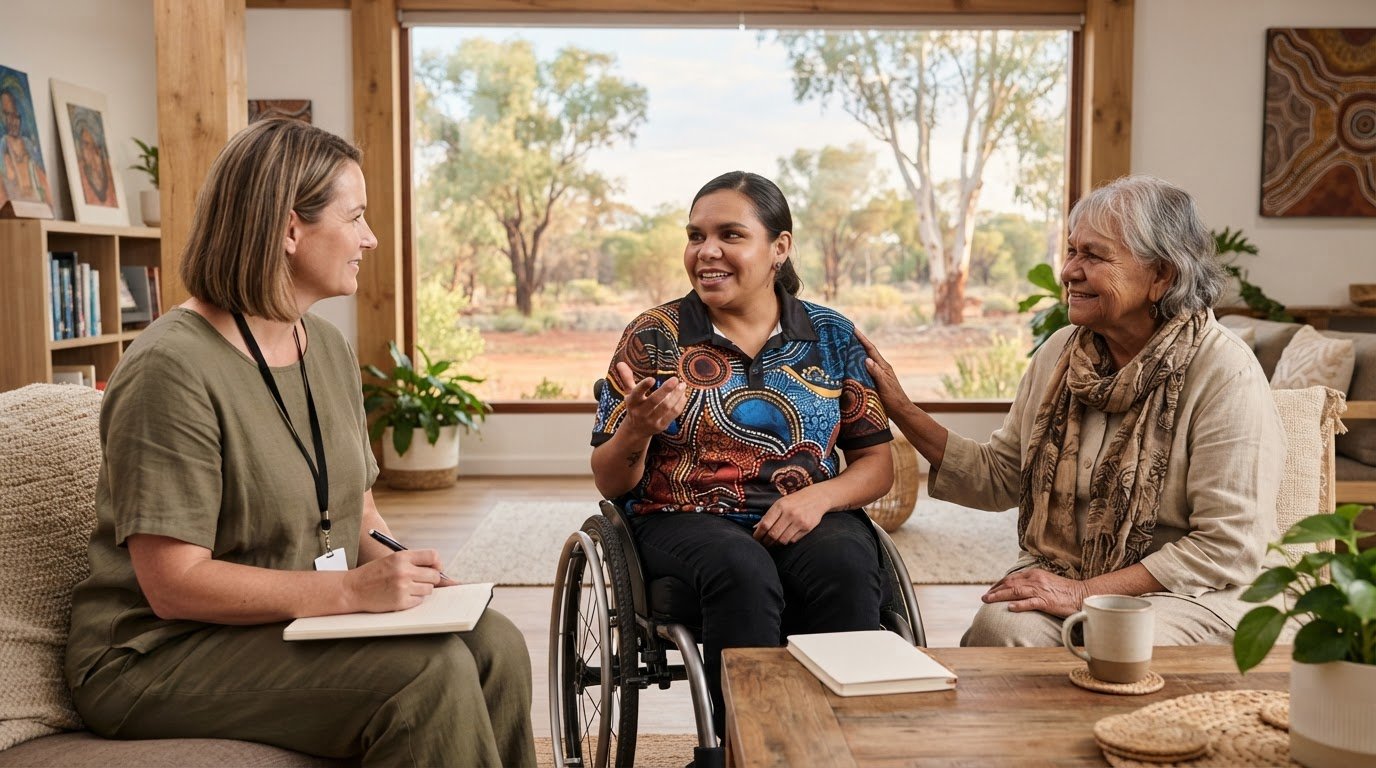
What if the most helpful NDIS support starts not with a service, but with what matters to you? Your priorities, relationships and connection to culture and Country can help shape the support you want in everyday life. This guide to ndis support for aboriginal and torres strait islander peoples offers practical ways to keep those priorities at the centre.
It’s understandable to feel unsure about what support can involve or how to make sure your preferences are heard. You can take it one step at a time. We’ll look at ways to prepare for support conversations, compare options such as support coordination and community participation, and express your preferences and boundaries. Your choices and the people you want involved can remain part of the conversation.
Key Takeaways
- Meaningful ndis support for aboriginal and torres strait islander peoples responds to the individual’s needs and perspective, rather than assumptions about identity.
- Before support discussions, note what matters to you, how you prefer to communicate, and any boundaries you want respected.
- You decide whether family, kin, an advocate or other chosen people join conversations about your support.
- Support coordination, advocacy and community participation can serve different purposes. Start with the kind of help you want.
NDIS Support for Aboriginal and Torres Strait Islander Peoples: What Person-Led Support Means
NDIS support is assistance funded through the National Disability Insurance Scheme to help a person work towards their goals and take part in everyday life. For a plain-language overview of the National Disability Insurance Scheme (NDIS), you can explore how the scheme is structured. In practice, support might relate to daily activities, building skills or joining community life. The right mix depends on the person, not assumptions about their identity or what they should want.
Person-led support starts by listening to what you want help with and how you want that support to work. Cultural safety isn’t a standard checklist that can be completed the same way for everyone. It means paying attention to how you experience an interaction, whether you feel respected and what would help you feel heard. Your perspective matters more than a provider’s assumptions.
“Person-led support honours choice and dignity by keeping the individual’s priorities at the centre of each decision.”
How can support respect culture, identity, and personal choice?
Preferences differ from person to person. A respectful conversation makes room for you to explain what feels comfortable, what you want help with and what you’d rather manage in your own way. Family, kin, community and cultural connections may be important to your life, but their involvement should reflect your wishes. You can begin by sharing what matters most and agreeing how you’d like those conversations to happen.
- What would you like support to help you do in daily life?
- How do you prefer people to communicate with you?
- Who, if anyone, would you like involved in discussions?
- Are there boundaries or preferences you want support workers to understand?
You can revisit these points as your needs or priorities change. Sharing them gives others a practical starting point for working alongside you, rather than deciding what matters on your behalf.
How to Shape NDIS Support Around Your Priorities and Preferences
A little preparation can make a support-planning conversation feel more manageable. You don’t need every answer ready. A few notes can help keep the discussion focused on what matters to you, rather than getting lost in unfamiliar terms or other people’s expectations.
- Choose your priorities. Note what you’d like support to help with now, and what you may want to work towards over time.
- Plan how to communicate. Consider what helps you take in information and share your views, such as having time to think or receiving information in writing.
- Name your boundaries. Write down what you’re comfortable with, what you’d prefer to do yourself and anything you want handled differently.
- Decide who joins you. You choose whether family, kin, an advocate or another support person takes part. You can also decide what role you’d like them to have.
Your support preferences belong to you, and you can express them in your own way and on your own terms.
What can you raise in a support-planning conversation?
Everyday details can make your priorities clearer. You might talk about routines you want to maintain, activities or community participation that matter to you, and goals you’d like support to work towards. You can also describe what respectful support looks like in practice, including how you want people to communicate and respond if something doesn’t feel right.
Keep a short list of questions and bring it along or share it beforehand if that suits you. The First Nations Connect phone service is another NDIS information point you can read about. Preferences can change as life changes, so it’s okay to return to them and ask for a conversation that reflects what matters now. If you’d like a partner alongside you, explore personalised disability support with Im with you.
NDIS Support Options and Ways I’m With You Can Walk Alongside You
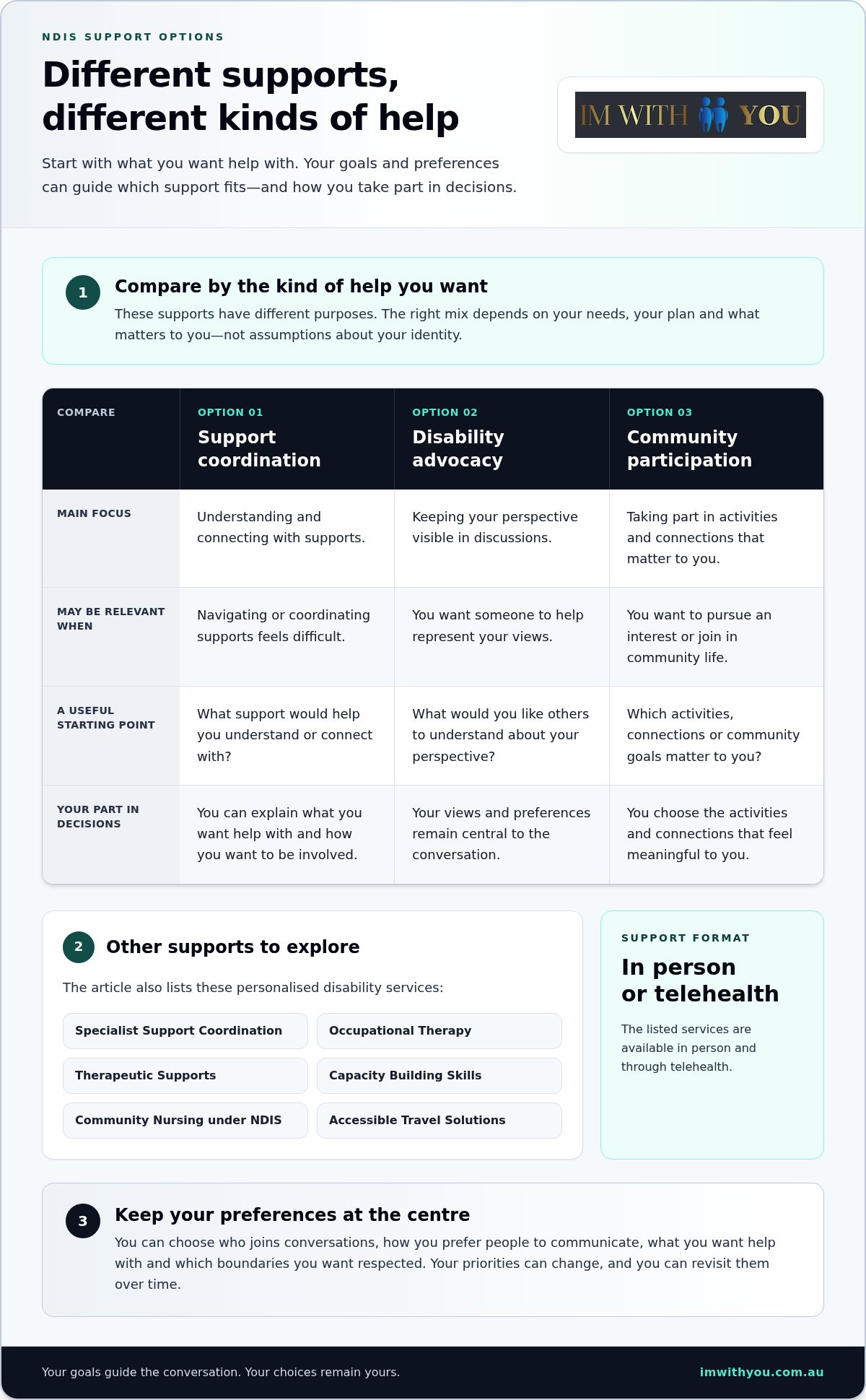
NDIS supports can take different forms, depending on what you want help with and what your plan includes. Im with you provides personalised disability services, including NDIS Support Coordination, NDIS Specialist Support Coordination, Disability Advocacy Services, Community Participation Support, Occupational Therapy, Therapeutic Supports, Capacity Building Skills, Community Nursing under NDIS and Accessible Travel Solutions. Services are available in person and through telehealth.
Each option has a different focus. Support coordination can help you understand and connect with supports. Disability advocacy can help keep your perspective visible in discussions. Community access and social participation focus on taking part in activities and connections that matter to you, such as exploring an interest or joining community life. To compare options, start with the support you want, the activity or goal it relates to, and how you want to be involved in decisions. The support should reflect your goals, not assume what you value.
Which supports might help with connection, daily life, or navigating services?
If understanding and coordinating supports feels difficult, support coordination may be relevant. If you want someone to help represent your views, disability advocacy may be useful. For participation and connection, community access or social participation may help you pursue activities that feel meaningful. You can also explore how to choose an NDIS provider and consider whether the language used for and about you feels respectful, including the principles of person-first language.
Im with you was recognised with the 2026 Australian Enterprise Award for Excellence in Disability Support and Advocacy. The award recognises disability support and advocacy; it is not a cultural accreditation. We work alongside you with care and respect, while your experiences and preferences guide conversations about support.
Take Your Next Step at Your Own Pace
Your next step doesn’t need to be a big one. You might begin by choosing one priority you’d like support to help with, or by writing down a question you want answered. Your preferences can guide the conversation as you explore what ndis support for aboriginal and torres strait islander peoples could look like in your life.
At Im with you, we believe support should be shaped around the person, with dignity, choice and individual priorities in view. We provide personalised disability support and advocacy, with options including support coordination, community participation and occupational therapy.
Explore personalised support with Im with you. We’re here to walk alongside you as you consider your options, one conversation at a time.
Frequently Asked Questions
Can Aboriginal and Torres Strait Islander peoples access NDIS support?
Yes. Aboriginal and Torres Strait Islander peoples can access the NDIS if they meet the scheme’s eligibility and access requirements, which are the same for all applicants. Identity alone doesn’t determine eligibility. This guide to ndis support for aboriginal and torres strait islander peoples can help you understand support options, while the NDIA can provide current information about applying and access.
What does culturally safe NDIS support look like?
It means support that respects how the individual wants to be treated, without assuming one approach suits everyone. In practice, a worker might ask how you’d like them to address you, explain what they’re doing before assisting and check whether the support feels comfortable. You can share what works for you and raise concerns if something doesn’t feel respectful.
Can family or community be involved in NDIS support planning?
Yes, if that’s what the person receiving support wants. You might invite a family member, kin, advocate or another trusted person to help you remember questions or communicate your preferences. You can also choose to speak for yourself, involve different people in different conversations or ask someone to join only for part of a discussion.
What NDIS supports can help with everyday life and community participation?
Depending on a person’s plan and needs, supports may include help with daily tasks, personal care or building everyday skills through Occupational Therapy or Capacity Building Skills. Community Participation Support can relate to hobbies, community events or social outings. Think about the activities you’d like to take part in and the practical assistance that could help you participate.