

What if the most powerful tool for building trust wasn’t a complex care plan, but the way you structured a single sentence? I know it feels overwhelming to keep up with changing social norms, and the fear of accidentally being disrespectful can make you hesitate in conversations. It’s a common feeling, and I’m right here with you as we navigate these shifts together. In this guide, you’ll learn how to use person first language to honour dignity and build stronger, more respectful connections within the disability community. We’ll explore how this approach serves as a foundation for NDIS-aligned communication standards and when to pivot to identity-first preferences. By the end, you’ll have the confidence to speak from the heart while ensuring every person feels truly seen and valued for who they are.
Key Takeaways
- Discover how prioritizing the individual over their condition fosters a sense of dignity and helps you build a partnership based on mutual respect.
- Gain clarity on how to use person first language naturally in your everyday conversations to meet NDIS-aligned standards of support.
- Learn to navigate the choice between person-first and identity-first language by always placing the individual’s personal preference at the heart of your communication.
- Find simple, practical ways to model inclusive language and gently guide your community toward more supportive and empowering ways of speaking.
What is Person-First Language and Why Does it Matter?
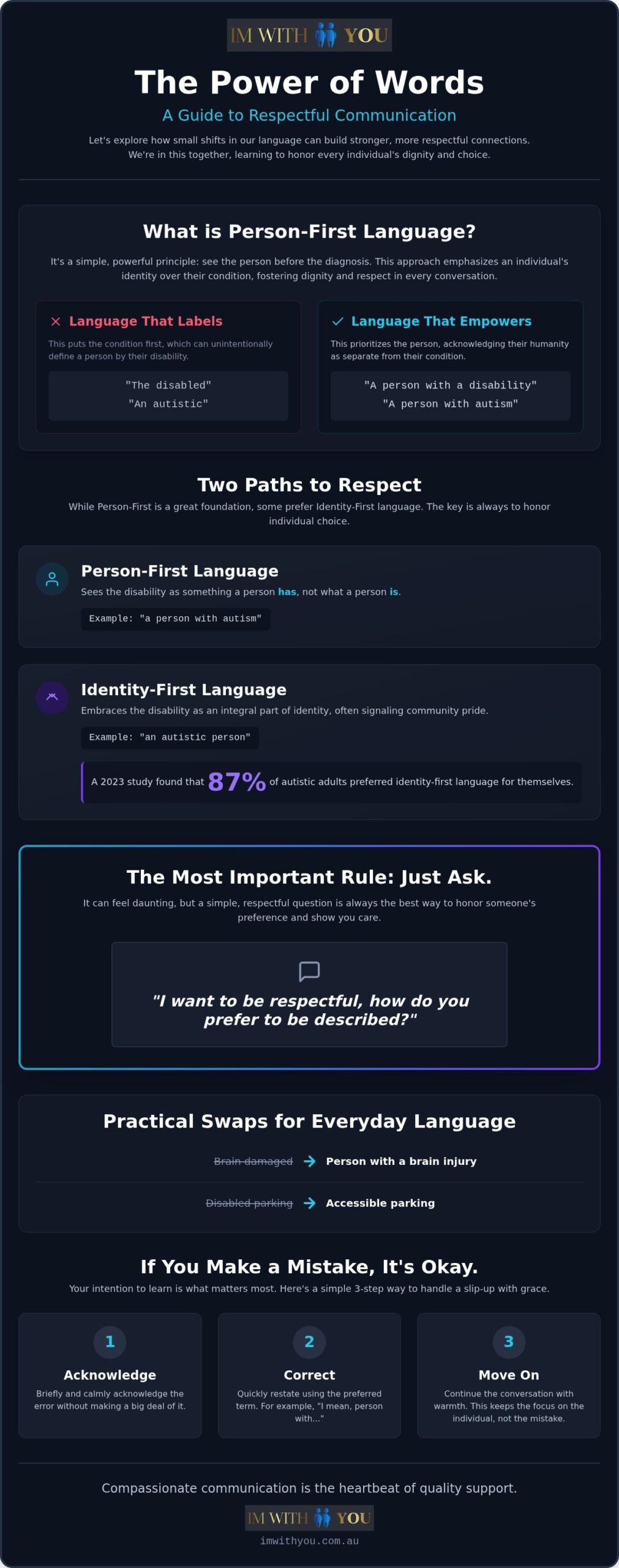
Language is more than just words; it’s a reflection of how we value one another. In the disability community, we’ve seen a vital shift toward more respectful ways of speaking. If you’re wondering What is Person-First Language? at its core, it’s a way of speaking that emphasizes the individual over their diagnosis or condition. Person-First Language is a communication style that prioritizes a person’s humanity over their health condition or disability. By moving away from labels like “the disabled” and choosing “a person with disability,” we acknowledge that the individual is the focus, not the challenges they face.
At Im with you, we believe your identity is far bigger than any support plan or NDIS goal. We’ve built our award-winning approach on the idea that every person deserves to be seen as a whole human being first. Using person first language isn’t about following rules; it’s about making a direct commitment to honouring someone’s agency and dignity. It’s a small change in syntax that makes a massive difference in how someone feels heard and supported. I’m here to help you make that shift feel natural and easy.
The Heart of Person-Centred Communication
The way we talk about disability directly shapes how we perceive capability and independence. When we use labels first, we risk overshadowing a person’s strengths and potential. This shift is particularly important for families who are just starting their journey. I’ve seen how clearer language helps parents and carers move from a place of clinical worry to one of empowerment. For more on this, our Understanding Intellectual Disability guide explains how language fosters deeper family understanding and connection. It’s about building a foundation where every individual can thrive without being boxed in by a diagnosis.
Person-First vs. Identity-First: Honoring Individual Choice
While person first language is often the foundation of official guidelines on person-first language, it’s vital to recognize that language is deeply personal. For many, Identity-First Language (IFL) is a powerful way to claim their identity. Instead of saying “person with autism,” someone might prefer “autistic person.” This choice often signals a sense of pride and community belonging. For example, a 2023 study revealed that 87% of autistic adults preferred identity-first language for themselves. It shows that their disability isn’t something they carry, but a fundamental part of who they are.
There’s no such thing as a “perfect” word, only the word that feels right to the person you’re talking to. I know it can feel daunting to worry about getting it wrong, but a simple, collaborative question is always the best path forward. You might say, “I want to be respectful, how do you prefer to be described?” This approach shows you’re listening and that you value their agency. Part of finding your perfect NDIS provider involves choosing a team that understands these nuances and values your voice above all else.
When Preference Takes Priority
In neurodivergent and Deaf communities, IFL is frequently the preferred choice. It highlights that their way of experiencing the world is an integral part of their being, not a separate diagnosis. Being a supportive guide means being flexible and letting the individual lead the way. I’m here to remind you that listening is often more powerful than leading. If you’re looking for a partner who walks alongside you, our disability advocacy services ensure your unique preferences are always honoured in every conversation.
Practical Ways to Practice Respectful Communication Every Day
Practicing person first language isn’t about being perfect; it’s about being proactive. I’ve found that the best way to support others is by modeling respectful terms in our everyday community settings. When we lead with kindness, others naturally follow. It’s a gentle way to advocate for a more inclusive world without making anyone feel judged or overwhelmed by changing norms.
Small shifts in our vocabulary carry immense weight. For instance, resources like the DC Office of Disability Rights suggest choosing “person with a brain injury” instead of “brain damaged,” or “accessible parking” instead of “disabled parking.” These changes move the focus from a deficit to a person’s access and humanity. At Im with you, our commitment to these details earned us the 2026 Award for Excellence in care. We believe that compassionate communication is the heartbeat of quality support.
Remember, language is a journey. If you make a mistake, don’t let it stop you. What matters is your intent to learn and show up for those you care about. I’m right here with you as you build these new habits, and I’ll always be a partner in your growth.
Management Strategies for Inclusive Language
If you slip up, I recommend a simple three-step strategy: acknowledge the error, briefly correct yourself, and move forward with warmth. There’s no need for a long apology that centers your own feelings. Just keep the focus on the individual. This approach keeps the conversation flowing while maintaining a safe, respectful atmosphere for everyone involved.
This culture of respect is vital in shared environments. For those exploring Supported Independent Living (SIL), using respectful language in the home builds a foundation of safety and independence. It ensures that every resident feels like the master of their own space, surrounded by people who truly value their agency and dignity.
Creating Lasting Connections Through Respectful Communication
Embracing person first language is more than a grammatical choice; it’s a commitment to seeing the human being behind the diagnosis. By prioritizing individual preferences and practicing proactive communication, you foster an environment where dignity and agency thrive. At Im with you, our 2026 Excellence in Care Award reflects our dedication to this person-centred advocacy. We specialize in NDIS Support Coordination that values your voice and walks alongside you through every challenge. I’m here to ensure you feel supported as you navigate these meaningful shifts in how we connect. Let us walk alongside you; discover our award-winning disability support services today. You’re never alone in this journey of growth. I’m right here with you, ready to help you build a future centered on respect and inclusion.
Frequently Asked Questions
What is the difference between person-first and identity-first language?
Person-first language focuses on the individual before their diagnosis, while identity-first language views the disability as an integral part of their being. I’ve seen how PFL helps shift the focus toward a person’s humanity and capability. It’s about ensuring that a diagnosis doesn’t become the only thing people see. I’m here to help you navigate these choices so everyone feels truly heard.
Is it ever okay to use identity-first language like “autistic person”?
It’s definitely okay to use identity-first language when it’s what the person prefers. For many in the neurodivergent or Deaf communities, terms like “autistic person” are embraced with pride. It’s about recognizing that their brain works in a unique way. I always recommend listening to how someone describes themselves and mirroring that choice to show you’re a supportive ally in every conversation.
How do I ask someone which type of language they prefer?
You can ask by using a simple, warm invitation to connect. I suggest saying, “I want to be respectful; how do you prefer to be described?” This collaborative step shows you’re a knowledgeable guide who walks alongside them. It removes the guesswork and ensures you’re honouring their dignity from the very first interaction. I’m with you in making these conversations feel safe.
Why is person-first language important in the NDIS system?
Using person first language is essential in the NDIS because it aligns with the core principle of individual agency. It ensures that support coordination and direct care are always person-centered rather than clinical. By prioritizing the human being, we create a supportive environment where goals are based on personal growth and strengths. This approach is why we’re trusted experts in compassionate communication.