
Imagine waking up and realizing the constant weight of caregiving has left your cup completely empty; you’re not alone in feeling that deep, quiet exhaustion. I understand that trying to figure out how to access ndis short term accommodation often feels like navigating a maze of jargon while you’re already running on fumes. It’s okay to feel overwhelmed by the “reasonable and necessary” criteria or even a little guilty for needing time away. I’m with you; seeking a break isn’t just about rest, it’s about sustaining the beautiful bond you share.
This guide offers a clear, supportive pathway to accessing Short Term Respite (STR) funding so you and your carers can recharge with confidence. As an award-winning provider, I’ll explain the 2026 pricing shifts toward unbundled services and how specialist support coordination helps you navigate these changes. We’ll explore the steps to demonstrate your needs to the NDIA, ensuring you have a steady partner to help secure a safe, joyful break.
Key Takeaways
- Discover how Short Term Respite (STR) serves as a restorative bridge, offering you new experiences while giving your informal carers a vital chance to recharge.
- Master the step-by-step process of how to access ndis short term accommodation by identifying personal goals and gathering the right evidence from your support team.
- Learn how to navigate the 2026 unbundled pricing changes with the help of Support Coordination to ensure your funding is managed transparently and effectively.
- Explore ways to choose a provider that truly listens to your needs, ensuring your medications, routines, and preferences are respected throughout your stay.
Understanding NDIS Short Term Accommodation and Respite
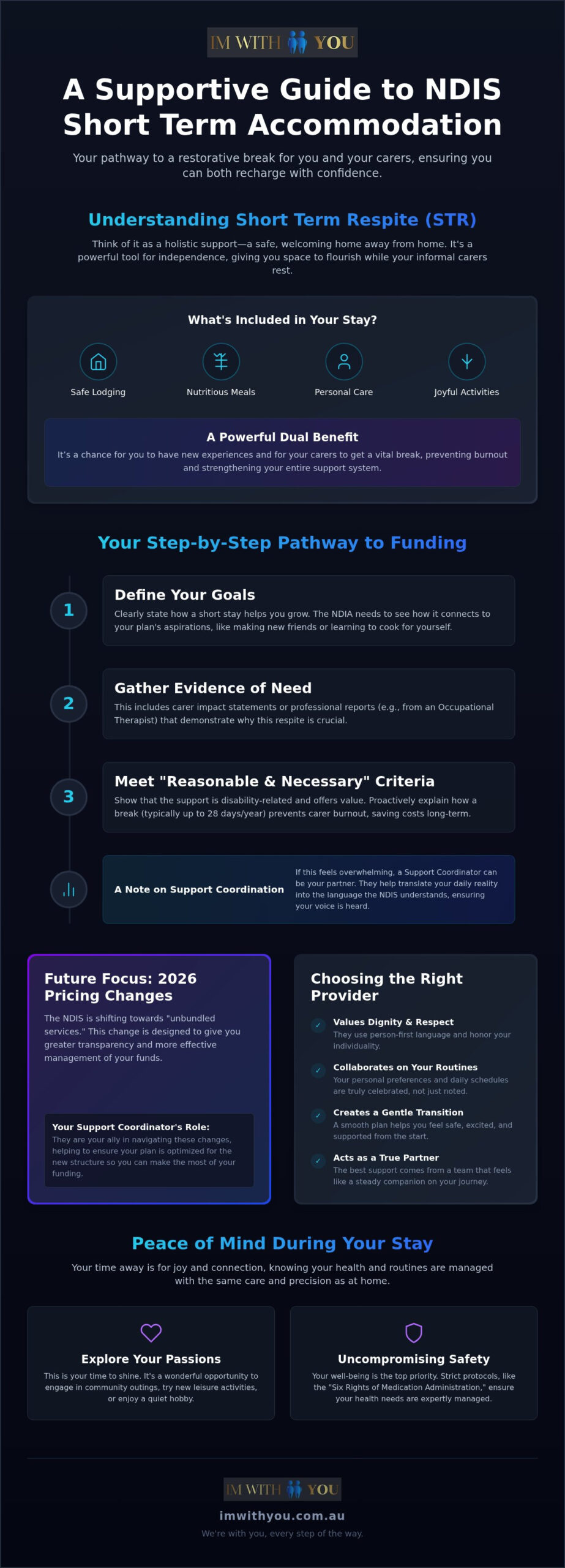
I want to start by reframing what this support really means for your life. Short Term Accommodation (STA), which is increasingly known as Short Term Respite, is a holistic support that provides a safe, welcoming home away from home. It’s much more than just a bed; it includes your lodging, nutritious meals, and personal care, alongside activities that spark joy and connection. I view STA as a powerful tool for social inclusion and independence, giving you the space to flourish in a new environment while your usual support network takes a moment to rest.
This support creates a beautiful dual benefit that strengthens the whole family. For you, it’s a chance to step out of your routine and embrace new experiences. For your loved ones, it offers a restorative break that prevents burnout. Within the National Disability Insurance Scheme (NDIS), this funding usually sits within your Core Supports budget. When you’re learning how to access ndis short term accommodation, it’s helpful to remember that this isn’t just an administrative line item; it’s a commitment to your well-being and the sustainability of your care.
Why STA is a Positive Step for Your Independence
Stepping into a different setting offers a wonderful opportunity to practice capacity building skills in a supportive, low-pressure way. Whether it’s navigating a new kitchen or engaging in community outings, these moments build immense social confidence. I’m with you in recognizing that choosing respite is a proactive, healthy management strategy. It ensures your carers can continue providing their best support by giving them the time they need to recharge. This change of scenery isn’t just a holiday; it’s a meaningful step toward a more independent and dignified life.
How to Access NDIS Short Term Accommodation Funding
Navigating the path to funding can feel like a heavy climb when you’re already tired. I’m with you; I want to make the process of how to access ndis short term accommodation as smooth as possible. It starts with your goals. Think about how a short stay helps you grow as an individual. Does it help you make new friends or learn how to cook for yourself? The NDIA needs to see that this support directly relates to the aspirations written in your plan.
Once your goals are clear, we need to gather your “evidence of need” to complete the process of how to access ndis short term accommodation. This usually includes a heartfelt carer impact statement or professional reports from your occupational therapy team. If you’re feeling stuck, our ndis support coordination can help you translate your daily reality into the language the NDIS understands. We’ll walk alongside you to ensure your voice is heard during your planning meeting or plan review. Our experts specialize in making these complex systems feel safe and manageable for you.
Meeting the Reasonable and Necessary Criteria
To secure NDIS Short Term Accommodation, the support must be deemed reasonable and necessary. This means it’s disability-related and represents value for money. Because funding is typically limited to 28 days per year, I suggest documenting how this specific block of time saves the scheme money in the long run. By supporting your primary carers now, you’re ensuring they can continue their vital role without reaching a breaking point. It’s a proactive management strategy that keeps your support system strong. If you’re ready to start this journey, our team is here to help you explore your coordination options today.
Choosing the Right Support and Managing Your Stay
Finding the right home away from home is about more than just facilities; it’s about the heart of the team. When you’re figuring out how to access ndis short term accommodation, look for a team that uses person-first language to honor your dignity. I’m with you in prioritizing respect and warmth over clinical efficiency. A great provider will collaborate closely with you to ensure your daily routines and personal preferences aren’t just noted, but truly celebrated.
Transitioning to a new space can feel daunting, so I recommend creating a gentle transition plan. This ensures you feel safe and excited rather than anxious. Organizations like Carers Australia emphasize that quality respite should feel like a partnership. I believe that true peace of mind flows from choosing an ndis provider who acts as a steady companion through every step of your journey.
What to Expect During Your Short Term Stay
Your stay is a wonderful time to explore what are leisure activities that bring you the most joy. Whether it’s a local community outing or a quiet hobby, it’s your time to shine. To keep you safe, our teams follow strict protocols like the six rights of medication administration. This ensures your health needs are managed with the same care you’d receive at home. Knowing how to access ndis short term accommodation includes knowing you’ll be safe, respected, and genuinely cared for.
Embrace the Opportunity for a Supportive Break
Securing a moment to breathe is a vital part of your long term well-being. By understanding how to access ndis short term accommodation, you’re opening doors to new experiences and essential rest for your loved ones. We’ve explored how identifying clear goals and gathering strong evidence can turn a complex application into a successful reality. As a provider recognized with the 2026 Award for Excellence in Disability Care, I’m here to ensure you never feel lost in the process. My national advocacy and support expertise are at your service to help you navigate every requirement with dignity and clarity.
I’m with you—let’s explore how we can support your journey to Short Term Accommodation today. You don’t have to manage these systems alone; let’s walk this path toward renewal together. Every step you take is a beautiful move toward a more independent and joyful future.
Frequently Asked Questions
Is Short Term Accommodation the same as respite?
Yes, Short Term Accommodation is the same as respite. In October 2025, the official NDIS terminology transitioned to “Short Term Respite” to better reflect its purpose. While both names are common, the goal remains identical: providing a supportive environment for you to build skills while your informal carers take time to recharge. I’m here to help you understand these naming shifts as they evolve.
How many days of STA can I get in my NDIS plan?
Generally, the NDIS funds up to 28 days of Short Term Respite per year. It’s most effective when used in smaller blocks, such as 14 days or less, to ensure you receive consistent support throughout the year. If you’re wondering how to access ndis short term accommodation for a longer period, you’ll need to provide significant evidence that it’s reasonable and necessary for your situation.
What if I do not have a specific line item for STA in my budget?
If you don’t see a specific line item, don’t worry; this support is typically funded under your Core Supports budget. You can often use your flexible core funding if the stay helps achieve your goals. However, if your budget is tight, I recommend requesting a plan review. Our support coordination team can assist you in documenting why this respite is essential for your care.
Can I use STA for a holiday or accessible travel?
No, the NDIS is clear that Short Term Respite is not a holiday. While we offer accessible travel solutions, STR funding must focus on disability support and carer respite. As of 2026, the NDIA applies stricter scrutiny to ensure funds aren’t used for recreational travel. It’s about your growth and well-being, focusing on skill building and providing your support network with a vital rest.