

Last Tuesday, Sarah spent three hours staring at her NDIS portal, heart racing as she tried to calculate if she had enough funding left for her speech therapy sessions without overspending before her next review. If you’ve felt that same tightening in your chest while looking at a budget spreadsheet, you aren’t alone. We know that managing ndis funding anxiety is often more exhausting than the disability itself. It’s completely normal to feel caught between the fear of running out of support and the worry that underspending might lead to a smaller budget next year.
You deserve to feel a sense of peace regarding your budget, rather than constant stress over complex terminology and administrative hurdles. This guide offers compassionate strategies and practical tools to help you move from feeling overwhelmed to feeling truly empowered in your journey. We’ll explore clear steps to simplify your daily administration and discuss how finding a provider who walks beside you can transform your experience of choice and control from a regulatory requirement into a lived reality. We’re here to help you navigate these numbers with confidence and ease.
Key Takeaways
- Understand why your stress is a valid response to “invisible labor” and learn how to shift from a deficit-based mindset to one centered on your unique strengths.
- Demystify common triggers like the “use it or lose it” myth to navigate your plan reviews with a sense of calm and professional clarity.
- Discover practical tools and a “gentle rhythm” for managing ndis funding anxiety, ensuring your budget tracking feels light and manageable rather than overwhelming.
- Learn how a Support Coordinator can act as your emotional shield and advocate, translating complex bureaucracy into simple, actionable steps for your life.
- Explore how to reclaim your sacred right to choice and control by turning administrative chaos into a compassionate, person-centered journey where you are never alone.
Understanding NDIS Funding Anxiety: Why It Is More Than Just Budgeting
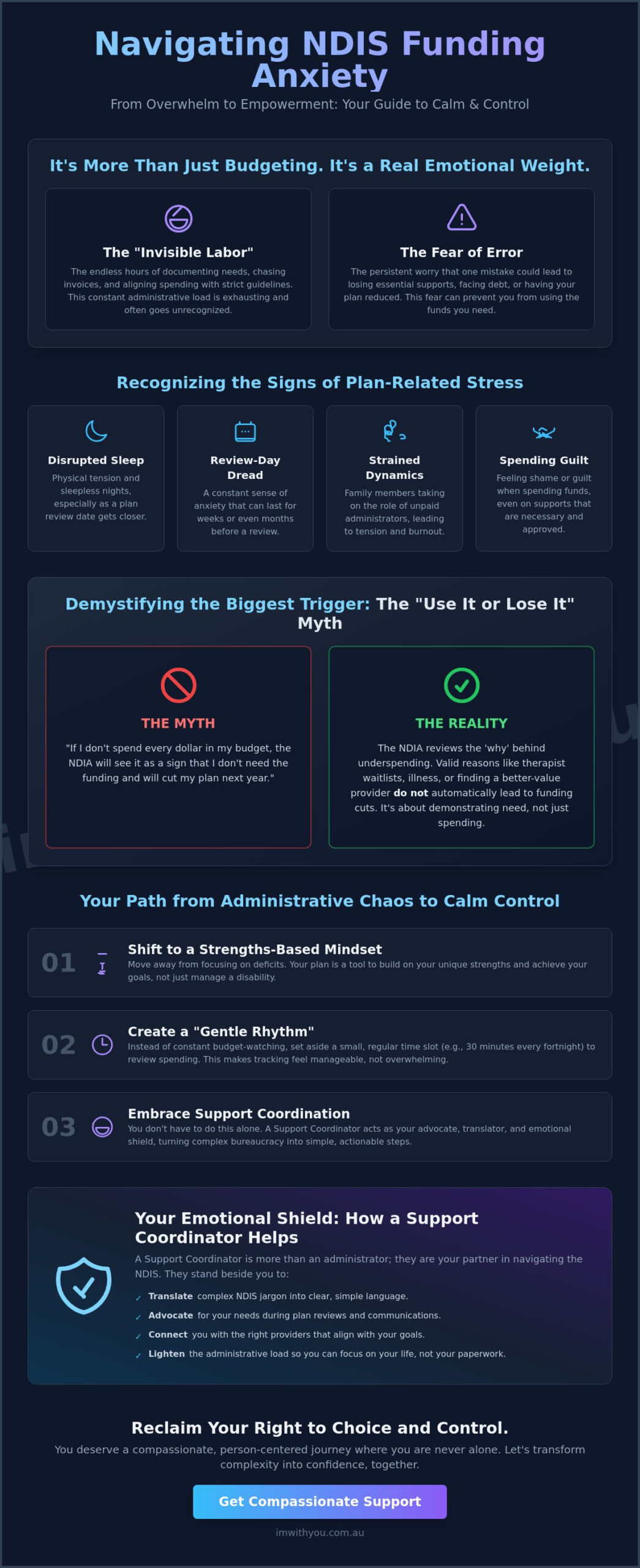
Living with a disability involves many layers of coordination. When we talk about managing ndis funding anxiety, we’re describing a very real emotional response to a complex system. It isn’t just about balancing a budget or tracking A$ amounts in a portal. Instead, it’s the persistent, heavy fear that a single administrative error might result in the loss of essential supports. This anxiety stems from the “invisible labor” you perform every day; the hours spent documenting needs, chasing invoices, and worrying if your spending aligns with strict guidelines.
The National Disability Insurance Scheme (NDIS) was designed to provide support, yet the 2023 NDIS Review highlighted that many participants find the scheme’s complexity overwhelming. This stress often leads to “under-utilization,” where people avoid using their allocated funds because they’re terrified of “doing it wrong” and facing a debt or a reduced plan later. We see this often, where the fear of the system prevents people from accessing the very therapies that would improve their lives.
To better understand how these administrative tasks work in practice, watch this helpful video:
The Emotional Weight of ‘Choice and Control’
The NDIS promises participants the power to lead their own lives. While this independence is vital, it paradoxically creates a significant mental burden. You aren’t just a participant; you’re often forced to become an employer, a bookkeeper, and a manager of your own care. This shift can feel exhausting rather than empowering. We believe that Choice and Control is a sacred promise of dignity, not just a rule. It should feel like an open door, not a heavy weight you have to carry alone. When the responsibility feels too great, it’s okay to ask for a hand to hold.
Recognising the Signs of Plan-Related Stress
Funding anxiety doesn’t just stay in your mind; it shows up in your body and your relationships. You might notice physical and emotional symptoms that signal you’re reaching your limit. These often include:
- Disrupted sleep or physical tension as a plan review date approaches.
- A sense of “review-day dread” that lasts for weeks or months.
- Strained family dynamics when partners or parents take on the role of unpaid plan administrators.
- Feelings of guilt or shame when spending funds, even on necessary supports.
When these feelings start to impact your psychosocial wellbeing, it’s a sign that the system is asking too much of you. The impact of this stress can contribute to carer burnout and a sense of isolation. Seeking professional advocacy or support coordination can lighten this emotional load. We are here to walk beside you, ensuring that managing ndis funding anxiety becomes a shared journey rather than a solitary battle. You deserve to focus on your life, not just your paperwork.
The Common Triggers of NDIS Stress and How to Navigate Them
Understanding where the pressure comes from is the first step in managing ndis funding anxiety. Many participants feel a heavy weight when they look at their NDIS portal, fearing that one wrong move might jeopardize their future support. We want to help you dismantle those fears by looking at the facts behind the most common stressors.
The “Use it or Lose it” myth is perhaps the biggest source of panic. You might worry that if you don’t spend every A$1 in your budget, the NDIA will slash your funding next time. This isn’t how the process works. The Agency looks at why funds weren’t used. If a therapist had a six-month waitlist or you were unwell, those are valid reasons that don’t reflect a reduced need for support. We focus on the “why” so your next plan remains robust and relevant to your life.
Compliance and audits also cause significant worry for self-managed and plan-managed participants. The NDIA simply wants to see that your spending aligns with your goals and meets the “reasonable and necessary” criteria. You can lower your stress by keeping a simple digital folder of invoices and receipts. This small habit ensures you’re always prepared, allowing you to focus on your progress rather than paperwork.
Navigating the Plan Review Without the Fear
The plan review often feels like a test you didn’t study for, but it doesn’t have to be. We recommend a “little and often” approach to gathering evidence. Instead of a mad scramble the week before your meeting, keep a journal of how your supports are helping you reach your goals. This is particularly important when intellectual disability documentation is involved. These reports require a nuanced, person-centered perspective that highlights your strengths and aspirations. Having a companion or advocate at the table with you provides an extra layer of security, ensuring your voice isn’t lost in the technicalities.
The Anxiety of Support Gaps and Waitlists
It’s incredibly frustrating to have funding sitting in your plan while you’re stuck on a 12-month waitlist for an Occupational Therapist or Psychologist. When these gaps appear, it’s time to pivot. You might use your capacity-building funds to engage an Allied Health Assistant or a mentor who can provide immediate support while you wait for a specialist. Accessing support for people with psychosocial disability often requires this kind of creative flexibility. If your current funding genuinely doesn’t reflect your daily reality, we can help you take the advocacy steps needed to request a plan variation. You don’t have to face these hurdles alone; we are here to walk beside you through every change in your journey.
Practical Strategies to Calm the NDIS Administrative Chaos
We understand that looking at your funding portal can sometimes feel like facing a storm. The weight of managing ndis funding anxiety often stems from the fear of the unknown or the worry that a single mistake might disrupt your support. By establishing a ‘Gentle Rhythm’ for your administration, you can transform this chaos into a predictable, manageable part of your week. We’re here to help you move from reactive panic to proactive peace, ensuring your plan remains a tool for your independence.
Try a 10-minute weekly check-in. Choose a time when you feel most grounded, perhaps on a Tuesday morning with a fresh cup of coffee. Briefly scan your recent invoices and remaining balances to ensure everything aligns with your expectations. This small habit prevents the month-end rush and keeps you in the driver’s seat. It’s about reclaiming your Choice and Control without letting the paperwork consume your identity. We also suggest strictly separating your ‘Life Time’ from your ‘Admin Time’. Designate a specific chair or a set hour for NDIS tasks; once that time ends, close the folder. Your life is meant for living, not just for reporting.
Creating a Stress-Free Budgeting System
You don’t need to be an accountant to manage your funds effectively. Some participants find comfort in a simple spreadsheet template tracked in A$ amounts, while others prefer specialized NDIS management software designed to automate the heavy lifting. Many of these digital tools offer ‘low balance’ alerts that act as a gentle safety net, notifying you before a category runs thin so you can avoid service interruptions. Consulting the official NDIS guide on mental health supports can also provide clarity on how to use your budget for emotional well-being. Ultimately, a successful budget is one that serves the person, not the other way around.
Refocusing on Joy and Connection
Effectively managing ndis funding anxiety requires a conscious effort to look beyond the numbers. We encourage you to intentionally schedule time for what are leisure activities to balance the administrative weight of the scheme. Evidence shows that social participation can significantly lower the cortisol levels associated with the stress of plan management. You can work with your providers to integrate local hobbies or community groups into your capacity-building goals. This approach ensures your funding supports your journey toward social inclusion, turning a bureaucratic requirement into a bridge toward genuine human connection and personal growth.
How Support Coordination Can Be Your Emotional Shield
Managing ndis funding anxiety often feels like a full-time job you didn’t apply for. When you handle everything yourself, the weight of every invoice and every negotiation sits squarely on your shoulders. This DIY approach frequently leads to burnout. A professional Support Coordinator acts as a vital buffer between you and the technicalities of the system. They serve as your bureaucracy translator, turning complex NDIS terminology into clear, actionable choices. Instead of you spending hours deciphering a 50-page plan, they highlight what matters most for your daily life.
Your coordinator also handles the tough conversations that can feel so draining. If a provider isn’t meeting your standards or there’s a dispute about a service agreement, they step in to resolve the issue. This protection allows you to maintain a positive relationship with your support workers while someone else manages the contractual friction. We believe in building a team that understands your holistic needs. We look beyond the line items in your budget to ensure your supports actually improve your well-being, rather than just filling a schedule.
Finding an NDIS Provider Who Walks Beside You
Selecting an ndis provider is about more than just checking a box for a service. You need a partner who values empathy over mere efficiency. When you interview potential providers, ask questions that reveal their heart. You might ask, “How do you support my emotional safety when my needs change?” or “Can I speak with the same person consistently?” A steady companion prioritises your comfort and listens to your intuition. A service provider might offer the right support on paper, but a true companion makes you feel seen and heard during the difficult moments of managing ndis funding anxiety.
Advocacy: When You Need a Stronger Voice
There are times when the system creates hurdles that feel too high to jump alone. You have clear legal rights under Section 100 of the NDIS Act 2013 to request an internal review of a decision within three months. While a Support Coordinator helps you use your plan, an advocate helps you fight for the plan you deserve. Advocacy services are independent and focus on protecting your rights during appeals or reviews. They provide the expert backbone you need when the NDIA’s decisions don’t align with your goals. You never have to stand alone against a complex system.
If you feel overwhelmed by the technical side of your plan, contact our compassionate team today to discover how we can walk this path together.
I’m With You: Transforming NDIS Complexity into Compassionate Support
Navigating the NDIS shouldn’t feel like a solo trek through a storm. We’ve built our “Gentle Touch” service delivery model specifically to act as your anchor. By focusing on person-centered care, we strip away the clinical coldness that often makes managing ndis funding anxiety feel like an impossible task. We don’t just see a plan number or a list of line items. We see your life, your goals, and the unique path you’re walking every day.
Our team understands that the administrative weight of a plan can be exhausting. That’s why we’ve refined a support coordination style that prioritizes your emotional well-being alongside your functional needs. We believe that when you feel safe and heard, you’re better equipped to make decisions that truly reflect your desires. This partnership isn’t about us taking over; it’s about us standing beside you so you can lead with confidence.
Our Commitment to Your Peace of Mind
Our dedication to this human-first approach led to our recognition for award-winning excellence in 2026. This milestone reflects how we’ve helped hundreds of Australians move from a state of total overwhelm to a place of quiet empowerment. The “With You” dynamic is more than a slogan. It’s a practical promise to be present during the moments that matter most, like your plan reviews or when unexpected life changes occur.
- Holistic Perspective: We look at your whole life, ensuring your funding categories support your actual daily needs instead of forcing you to fit into a rigid box.
- Side-by-Side Advocacy: We attend meetings with you to ensure your voice is heard and your Choice and Control are protected.
- Empowerment Focus: Our goal is to build your capacity until the NDIS feels like a tool you use, rather than a system that manages you.
We’ve seen participants arrive at our doors feeling defeated by the complexity of their funding. Within months of consistent, compassionate support, those same individuals are often exploring new community activities or pursuing personal milestones they once thought were out of reach. We focus on possibilities and strengths, ensuring that managing ndis funding anxiety becomes a shared journey rather than a private burden.
Let’s Start the Conversation
If you’re feeling the weight of your current plan, we invite you to reach out for a low-pressure chat. Your first discovery call isn’t a clinical assessment or a formal interview. It’s a chance to be heard by someone who truly cares. You’ll speak with a team member who brings deep NDIS expertise without the detached, medical tone. We’ll listen to your story, explain how we can support your specific goals, and provide a steady hand to guide you forward.
You deserve to feel secure in your support system. We’re here to provide that security through patience, reliability, and genuine expertise. When you’re ready to take that first step toward a calmer NDIS experience, we’re ready to walk with you.
Embracing a Future of Choice and Control
Your journey through the NDIS should be defined by your goals, not your paperwork. Managing ndis funding anxiety involves more than just balancing a budget; it requires a supportive partner who understands the emotional weight of advocacy. By simplifying administrative chaos and leaning on expert support coordination, you can shift your focus back to what truly matters: your life and your independence.
At I’m With You, we’re specialists in psychosocial support and advocacy, maintaining a 100% person-centered approach in every interaction. Our team’s dedication to your well-being was recognized with the 2026 Award for Excellence in Disability Care, reflecting our commitment to standing beside you through every challenge. You don’t have to navigate these complexities by yourself. Let us walk beside you. Connect with our compassionate NDIS support team today. We’re here to ensure you feel heard, valued, and completely supported as you reclaim your peace of mind.
Frequently Asked Questions
Is it normal to feel anxious about my NDIS plan review?
It’s completely normal and very common to feel this way. According to the 2023 NDIS Participant Report, nearly 40% of participants expressed that navigating the review process feels overwhelming. We understand that your plan represents your independence, so feeling protective of it is a natural response. You don’t have to carry this weight alone; we’re here to support you through every step of the review and stay with you throughout the process.
What happens if I accidentally overspend my NDIS budget?
If you overspend, your first step should be contacting your Plan Manager or the NDIA immediately. While the system usually prevents claims once a budget hits zero, accidental overspending can sometimes occur if multiple invoices arrive at once. Managing NDIS funding anxiety becomes easier when you have a clear plan for these moments. Your Plan Manager can help you reallocate funds from other flexible categories or request a plan variation if your support needs have changed.
Can I change NDIS providers if my current one is causing me stress?
You absolutely have the right to change providers at any time. This is the heart of Choice and Control, a promise that ensures you’re never stuck in a relationship that doesn’t feel right. Most service agreements include a notice period, commonly 14 or 28 days. We can help you review your current agreement and transition to a new provider who makes you feel safe and heard, ensuring your journey remains positive and supportive.
Does the NDIS fund support for anxiety caused by the scheme itself?
While the NDIS doesn’t fund supports specifically for “scheme anxiety,” it does fund capacity building supports that help you manage the impact of anxiety on your daily life. For example, a Psychosocial Recovery Coach or a therapist can work with you to build resilience and coping strategies. These professionals stand beside you as you navigate the system, helping you regain a sense of calm and stability while focusing on your holistic wellbeing.
How can a Support Coordinator help with my funding anxiety?
A Support Coordinator acts as your expert guide, translating complex NDIS terminology into clear, actionable steps. They help you find the right providers and monitor your budget so you don’t have to worry about the numbers. By handling the heavy lifting of plan implementation, they reduce the pressure on you. This collaborative approach ensures you stay in the driver’s seat of your life while we handle the technical details together.
What is the best way to track NDIS spending without getting overwhelmed?
The most effective way to track spending is by using the “my NDIS” mobile app or your Plan Manager’s digital portal. These tools provide a real-time view of your remaining balance, updated every 24 hours. Managing NDIS funding anxiety is much simpler when you can see your budget at a glance. Setting a monthly check-in with your support team can also help you stay on track without feeling like you’re constantly monitoring every cent.
Can I get an advocate to help me talk to the NDIA?
You can certainly engage an independent advocate to support you. The National Disability Advocacy Program (NDAP) funds over 60 organizations across Australia to provide this free service. An advocate can attend meetings with you, help you express your needs, and ensure your voice is heard by the NDIA. We believe in the power of having someone in your corner, ensuring your rights are always protected and your dignity is respected.
Will my funding be cut if I don’t use it all this year?
Underspending your budget doesn’t automatically mean your funding will be reduced in your next plan. The NDIA looks at why funds weren’t used, such as long waitlists for therapists or a change in your health. It’s important to document these reasons during your review. We’ll work with you to explain these gaps clearly, ensuring your future funding reflects your actual needs and long-term goals. We are with you to ensure your supports remain adequate.