
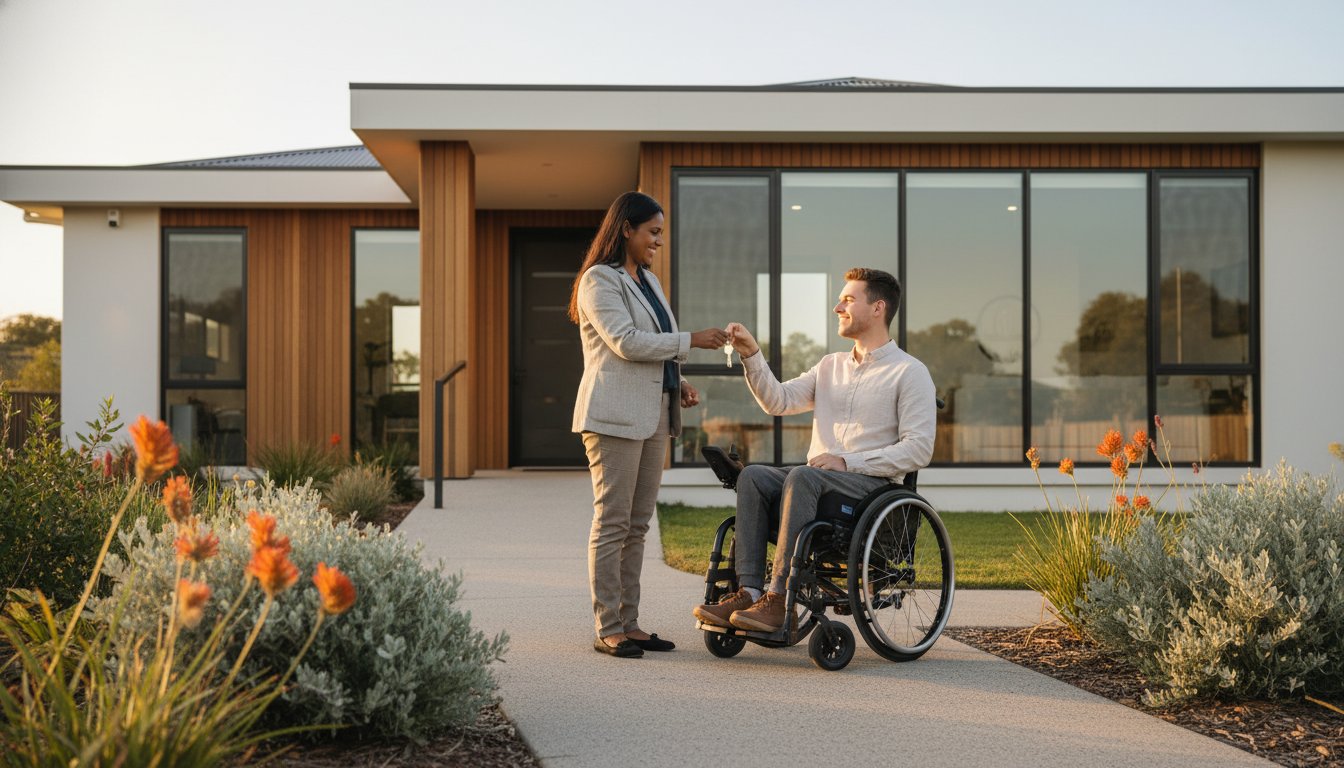
Last Tuesday, a woman named Sarah sat at her kitchen table surrounded by NDIS brochures, feeling more like a case number than a person who simply wanted her own front door key. It’s a heavy weight to carry when the system feels like a barrier of confusing acronyms rather than a path to a home. You’ve likely felt that same exhaustion while trying to understand the different ndis housing options australia offers, especially since the NDIS Q3 2023-24 report shows that over 35,000 people are currently managing the complexities of Specialist Disability Accommodation funding.
We believe your home should be a sanctuary of choice and control, not a source of stress. This guide is here to stand beside you, breaking down the complexities of SIL, SDA, and ILO into clear, human language so you can find a living arrangement that respects your dignity. We will explain each housing model in detail and provide a clear roadmap for starting the application process with your Support Coordinator.
Key Takeaways
- Learn how to distinguish between the physical building and your personal care to better navigate the various ndis housing options australia provides for your unique journey.
- Discover whether the 24/7 onsite support of SIL or the creative, flexible approach of Individualised Living Options (ILO) best aligns with your lifestyle goals.
- Explore specialized solutions like Specialist Disability Accommodation (SDA) for complex needs and Medium Term Accommodation (MTA) to bridge the gap while you wait for your permanent home.
- Gain a clear roadmap for your next NDIS planning meeting, including how to gather the right evidence from therapists and your support coordination team to advocate for your choice and control.
- Understand why the human element is the heart of every home and how the right support team walks beside you to ensure you feel safe, heard, and empowered.
Understanding NDIS Housing Options in Australia
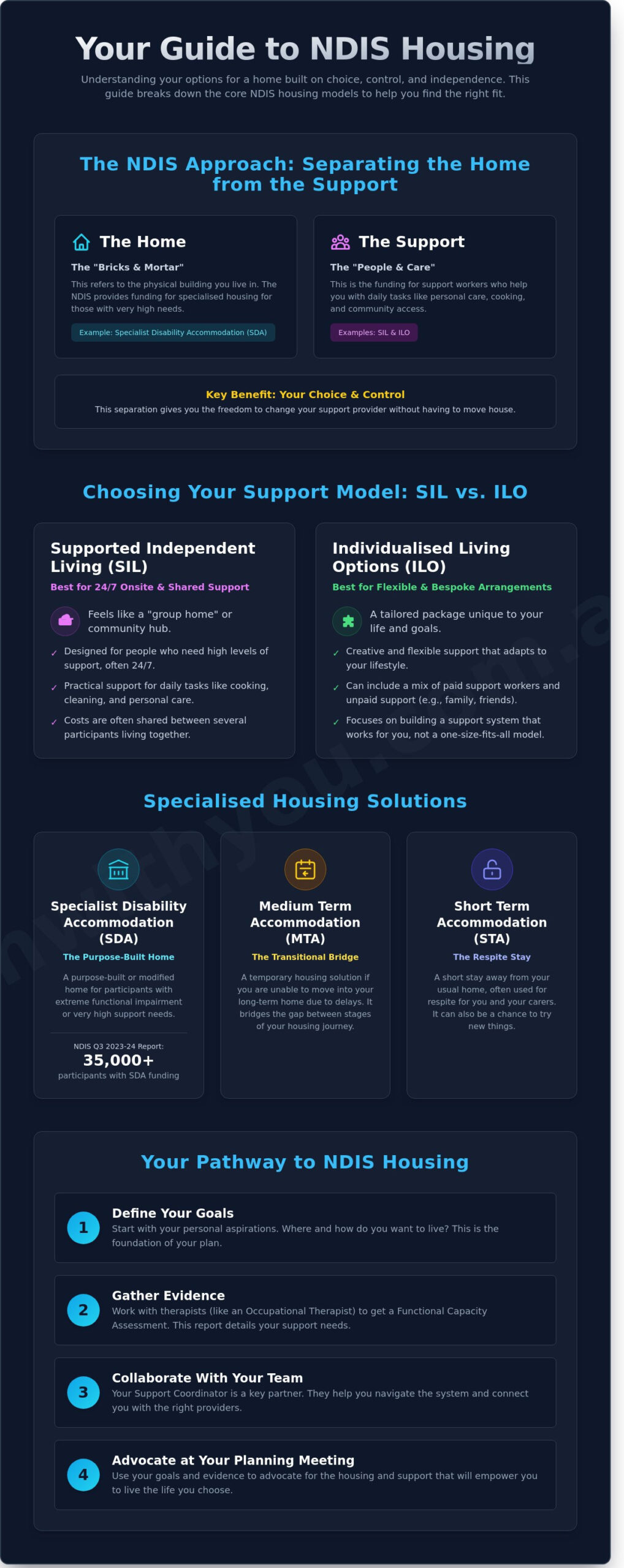
Finding a place to call your own is a fundamental human need. In the context of the National Disability Insurance Scheme (NDIS), housing is viewed as a holistic combination of your physical environment and the tailored supports you receive within those walls. We understand that this journey can feel complex, but we are here to walk beside you. The scheme intentionally separates the “bricks and mortar” aspect, known as Specialist Disability Accommodation (SDA), from the “people support” side, which includes options like Supported Independent Living (SIL) or Individualised Living Options (ILO). This structure ensures you have the freedom to change your support provider without necessarily having to move house. NDIS housing serves as a vital pathway to autonomy rather than just a residential service.
To better understand this concept, watch this helpful video:
The core goal of these integrated supports is to foster your independence and encourage community inclusion. We believe that a home should be more than just a place to sleep; it’s a foundation for building a life you love. By separating the building from the care, the NDIS places the power back into your hands, allowing for a more person-centered approach to your living arrangements.
The Difference Between Housing and Living Supports
We often see participants surprised to learn that the NDIS usually pays for the support you need to live safely, rather than your daily rent or groceries. In most cases, you are responsible for your own board and lodging costs, just like any other Australian. The NDIS categorises these needs under “Home and Living” in your plan. This category covers a wide range of assistance that adapts to your lifestyle. These supports empower you to exercise choice and control in your daily life, giving you the help needed to cook, clean, or manage personal care while you focus on your personal growth. By funding the help rather than the home, the system encourages you to live as independently as possible within your community. We believe that when you have the right support, your home becomes a launchpad for your dreams.
Who is Eligible for Housing Supports?
Accessing specific ndis housing options australia depends on your unique circumstances and the goals you have set for your future. The NDIS looks for evidence of “extreme functional impairment” or “very high support needs” when deciding on higher levels of funding. To determine the right path, we rely on functional capacity assessments. These reports, often written by Occupational Therapists, provide a detailed picture of what you can do and where you need a helping hand. Your personal aspirations are always the starting point. Whether you want to live with friends or move into a purpose-built apartment, your plan should reflect the life you want to lead. According to NDIA data from June 2023, approximately 23,000 participants were successfully utilising Specialist Disability Accommodation. This shows a growing commitment to ensuring people with high needs have access to safe, modern environments. We are committed to helping you find the right fit for your journey.
SIL vs. ILO: Choosing the Right Support Model
Finding a place where you feel safe, seen, and supported is a vital part of your journey. When you look into the various ndis housing options australia offers, you will likely find two main paths: Supported Independent Living (SIL) and Individualised Living Options (ILO). Both models are built on a foundation of person-first language. This ensures your dignity and individual identity come before any diagnosis or support requirement.
Choosing between them often depends on how much support you need and how you want your daily life to feel. SIL often feels like a community hub with a “group home” atmosphere, while ILO offers a “bespoke” arrangement tailored specifically to your preferences. We are here to help you weigh these choices side-by-side.
Supported Independent Living (SIL) Explained
SIL is designed for people who feel most comfortable with 24/7 onsite support. This model is very practical. It helps you manage daily tasks that might otherwise feel overwhelming. This includes personal care, cooking nutritious meals, and staying on top of medication schedules. One of the greatest benefits of SIL is the natural social connection it creates. Living in a shared environment means there is always someone nearby, which reduces isolation and increases your safety. If you want to understand the finer details, our SIL Guide offers a deeper look at how this support works in practice.
Individualised Living Options (ILO): A Flexible Alternative
ILO is a creative alternative that puts you in the driver’s seat of your living arrangements. It allows you to decide exactly where you live and who shares your home. This model doesn’t provide the physical house, but it funds the support framework that makes your chosen life possible. The NDIS structures this in two clear stages. First, you enter the Exploring and Designing stage to map out your goals. Second, you move into Implementation to put those plans into action. Examples of ILO include:
- Host Arrangements: You live in the home of a non-related person or family who provides support and companionship.
- Supportive Housemates: You live in your own home with someone who provides a set amount of help in exchange for reduced rent.
- Living Alone: You live by yourself with a network of formal and informal supports that check in on you.
While these models focus on the people helping you, some participants also require Specialist Disability Accommodation (SDA) for the physical structure of the home. Combining the right support model with the right building ensures your home is truly a sanctuary. If you feel unsure about which direction to take, we can explore these possibilities together to find the right fit for your future.
Specialised Solutions: SDA, MTA, and STA
Finding the right fit among the various ndis housing options australia offers can feel like a big step. We’re standing beside you to make sense of the technical details. Specialized solutions like SDA, MTA, and STA aren’t just acronyms; they’re specific pathways to living with dignity and safety. These options ensure that regardless of the complexity of your needs, you’ll never be left without a secure place to rest your head.
When is Specialist Disability Accommodation (SDA) Necessary?
SDA refers to the actual physical building you live in. It’s designed for people who require very high support or have significant functional impairments. Because these homes require specialized designs like reinforced walls or ceiling hoists, the NDIS only funds SDA for approximately 6% of participants. There are four specific categories tailored to different requirements:
- Improved Liveability: For people with sensory, intellectual, or cognitive impairments.
- Robust: Built with resilient materials to keep you and your providers safe.
- Fully Accessible: Designed for people with significant physical impairments, like wheelchair users.
- High Physical Support: Includes structural provisions for ceiling hoists and assistive technology.
Choosing the bricks and mortar is only half the journey. It’s vital to match your home with the right support team. While SDA covers the building, Supported Independent Living (SIL) often covers the person-to-person help you receive inside those walls. We’re here to help you coordinate these layers so your daily life feels seamless and your agency is respected.
Temporary Stays: MTA and STA
Sometimes you need a bridge while waiting for your forever home. Medium Term Accommodation (MTA) provides a safe place to stay for up to 90 days. It’s often used when your permanent home isn’t quite ready or you’re transitioning from a hospital setting. This ensures you aren’t forced into unsuitable environments while your long-term ndis housing options australia are being finalized. It serves as a vital safety net that keeps you moving forward on your journey.
Short Term Accommodation (STA), often called respite, serves a different purpose. It gives you a chance to try a new environment, build your independence, and gives your regular carers a well-deserved break. These stays usually last up to 14 days at a time and include all your basic needs. Professional NDIS providers play a critical role in coordinating these stays, ensuring the transition is gentle and supportive. We believe in your right to Choice and Control, even during temporary transitions, so you always feel empowered in your housing journey.
Navigating the NDIS Housing Pathway
Finding the right place to live is a journey we take together. It begins during your NDIS planning meeting, where you’ll share your long-term housing goals. You don’t need to have every detail figured out immediately. This stage is about your vision for a home where you feel safe, respected, and independent. We focus on what you want your life to look like in the years to come.
To turn this vision into reality, you’ll need to gather specific evidence. This involves working closely with occupational therapists and your support coordination team. They help document the exact support you need for daily living activities. Once this evidence is ready, you submit a Home and Living Support Request Form to the NDIA. When you receive an offer, take the time to choose providers that align with your personal values. We’ll then help you create a transition plan to make moving day as calm and stress-free as possible.
Gathering the Right Evidence
The Functional Capacity Assessment (FCA) is your most vital tool in this process. It’s a detailed document, often 10 to 15 pages long, that explains how your disability impacts your daily routines. We also encourage including “impact statements” from your family and current carers. These personal stories provide a window into your world that clinical data alone cannot capture. Together, these documents prove that your preferred ndis housing options australia are “reasonable and necessary” for your long-term well-being and independence.
Overcoming Common Challenges
Sometimes the path has hurdles, but you aren’t alone in facing them. If the NDIA declines your housing request, we’ll stand beside you through the review process to seek a better outcome. If you’re managing the waitlist for high-demand Specialist Disability Accommodation (SDA) properties, we focus on securing interim supports. It’s also vital that your intellectual disability or psychosocial needs are specifically addressed in every report. This ensures the NDIA understands your unique sensory or cognitive requirements from the very start.
If you’re ready to start your journey toward a new home, connect with our compassionate team today for a gentle conversation about your housing options.
Walking Beside You: How the Right Support Makes a Home
A house is built of bricks and timber. A home is built of safety, dignity, and belonging. While you explore ndis housing options australia, remember that the physical structure is only half the story. The right support team creates the atmosphere where you can truly thrive. I’m With You prioritizes the human side of your housing journey. We know that the transition to a new living arrangement is more than a change of address. It’s a significant life milestone that deserves patience and care.
Our team acts as a bridge between you, the NDIA, and property owners. We advocate for your needs so you don’t have to carry that weight alone. Whether it’s requesting specific modifications or clarifying funding, we ensure your voice remains central to every conversation. You deserve to maintain your independence without feeling isolated in your challenges. We’re here to provide a steady hand, making sure you feel empowered and secure in your own space. Our commitment is to walk beside you, ensuring that “Choice and Control” is a reality rather than just a phrase in a plan.
Person-Centered Advocacy in Housing
We don’t just offer support; we stand beside you as you claim your place in the community. Respecting your Choice and Control is our highest priority. This means we listen first and act second. Our holistic approach ensures that your new home isn’t just a place to sleep. It should be a base for growth and connection. We help you integrate into your local area by exploring leisure activities that bring genuine joy to your daily life. Whether it’s joining a local club or finding a quiet park, we support your right to a full, active life.
Starting Your Journey Today
Finding the right path starts with a gentle conversation. Reach out to I’m With You to discuss your vision for the future. We don’t use high-pressure tactics or complex jargon. Instead, we take the time to understand what “home” looks like to you. Our first steps together involve mapping out your goals and identifying which ndis housing options australia align with your lifestyle. Your home should be a sanctuary of support, and we are here to help you build it. Let’s begin this transition together, at a pace that feels right for you.
- Step 1: Initial conversation to share your dreams and needs.
- Step 2: Collaborative review of your current NDIS funding and goals.
- Step 3: Side-by-side exploration of suitable housing providers and locations.
- Step 4: Ongoing advocacy to ensure your move is smooth and your voice is heard.
Embracing Your Future in a Home That Fits
Choosing the right living arrangement is a vital step toward the independence you deserve. You now have a clearer understanding of how SIL and ILO models differ, as well as the specialized roles of SDA, MTA, and STA in providing tailored support. Navigating ndis housing options australia involves many decisions, but the most important one is choosing a partner who values your agency. At I’m With You, we treat Choice and Control as a sacred promise. Our national expertise is backed by our 2026 Award for Excellence in NDIS Service Provision, ensuring you receive high-quality care that never loses its human touch. We’re here to provide the reassurance and professional guidance you need to turn a housing plan into a true home.
Begin your journey to independence with a team that stands beside you, contact I’m With You today.
You’ve got the strength to make this transition, and we’re ready to walk right beside you every step of the way.
Frequently Asked Questions
What is the most common NDIS housing option in Australia?
Supported Independent Living (SIL) is the most common housing support, with over 31,000 participants receiving this funding according to the December 2023 NDIS Quarterly Report. We walk beside you to explore how SIL provides help with daily tasks like cooking or personal care while you live in your own home or a shared setting. It focuses on building your skills so you can lead a more independent life with confidence.
Can I live with my partner or family in NDIS housing?
You absolutely can live with your partner, children, or family members while accessing NDIS housing supports. The NDIS is built on the sacred promise of Choice and Control, meaning your living arrangements should reflect your personal relationships and your right to a private family life. Whether you’re looking at Specialist Disability Accommodation (SDA) or Individual Living Options (ILO), we’re here to help you find a path that keeps your loved ones close.
How much of my NDIS funding goes toward rent?
Your NDIS funding doesn’t typically pay for rent itself, as it’s designed to cover support services rather than basic cost-of-living expenses. Most participants use their Disability Support Pension to pay a Reasonable Rent Contribution, which is generally capped at 25% of your basic pension plus 100% of any Commonwealth Rent Assistance you receive. We’ll stand beside you to navigate these costs and ensure your budget remains sustainable for your long-term journey.
What is the difference between SIL and SDA?
The main difference is that Specialist Disability Accommodation (SDA) refers to the physical building you live in, while Supported Independent Living (SIL) refers to the people who support you inside that home. SDA is reserved for the 6% of NDIS participants with very high support needs who require specialized housing designs, such as reinforced ceilings or wide doorways. Understanding these ndis housing options australia helps you build a holistic support system tailored to your specific physical and emotional needs.
How long does it take to get NDIS housing approval?
The timeline for housing approval varies, but the NDIA generally aims to make decisions on home and living supports within 90 days of receiving all necessary evidence. For complex needs like SDA, the process can take longer because it requires detailed functional capacity assessments and reports from occupational therapists. We’re with you throughout this wait, providing the steady, patient support you need while your application progresses through the system.
Can I change my housing provider if I am not happy?
You have the right to change your housing or support provider at any time if they no longer meet your needs or respect your dignity. Your NDIS plan belongs to you, and the principle of Choice and Control allows you to switch to a partner who better aligns with your personal goals. We recommend checking your service agreement for notice periods; these are often 28 days, ensuring a smooth and safe transition to your new home.
Is NDIS housing available for people with mental health conditions?
Yes, NDIS housing supports are available for people living with psychosocial disabilities or significant mental health conditions that impact daily functioning. Options like Individual Living Options (ILO) are specifically designed to be flexible, focusing on recovery, stability, and community connection rather than just physical care. We take a compassionate, person-centered approach to help you find ndis housing options australia that offer the safety and peace of mind essential for your wellbeing.
What happens if my support needs change after I move in?
If your needs change, you can request a plan reassessment or a change of circumstances review with the NDIS at any time. You aren’t locked into a specific level of care if your journey takes a different turn or if you require more intensive support to stay safe. We’ll walk side-by-side with you to gather new evidence and update your funding so your home continues to be a place of empowerment and growth.