
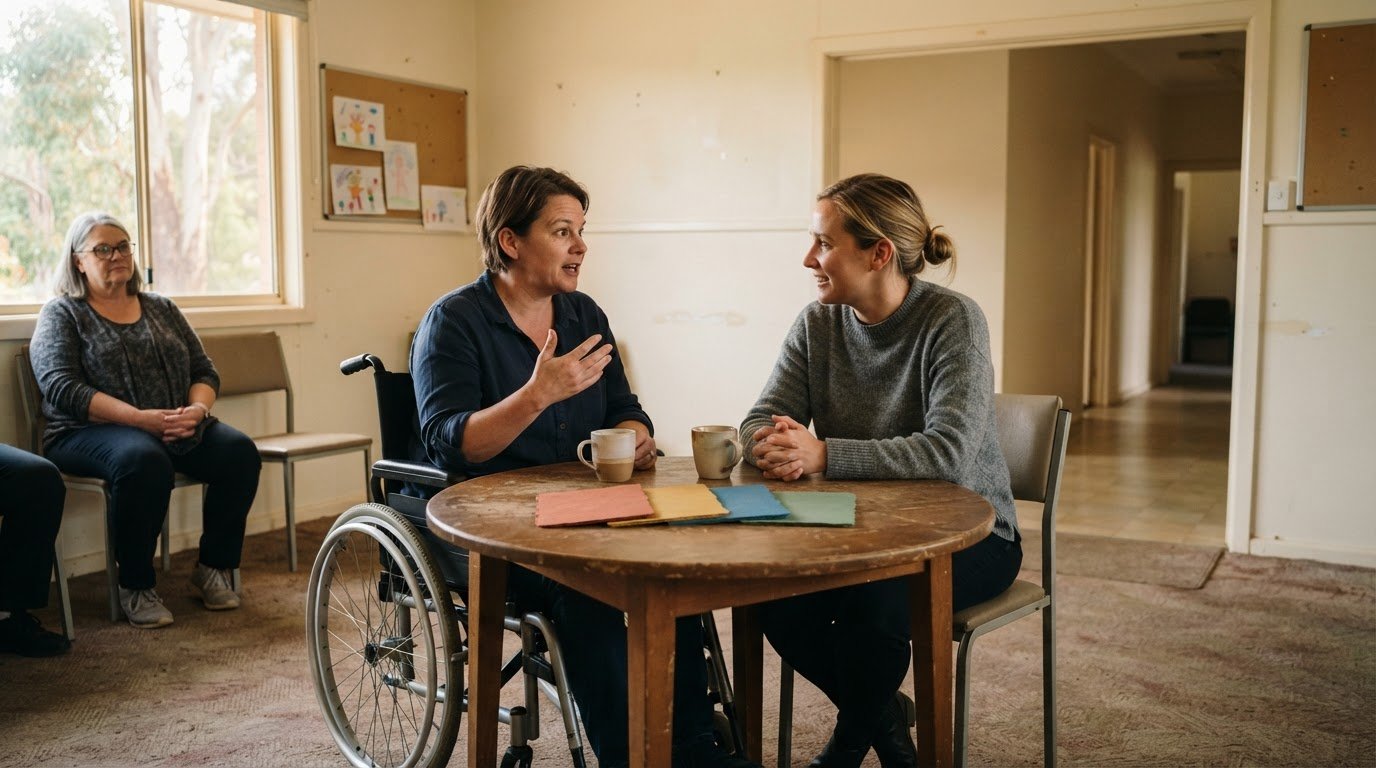
What if support starts with people who understand your experience because they’ve lived something similar? If you’re wondering how to find peer support groups for disability, begin with what matters to you: shared experiences, interests or location. Groups may meet online or face to face, giving you space to connect, exchange information and speak up about issues that matter.
It’s understandable to want a group that feels welcoming, accessible and right for you, rather than joining the first one you find. Ask the organiser what happens at meetings, what accessibility arrangements are available and whether you can attend before committing. You don’t need to share your whole story to make an initial enquiry.
This guide explains how peer support can help, where to look for Australian groups and how to decide whether a group suits you. It also covers how people can build and sustain community-led groups, so connection can grow around members’ needs and strengths.
Key Takeaways
- Peer groups can offer connection, shared information and a place to advocate for what matters to you.
- Use your interests, experiences and location to narrow your search, then ask organisers what to expect and what accessibility is available.
- If an existing group doesn’t feel like the right fit, community-led groups can create space for people to shape activities and build connections together.
- Therapeutic Supports from Im with you can offer another form of support alongside your search for peer connection.
Why join the Group?
Peer support can help you meet people with disability, exchange practical information and advocate for issues that matter to you. Groups may connect people through shared experiences, interests or community ties. To learn how to find peer support groups for disability, ask your GP, treating practitioner, local council or community health centre about options. Groups in Australia may meet in person or online, and some offer telephone support.
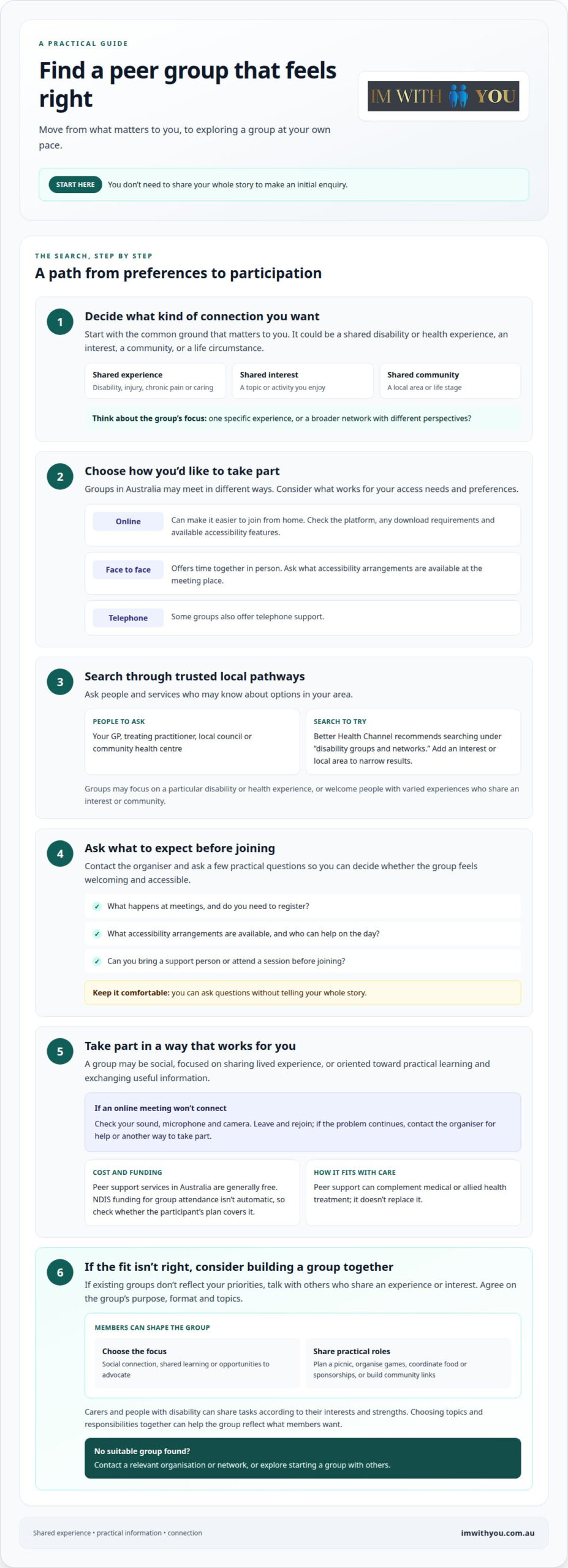
Before attending, contact the organiser and ask what happens at meetings, whether you need to register and who can help on the day. You don’t need to share your whole story. Ask about accessibility, bringing a support person and trying a session before joining. For an online group, find out which platform it uses, whether you need to download anything and what accessibility features are available.
Online meetings can make it easier to join from home, while face-to-face sessions offer time together in person. If an online meeting won’t connect, check your sound, microphone and camera, then leave and rejoin. If the problem continues, contact the organiser for help or another way to take part. Peer learning groups can also give members space to share experiences and useful information.
Peer support services in Australia are generally free. NDIS funding for group attendance isn’t automatic, so check whether the participant’s plan covers the support. Carers and family members can look for in-person groups or online forums. These forums let carers ask questions, share advice and experiences, and find emotional support. Peer support complements medical or allied health treatment; it doesn’t replace it.
Searching for groups by interests, experiences or location
Start with the kind of connection you want: a shared disability experience, a particular interest or a common life circumstance. Then consider whether online or face-to-face participation suits you, and search for groups that match those preferences.
Shared Experiences and Mutual Support
Peer groups bring together people with something in common so they can connect and support one another. That common ground might be a disability, injury, chronic pain or experience as a carer. Consider whether you’d prefer a group focused on one experience or a broader network where members bring different perspectives.
Better Health Channel recommends searching under disability groups and networks to find disability networks, support organisations and groups. Add an interest or the name of your local area to narrow the results.
Learning and Sharing Experiences
Social Futures describes peer groups as social environments where people share stories, information and resources. Members might discuss ways to handle everyday challenges, compare perspectives or exchange ideas drawn from lived experience.
Consider what you hope to get from the group. A practical learning focus may suit you if you want to exchange strategies, while a social group may put more emphasis on connection and sharing experiences.
Condition-Specific and General Groups
Some groups centre on a particular disability or health experience. Others welcome people with varied experiences who share an interest, community or life stage. Choose the focus that feels most relevant to the conversations you want to join.
Groups may be informal or led by trained peers, and some use facilitators with lived experience. Imagine More peer group facilitators aim to help members feel safe, welcome and supported. You can also explore ways to build community connections as part of your wider support.
Support for community-led peer groups
If existing groups don’t reflect your priorities, community members can consider starting one together. Begin by talking with people who share an experience or interest, then agree on the group’s purpose, format and topics. A planning conversation can clarify whether members want social connection, shared learning or opportunities to advocate.
Support can help turn that idea into a group people can shape and sustain. The Physical Disability Council of NSW is delivering projects for the Peer Support and Capacity Building grant for the NDIS. Community-led groups can give participants active roles in planning and delivering activities, rather than leaving all decisions to one organiser.
Practical roles might include planning a picnic, organising games, coordinating food or sponsorships, and building links with the wider community. Carers and people with disability can share tasks according to their interests and strengths. Agreeing on responsibilities and choosing topics together can make participation more meaningful and help the group reflect what members want.
Some groups are formed around a specific setting. In Victoria, parents and carers can ask their child’s kindergarten teacher to set up a program support group if the child has a disability or additional needs and doesn’t already have one. These groups support the child’s inclusion from kindergarten enrolment until the move to school, giving families and relevant professionals a shared space to discuss support.
If you can’t find a suitable Australian group, contact a relevant organisation or network, or explore starting one with others. Explore support for building community connections as you consider the next step.
Im with you: Therapeutic Supports
Im with you offers Therapeutic Supports for people seeking individual support alongside peer connection. A peer group can create shared understanding, while therapeutic support can focus on your personal goals and strategies for daily life. These are different forms of support that can sit alongside each other.
If you’d like help exploring support that aligns with your needs, Im with you also provides Disability Support Services, Community Participation Support and NDIS Support Coordination. These services may help with everyday participation or coordinating support around your goals.
Contact Im with you to talk about the support you’re looking for.
Take a next step that feels right for you
Knowing how to find peer support groups for disability gives you a starting point, but your next step can be small: choose one group to explore and notice what kind of connection feels right. Take your time, adjust your approach or decide a group isn’t for you. Building support around your life is an ongoing process, and you don’t have to work it out alone.
I’m With You offers Disability Support Services, Community Participation Support and NDIS Support Coordination. These supports can sit alongside your search for peer connection, helping you explore participation and coordinate support around your goals.
Contact Im with you to talk about support that fits what matters to you. Each step can help you shape a support network that feels more connected to your life.
Frequently Asked Questions
Can’t find a group that fits what you need?
Contact an organisation or network connected to your interests or disability, or explore creating a group with others. Start by identifying the shared purpose you’d like members to have, such as social connection or advocacy. You could also ask people in your community if they’re interested. A suitable group can grow from a shared idea.
How do I know if a group is right for me?
A group may suit you if its purpose and approach to participation feel comfortable and relevant to your needs. After attending, consider whether you felt able to take part, whether conversations matched your interests and whether members treated one another respectfully. Take time to decide. It’s valid to stop attending if the group doesn’t feel right.
What is a peer group?
A peer group brings together people who share an experience or circumstance so they can connect and support one another. Members may draw on lived experience to offer understanding and practical perspectives. A peer group is different from medical or allied health treatment, and peer support should complement, not replace, that care.
What should I ask before joining?
Ask what participation looks like in practice, including whether you can listen without speaking and how the group handles personal information. You could also ask whether the group welcomes people with different communication styles or support needs. These details can help you judge how comfortable you may feel taking part, without needing to explain your whole story.
Where can people with disability find peer support groups in Australia?
The Disability Gateway provides disability information and services across Australia for people with disability, their families and carers. It can be a useful starting point for exploring support options. You can also search for groups connected to a particular disability, interest or community, then check whether each offers online or in-person participation.