

About one in four Australian adults live with some form of incontinence, yet a continence assessment can turn a worrying concern into a clearer plan. A continence assessment report summarises your symptoms, relevant health and mobility needs, assessment findings and recommended supports.
It’s understandable if examinations or conversations about bowel and bladder changes feel personal. You deserve to know what to expect and to have your comfort and choices respected throughout the process.
This guide explains what an assessment usually involves, including the questions and diaries that can help build a fuller picture. It also covers when abdominal, neurological or pelvic floor examinations may be considered, what the written report can explain, and how it can inform practical next steps.
Key Takeaways
- Share your medicines and other health conditions during the assessment so their possible effects on bladder and bowel function can be considered.
- Ask for an explanation of any proposed abdominal, neurological or pelvic floor examination, and proceed only if you feel comfortable.
- Use the written report to understand the findings and support a request for disability-related continence products or ongoing nursing support.
- Look for recommendations shaped around your goals and daily needs, so the next steps feel practical and personal.
What is a Continence Assessment?
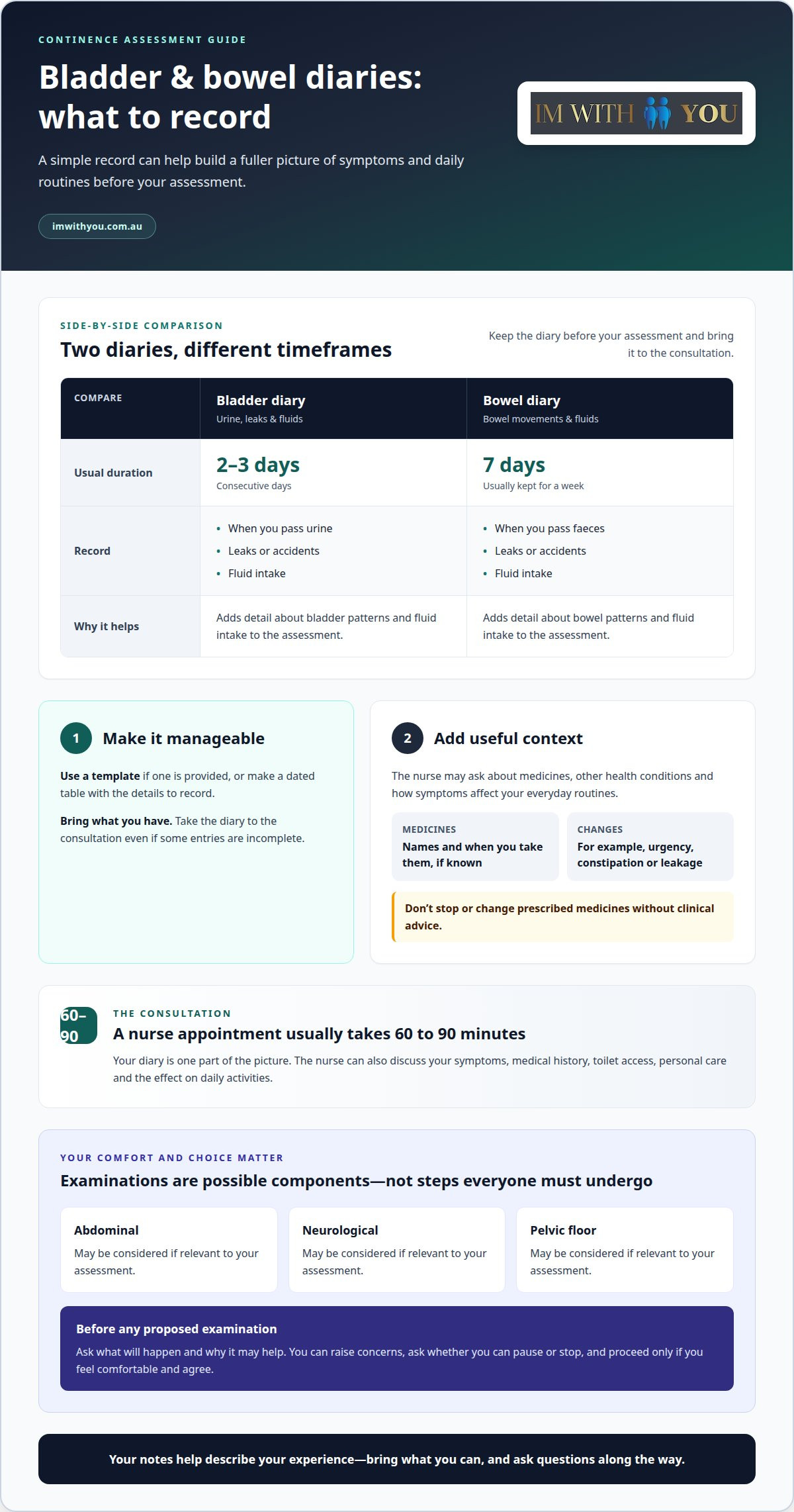
A continence assessment explores bladder and bowel symptoms, health needs and daily routines. A nurse consultation usually takes 60 to 90 minutes and can lead to a personalised management plan.
Medication Effects on Bladder and Bowel Function
During the consultation, the nurse asks about medicines and other health conditions, then considers how they relate to bladder or bowel symptoms. If you know them, note medicine names and when you take them, alongside changes such as urgency, constipation or leakage. This timeline helps the assessment consider possible effects. Don’t stop or change prescribed medicines without clinical advice.
Preparing and Using Bladder and Bowel Diaries
A bladder diary is usually kept for 2 to 3 consecutive days before assessment; a bowel diary is usually kept for 7 days. Record when you pass urine or faeces, leaks or accidents, and fluid intake. Use a provided template or a dated table with these details. Bring the diary to the consultation, even if some entries are incomplete.
Continence Services and Assessment Options
In Australia, options include a continence nurse consultation and an assessment tailored to your symptoms and support needs. Medicare or private health insurance coverage depends on the service and policy, so don’t assume a benefit. Assessment costs depend on the case and are provided after a quote request. After assessment, you receive a written report and personalised bladder and bowel management plan. These documents can support an NDIS funding request for disability-related continence products or ongoing nursing support. NDIS funding doesn’t cover incontinence itself as a health condition; continence care unrelated to disability is the responsibility of Australia’s mainstream health system.
Abdominal, neurological and pelvic floor examinations
Questions about your symptoms and medical history help shape an appropriate assessment. A physical examination may also be considered, with your comfort and informed agreement guiding the process.
Assessment Questions and Examination Process
The consultation explores how incontinence affects your daily routines, toilet access and ability to manage personal care. You can describe when symptoms occur, what changes them and which activities they interrupt. Questions about your medical history help put these experiences in context. Share what feels relevant, and ask the specialist to explain any unfamiliar term or proposed step. If funding is a concern, explain how symptoms affect your everyday support needs. The assessment should connect the information you share with practical goals, rather than treating one symptom in isolation.
Physical Examination Components
An abdominal, neurological or pelvic floor examination may be considered if relevant to your assessment. These are possible components, not steps everyone must undergo. Before proceeding, the continence nurse should explain what an appropriate examination involves and why it may help. You should feel comfortable with the examination and can raise concerns beforehand. Ask which area will be examined, what the clinician will do, and whether you can pause or stop. This conversation helps you make an informed choice about each proposed component. If you don’t agree to an examination, tell the nurse so you can discuss your concerns.
Continence assessment reports
A continence assessment report turns assessment findings into a written account of needs and recommended support. For NDIS requests, its key role is to show how ongoing incontinence relates to disability.
Evidence Included in the Report
For an NDIS funding request, the report can document ongoing incontinence and its direct link to disability. It can also support a request for disability-related continence products or ongoing nursing support.
A useful report brings together relevant clinical history, symptoms, bladder diary information and examination findings. It should explain how these details relate to daily continence care and the recommended management plan. For example, it can describe how leakage affects routines and why particular support is recommended. The report helps connect assessment evidence with the person’s stated needs and goals.
Who Can Complete the Report
A continence nurse or another continence health professional can carry out an assessment and prepare written findings. The report should reflect the consultation, relevant history, any examination undertaken and the person’s continence needs. Ask who will write the report and how their findings will inform the management plan. For an NDIS request, clear links between disability, continence needs and recommended supports make the evidence easier to understand.
A report is not the same as an NDIS funding decision. It provides evidence for consideration alongside the participant’s circumstances and support needs.
Report Timing and Updates
The assessment with a nurse usually takes around 60 to 90 minutes. The written report follows the assessment, but its preparation time and update frequency aren’t fixed in the available guidance. Keep the documents together, including the report and management plan.
Request an updated assessment when symptoms, health, daily routines or support needs change. A new bladder diary or examination findings may then help describe the current picture. For help coordinating NDIS supports around your report, get support with NDIS coordination.
Im with you
Im with you can help you consider how continence-related needs fit alongside your disability supports and everyday goals. If your report recommends support with daily activities or community access, Disability Support Services and Community Participation Support may be relevant. NDIS Support Coordination can help you understand how supports work together, while Disability Advocacy Services can support you to communicate your needs.
These services don’t replace a clinical continence assessment. They can help you take the next step with your wider support needs, using your report to guide conversations about what matters to you.
If you’d like support to work through your options, contact Im with you.
Take your next step with confidence
Your continence assessment report can help you explain what support could make daily life more manageable. As you consider the recommendations, think about the routines, activities and community connections you want to prioritise. These goals can help guide conversations about how different supports fit together.
I’m With You offers Disability Support Services, Community Participation Support and NDIS Support Coordination. These supports can help you work towards your goals and understand your next steps. Start with the needs that matter most to you, then explore what support may fit.
Talk through your support needs with Im with you. Your next step can be a calm conversation about moving forward in a way that feels right for you.
Frequently Asked Questions
What Happens After Your Assessment?
After your assessment, use the written recommendations to plan practical next steps with your support team. For example, note which recommendations relate to daily routines, continence products or nursing support, then discuss how they fit your needs. If your circumstances change, share that information in follow-up conversations. The report can help keep those discussions focused on what matters to you.
What is a continence assessment report in Australia?
A continence assessment report is a written record of a person’s continence needs and the supports recommended after assessment. It can help explain how disability-related needs affect daily life and provide information for an NDIS funding request. Its value lies in clearly connecting a person’s circumstances with the support they need and the reasons for that support.
What information and tests are included in a continence assessment?
The information gathered and examination components depend on the person’s symptoms and circumstances. A continence nurse may discuss health history, daily routines and how symptoms affect activities. An abdominal, neurological or pelvic floor examination may be considered if relevant, but a physical examination should be explained beforehand and requires your comfort. There isn’t one set of tests that applies to everyone.
How do I prepare for a continence assessment appointment?
Before your appointment, gather a list of medicines, relevant health details and notes about how symptoms affect daily activities. Think of a practical example, such as needing to change plans because a toilet wasn’t accessible. Write down questions you want answered, including what each proposed examination involves. If someone supports you, consider whether you’d like them to help describe your experiences.
What are the steps for getting continence products approved or funded after assessment?
Use the assessment report as evidence for an NDIS funding request. It should document ongoing incontinence, its direct link to disability, and the need for disability-related continence products. The report supports the request but is not a funding decision.