
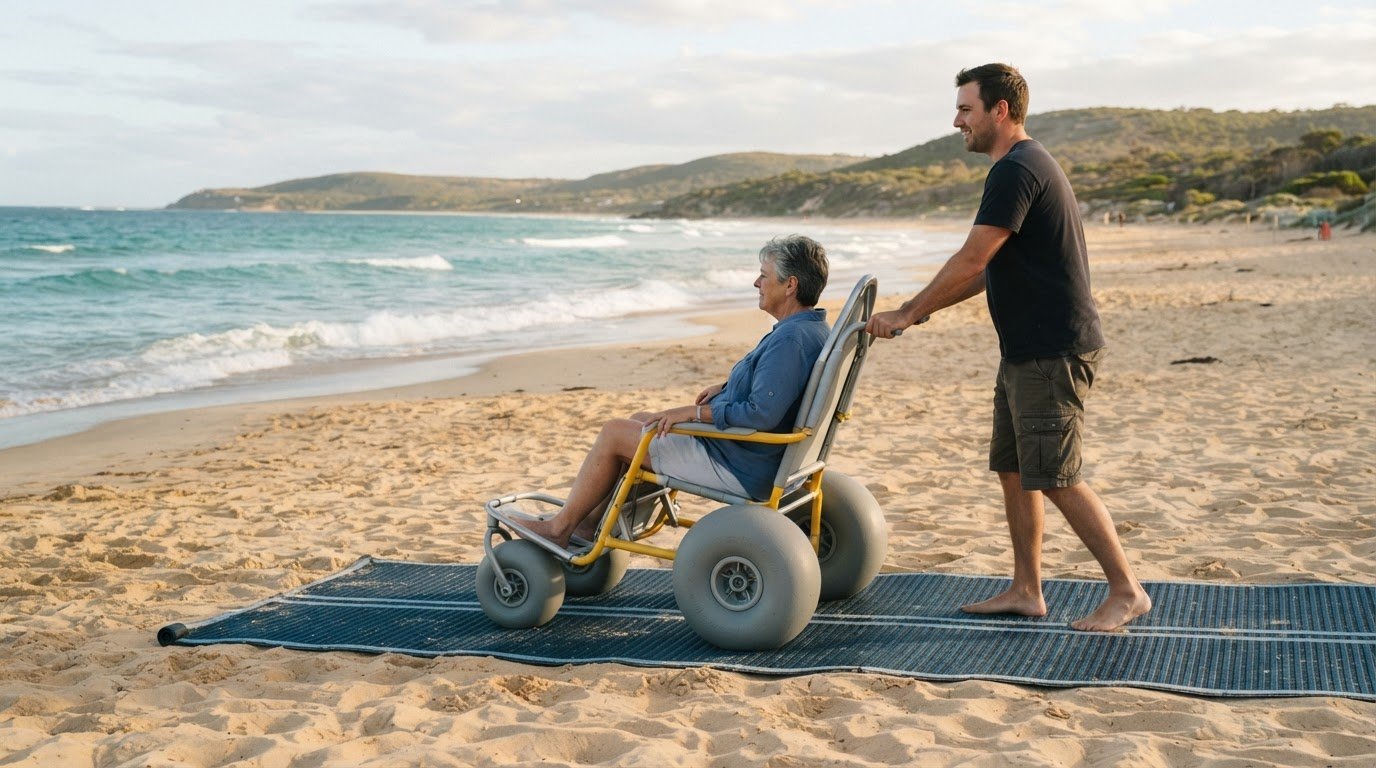
What if an NDIS-friendly holiday started with what you want to experience, rather than what feels difficult to arrange? Planning accessible travel and tourism with NDIS support means matching your destination, accommodation, transport and activities to your preferences and support needs. The NDIS doesn’t fund the holiday itself, but it may fund disability-related supports included in your plan, such as support-worker assistance or adaptive equipment.
It’s understandable to want the practical details settled so you can focus on enjoying your time away. This guide shares ways to plan a more accessible, personalised trip, including how to think about travel support, transport and accommodation, and how to shape activities around what matters to you. We’ll also explain where NDIS supports may fit, so you can plan with greater confidence and feel supported along the way.
Key Takeaways
- Choose accommodation around your access needs, including bathroom features, doorway width and step-free entry.
- Plan how you’ll travel with mobility aids, and arrange any assistance or accessible transport you need ahead of time.
- Separate holiday costs from disability-related supports: the NDIS doesn’t fund the holiday itself, but may fund supports included in your plan.
- Shape the trip around your interests and support needs, so activities and assistance work together to make the holiday more enjoyable.
1. NDIS-Friendly Holidays: How to Make Travel More Accessible and Enjoyable?
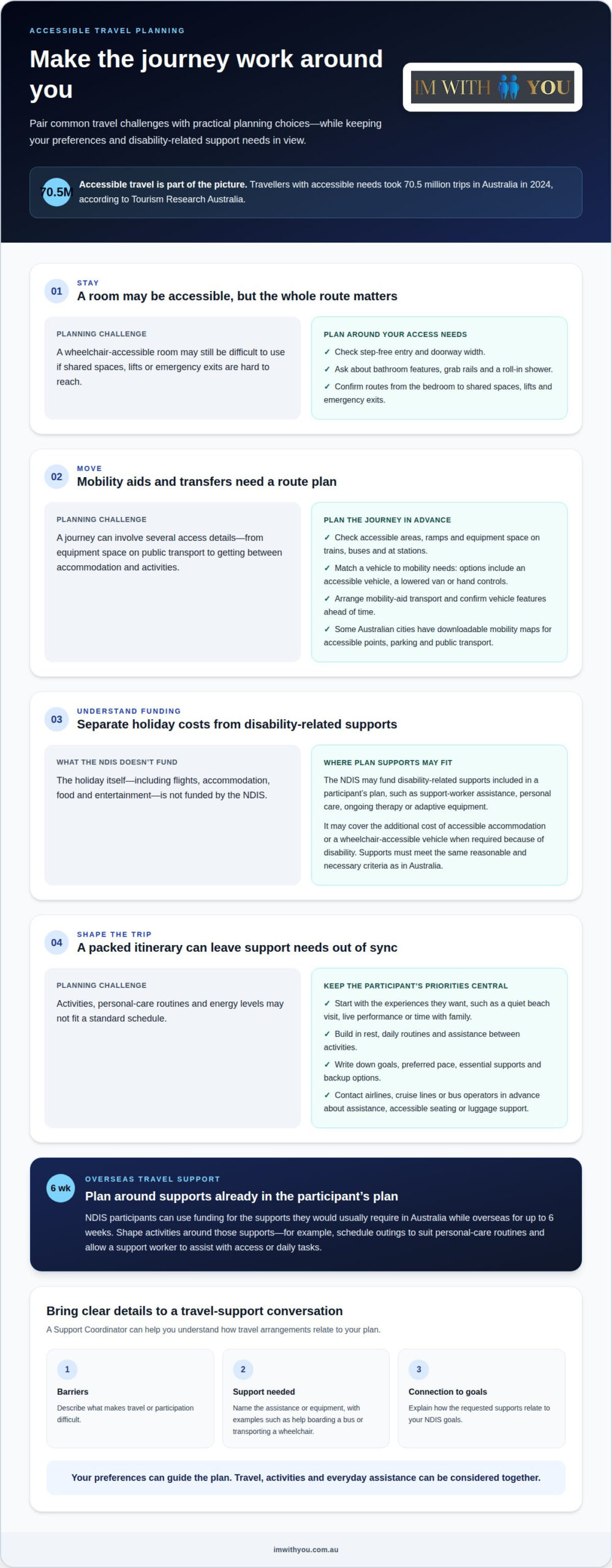
Start with the access features that will make each day comfortable. For accommodation, consider step-free entry, wide doorways, an accessible bathroom, grab rails and a roll-in shower. Ask about the route from the bedroom to shared spaces, lifts and emergency exits. A wheelchair-accessible room may still be unsuitable if key facilities are difficult to reach.
Match destinations and activities to your preferences and support needs. Before choosing a region, look for accessible pathways, ramps and restrooms at attractions. For example, a coastal destination may suit someone who enjoys the beach if beach wheelchairs and accessible paths are available. According to Tourism Research Australia, travellers with accessible needs took 70.5 million trips in Australia in 2024. An inclusive itinerary makes room for rest, interests and the access arrangements that help individuals with disabilities participate.
The NDIS doesn’t fund the holiday itself. It may cover the additional cost of accessible accommodation or a wheelchair-accessible vehicle when required because of disability. A Short Term Accommodation (STA) travel experience should reflect the participant’s preferences and support needs, with activities and daily routines planned around them.
NDIS travel supports relate to disability-related needs in a participant’s plan. The Companion Card and state-based assistance are separate schemes, each with its own purpose and eligibility. Accessible tourism operators and travel agencies can help arrange travel details. For any destination, organise transport for mobility aids and confirm that vehicle and accommodation features match the traveller’s needs.
2. What factors should I consider when arranging accessible travel with the NDIS?
Map each journey around your mobility aids and support needs. Check whether trains, buses and stations offer accessible areas, ramps and space for equipment. For a longer journey, consider whether a support worker needs to travel with you and what assistance they’ll provide. Planning this in advance can make transfers and arrival smoother.
For car travel, consider a wheelchair-accessible vehicle, a lowered van or a rental vehicle with hand controls. Match the vehicle to your mobility needs and equipment. Some Australian cities offer downloadable mobility maps showing accessible points of interest, parking zones and public transport options. Use these details to plan a route between your accommodation and activities.
Transport funding depends on the supports included in your NDIS plan. Eligible participants may receive an activity-based transport budget for NDIS-funded activities, such as community participation. Plan reviews can help keep transport support aligned with changing needs and goals. A Support Coordinator can help you understand how travel arrangements relate to your plan.
To discuss travel-related supports, prepare a clear account of the barriers you face, the assistance or equipment needed, and how these supports connect with your NDIS goals. Include practical examples, such as needing help to board a bus or transport a wheelchair. This gives your planning conversation a useful focus. For help coordinating accessible travel support, we can work through your needs with you.
3. Personalised travel for NDIS participants
A personalised holiday begins with the participant’s own priorities, not a standard itinerary. Start by choosing what they want to enjoy, such as a quiet beach visit, live performance or time with family. Then consider disability-related assistance, daily routines and likely challenges. A slower schedule with rest between activities can make participation more comfortable and enjoyable.
The NDIS doesn’t fund the holiday itself, including flights, accommodation, food or entertainment. It may fund disability-related supports included in a participant’s plan, such as support-worker assistance, personal care, ongoing therapy or adaptive equipment. These supports must meet the same reasonable and necessary criteria as supports in Australia, including during overseas travel.
NDIS participants can use funding for the supports they would usually require in Australia while overseas for up to 6 weeks. Build the itinerary around those supports. For example, plan activities at times that suit personal-care routines, and allow a support worker to assist with access or daily tasks. Contact airlines, cruise lines or bus operators in advance to request assistance, accessible seating or luggage support.
Before booking activities, write down the participant’s goals, preferred pace, essential supports and backup options. A museum visit, for instance, could include a quiet break and a shorter route if energy changes. This turns navigating travel challenges into practical choices while keeping the person’s interests central. For guidance shaping your personalised travel support plan, we’re ready to work alongside you.
Im with you: Accessible Travel Solutions
Im with you offers Accessible Travel Solutions for NDIS participants planning a holiday around their preferences and disability-related support needs. We can help you consider how travel, activities and everyday assistance fit together, so your plans reflect what you want to experience.
If you’re working through how travel connects with your NDIS plan, NDIS Support Coordination can help you understand and organise your supports. Community Participation Support may also be relevant when your plans include taking part in activities and experiences in the community related to accessible travel and tourism ndis.
You’re in control of the choices. We’ll work alongside you to explore an approach that keeps your goals and support needs in view. Contact Im with you to talk about accessible travel support.
Make space for the trip you want
Your next step can be a conversation about what would make a holiday worthwhile to you. Think about the experiences you’re looking forward to, the support that helps you take part and the choices that would give you greater comfort and independence. Planning accessible travel and tourism with NDIS support is personal, and your preferences can guide decisions from the start.
I’m With You offers Disability Support Services, Community Participation Support and NDIS Support Coordination. We can work alongside you as you explore how your goals and supports may connect with the travel experience you have in mind. You don’t need every detail settled before starting the conversation.
Start a conversation with Im with you about your travel goals and the support you’re considering. Your holiday can begin with one thoughtful step, and we’re here to take it alongside you.
Frequently Asked Questions
NDIS-Friendly Holidays: How to Make Travel More Accessible and Enjoyable?
Accessible travel and tourism with NDIS support starts by building the holiday around the participant’s interests and support routines. Choose meaningful experiences, then allow flexibility for rest, changes in energy or activities taking longer than expected. For example, a relaxed morning after a busy event can help keep the trip comfortable without removing activities the participant is looking forward to.
What Can and Can’t Be Covered?
The NDIS doesn’t fund holiday costs such as flights, accommodation, food or entertainment. It may fund disability-related supports included in a participant’s plan, such as support-worker assistance, personal care, ongoing therapy or adaptive equipment. Ask whether an expense pays for the holiday itself or for support the participant needs because of disability. NDIS-funded supports must meet the reasonable and necessary criteria.
What factors should I consider when arranging accessible travel with the NDIS?
Consider how travel plans connect with the participant’s goals, support needs and usual routines. Think through the assistance needed at each stage, from leaving home to taking part in activities. In rural or remote parts of Australia, NDIS travel funding reductions may affect support-worker availability or cost. Planning around the most important supports can help make the itinerary practical and meaningful.
What is the National Disability Insurance Scheme, and how does it assist accessible travel?
The National Disability Insurance Scheme (NDIS) is an Australian government-funded program that funds disability-related supports for eligible participants. It doesn’t pay for a holiday as a general expense. Instead, a participant’s plan may fund supports connected to disability needs and goals, including assistance that helps them participate while travelling. The same reasonable and necessary criteria apply to overseas supports as to supports in Australia.
What kind of travel assistance does the NDIS provide?
Depending on a participant’s plan and support needs, NDIS funding may cover support-worker assistance, personal care, transport assistance linked to the plan, or assistive technology for mobility or communication. For example, a participant who needs communication equipment to take part in an activity can discuss that support as part of planning. The support must relate to disability needs and meet NDIS funding criteria.