

An NDIS support coordinator can help you understand your plan, connect with providers and coordinate supports related to your living arrangements. The NDIS doesn’t directly fund rent or housing, but it may fund disability-related supports that help you access and maintain suitable living arrangements. Understanding how a support coordinator helps with housing under the NDIS starts with separating the cost of a home from the supports that may help you live there.
If you’re considering public or private rental housing, it’s understandable to want clarity about the support that may fit your situation. This article explains how a coordinator can help you interpret your plan, connect providers and explore housing-related support options, including what coordination can and can’t do. It also covers how your support needs, changing circumstances and gaps in a plan can shape practical next steps, so you can consider your choices with greater confidence.
Key Takeaways
- Understand how the three levels of support coordination differ, and when more complex housing needs may call for specialist coordination.
- Explore how a coordinator can help connect supports around Supported Independent Living and Specialist Disability Accommodation.
- Learn how to make sense of your plan, spot possible gaps and prepare to discuss changing housing needs.
- See how coordinated providers and multidisciplinary supports can work together around your goals and living arrangements.
💡 So… What Is a Support Coordinator?
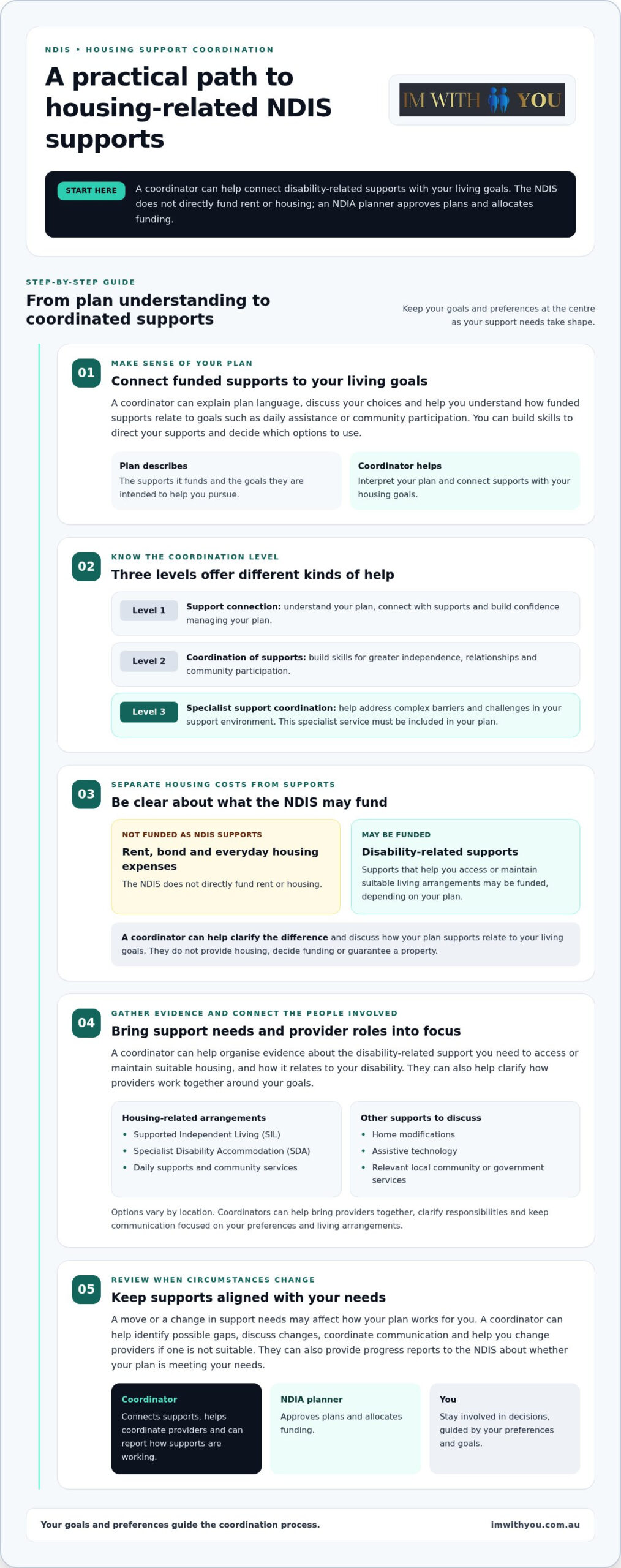
An NDIS support coordinator helps connect a participant’s funded supports with their housing goals. They can coordinate complex arrangements, including Supported Independent Living (SIL) and Specialist Disability Accommodation (SDA).
The NDIS funds three levels of support coordination. Level 1, support connection, helps participants understand plans, connect with supports and build confidence managing their plans. Level 2 helps build skills for greater independence, relationships and community participation. Level 3, specialist support coordination, supports participants facing complex barriers and challenges in their support environment. This specialist service must be included in the participant’s plan. A specialist coordinator can help address barriers and design a service plan around support needs. For example, they can coordinate providers involved in a SIL arrangement or supports connected with SDA.
Housing Evidence and Eligibility
Housing support eligibility concerns whether NDIS funding can cover disability-related supports connected with your living arrangements. A coordinator can help organise evidence about the support you need to access or maintain suitable housing and how it relates to your disability. The NDIS doesn’t directly fund rent or housing, but it may fund supports that help with suitable living arrangements. An NDIA planner, not a coordinator, approves plans and allocates funding.
Limits of Coordinator Support
A support coordinator arranges and connects supports, but doesn’t decide NDIS funding or provide housing. This distinction matters when you’re weighing public or private rental options: coordination can help organise disability supports around your living goals, but it can’t fund rent or guarantee a property. A coordinator can identify possible plan gaps and discuss changes when circumstances shift, including a move. Level 3 support also requires inclusion in your plan.
Helping participants understand and use their NDIS plans
A coordinator helps connect the supports in your plan with your housing goals. Understanding your options can make it easier to plan practical next steps.
Understanding Plans and Participant Choices
An NDIS plan describes the supports it funds and the goals they’re intended to help you pursue. A coordinator can explain the plan’s language, discuss your choices and help you build skills to direct your supports. For example, you can talk through how a housing goal relates to daily assistance or community participation. This can help you make informed decisions about which supports to use.
Using NDIS Plan Supports
Funding Everyday Housing Costs
Housing costs may need to be considered separately from disability-related supports. Rent, bond and everyday housing expenses aren’t disability-related supports funded by the NDIS. A coordinator can help distinguish housing costs from supports connected with accessing or maintaining suitable living arrangements. This distinction can clarify what to discuss in relation to your plan and help you avoid treating housing expenses as plan-funded supports.
Arranging Home Modifications and Assistive Technology
A coordinator can help connect you with providers to discuss home modifications or assistive technology related to your support needs. They can help you understand how these supports fit with your plan and coordinate communication between the people involved. Your goals, living arrangements and support needs can guide those discussions. For help making sense of plan supports, NDIS support coordination can help you consider the next steps.
Coordinating providers and multidisciplinary supports
Clear communication can make changes easier to manage. A coordinator can bring providers together to clarify responsibilities, share relevant updates and address support gaps. If a provider isn’t suitable, a coordinator can help you change providers. You remain central to those decisions, with your preferences guiding which supports work for you.
Moving can change the support you need from your plan. A coordinator can work with you to adjust supports when your circumstances change, including when you move. They can also provide progress reports to the NDIS about whether your plan is meeting your needs. These updates can help describe how your current supports are working and where your needs have changed.
Coordination can also connect NDIS supports with community or government services. For instance, a coordinator can help you find local services that complement your disability supports, while keeping each provider’s role clear. This can be useful when your housing goals involve several services rather than one provider. If you’d like help bringing your supports together, take the next step with our team.
Im with you: Disability Support Services
Im with you can support you when housing goals feel difficult to coordinate alongside your NDIS supports. Through NDIS Support Coordination, we can help you understand your plan, connect with providers and bring communication together around the living arrangements you’re working towards. You stay involved in decisions, with your preferences and goals guiding the discussion.
Disability Support Services and Community Participation Support can help you work towards everyday routines and community involvement. If you face complex barriers or need support to express your choices, Disability Advocacy Services can provide a supportive voice. These services address your disability support needs, not rent or finding a property.
You don’t have to plan every detail alone. We can walk alongside you as you consider what support may fit your goals and plan. Visit imwithyou.com.au to learn more or get in touch.
Take Your Next Housing Step With Confidence
Your next step can be a simple conversation about what you want from home and what support would help you work towards it. Before speaking with a coordinator, consider the routines you want to manage more independently, the people involved in your supports and any changes you’re preparing for. These details can help focus the discussion on how an NDIS support coordinator helps with housing and which priorities to address first.
You’re still the person making decisions about your life. A coordinator can help you explore practical options while keeping your preferences at the centre. If you’d like support thinking through your NDIS housing goals, contact Im with you. You can take the next step at your own pace, with your goals leading the way.
Frequently Asked Questions
Do you help with public or private rental housing?
Support coordination can help you consider disability-related support needs in either public or private rental housing. It doesn’t provide or secure a rental property. As you compare options, note the daily tasks you’d manage in each setting, any accessibility features you need and what support would help you feel comfortable there. These details can clarify your housing preferences.
What Are Housing Support Services?
Housing support services describe assistance connected with a person’s needs at home, rather than one specific service or type of housing. Suitable supports depend on your goals, routines and living arrangement. For example, consider which everyday activities you want to manage independently and where you’d value assistance. This helps distinguish your personal support needs from your preferences about the home itself.
What if I need to move quickly or in a crisis?
Tell your coordinator what has changed and what needs attention first. Be specific about any immediate risk, when you need to leave and which daily supports could be disrupted. This gives you a clearer basis for setting priorities and communicating with the people involved. A coordinator can help with support-related planning, but can’t guarantee a home or arrange an emergency relocation.
What does an NDIS support coordinator do to help with housing?
A coordinator can help turn a broad housing goal into practical priorities for your supports. Before a discussion, write down the tasks you want help with, your preferred routines and any decisions you’re still weighing. For instance, note whether you want more privacy or help maintaining a particular daily routine. This gives the conversation focus while keeping decisions in your hands.
How can a support coordinator help an NDIS participant find suitable housing?
A coordinator can help you consider what “suitable” means for your circumstances, rather than choose a home for you. Think about access around the home, privacy, sensory needs and how well the setting supports your preferred routines. Use these priorities to compare possible living arrangements and explain what matters most before making a decision.