
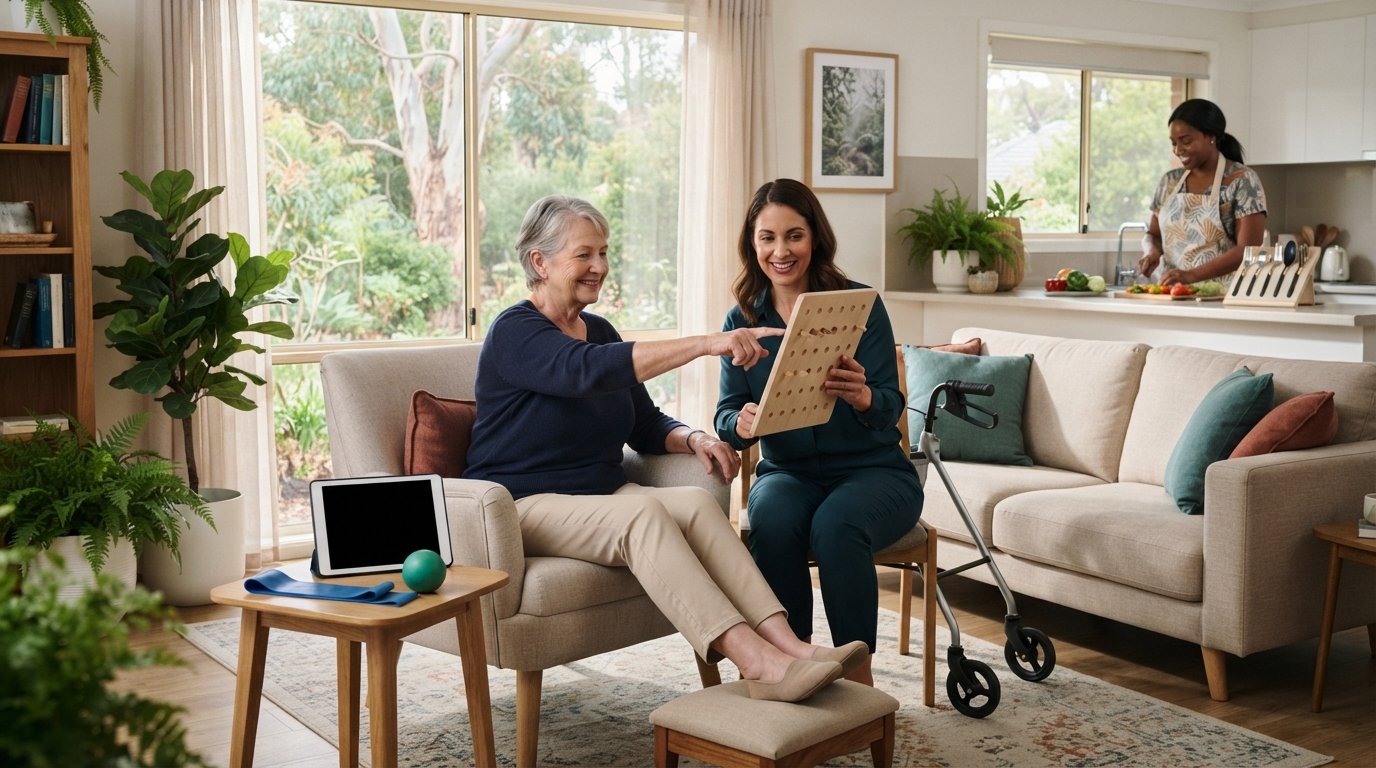
The most powerful rehabilitation center isn’t found within the walls of a hospital; it’s the familiar comfort of your own living room. Coming home after a stroke is a significant milestone, yet it often brings a wave of uncertainty about how to manage daily life. You might feel overwhelmed by the administrative hurdles of the NDIS or worry that your independence is slipping away. I’m with you in those quiet moments of anxiety. This guide will help you understand how to access compassionate ndis support for stroke recovery at home so you can reclaim your rhythm and focus on healing. We’ll explore how to navigate your funding for therapeutic supports and community nursing, providing practical strategies to ensure your recovery journey is filled with dignity and hope.
Key Takeaways
- Understand how NDIS funding categories, such as Core and Capacity Building supports, work together to protect your independence and lifestyle.
- Learn to combine professional Occupational Therapy with daily care to create a safe, compassionate environment for your physical and emotional healing.
- Discover how to access person-centred ndis support for stroke recovery at home, ensuring your care is as unique as your personal journey.
- See how Support Coordination removes the stress of administrative hurdles, giving you a steady companion to navigate the system on your behalf.
Understanding NDIS Stroke Recovery at Home
Every person experiences stroke recovery differently. It’s a deeply personal journey that deserves a gentle, tailored approach to home-based care. Empowerment begins when you realize you’re the pilot of your own healing journey, while the NDIS provides the fuel. We define NDIS stroke support as a holistic system designed to restore dignity and independence at home.
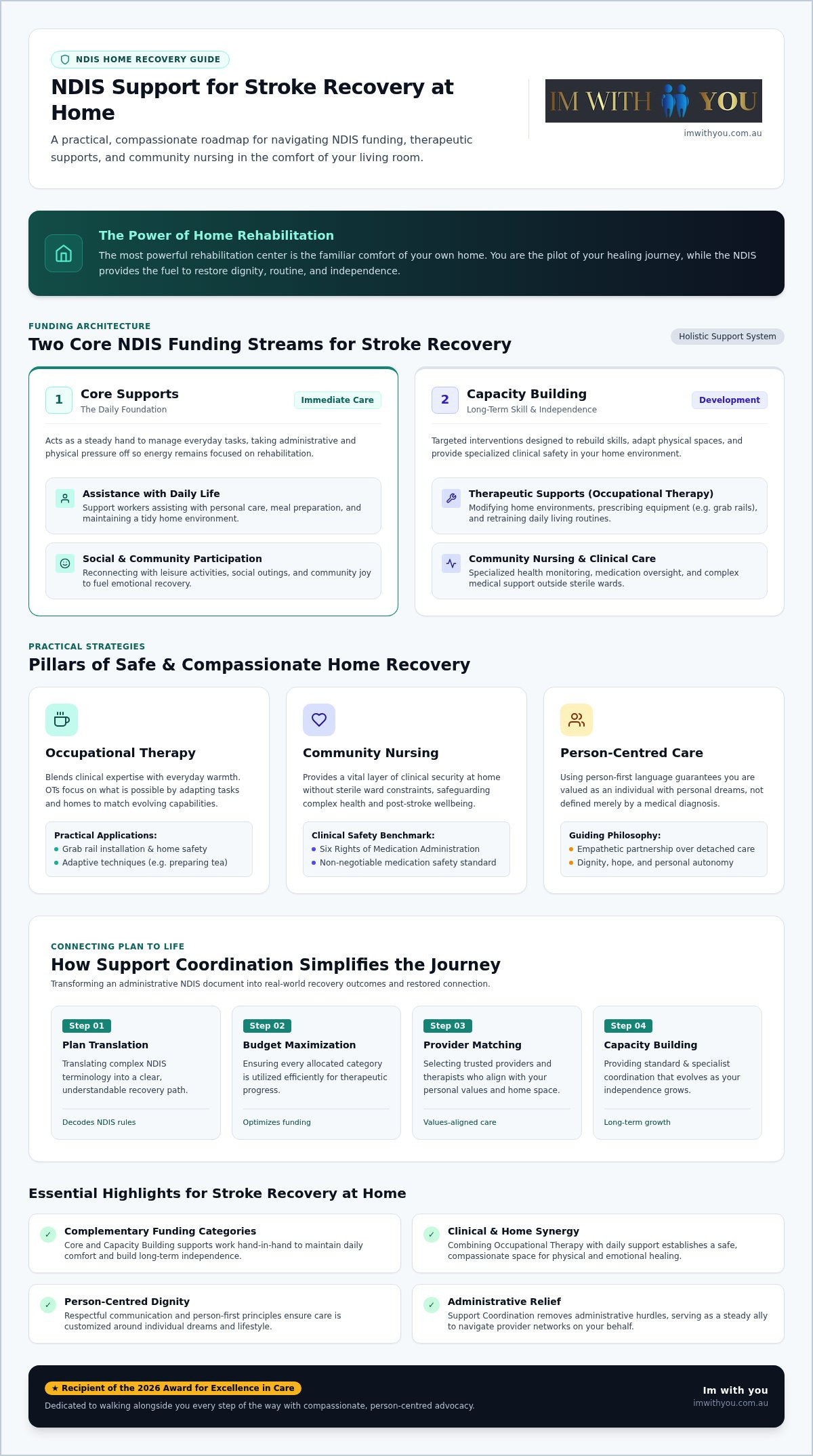
To make this work, the NDIS categorises your needs under ‘Core Supports’ and ‘Capacity Building’. These aren’t just administrative labels; they’re tools to help you maintain your chosen lifestyle. Accessing the right ndis support for stroke recovery at home ensures you don’t have to face these changes alone.
The Core Supports That Build Your Daily Foundation
Core Supports act as the steady hand that helps you manage everyday tasks. This includes assistance with daily life, where support workers help with personal care, meal preparation, and keeping your home tidy. It’s about taking the pressure off so you can focus on getting stronger. When your home environment is managed, you have more energy for your rehabilitation.
Social and community participation is another vital piece of the puzzle. Reconnecting with the world outside helps you rediscover yourself. You might wonder what are leisure activities in this context; they’re the moments of joy and connection that fuel your emotional recovery. Finding ndis support for stroke recovery at home means having someone by your side as you step back into the community with confidence.
Practical Management Strategies for Your Home Recovery
Effective management at home is a collaborative dance. It involves blending professional therapy with compassionate daily support to create a safe, nurturing environment. We know that understanding how the NDIS works is the first step in building a plan that truly serves you. Using person first language ensures you are always seen as an individual with unique dreams, not just a diagnosis. This approach transforms ndis support for stroke recovery at home from a simple service into a deeply meaningful partnership.
The Vital Role of Occupational Therapy and Nursing
Occupational therapists are essential partners in your home recovery. They don’t just look at what you can’t do; they focus on modifying your home to match your evolving abilities. Whether it’s recommending a new grab rail or teaching a different way to prepare tea, they’re there to boost your confidence. This blend of clinical expertise and warmth is exactly what makes ndis support for stroke recovery at home so effective for long-term independence.
Community Nursing under NDIS adds an extra layer of security. Our nurses provide specialized care that keeps you safe without the sterile feel of a ward. They manage complex health needs and medications using the six rights of medication administration as a non-negotiable standard. This ensures your health is protected while you remain in the place you love most. If you’re ready to explore how these services can change your daily life, our compassionate team is ready to walk alongside you.
How Support Coordination Simplifies the NDIS Journey
Support Coordination acts as the vital bridge connecting your NDIS plan to real-world recovery outcomes. It’s the difference between having a document and having a life filled with movement and connection. At ‘Im with you,’ we believe you shouldn’t have to be an NDIS expert to get the care you deserve. Navigating ndis support for stroke recovery at home can feel like learning a new language, but you don’t have to do it alone. We’re here to translate the complexity into a clear path forward.
Your coordinator is more than an administrator; they’re a dedicated advocate who walks beside you. They help you understand the various supports funded by the NDIS so you can maximize every part of your budget. This partnership helps you learn how to choose an NDIS provider who shares your personal values and respects your home. We manage the provider networks and administrative hurdles so you can focus entirely on your healing.
Partnering with ‘Im with you’ for Excellence in Care
Our 2026 Award for Excellence in care reflects our deep commitment to walking alongside you every step of the way. Whether you require standard coordination or specialist support coordination, we ensure your voice remains the focus of every decision. We’re dedicated to building your capacity so you feel confident and empowered in your own space. This specialized ndis support for stroke recovery at home is designed to evolve as you do, ensuring your journey toward independence is steady, safe, and always respected.
Reclaiming Your Independence with Confidence
Recovery is not a path you need to walk alone. By combining therapeutic supports like Occupational Therapy with the security of community nursing, you can build a home environment where healing feels natural. We’ve explored how your NDIS plan provides the essential fuel, but it’s your strength that keeps you moving forward. As specialist NDIS support coordination experts and recipients of the 2026 Award for Excellence, we’re dedicated to providing compassionate, person-centred advocacy. Accessing the right ndis support for stroke recovery at home means having a steady companion who respects your dignity. You deserve care that sees the person before the diagnosis. Let’s walk this path together; contact our friendly team today and take the next step toward a brighter, more supported future. Your journey matters, and we’re with you.
Frequently Asked Questions
Can the NDIS pay for home modifications after a stroke?
Yes, the NDIS often funds home modifications if they’re deemed reasonable and necessary for your safety. An Occupational Therapist will visit your home to assess your specific needs and recommend changes like grab rails or ramps. These modifications ensure your environment supports your healing. We’re here to help you navigate this process so your home remains a sanctuary of independence and comfort.
How do I include stroke recovery in my NDIS plan?
You can include stroke recovery in your plan by identifying goals centered on independence and community connection. It’s helpful to provide evidence from your therapeutic team to show how ndis support for stroke recovery at home will help you reach these milestones. We’ll walk alongside you during this planning phase, ensuring your voice is heard and your personal recovery journey is fully supported.
What is the difference between a support worker and a therapist in stroke recovery?
Therapists, such as our Occupational Therapists, focus on capacity building and teaching you new ways to perform daily tasks. Support workers provide the practical, hands-on assistance needed for personal care and household chores. Both roles are essential components of ndis support for stroke recovery at home, working in harmony to ensure you feel both physically safe and emotionally empowered throughout your rehabilitation.
How does Support Coordination help with hospital-to-home transitions?
Support Coordination simplifies the transition by organizing all your necessary services before you even leave the hospital. Our coordinators act as your advocate, connecting you with therapeutic supports and community nursing so everything is ready for your arrival. We manage the complex logistics, allowing you to focus entirely on returning to the comfort and familiarity of your own home with peace of mind.