

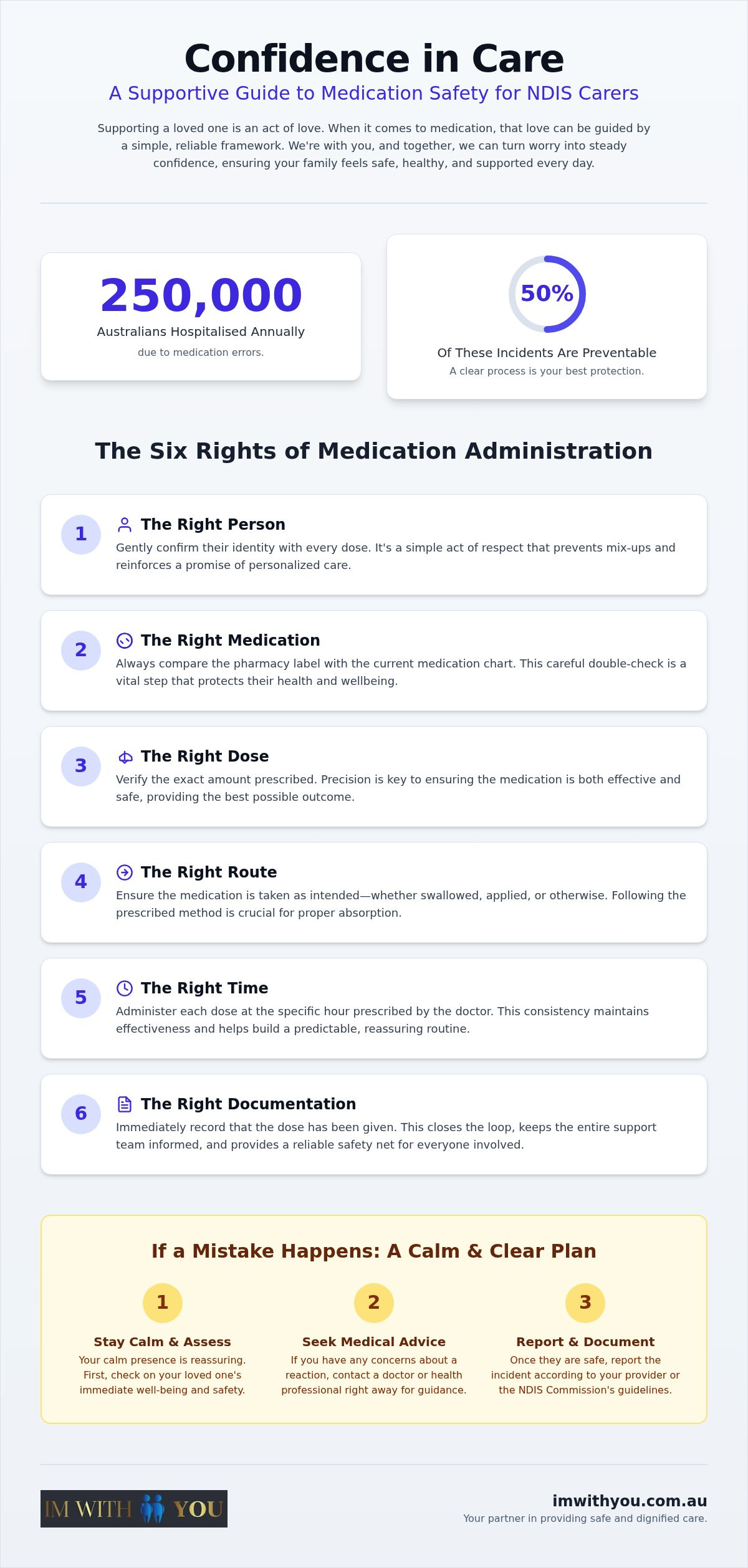
Did you know that 250,000 Australians are hospitalised every year due to medication errors, even though half of those incidents are preventable? When you’re supporting a loved one through the NDIS, the pressure to get every dose exactly right can feel heavy. Learning the six rights of medication administration is a simple way to ensure a high standard of quality care without the stress of clinical jargon. It’s natural to feel overwhelmed, but please know your heart is in the right place.
Im with you, and I want to help replace that worry with steady confidence. As a provider recognized with the 2026 Award for Excellence, I’ve seen how this framework protects both health and dignity. This guide offers a practical checklist designed to give you peace of mind. Together, we’ll ensure your loved ones remain safe, healthy, and supported every single day.
Key Takeaways
- Discover how to transform clinical requirements into a compassionate promise of safety and dignity for your loved ones.
- Master the six rights of medication administration to confidently verify identity, dosage, and timing every single time.
- Learn practical ways to simplify your daily routine using supportive tools like Webster-paks and distraction-free environments.
- Gain the peace of mind that comes from knowing you have a clear, reliable safety net to protect your family’s wellbeing.
What are the Six Rights of Medication Administration for NDIS Carers?
Supporting a loved one through their NDIS journey is a deeply personal commitment. It’s about more than just managing a schedule; it’s about building a life of dignity, health, and security. The six rights of medication administration provide a simple, reliable safety framework that helps prevent errors before they happen. For families and carers, these steps are a promise of safety that honors the person you’re supporting. Following this process helps you feel certain that you’re providing the best possible care, maintaining a high standard of quality care even when requirements feel complex. When you follow these steps, you aren’t just checking boxes; you’re creating a sanctuary of health for those who matter most.
To see how these principles work in a practical setting, this helpful video breaks down the core concepts:
Why medication safety is a foundation of quality care
Your commitment to safety is a powerful act of advocacy. By using person-first language, we acknowledge that every dose is about a person’s wellbeing, not just a clinical task. This mindset is vital within supported independent living (SIL), where medication safety maintains a participant’s independence and autonomy. While professional settings often start with the five rights of medication administration, our approach ensures that documentation is treated with equal importance in a home environment.
Following these steps bridges the gap between technical NDIS standards and the gentle, human touch your loved one deserves. It creates a space where health management feels safe and non-judgmental. Ultimately, the six rights of medication administration function as a collaborative safety net that protects both the carer and the individual, ensuring every day is lived with peace of mind.
A Gentle Breakdown: Navigating the Six Rights Every Day
Applying the six rights of medication administration in a home environment feels different than in a clinical setting. While Clinical Guidelines for Medication Administration provide the technical basis, your role is about weaving safety into a warm, daily routine. It’s about ensuring that every step is taken with care and focus, protecting the health of the person you support.
Start with the Right Person. Even when you know someone well, confirming their identity out loud or checking their photo on the support plan prevents simple mix-ups. Next, verify the Right Medication and Dose by comparing the pharmacy label to the current medication chart every single time. The Right Route and Time ensure the medicine is taken as intended, whether swallowed with water or applied topically, at the specific hour prescribed. Finally, Right Documentation closes the loop. Recording the dose immediately keeps the whole support team informed and provides vital peace of mind for everyone involved.
The Sixth Right: Verification and Indication
Understanding the “why” behind a prescription empowers you as a trusted advocate. When you know a medication’s purpose, you can better monitor its effectiveness and potential side effects. Our NDIS support coordination services often help families navigate these complex health requirements by connecting them with the right clinical experts. We always encourage participants to be active partners in their own journey, as involving them fosters independence and mutual trust. If you’re feeling unsure about a specific routine, you can always reach out to our supportive team to explore how we can walk alongside you.
Managing Medication with Confidence: Tips for Your Support Routine
Creating a supportive environment is just as important as the medicine itself. We know how busy life gets, but carving out a quiet, distraction-free space for this task is a vital act of care. It allows you the mental room to focus on the six rights of medication administration without the pressure of a noisy household. Using practical tools like Webster-paks or digital charts can simplify your daily routine, turning complex schedules into a clear, manageable path. Regular reviews with your GP or NDIS healthcare team ensure the support plan stays current as needs change. Remember, asking for help isn’t a failure; it’s a sign that you’re a dedicated and proactive carer.
What to do if a mistake happens: We are with you
If an error occurs, the most important thing is to stay calm. Your immediate priority is the participant’s health and safety. Check on them first and seek medical advice if you’re concerned about a reaction. Once they’re safe, follow the clear steps for reporting the incident to your support provider or the NDIS Quality and Safeguards Commission. These rules exist to protect everyone, not to assign blame. I’m with you during these stressful moments, and we view these events as opportunities to learn and improve future care together. By approaching mistakes without judgment, we can refine our six rights of medication administration process to ensure even better support moving forward. You’re doing a wonderful job in a complex role, and we’re here to walk alongside you every step of the way.
Moving Forward with Confidence and Care
By embracing the six rights of medication administration, you’ve transformed a daunting task into a reliable routine that protects your loved one’s dignity. You now have the tools to verify every dose with clarity and the peace of mind to handle challenges without fear. As a 2026 Excellence Award Winner, we understand that great care is built on partnership and specialized NDIS Support Coordination. Whether you’re navigating complex health requirements or seeking compassionate national disability advocacy, you don’t have to do it alone. I’m with you, providing the steady, expert support your family deserves. We’re here to walk beside you; explore our NDIS support services today. You’re doing an incredible job, and your dedication truly makes all the difference in the world.
Frequently Asked Questions
What are the most common medication errors in home care?
Errors often involve giving the wrong dose or missing a scheduled time, especially during busy periods. Research indicates that over 50% of medication errors happen when someone transitions between care settings, such as returning home from a hospital stay. Staying focused and using a quiet space helps you maintain the high standard of care your loved one deserves.
How do I document medication if the participant refuses to take it?
If a participant chooses not to take their medicine, you should record the refusal clearly on their Medication Administration Record (MAR) and notify their GP. Every NDIS participant has the legal right to refuse medication under the principle of choice and control. I’m with you in these moments; simply listen to their concerns and document the event without judgment.
Can an NDIS support worker help with all types of medication?
Support workers can assist with prompted or pre-packaged medications, but complex tasks like injections often require specialized training. For more intricate health needs, community nursing under NDIS provides the expert clinical oversight required for safety. We can help you determine the right level of support to ensure the six rights of medication administration are always upheld with professional care.
What should I do if the medication label is different from the doctor’s instructions?
You must stop immediately and contact the prescribing doctor or pharmacist if you notice a discrepancy between the label and your instructions. Never guess or assume which one is correct. This vital safety check is a core part of the six rights of medication administration. Verifying these details before the dose is given ensures your loved one’s health remains the top priority.