

Imagine waking up to a quiet morning, knowing your loved one is safe, happy, and enjoying a supported getaway while you finally take that deep, restorative breath you’ve needed for months. You probably feel a familiar tug of guilt when thinking about a break, or maybe you’re just exhausted by the complex terminology used in your plan. It’s natural to fear that requesting ndis funding for short term accommodation might lead to a rejection during your next review, but I’m here to walk alongside you through this process.
I’ll show you how to access and maximize your funding to ensure both you and your carers receive the genuine support you deserve. We’ll explore the specific evidence required in 2026 to make your application simple, clear, and successful, giving you a clear path toward peace of mind and shared happiness.
Key Takeaways
- Learn how ndis funding for short term accommodation provides up to 28 days of care each year, focusing on restorative breaks for both you and your support circle.
- Understand the essential steps to gather evidence, such as carer impact statements, to help the NDIS see your request as reasonable and necessary.
- Discover how to transform a temporary stay into an opportunity for personal growth and connection in a safe, welcoming environment.
- Explore how working with a steady guide can simplify the funding process and ease the anxiety of transitioning into a new support setting.
What is NDIS Funding for Short Term Accommodation (STA)?
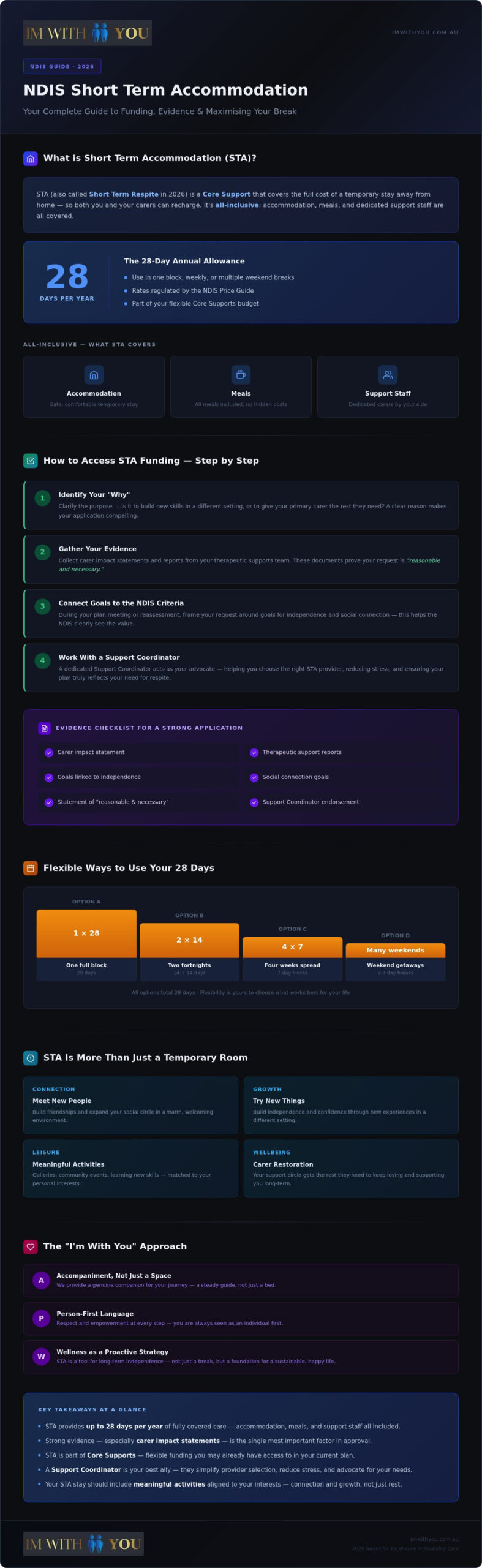
I often describe Short Term Accommodation (STA) as a gentle bridge that allows both you and your family to recharge. Simply put, ndis funding for short term accommodation is a core support designed to cover the cost of your care in a temporary setting for up to 28 days each year. While it’s technically called STA, you’ll notice the NDIS frequently uses the term ‘Short Term Respite’ in 2026. This shift isn’t just about paperwork; it’s a recognition that your carers need a restorative break to keep supporting you with the same love and energy they always provide. To find inspiration for your next period of rest, you can explore Luxury Wellness Retreats and Private Massoga® Treatments and see how professional wellness practices can transform your downtime.
When you access this funding, it’s completely all-inclusive. This means it covers the cost of your stay, your meals, and the dedicated support staff who walk alongside you during your time away. You won’t need to worry about hidden costs for daily activities or basic care needs while you’re enjoying your change of scenery and building your independence.
The 28-Day Rule and How Funding is Allocated
The 28 days provided in your plan offer wonderful flexibility to suit your lifestyle. You might choose to use them in two-week blocks, or perhaps you’d prefer several weekend getaways throughout the year to stay connected with your community. Standard rates for these stays are strictly regulated by the NDIS Price Guide to ensure you receive fair value and consistent care. Because STA is part of your Core Supports budget, you can often access it easily if your plan includes flexible funding, giving you the agency to choose when a break feels right for you.
How to Access STA Funding in Your NDIS Plan
Securing ndis funding for short term accommodation feels like a big task, but it becomes much simpler when we break it down into small, manageable steps. First, take a moment to identify why a break is important for you right now. Is it to build new skills in a different environment, or perhaps to give your primary carer the rest they need to keep supporting you? Understanding your “why” is the first step toward a successful application.
Once you’ve identified the need, we focus on gathering the right evidence. This often includes carer impact statements or reports from your therapeutic supports. These documents help the NDIS understand that your request is “reasonable and necessary” for your long-term wellbeing. During your plan meeting or reassessment, I recommend focusing on how this stay helps you reach your goals for independence and social connection. Clear goals make it easier for the NDIS to see the value in your request.
The Role of a Support Coordinator in Your Journey
You don’t have to navigate these complexities alone. A dedicated Support Coordinator acts as your steady guide, helping you understand how to choose an NDIS provider who offers high-quality STA. We serve as your advocate, ensuring your plan truly reflects your need for respite while reducing the stress of the application process. Having a companion by your side makes you feel empowered rather than overwhelmed. If you’re feeling unsure about your next plan review, our Support Coordination team is ready to walk this path with you.
Maximizing Your Experience: Beyond Just a Bed
While the NDIS defines this support in administrative terms, I believe your stay should feel like more than just a temporary room. When you use your ndis funding for short term accommodation, you’re investing in opportunities for connection and personal growth in a safe, warm environment. It’s a chance to try new things and meet new people while your usual support network takes a well-earned rest. This is quite different from more permanent arrangements, which you can explore in our gentle guide to Supported Independent Living (SIL).
A truly supportive provider ensures your stay is vibrant and full of life. We focus on matching your time away with meaningful leisure activities that align with your personal interests. Whether it’s visiting a local gallery, attending a community event, or learning a new skill, these moments transform a simple break into a highlight of your year. It’s about finding joy, not just filling time.
The ‘Im with you’ Approach to Short Term Respite
Our philosophy centers on accompaniment. We don’t just provide a space; we provide a companion for your journey. By using person-first language, we create an atmosphere of respect and empowerment where you’re always seen as an individual first. I invite you to see STA as a proactive strategy for a happy, sustainable life. It’s a tool for wellness and independence, ensuring you and your carers stay strong and connected for the long term.
Your Path to a Restorative Break
You now have a clearer understanding of how ndis funding for short term accommodation works and how it can breathe new life into your support circle. We’ve explored how to gather the right evidence and why this funding is a proactive step for your long-term independence. As national advocacy and support experts, we’re here to ensure you feel heard and valued throughout every plan review. Our 2026 Award for Excellence in Disability Care reflects our deep commitment to this compassionate, person-centered approach. You deserve a break that feels safe and uplifting, and I’m ready to walk alongside you to make that happen.
Let’s explore your STA options together; we’re with you every step of the way. You’re never alone in this process, and a brighter, more supported future is just a conversation away.
Frequently Asked Questions
Can I use NDIS funding for a holiday under Short Term Accommodation?
Does STA funding include the cost of my meals and activities?
Yes, your STA funding is designed to be all-inclusive while you are away from home. It covers the cost of your accommodation, all your nutritious meals, and the dedicated support staff who walk alongside you. It also includes basic community activities that help you reach your goals, ensuring you won’t face extra daily living expenses during your stay.
How do I prove to the NDIS that I need Short Term Respite?
You prove your need by providing evidence that shows how a break supports your wellbeing and sustains your caring relationships. Carer impact statements are vital here, as they describe the emotional and physical needs of your support network. Reports from therapists also help demonstrate that this funding is reasonable and necessary for your personal growth and independence.
What happens if I need more than 28 days of STA per year?
The NDIS typically caps this support at 28 days per year to keep it truly short term. If your circumstances change and you require more frequent or longer support, we might need to explore other options within your plan. I recommend discussing these changes with your Support Coordinator to ensure your funding continues to meet your evolving life needs.
Is Short Term Accommodation the same as respite care?
Yes, the NDIS now frequently refers to ndis funding for short term accommodation as ‘Short Term Respite’ to better reflect its purpose. This shift in language emphasizes the importance of giving both you and your carers a restorative break. While the name has become more person-centered, the focus remains on providing a safe, warm, and supportive temporary home.
Can children under 18 access STA funding?
Yes, children can access STA funding if it is deemed reasonable and necessary for their development or to support their family. It often helps young people build social skills and confidence in new environments away from their primary home. This support also gives parents and siblings the space to recharge, which helps maintain a happy and sustainable family life.