

Changing your support provider isn’t a sign of failure or a difficult “breakup”; it’s a powerful expression of your right to choice and control. I understand that the thought of moving on can feel overwhelming. You might worry about the awkwardness of the conversation or feel anxious that your essential care could stop during the transition. I’m with you, and I want you to know that learning how to terminate an ndis service agreement is a standard part of managing your plan effectively.
This guide will help you navigate the process with clarity and peace of mind. We’ll explore the latest requirements from the NDIS Pricing Schedule 2026-27, including the seven-day notice period for support workers and the two-day period for other services. You’ll gain a clear exit strategy that maintains respect for everyone involved while ensuring your care remains seamless. By the end of this read, you’ll have the tools to step toward a support match that truly understands your vision for the future.
Key Takeaways
- Reclaim your agency by understanding that choice and control are core promises designed to help you find the support that fits your life perfectly.
- I’m with you as you navigate how to terminate an ndis service agreement, helping you identify the specific clauses that protect your rights and your plan.
- Protect your funding by identifying the required notice periods in your current contract to avoid any unexpected charges during your transition.
- Build a bridge to your next chapter by discovering how to share your goals with a new team while keeping your personal privacy secure.
- Empower yourself with a clear management strategy that ensures your essential daily supports continue without interruption as you move forward.
Understanding Your Rights: When and Why to Terminate an NDIS Service Agreement
Termination is simply the formal way you end a contract with a provider. It’s a standard management tool that ensures your supports remain aligned with your evolving life. Under the National Disability Insurance Scheme (NDIS), you have the fundamental right to change who supports you at any time. I’m with you in this transition, and I want you to feel empowered rather than anxious. Changing your team isn’t a sign of trouble; it’s a sign that you’re actively steering your own journey.
Knowing how to terminate an ndis service agreement allows you to maintain the quality of your care. It ensures that every part of your budget works toward your specific goals. If a partnership no longer feels like the right fit, ending the agreement is the first step toward a more fulfilling connection. This process is a healthy part of managing your plan and exercising your rights as a consumer.
To better understand how these agreements work, watch this helpful video:
The Power of Choice and Control
The NDIS was built on the foundation of choice and control. Your plan should grow as you do, adapting to new aspirations and challenges. Using person-first language helps you stay at the center of every conversation. It reminds everyone that you’re the expert on your own life. When you speak up about your needs, you’re exercising the agency the scheme was designed to protect. You have the permission to seek out partners who truly hear you.
Common Reasons for Seeking a New Partnership
You might seek a new partner because your life is entering a fresh phase. Perhaps you’re exploring supported independent living ndis and need a provider with specialized expertise. Other times, communication might break down, or there’s a simple personality mismatch with a support worker. These are all valid reasons to move forward. You deserve a team that celebrates your strengths and supports your specific vision for independence.
Step-by-Step: How to Terminate an NDIS Service Agreement with Confidence
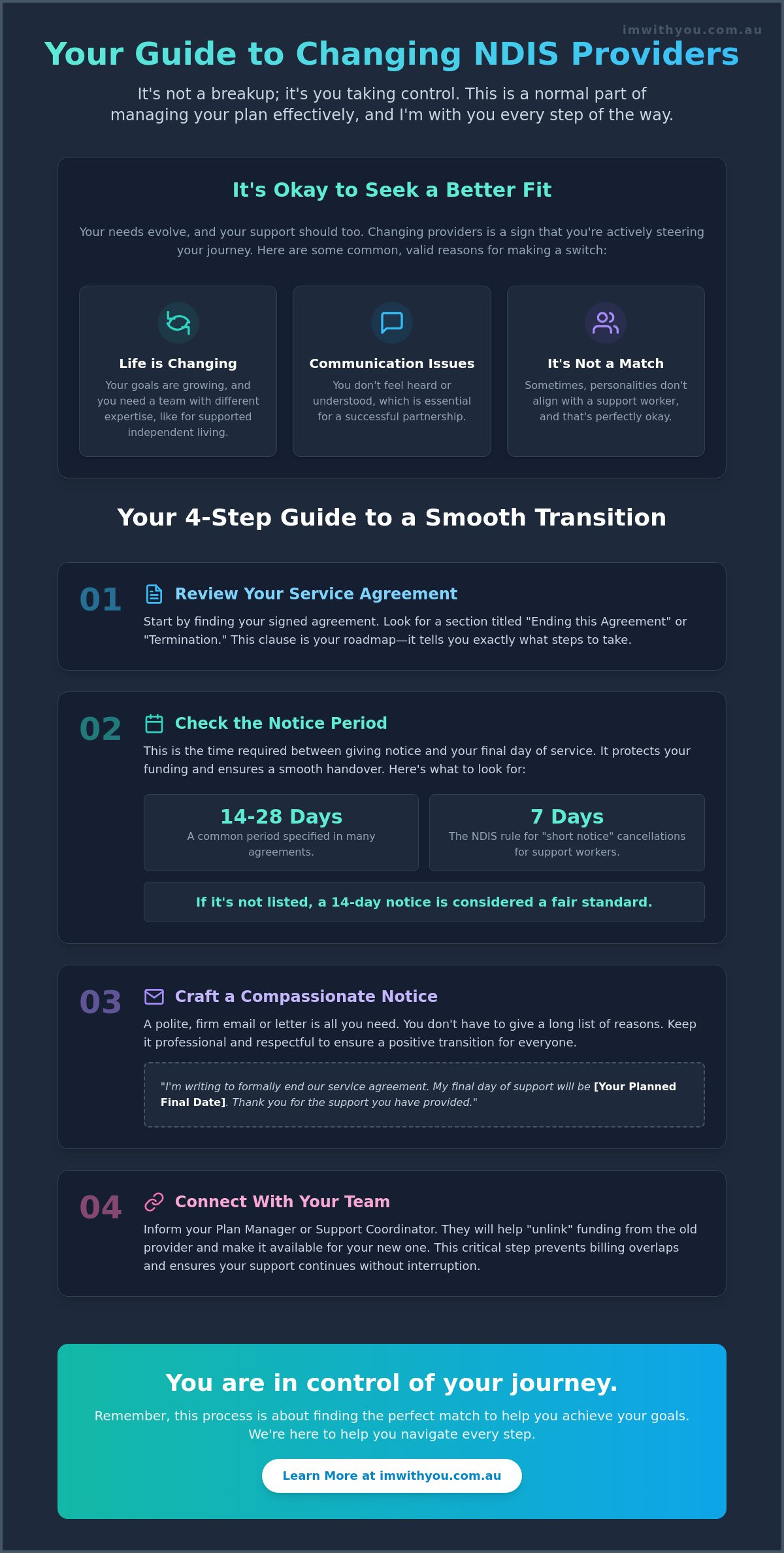
Taking the first step toward a new support partnership starts with a clear look at your current paperwork. I’m with you as you begin this process, and the best place to start is by locating your signed Service Agreement. Within those pages, you’ll find a section usually titled “Ending this Agreement” or “Termination.” This clause is your roadmap; it outlines exactly how much notice you need to give and the steps required to make it official. Having this information helps lower stress and ensures you stay in control of your budget.
Reviewing the Notice Period Clause
A notice period is the amount of time between telling your provider you’re leaving and the actual final day of service. Providers use this time to reallocate staff and finalize administrative tasks. While many agreements specify a 14 to 28-day window, the NDIS Pricing Schedule 2026-27 provides specific rules for short-term changes. For example, a “short notice” cancellation for most disability support worker items is now seven clear days. If you’re exiting a “program of support,” the standard notice is typically two weeks. If your agreement doesn’t list a specific timeframe, the NDIS generally suggests a 14-day notice as a fair standard.
Crafting a Compassionate Termination Notice
When you’re ready, documenting your intention in writing is the safest management strategy for everyone. You don’t need to feel pressured to provide a long list of reasons. A polite, firm email or letter is all that’s required. You might say, “I’m writing to formally end our service agreement, with my final day of support being [Date].” This approach keeps the transition professional and respectful. If you feel overwhelmed by the paperwork, our NDIS Support Coordination team can walk alongside you to ensure every detail is handled with care.
Once you’ve sent your notice, it’s vital to communicate with your Plan Manager or Support Coordinator. They’ll help “unlink” your funding from the old provider, making those funds available for your new team. This step prevents any overlap in billing and ensures a smooth financial transition. By following these steps, you’re not just ending a contract; you’re actively managing your path toward a support match that truly fits your life.
Moving Forward: Ensuring a Smooth Transition to Your Next Support Team
The transition period is a powerful time for advocacy and setting fresh expectations for your care. While the final weeks with a current provider can feel sensitive, I’m with you to ensure your voice remains the most important one in the room. This phase isn’t just about ending one chapter; it’s about carefully preparing the ground for your next partnership to flourish. By focusing on a clear handover, you protect your continuity of care and ensure your new team hits the ground running from day one.
I understand that privacy is a top priority during this move. You have the right to decide exactly what information follows you to your new provider. Mastering how to terminate an ndis service agreement includes managing this flow of data with confidence. You can choose to share only the essential documents that ensure your safety and support quality, keeping your personal journey as private as you wish. This balance of transparency and privacy is a key part of exercising your choice and control.
Finding Your Perfect Match
As you move forward, take the time to vet potential partners against your personal values. Use this checklist for how to choose an ndis provider to find a team that feels like a natural extension of your support network. When interviewing new providers, look for these three pillars:
- Transparency: Do they explain their billing and cancellation policies clearly?
- Empathy: Do they use person-first language and truly listen to your aspirations?
- Specialized Expertise: Can they demonstrate experience in the specific areas where you need the most growth?
Handover and Continuity of Care
To keep your daily routine steady, organize a digital or physical folder of your most vital documents. This typically includes your current support plans, updated risk assessments, and medication charts. Sharing these ensures your new workers understand your specific needs without you having to repeat your story multiple times. Your new provider should walk alongside you during this onboarding phase to lower your stress and handle the heavy lifting of the administrative transition. This collaborative approach ensures that your care remains seamless, allowing you to focus on the excitement of a fresh start.
Your Path to a More Supportive Tomorrow
Choosing to move on is a brave step toward a life that feels more aligned with your dreams. We’ve explored how identifying your notice periods and documenting your intentions in writing can turn a stressful task into a manageable strategy. I’m with you as you take these steps, ensuring your dignity remains the priority during every conversation. You’ve learned that transition is a time for growth, allowing you to reset your expectations and seek the high-quality care you deserve.
Understanding how to terminate an ndis service agreement is about more than just paperwork; it’s about reclaiming your agency. By focusing on a clear handover and vetting new partners for empathy and transparency, you’re setting the stage for a much stronger partnership. You don’t have to navigate these changes alone. Every step you take is a positive move toward a support team that truly understands your vision for independence.
As National NDIS Advocacy Specialists and the 2026 Excellence in Care Award Winner, our compassionate, person-centered support team is ready to help. We’re here to walk alongside you; discover how our award-winning advocacy can support your next chapter. You deserve a team that truly sees you, and I’m excited to see you find that perfect match.
Frequently Asked Questions
Can I terminate an NDIS service agreement immediately if I feel unsafe?
Yes, your safety and well-being always come first. If you feel unsafe or there is a serious breach of care, you aren’t required to wait out a standard notice period. You can contact the NDIS Quality and Safeguards Commission at 1800 035 544 for immediate assistance. I’m with you in prioritizing your security, and we can help you access urgent advocacy to ensure you move to a safe environment right away.
Do I have to give a reason for terminating my service agreement?
You don’t need to provide a specific reason or justification for wanting to move on. The NDIS is built on your fundamental right to choice and control, which means simply wanting a different support style is enough. When you decide how to terminate an ndis service agreement, your focus should stay on your own goals. While feedback can be helpful for providers, it’s entirely your choice whether to share it or not.
What happens to my NDIS funding when I switch providers?
Your NDIS funding stays with you because it’s tied to your personal plan, not a specific agency. When you move, your Support Coordinator or Plan Manager will “unlink” your budget from the old provider. This makes those funds available for your new team to claim against. I’ll walk alongside you during this transition to make sure the paperwork is handled correctly, ensuring your essential daily care continues without any financial interruptions.
Can a provider refuse to let me terminate the agreement?
No, a provider cannot legally stop you from ending your agreement. They must respect your right to find a new support match. While they can ask you to honor the notice period written in your contract, they cannot force you to stay indefinitely. If you feel pressured or a provider tries to block your exit, this may be a breach of your rights. I’m with you in asserting your independence and finding a team that respects your agency.