

What if the thick stack of paper on your kitchen table wasn’t a legal hurdle, but a roadmap to the life you want to lead? It’s completely natural to feel a flutter of anxiety when you’re tasked with understanding ndis service agreements, especially when the language feels cold or clinical. You might worry about hidden costs or fear that a simple mistake could impact your care. I want you to know that I’m with you, and those feelings don’t have to define your experience or your future.
I believe that every document should reflect your dignity and your choices, not just administrative requirements. You deserve to feel like a partner, not a number in a system. This guide is designed to help you navigate these agreements with a sense of security and warmth. I’ll show you how to look for clarity in cancellation terms and how to ensure your provider truly hears your needs. By the time we’re finished, you’ll have the practical tools to advocate for yourself, ensuring your supports are managed with the care and partnership you deserve.
Key Takeaways
- View your agreement as a collaborative roadmap that defines how we walk alongside you to support your unique journey.
- Gain peace of mind by understanding ndis service agreements and how they translate your funding into daily, person-centered care.
- Identify the essential elements of a Statement of Supports to ensure every service aligns perfectly with your individual goals.
- Learn how to review or update your agreement with ease, keeping your supports flexible as your life and needs evolve.
- Feel empowered to lead your partnership with a clear understanding of your rights regarding pricing and cancellation terms.
What is an NDIS Service Agreement and Why is it Important for You?
Imagine a document that doesn’t just list rules, but captures your dreams and aspirations. That’s the heart of a service agreement. While the National Disability Insurance Scheme (NDIS) provides the formal structure for your funding, the agreement is where our partnership truly begins. It’s a collaborative roadmap that ensures we’re moving in the same direction, toward the life you want to live. I’m with you in this process, making sure every word reflects your agency and your unique preferences.
To help you feel more comfortable with these documents, here’s a short video that breaks things down simply:
The Difference Between Your Plan and Your Agreement
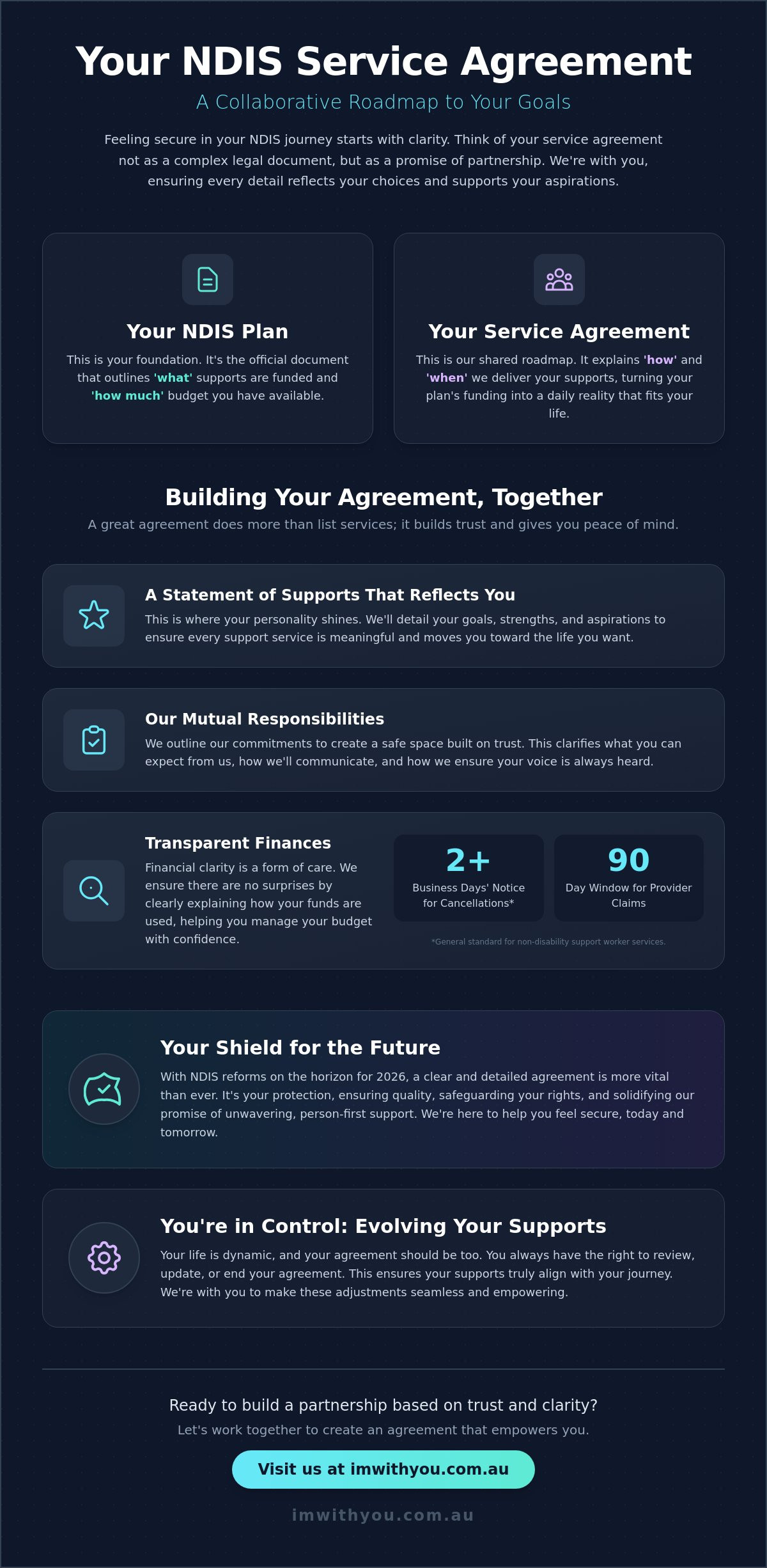
Your plan is the foundation, but the agreement is the house we build together. Understanding ndis service agreements helps you see how your funding turns into real-world support. Your NDIS Plan tells us ‘what’ is funded and ‘how much’ budget you have. In contrast, your Service Agreement explains ‘how’ and ‘when’ we’ll deliver that care to suit your specific schedule and lifestyle. This document acts as the vital bridge between your government funding and your daily lived experience, turning abstract numbers into meaningful growth.
Why ‘Good Enough’ Isn’t Enough in 2026
With the 2026 NDIS reforms bringing increased scrutiny and tighter regulations for providers, a clear agreement is more vital than ever. You shouldn’t settle for “good enough” when it comes to your safety and dignity. Premium providers prioritize detailed agreements to ensure excellence and to protect your rights in an evolving system. This clarity supports the use of person-first language and reinforces your role as the leader of your own support team. A well-managed agreement is a promise of quality, transparency, and unwavering companionship.
Managing the Essentials: What Your Agreement Should Include
A great agreement does more than list prices; it protects your peace of mind. When we sit down together, we’ll look at the specific details that make your support feel personal and reliable. Understanding ndis service agreements means knowing exactly what you’re signing up for, from the timing of your visits to the way we’ll handle unexpected changes. I’m with you as we build this foundation, ensuring every clause serves your wellbeing and respects your agency.
Your agreement should clearly define our mutual responsibilities. This creates a safe space where you know exactly what to expect from us, and we understand how best to walk alongside you. We’ll outline how we’ll provide support, how we’ll communicate with you, and the steps we’ll take to ensure your voice is always the loudest in the room. This clarity is the first step toward a true partnership built on trust and reliability.
Creating a Statement of Supports That Reflects You
Your agreement should be a vibrant reflection of your life. It’s not just about basic needs; it’s about the leisure activities and community connections that bring you joy. We’ll focus on your strengths and aspirations, making sure the document outlines exactly how our disability support services will help you reach those milestones. By being specific about your goals, we ensure your funding is always working toward the things that matter most to you, rather than just checking boxes.
Navigating Fees and Charges with Transparency
Financial clarity is a form of care. By reviewing NDIS service agreement essentials, you’ll see that transparency is a core requirement. We’ll clearly explain how your core supports or capacity-building funds are utilized, so there are never any surprises. By focusing on understanding ndis service agreements, you can manage your budget effectively so you always know where your funding is going.
This transparency includes being upfront about cancellation policies. Current standards generally require 2 business days’ notice for non-disability support worker related services to ensure fair treatment for everyone involved. We also keep you informed about claim timelines, such as the 90-day window for providers to process support claims, so your budget tracking remains accurate. I’m with you in managing these administrative details, allowing you to focus on your personal growth while I handle the paperwork with precision and care.
Your Rights in Action: Changing or Ending an Agreement
Your life is dynamic, and your supports should be too. Understanding ndis service agreements involves knowing that these documents aren’t set in stone. I’m with you to ensure your agreement evolves as you do, whether you’ve discovered a new hobby or your daily needs have shifted. A regular review, at least once a year or whenever your NDIS plan is updated, keeps our partnership fresh and focused on your current goals.
If you ever feel that our path together has reached its natural conclusion, you have the right to choose a different NDIS provider. Most agreements include a notice period, typically around 14 to 28 days, to ensure a smooth transition of care. For instance, participants in a Program of Support can generally exit with two weeks’ notice. This flexibility is a core part of your NDIS service agreement, protecting your independence and your right to seek the best possible fit for your life.
A Supportive Approach to Feedback and Complaints
I view your feedback as a gift. It’s the most valuable tool I have to improve and maintain excellence in care. If something isn’t working, I’m with you to listen without judgment. We handle every concern with deep empathy, ensuring you feel safe throughout the resolution process. Open communication isn’t just a policy; it’s how we find a path forward together. We aim to resolve disagreements through a collaborative approach that respects your dignity and perspective.
Advocacy and Your Empowerment
You are the leader of your support team. If understanding ndis service agreements feels overwhelming, our NDIS support coordination can walk alongside you to clarify the technical details. We’re here to empower you, providing the steady companionship and advocacy skills you need to manage your supports with confidence. You’re never alone in these decisions. I’m right here to support your agency every step of the way, making sure your agreement always serves your best interests.
Step into Your Future with Confidence
You’ve taken a beautiful step toward empowerment today. By understanding ndis service agreements, you’ve moved from feeling overwhelmed by paperwork to being the informed leader of your own support team. These documents aren’t just administrative requirements; they’re the tangible promises of quality and respect that ensure your voice remains the loudest in every decision. Whether you’re refining your Statement of Supports or exercising your right to change providers, you’re now equipped to manage your journey with clarity and grace.
As specialists in disability advocacy with national coverage, we’re here to provide the person-centered touch that makes you feel safe and truly seen. Our dedication to this collaborative spirit was recently recognized with the 2026 Award for Excellence in Care. I’m with you as you navigate these complex systems, offering the steady companionship and expertise you need to thrive. You don’t have to manage this alone. Let’s start this journey together—contact Im with you for support that puts you first. Your aspirations are our priority, and I can’t wait to see what we’ll achieve together.
Frequently Asked Questions
Do I legally have to have a written NDIS service agreement?
While it isn’t a legal requirement for every type of support, the NDIA strongly recommends having one in place. For certain specialized services, like Specialist Disability Accommodation, a written agreement is mandatory under NDIS rules. Having a document in writing protects your rights and ensures there’s no confusion about the care we’ve promised. It’s the best way to keep our partnership clear, safe, and focused on your goals.
Can my provider change their prices without telling me?
No, your provider cannot change prices without informing you first. Price adjustments typically happen once a year on July 1st after the NDIA releases its annual price guide. For the 2026-27 period, these changes are managed through formal pricing determinations. I’m with you to ensure your budget is handled with total transparency. We’ll always discuss how any national price limit updates might affect your specific supports before they take effect.
What should I do if I don’t understand the language in the agreement?
You have every right to ask for a version that makes sense to you. Understanding ndis service agreements shouldn’t feel like a struggle with complex jargon. You can request a plain English version or even use an interpreter to help you feel more comfortable. If things still feel unclear, a disability advocacy service can walk through the document with you. I’m with you to ensure you feel empowered and confident before signing anything.
How much notice do I need to give to end a service agreement?
Notice periods are usually between 14 and 28 days, depending on what we’ve agreed upon. This window allows for a respectful and smooth transition for everyone involved. If you’re participating in a Program of Support, the standard notice period to exit is two weeks. I’m with you in respecting your right to choose the best path for your life. We’ll always ensure your transition is handled with care and dignity.
Can a family member or carer sign the agreement on my behalf?
Yes, a family member or carer can sign if they’re your legally appointed nominee or have the authority to act for you. This is a common way for families to handle the administrative side of supports together. Even if someone else signs the paperwork, we’ll always keep you at the heart of every conversation. Our focus remains on your personal growth and your unique choices, ensuring you’re always the leader of your team.
What happens to my agreement if my NDIS plan is reviewed or changed?
Your agreement should be updated whenever your NDIS plan changes to ensure your supports still align with your funding. A plan review is a great time for us to sit down and see if your current services still fit your life. This keeps understanding ndis service agreements as an ongoing conversation rather than a one-time task. We’ll adjust your Statement of Supports together to match your new goals and any fresh aspirations you have.