

What if the time you spend waiting for your NDIS access decision wasn’t just lost time, but a valuable window to build your foundation? I know how exhausting it feels to be stuck in limbo, managing complex needs on your own while the clock ticks. It’s incredibly stressful to feel like your life is on hold until a letter arrives in the mail. I’m with you, and I want to help you figure out what to do while waiting for ndis approval so you can feel more in control of your journey right now.
You deserve to feel supported and heard, even before your funding is finalized. Discovering practical strategies and community resources can help bridge the gap and ease that sense of isolation. This guide offers a clear path forward, from finding immediate local help to organizing your documents for your first planning meeting. We’ll explore how to reduce your anxiety through a steady action plan, ensuring you’re prepared to step into your new supports with confidence and dignity.
Key Takeaways
- Centralize your medical reports and therapist contacts in a “Waiting Well” folder to keep your information organized and accessible.
- Explore mainstream health and education services that provide vital support while you wait for your official access decision.
- I’m with you as you discover what to do while waiting for ndis approval, starting with immediate peer support through local community networks.
- Draft a “Typical Day” statement to clearly show your future planner exactly where and how you need support the most.
- Choose a trusted advocate or support person to join your planning meeting so you can feel confident and heard throughout the process.
Navigating the NDIS Waiting Period with Confidence and Calm
Entering the National Disability Insurance Scheme (NDIS) can feel like starting a marathon without a clear finish line. If you’re feeling overwhelmed by the silence after submitting your application, please know that I’m with you during this transition. This “in-between” stage is often the hardest part emotionally, but it’s also a powerful time to gather your thoughts and take small, manageable steps toward your future. You aren’t navigating this gap alone, and there are practical ways to stay grounded while you wait.
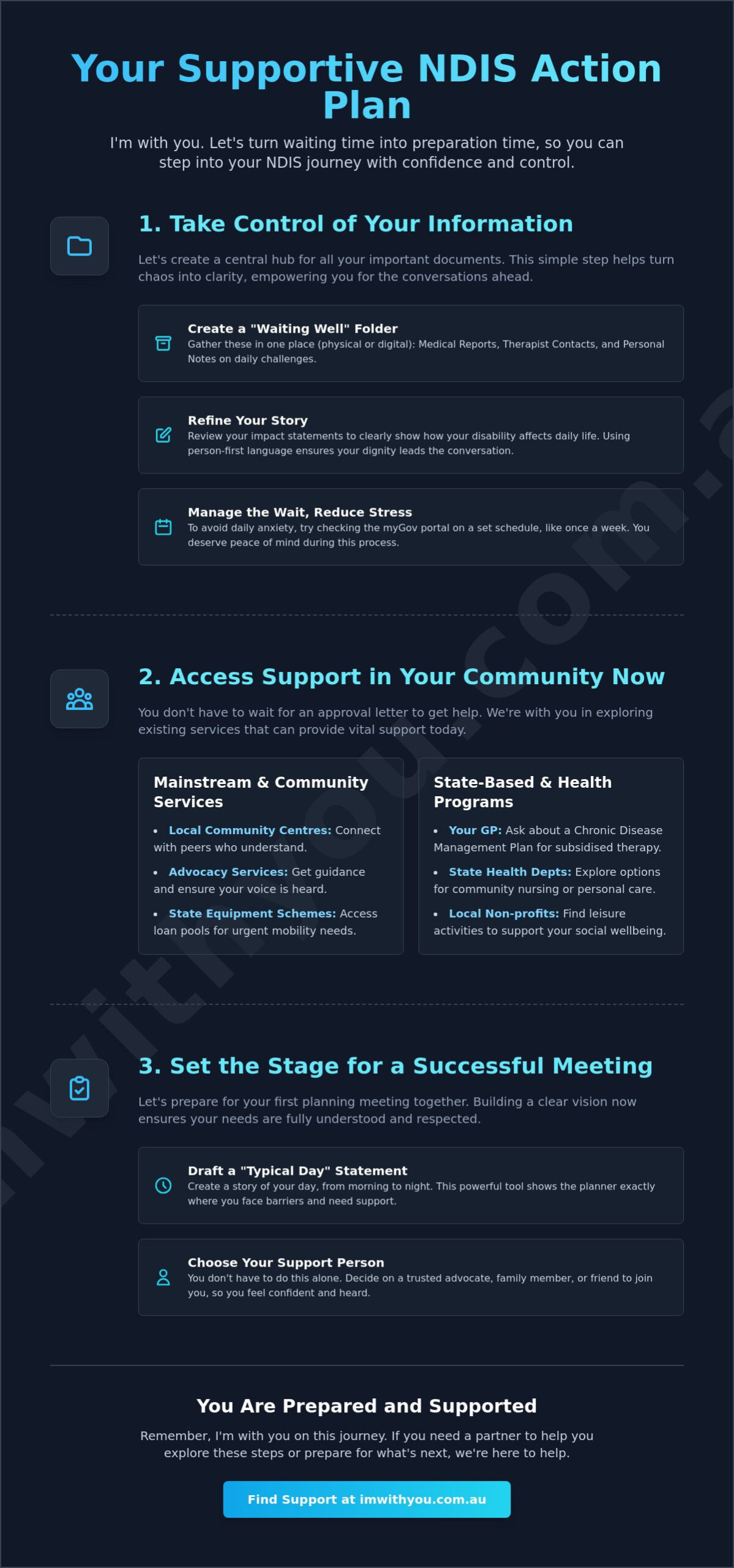
One of the most effective management strategies you can adopt is establishing a “Waiting Well” folder. This simple physical or digital space centralizes all your medical reports, therapist contacts, and personal notes about daily challenges. It turns a chaotic stack of papers into a clear, organized record of your needs. While you’re eager for news, try to set a specific routine for checking your myGov portal, perhaps just once a week. This keeps you informed without letting the wait become a source of daily stress. Learning what to do while waiting for ndis approval is really about reclaiming your peace of mind while the administrative process moves forward.
To better understand this concept, watch this helpful video:
Organising Your Evidence for a Smoother Approval
This period is a perfect time to refine your evidence to ensure it truly reflects your life. Take a moment to review your “impact statements” and confirm they focus on your functional capacity, showing exactly how your disability affects your daily routines. It’s also helpful to use person-first language when describing your needs. This approach ensures your dignity remains the priority while you communicate clearly with the NDIA. Confirm that your treating health professionals have provided specific, evidence-based documentation that supports your goals. Identifying these goals now will help you communicate them with confidence once you are approved.
Accessing Immediate Support Through Mainstream and Community Services
While the official NDIS application process is underway, you don’t have to wait in a vacuum. Mainstream services are designed for everyone in the community, including you. These include health, education, and community programs that operate independently of NDIS funding. I’m with you as you explore these avenues to ensure your immediate needs are met. If you are wondering what to do while waiting for ndis approval, looking toward these existing systems is a proactive way to bridge the gap.
Local community centres are wonderful hubs for social connection and immediate peer support. They often host groups where you can meet others who truly understand your journey. Additionally, many advocacy services provide guidance and support even before your plan is active. They can help you understand your rights and ensure your voice is heard. If you have urgent mobility needs, look into state-funded equipment schemes or “loan pools.” These programs can provide temporary access to wheelchairs or walking aids while you wait for a permanent solution.
Leveraging State-Based Disability and Health Programs
Your local GP is a vital partner during this time. You can discuss a Chronic Disease Management Plan, which provides Medicare-subsidised sessions with allied health professionals like physiotherapists or occupational therapists. This is a practical management strategy to maintain your wellbeing today. You might also explore state health departments for community nursing or personal care options that don’t require an active NDIS plan. Researching local non-profits that offer leisure activities is another way to maintain your social health and find joy during the wait. If you need a steady companion to help identify these local options, our disability support services are here to help you explore the possibilities.
Preparing for Your Planning Meeting: Setting the Stage for Success
The wait for your access decision doesn’t have to be passive. While you are figuring out what to do while waiting for ndis approval, you can start building a clear vision for your future. I’m with you as you prepare for your first planning meeting, which is the vital bridge between your application and your actual supports. One of the most powerful tools you can create right now is a “Typical Day” statement. This isn’t just a list. It’s a vivid story of your life that shows the planner exactly where you face barriers, from the moment you wake up to the time you go to sleep.
You don’t have to walk into that meeting alone. Think about who makes you feel safe and heard. Whether it’s a family member, a friend, or a professional advocate, having a support person can help you stay focused on your goals. This is also the time to decide how you want to manage your future funding. You can choose to be Self-Managed, Plan-Managed, or NDIA-Managed. Each option offers a different level of control and responsibility. Take some time to reflect on which style suits your lifestyle and your confidence in managing administrative tasks.
Finding the Right Support Partner for Your Journey
Starting your research now means you can hit the ground running the moment your plan is live. It’s helpful to learn how to choose an NDIS provider that truly aligns with your personal values of dignity and care. Look for partners who offer comprehensive services such as NDIS Support Coordination and Capacity Building Skills. These supports are designed to empower you and help you navigate the complex system with ease. Seek out award-winning care providers who prioritize excellence and a person-centered approach. By organizing your thoughts and researching your options today, you’re creating a foundation of strength for your future journey.
Stepping Into Your Future with Confidence
The waiting period doesn’t have to be a time of standing still. By organizing your evidence, accessing community services, and envisioning your ideal support structure, you’ve already begun your journey toward independence. I’m with you every step of the way, ensuring you never feel alone as you decide what to do while waiting for ndis approval. These proactive steps turn a period of uncertainty into a foundation of strength, allowing you to move forward with a clear sense of purpose and calm.
As a national provider and the winner of the 2026 Award for Excellence in Disability Support, we’re dedicated to a compassionate, advocate-led approach to care. Whether you need high-standard Support Coordination or a steady companion to guide your next steps, we’re here to help you navigate the system with dignity. You’ve done the hard work of starting this process, and now it’s time to look forward to the possibilities ahead. Connect with our empathetic team for support today and let’s start this new chapter together. You’re capable, you’re prepared, and we’re right beside you.
Frequently Asked Questions
How long does NDIS access approval actually take in 2026?
NDIS access decisions are typically made within 21 days of the NDIA receiving your completed application. While this is the standard benchmark, the current period of scheme reform in 2026 means some applications may take slightly longer if more evidence of functional capacity is required. I’m with you during this time of anticipation, and I recommend checking your myGov portal weekly for the most accurate status updates on your request.
What happens if my NDIS application is declined?
If your application isn’t approved, you have the right to request an internal review within three months of receiving the decision letter. This process allows you to submit further evidence or clarify how your disability impacts your daily life. If the internal review doesn’t result in the outcome you need, you can apply for an external review through the Administrative Review Tribunal (ART) within 28 days of that second decision. You don’t have to face this alone; advocacy services are available to guide you through these steps.
Can I access any NDIS funding retrospectively for costs incurred while waiting?
NDIS funding is not retrospective, meaning it won’t cover the costs of supports or equipment purchased before your plan is officially approved. This is exactly why it’s vital to know what to do while waiting for ndis approval, such as utilizing Medicare-subsidised therapy sessions through a Chronic Disease Management Plan. These mainstream health pathways provide essential support today while you wait for your long-term NDIS funding to begin.
Who can help me understand my NDIS letter once it arrives?
A Disability Advocacy Service or a Support Coordinator can help you translate the technical language in your NDIS letter into clear, actionable steps. These professionals specialize in decoding the scheme’s terminology and can help you prepare for your upcoming planning meeting. I’m with you to ensure you feel confident and fully informed about what your access decision means for your future supports and independence.