

What if your NDIS plan was less about managing your daily needs and more about building a life where you need less management? I know it often feels like you’re caught in a cycle of being looked after rather than moving forward. It’s completely normal to feel a bit anxious about how to use your funding or worried that a mistake might set you back. Sorting through the different categories can be confusing, and you deserve to feel sure about every choice you make for your future.
Im with you on this journey, and I want to show you how to transform your budget into a practical roadmap for lasting independence and self-reliance. We’re going to move beyond administrative tasks and focus on what really matters: your personal growth. In this guide, we’ll explore real-world ndis capacity building examples and clear strategies to help you understand your funding categories. You’ll gain the tools to lead your own support journey with confidence and turn your long-term goals into everyday skills that stay with you for life.
Key Takeaways
- Learn how to view Capacity Building as a targeted investment in your future skills rather than just another administrative budget category.
- Discover practical ndis capacity building examples that show you how to move from a cycle of care toward genuine self-reliance.
- Master strategies for collaborative management to ensure your supports always stay aligned with your evolving life and personal goals.
- Understand the vital role of Support Coordination as a bridge that connects your plan’s funding to your real-world independence.
- See how community participation can help reduce social isolation while building the confidence you need to lead your own journey.
Understanding NDIS Capacity Building for Independence
Capacity Building isn’t just a budget line; it’s a promise to your future self. Think of it as a targeted investment in the skills and confidence you’ll use for years to come. While navigating the National Disability Insurance Scheme (NDIS), it’s easy to focus only on the immediate help you need today. However, the 2026 excellence standards in care remind us that the goal is always person-first growth. We want to move away from simply delivering services and toward helping you blossom. Some people worry about a “use it or lose it” policy, but the real focus should always be on your meaningful goal progression. If you’re moving forward, you’re using your plan exactly as intended.
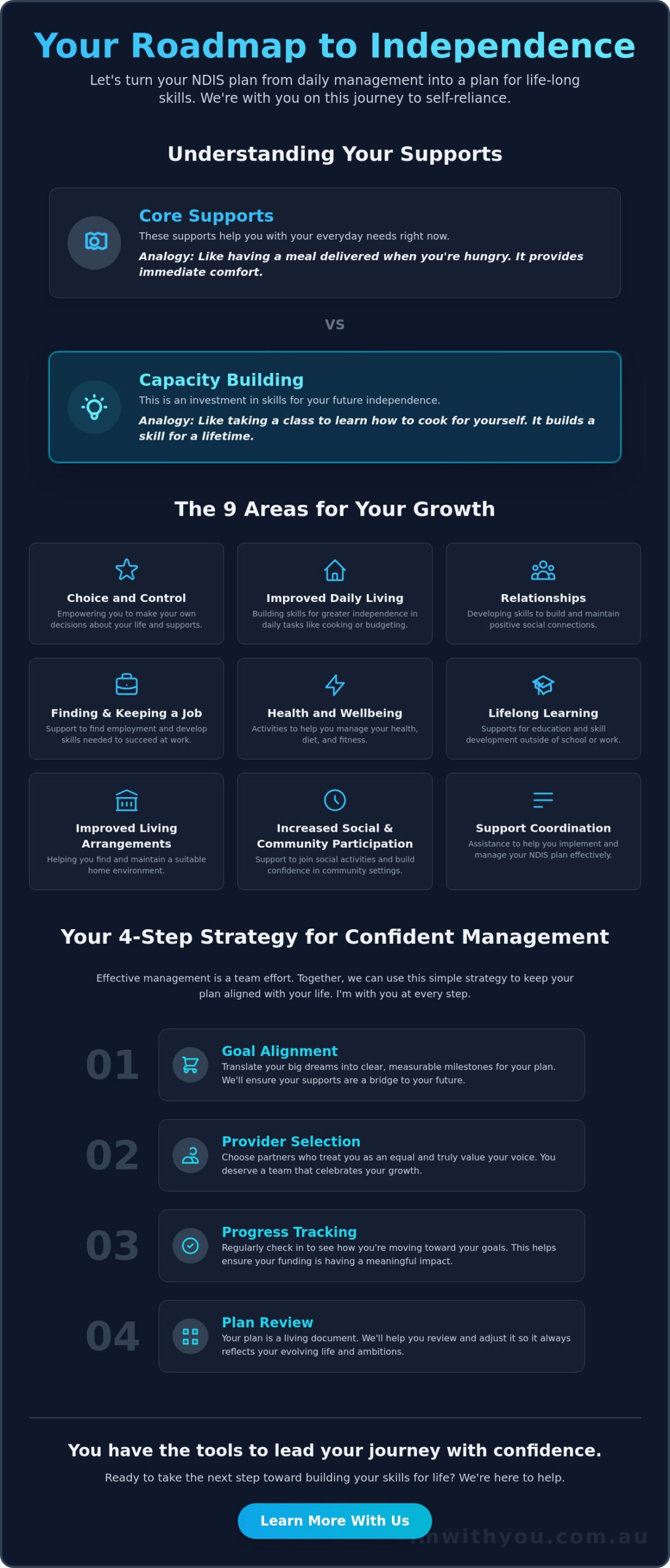
To help you visualize how these budgets work together, have a look at this helpful breakdown:
The 9 Categories of Capacity Building
Core vs. Capacity Building: A Gentle Comparison
Understanding the difference between Core and Capacity Building is simpler when you think about food. Core Supports are like having a meal delivered when you’re hungry; they meet your needs right now. Capacity Building is like taking a class to learn how to cook for yourself. One provides immediate comfort, while the other builds a skill for a lifetime. Most successful plans include a balance of both. You might need help with daily tasks today while you work on the skills that will make you more self-reliant tomorrow. This combination creates a sturdy bridge toward the independence you deserve.
Practical Strategies for Managing Your Capacity Building Journey
Managing your NDIS journey is about more than just ticking boxes; it’s about keeping your supports perfectly aligned with your evolving life. I’m with you in this process, ensuring you never feel like you’re managing these complexities alone. Effective management is a collaborative team effort between you and your providers. To help you stay on track, I recommend a simple four-step strategy: Goal Alignment, Provider Selection, Progress Tracking, and a regular Review. By following these steps, you can turn your plan into a living document that breathes with your daily experiences.
According to the Official NDIS Guide to Capacity Building, these supports are specifically designed to help you build the skills you need to live as independently as possible. When looking for ndis capacity building examples that work for you, remember that the most effective strategies are the ones that feel personal and achievable. Seeing practical ndis capacity building examples helps you understand how these budgets translate into real-life independence. If you ever feel stuck, exploring how to choose an NDIS provider who understands your vision is a great way to regain your momentum.
Aligning Supports with Your Personal Goals
Turning big dreams into NDIS-friendly goals is a skill in itself. It’s about translating your desire for “more freedom” into specific, measurable milestones for your plan review. Goal alignment acts as the bridge between your current needs and your future independence. Using person-first language is a powerful way to ensure your goals remain respectful and focused on your individual agency rather than just your diagnosis.
Choosing the Right Partner for Growth
Finding a provider who truly values your voice is essential for long-term success. You should look for a partner who treats you as an equal rather than a patient. Learning how to choose an NDIS provider who respects your choices will make your journey much smoother. Don’t be afraid to be brave; if a partnership isn’t clicking or doesn’t feel supportive, you have the right to find a better fit. Your growth is the priority, and the right team will always celebrate your movement toward self-reliance.
Moving Toward Independence: The Power of Partnership
From Skill-Building to Independent Living
The skills you develop through your capacity building budget often lead to major life changes, such as moving into supported independent living (SIL). Learning how to manage a household is the ultimate expression of your hard work and dedication. Practical ndis capacity building examples include mastering meal preparation, handling personal finances, or learning how to use public transport safely. These aren’t just tasks; they’re the building blocks of a life led by your own choices and preferences.
Finding Joy Through Connection
Independence also includes the freedom to choose how you play and connect with others. Capacity building is closely linked to the simple goal of finding joy in leisure activities. Whether it’s joining a local art group or attending a community sports event, these connections are vital for your wellbeing. When you explore different ndis capacity building examples, you’ll see that social skills are just as important as practical ones. They help you feel like a valued, active part of your local community.
I’m with you as you take these brave steps toward the life you’ve imagined for yourself. We’ll celebrate every new skill and every bit of newfound confidence together. Your independence is a shared victory, and I’m honoured to walk alongside you on this path toward a more self-reliant future.
Embrace Your Journey Toward Self-Reliance
Your NDIS plan serves as the foundation for the life you choose to lead. We’ve explored how understanding your budget and selecting partners who value your voice can transform your daily experience. By applying these ndis capacity building examples to your own life, you’re taking active steps toward a future defined by your strengths rather than your challenges. Im with you as you navigate these choices, ensuring you always feel heard and supported.
At Im with you, we’re proud to provide expert NDIS Support Coordination and compassionate, person-centered advocacy. Our commitment to your growth was recently recognised with the 2026 Award for Excellence in Disability Support. We believe that independence is a shared victory, and we’re here to walk alongside you every step of the way. Let’s build your independence together; connect with our award-winning team today. You have the power to shape your tomorrow, and it would be our honour to help you make it happen.
Frequently Asked Questions
Can I move money between my Capacity Building categories?
You generally cannot move funds between different Capacity Building categories because they’re specifically tied to the goals outlined in your plan. Unlike Core supports, which offer more flexibility, Capacity Building funding is fixed to the specific area of growth it was intended for. If your circumstances change and you need to shift your focus, I’m with you to help prepare for a plan review to adjust these allocations. This ensures your budget always reflects your current path toward independence.
How do I know if a support is Capacity Building or Core?
You can identify the difference by looking at whether the support meets an immediate need or builds a future skill. Core supports provide the help you need for your daily life right now, such as assistance with personal care or household tasks. Capacity Building is an investment in your tomorrow. It focuses on training and therapy that help you do more for yourself. Looking at ndis capacity building examples like learning to use public transport versus being driven to an appointment makes this distinction easy to see.
Do I need a therapist for every Capacity Building goal?
You don’t always need a clinical therapist to work on your capacity building goals. While therapists are essential for many functional improvements, you can also use skill-building coaches or support workers to practice real-world tasks. Many people find that a mentor who walks alongside them during community activities is the perfect partner for building social confidence. It’s all about finding the right person to help you grow, whether they’re a specialized professional or a dedicated support worker focusing on your agency.
What happens if I don’t use all my Capacity Building budget?
If you don’t use your full budget by the end of your plan, the remaining funds don’t roll over to the next one. It’s a common concern that this might lead to future funding cuts, but that isn’t always the case. We’ll work together to document why the funds weren’t used, such as waiting lists for specific ndis capacity building examples like therapy or life-skills programs. My priority is helping you find meaningful ways to use your supports so you can reach your milestones with confidence and ease.