

If you see a loved one suddenly struggling to speak or move, your first instinct is likely to reach for the medicine cabinet, but that one act could actually cause more harm than good. It’s a common point of confusion; while aspirin is a lifesaver during a heart attack, it can be incredibly dangerous during a stroke. Im with you in that feeling of uncertainty, and I want to help replace that fear with the confidence of knowing exactly what to do. Understanding the specific first aid rules for a stroke is the first step in a journey that eventually leads to comprehensive ndis support for stroke survivors.
In this guide, you’ll learn the vital reasons why Mayo Clinic experts insist on the “no aspirin” rule and how to master the F.A.S.T. method to keep your loved ones safe. Beyond the initial emergency, we’ll look at how the NDIS provides a compassionate pathway for long-term recovery through therapeutic supports and capacity building. I’ve put together a clear roadmap to help you understand the latest 2026 funding categories, ensuring you never have to feel alone while managing the complexities of post-stroke care. Let’s explore how to move from immediate safety to a life filled with possibility and support.
Key Takeaways
- Learn why reaching for aspirin during a suspected stroke is a dangerous mistake and how to confidently apply the F.A.S.T. method instead.
- Understand the critical differences between ischaemic and haemorrhagic strokes to better advocate for your loved one’s specialized care needs.
- Discover how ndis support for stroke survivors provides the essential funding for therapies and community access that make long-term recovery possible.
- Explore how professional Support Coordination simplifies the transition from hospital to home, ensuring you never have to walk this complex path alone.
- Gain practical strategies for managing NDIS funding categories to focus on rebuilding independence and achieving your personal growth goals.
The Essential Rule of Stroke First Aid: Why Aspirin is Not the Answer
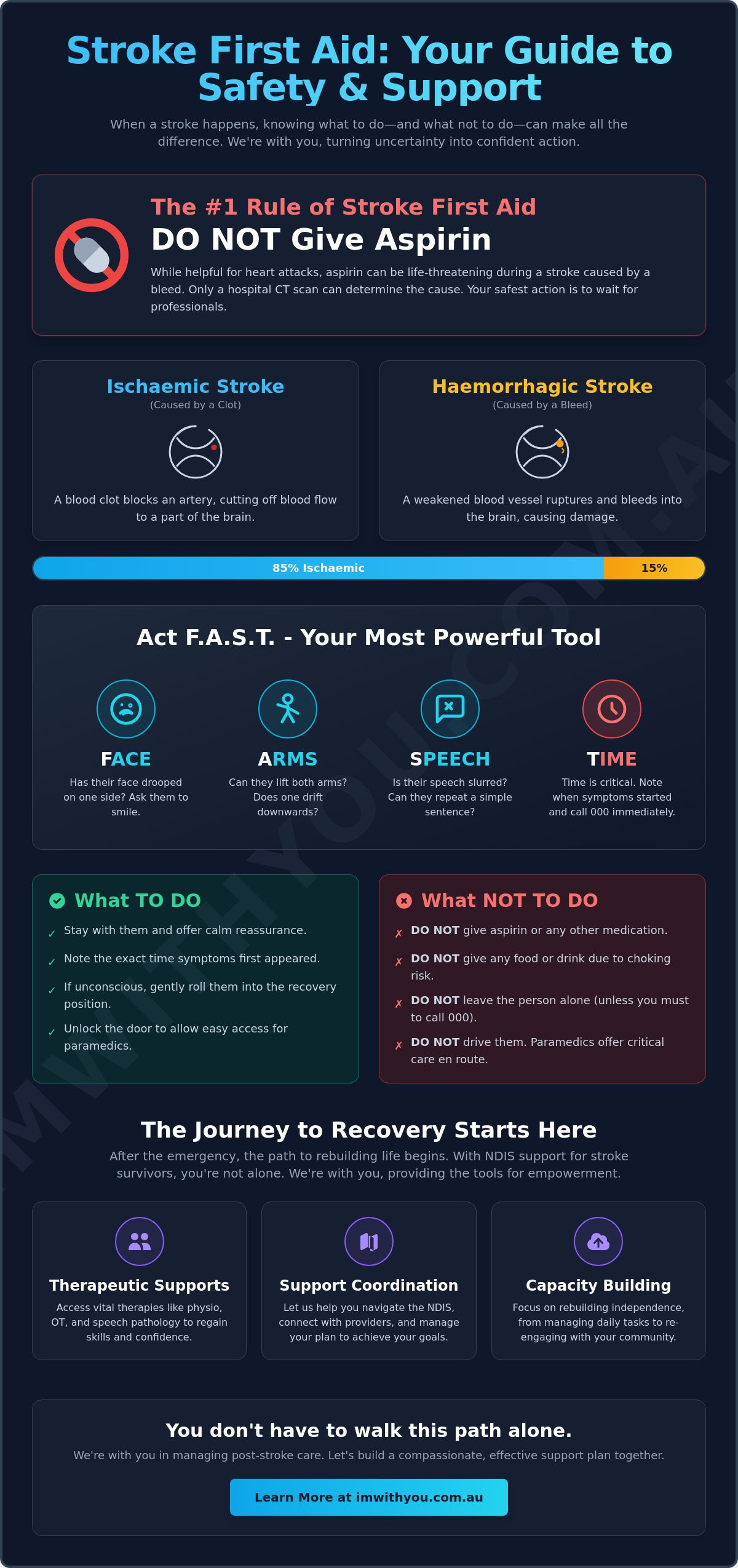
In a moment of crisis, your first instinct is to help. You might remember that aspirin is recommended for heart attacks and think it’s the right choice here too. Regarding stroke first aid, the Mayo Clinic is very clear: never give aspirin or any other medication. I’m with you in wanting to do everything possible, but in this case, doing less is actually doing more. Giving aspirin can be life-threatening if the stroke is caused by a ruptured blood vessel rather than a clot. With approximately 41,100 stroke events occurring in Australia each year, knowing these rules is vital for everyone.
To help you understand how this immediate care transitions into long-term recovery, watch this helpful video:
It’s impossible for even the most experienced first aider to tell if a stroke is caused by a clot or a bleed without a hospital CT scan. This distinction between Ischaemic vs. Haemorrhagic Stroke determines the entire medical response. While you wait for paramedics, your priority is to foster a calm environment and monitor the person closely. This foundation of safety is exactly what we build upon later when arranging ndis support for stroke survivors to help them regain their independence and confidence.
The Risk of Self-Medicating in a Crisis
Symptoms alone can’t tell us what’s happening inside the brain, and acting on a guess is too risky. Beyond the danger of worsening a bleed, there’s a serious hazard of choking. Strokes often affect a person’s ability to swallow, so you shouldn’t give them water, food, or pills. Paramedics and doctors need to perform specific diagnostics before starting any drug therapy to ensure they’re moving in the right direction. By keeping the person’s system clear of self-administered meds, you’re giving the medical team the best chance to act quickly.
Medication Safety as a Core Promise
Clinical oversight is essential in those first few hours to prevent further damage and start the healing process. We believe that safety is a partnership that starts in the emergency room and continues into the home. That’s why we always follow the six rights of medication administration. This commitment to protocol is a big part of how we provide ndis support for stroke survivors through our Therapeutic Supports and Support Coordination. We’re here to ensure every step of your recovery journey is handled with the professional care and dignity you deserve.
Ischaemic vs. Haemorrhagic Stroke: Understanding the Danger
Understanding what’s happening inside the brain is the first step toward effective management. Most strokes, about 85%, are ischaemic, which occurs when a clot blocks blood flow to the brain. The remaining 15% are haemorrhagic strokes, caused by a weakened vessel that ruptures and bleeds into the surrounding tissue. Because both types look identical from the outside, The Essential Rule of Stroke First Aid is to wait for a clinical diagnosis before acting. I’m with you in the desire to help, but guessing incorrectly can have serious consequences.
The danger of aspirin lies in its blood-thinning properties. While thinning the blood helps a clot dissolve in an ischaemic event, it does the exact opposite during a haemorrhagic stroke. If a vessel has ruptured, the body needs to form a “plug” to stop the bleeding. Aspirin prevents this natural clotting process, which can cause the brain bleed to expand rapidly. This is why a hospital CT scan is the only safe way to decide on treatment. This medical precision is the foundation upon which ndis support for stroke survivors is built, ensuring that every survivor receives a care plan tailored to their specific injury.
The F.A.S.T. Method: Your Most Powerful Tool
- Face: Look for an uneven smile or a drooping eye or mouth.
- Arms: Check if the person can lift both arms and keep them there.
- Speech: Listen for slurred words or an inability to repeat a simple sentence.
- Time: You must record the exact minute you noticed symptoms because certain life-saving treatments have a very narrow window of effectiveness.
Supporting the Person Through the Unknown
While you wait for 000 responders, your presence is a powerful form of care. Keeping the person calm and still helps manage their blood pressure, which is critical during a potential bleed. If they lose consciousness or begin to vomit, gently roll them onto their side into the recovery position to keep their airway clear. I’m with you in these heavy moments, and gathering their current medications can be a huge help for the paramedics once they arrive. If you feel overwhelmed by the road ahead, exploring Disability Advocacy Services can provide the steady guidance you need. Providing this level of care today sets the stage for successful ndis support for stroke survivors as they move into the recovery phase.
The Journey Beyond the Emergency: NDIS Support for Stroke Survivors
Once the immediate medical crisis passes, a new chapter of recovery begins. While the hospital team saves lives, the community phase is where you rebuild them. Moving from clinical intervention to home-based care can feel like a daunting step, but accessing ndis support for stroke survivors ensures you don’t have to navigate this transition alone. I’m with you as you move into this phase, helping you turn a complex funding plan into a practical roadmap for regaining your independence and confidence.
NDIS Support Coordination acts as the essential bridge between the hospital ward and your front door. It’s common to feel overwhelmed by the sudden need for new routines and specialists. A dedicated coordinator walks alongside you to organize your schedule and ensure all your supports align with your personal goals. Whether you need Therapeutic Supports to improve mobility or Capacity Building Skills to manage daily tasks, we focus on your strengths. We treat these services not just as administrative requirements, but as core promises to help you live a dignified and self-directed life.
Choice and Control in Post-Stroke Life
Reclaiming control over your environment is a vital part of the healing process. Your NDIS funding can cover essential home modifications, such as installing grab rails, or assistive technology that helps with communication and movement. Since every recovery journey is different, it’s important to know how to choose an NDIS provider who shares your values and understands your specific needs. We also encourage you to look beyond physical therapy by exploring what are leisure activities that can help you rediscover joy and reconnect with your local community.
A Holistic Approach to Recovery
A stroke can sometimes bring unexpected changes to how we think and feel. This might involve understanding intellectual disability or managing the psychosocial impacts of a sudden health change. Our Disability Advocacy Services ensure that your voice remains the most important one in the room during planning meetings. We take a person-centered approach to ndis support for stroke survivors, making sure your identity is never lost behind a diagnosis. I’m with you in this long-term commitment, providing the steady companionship and expertise needed to navigate the 2026 NDIS reforms with ease.
Building a Brighter Future After a Stroke
Your journey from that first critical moment of first aid to your recovery at home is a testament to your resilience. By remembering the F.A.S.T. method and the vital safety rules about medication, you’ve already taken the most important steps toward a safer outcome. Transitioning into long-term recovery involves more than just clinical care; it’s about reclaiming your independence and finding joy in daily life again. I’m with you as you explore these new possibilities, ensuring your dignity and choice always remain the top priority.
As a national provider awarded for excellence in Australian disability care 2026, we specialize in providing compassionate NDIS Support Coordination and Advocacy. We believe that navigating ndis support for stroke survivors should feel like a partnership rather than an administrative process. Our team is committed to walking alongside you, helping you access the therapeutic supports and community connections that matter most to your individual goals. You don’t have to manage these complex systems alone. Discover how we walk beside you on your NDIS journey and let’s start building your roadmap to recovery together. You have the power to shape your future, and I’m here to support every step you take.
Frequently Asked Questions
Why does the Mayo Clinic specifically warn against aspirin for stroke first aid?
Mayo Clinic experts warn against aspirin because it can dangerously worsen a haemorrhagic stroke by preventing the blood from clotting at the site of a ruptured vessel. I’m with you in the instinct to act quickly, but since we can’t distinguish between a clot and a bleed without hospital imaging, avoiding all medication is the safest choice. This rule ensures the medical team has a clear path to start the correct treatment immediately upon arrival.
Can I give the person water or food if they are conscious during a stroke?
You should not give a person anything to eat or drink during a suspected stroke, even if they appear fully conscious and alert. Many survivors experience sudden swallowing difficulties, known as dysphagia, which creates a high risk of choking or inhaling food into the lungs. Keeping their airway clear and their system free of intake is a vital part of your supportive role while waiting for the 000 responders to take over.
What is the difference between a mini-stroke (TIA) and a full stroke?
A Transient Ischaemic Attack (TIA) is a temporary blockage of blood flow to the brain where symptoms usually disappear within 24 hours. A full stroke involves a lasting blockage or rupture that causes permanent damage to brain tissue. I’m with you in treating every sign seriously; a TIA is often a warning sign of a future event, so both require an immediate 000 call for professional assessment and care.
How does the NDIS help someone return home after a stroke?
The scheme provides ndis support for stroke survivors by funding essential home modifications and assistive technology that make your living space safe and accessible. We use Support Coordination to help you manage the transition from clinical care to community living, ensuring you have the right personal care and therapeutic supports in place. This collaborative approach focuses on your strengths, helping you rebuild daily living skills and confidence in your own home.
Is a stroke the same as a heart attack in terms of emergency first aid?
No, these emergencies require very different first aid responses regarding medication. While both involve blood flow issues, heart attack protocols often suggest aspirin to help clear clots, but doing the same for a stroke could be fatal if a brain bleed is occurring. The best way to help in both situations is to call 000 immediately and provide a calm, steady presence until help arrives, ensuring the person feels safe and supported.