

What if moving into a shared home didn’t mean losing your independence, but actually gaining the freedom to live life exactly how you choose? Many of the 610,000 Australians currently supported by the NDIS feel a deep sense of anxiety when they start looking for sil providers, especially when complex terms like “Roster of Care” feel more like a math problem than a support plan. You likely believe that a home should be a sanctuary where your dignity is protected, and we’re here to tell you that’s exactly what you should expect.
We’ve designed this guide to help you find a partner who values your choice and control as a sacred promise rather than just a regulatory requirement. You’ll discover how to identify a team that prioritizes your agency while helping you build essential daily living skills in a stable, nurturing environment. We’re walking beside you to ensure you feel empowered to make the best decision for your future. We’ll examine the specific criteria for quality support and the practical steps to secure a living arrangement that feels like home.
Key Takeaways
- Understand the vital distinction between your physical home and the personalized support services that empower your daily independence.
- Discover how quality sil providers go beyond basic care to help you build essential life skills like cooking, cleaning, and household management.
- Learn how to use a person-centered checklist to find support workers who truly align with your personality and unique lifestyle values.
- Navigate the NDIS pathway with ease by identifying the specific evidence and assessments needed to achieve your Home and Living goals.
- Explore how a “side-by-side” approach to supported living protects your dignity and ensures you maintain total choice and control over your journey.
What Are SIL Providers and How Do They Support You?
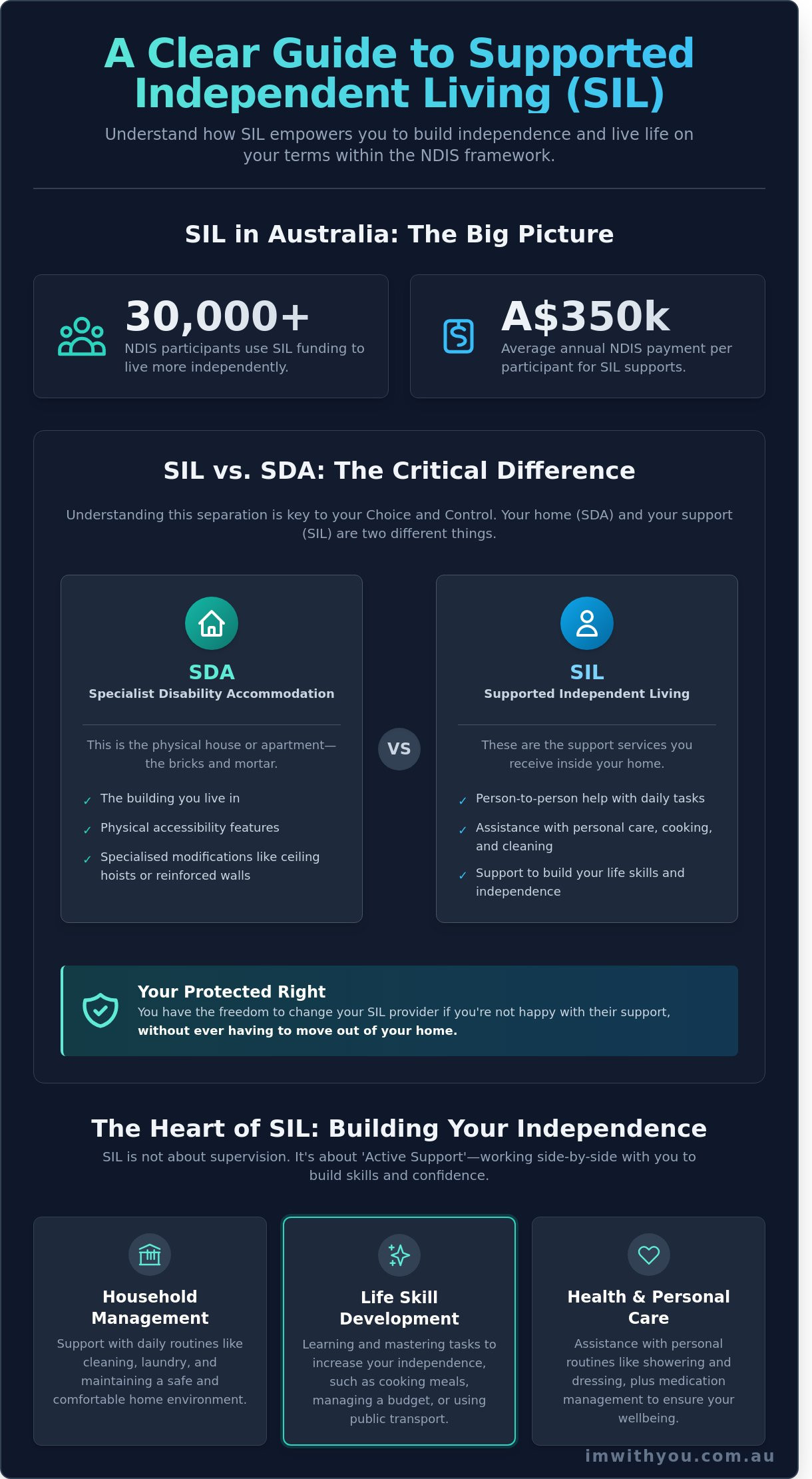
Finding the right support to live your life on your terms is a significant milestone in your NDIS journey. Supported Independent Living, commonly known as SIL, is a core support designed for people who need help at home to build their independence. It’s about having someone by your side to assist with daily tasks like cooking, personal care, or managing your household schedule. As of June 2023, NDIS data shows that over 30,000 participants across Australia use SIL funding to create a life that feels both safe and self-determined. We believe that your home should be a place of growth, not just a place of residence.
Your SIL funding sits within the Core Supports budget of your NDIS plan. This is a deliberate choice by the NDIA to ensure your daily living needs are met with flexibility. According to the NDIS 2022-23 annual report, the average annual payment for a participant receiving SIL supports was approximately A$350,000. This reflects the intensive, person-centered nature of the care provided. Because this funding is tailored to your specific goals, sil providers work closely with you to ensure every hour of support helps you move closer to the life you envision for yourself.
To better understand how these supports function in a real-world setting, watch this helpful video:
SIL vs. SDA: Clearing Up the Confusion
Understanding the difference between your house and your care is vital for maintaining your autonomy. Specialist Disability Accommodation (SDA) refers to the physical building, including specialized modifications like ceiling hoists or reinforced walls. In contrast, SIL is the person-to-person support that happens inside those walls. You might find it helpful to explore What is Supported Living? to see how this philosophy of separating housing from care has become a global standard for dignity.
You have the freedom to choose different sil providers for your care than the organization that owns your home. This separation is a key part of your Choice and Control. It means if you aren’t happy with your support staff, you don’t have to pack your bags and move house. We see this as a sacred promise that protects your stability. Choosing a provider who understands both sides can be helpful, but the power to decide always remains in your hands.
- SDA: The bricks, mortar, and physical accessibility features.
- SIL: The help with showering, meal prep, and social skills.
- The Benefit: Total flexibility to change your care without losing your home.
The Core Purpose of SIL Support
The heartbeat of SIL is capacity building. We don’t view our role as simply ‘supervising’ your day. Instead, we focus on active support. This is a proven model that the NDIA officially recognized in their 2023 guidelines as the gold standard for disability care. It involves breaking down tasks into manageable steps so you can participate in every part of your life. Whether it’s learning to use the local bus or mastering a new recipe, we’re there to help you do it, not just do it for you.
We focus on creating a warm, inviting environment where you feel like the master of your own domain. A provider’s role is to foster a sense of belonging and safety. This involves more than just clinical checklists; it requires a gentle, human touch that respects your privacy and your personality. By focusing on your strengths rather than your limitations, we help turn a house into a home where you can truly thrive.
What Do SIL Providers Actually Do? A Day in the Life
We believe that your home should be a place where you feel completely supported and understood. While every day looks different for every person, sil providers are there to ensure your daily rhythm reflects your personal choices and goals. This support starts from the moment you wake up. It includes assistance with personal care tasks like showering, dressing, and grooming, ensuring you feel confident and ready for the day ahead. We also handle medication management with strict attention to detail, following the specific health protocols outlined in your support plan.
Support doesn’t stop when the sun goes down. Understanding the difference between overnight care options is vital for your peace of mind. A “Sleepover” support involves a staff member staying in a separate room for an 8-hour period, available to assist you up to two times if a need arises. In contrast, “Active Overnight” support means a staff member remains awake and alert throughout the entire night. This is often essential for individuals with complex medical needs or those who require frequent repositioning and monitoring. By 2023, more than 31,000 NDIS participants utilized these types of 24/7 supports to maintain their independence safely.
Our role also involves bridging the gap between your home and the wider world. We provide the physical and emotional scaffolding needed for social connection. This might involve helping you catch a bus to a local community center or supporting you while you catch up with friends at a cafe. We focus on building your confidence so that you don’t just live in a community, but truly belong to it. The NDIS defines What is Supported Independent Living as a way to grow your skills while receiving the help you need in a shared or individual home environment.
Skill Building for a Brighter Future
We don’t just perform tasks for you; we walk beside you as you learn to do them yourself. This capacity-building approach is at the heart of what sil providers offer. We might spend a Tuesday morning helping you create a A$160 weekly grocery budget or teaching you how to compare prices at the supermarket to make your funding go further. Developing a routine is a collaborative process. We align your daily schedule with the specific milestones in your NDIS plan, whether that is learning to use a washing machine or mastering a new recipe. We also place a high value on your happiness within the home, encouraging you to pursue hobbies like painting, music, or gardening that bring you joy.
Health and Safety Management
Managing your wellbeing is a journey we take together. We provide practical assistance with medical appointments, ensuring you get to your GP or specialist on time and that all follow-up actions are recorded. For participants with complex needs or those focused on psychosocial recovery, we offer a steady, non-judgmental presence to help navigate emotional challenges. A provider ensures safety by adhering to the NDIS Practice Standards, which require providers to implement comprehensive risk management systems and regular staff audits to guarantee a high quality of care. If you are ready to find a team that truly listens to your needs, the dedicated staff at I’m With You are here to support your journey toward independence.
How to Choose a Quality SIL Provider: A Checklist
Finding a home that feels like your own is a milestone in your journey toward independence. We believe that choosing between sil providers is about more than just finding a vacancy; it is about finding a team that stands beside you. You deserve a partner that prioritizes your dignity and your unique goals over simple administrative compliance. While every registered provider must meet the NDIS Practice Standards, a high-quality provider goes further by weaving person-centered values into every interaction.
Start by looking at how a provider treats your agency. A quality provider sees you as the expert of your own life. They should offer 100% transparency during the Roster of Care (RoC) development. This document outlines how your support hours are shared and used. You have the right to see exactly how your funding translates into daily support. If a provider hesitates to share these details, they are not practicing the level of collaboration you deserve. You might find A Checklist for Choosing a SIL Provider helpful as you begin comparing your options and assessing their commitment to your needs.
Evaluate the provider’s track record with advocacy and incident management. Ask for specific examples of how they’ve supported participants to overcome challenges. A reliable partner doesn’t just manage a house; they support a life. This includes having robust systems to keep you safe while encouraging you to take positive risks that lead to growth. We view Choice and Control as a sacred promise. This means you should have a direct say in who enters your home and how they support you.
Questions to Ask Potential Providers
You should feel empowered to interview sil providers just as they might get to know you. Ask them: “How do you involve me in choosing my support staff?” You should have the opportunity to meet workers before they start. Ask: “What happens if I don’t get along with my housemates?” A good provider has a clear, empathetic conflict resolution strategy. Finally, ask: “How do you support my specific cultural or communication needs?” Your heritage and your voice are central to who you are, and your support team must respect that.
Red Flags to Watch Out For
Watch for signs that a provider prioritizes their schedule over your life. A “one-size-fits-all” approach to household routines is a major warning sign. If dinner is always at 5:00 PM regardless of what you want, your independence is being sidelined. High staff turnover is another concern. The 2023 NDIS workforce report indicated an industry average turnover rate of approximately 25%. If a provider’s rate is significantly higher, it often leads to inconsistent care. Most importantly, avoid any provider who makes decisions for you rather than with you. Your home should be a place of empowerment, not a place where you simply follow someone else’s rules.
The Journey to SIL: From Plan Review to Move-in Day
The path toward your own front door is a sequence of small, meaningful steps. It’s a journey we walk together, ensuring your voice remains the loudest in every room. This process begins during your NDIS planning meeting. You’ll need to clearly identify a ‘Home and Living’ goal. This isn’t just a checkbox; it’s a declaration of your desire for independence. When you state this goal, the NDIA looks for evidence that Supported Independent Living is the right fit for your life and your safety.
Gathering evidence is the most clinical part of an otherwise very personal experience. You’ll work closely with an Occupational Therapist who conducts a functional capacity assessment. This report often spans 15 to 20 pages of detailed observations about your daily routines, your strengths, and the areas where you need a helping hand. These documents provide the NDIA with the proof they need to approve your funding. Once your evidence is ready, we help you submit the Home and Living Request Form. This starts the formal review process which can take several weeks to finalize.
While the NDIA reviews your request, you’ll collaborate with sil providers to develop a Roster of Care (RoC). Think of the RoC as a blueprint for your week. It accounts for all 168 hours in a seven-day period, detailing when you need one-on-one support and when shared support is appropriate. This document ensures that the funding requested actually matches the rhythm of your life. It’s about making sure you have the right person by your side when you’re cooking dinner or heading out to a community event.
The Role of Support Coordination in SIL
Your Support Coordinator acts as a steady guide through the technical landscape of the NDIS. They do the heavy lifting by vetting sil providers to find a home that matches your personality and support needs. They manage the complex paperwork and advocate for your “Choice and Control” during the NDIA review process. Having a coordinator means you aren’t alone when navigating the 2024 NDIS pricing arrangements or legislative changes. They bridge the gap between your family, the provider, and the agency, keeping everyone on the same page.
If you’re feeling overwhelmed by the paperwork, remember that we’re here to help you find the right path. Let’s start your SIL journey together today.
Preparing for the Big Move
A successful move relies on a thoughtful transition plan. We don’t believe in rushing such a significant life event. A typical plan might include three short afternoon visits followed by two overnight stays to help you settle in. This gradual approach reduces the stress of a new environment. We also ensure your existing therapeutic supports, like your physiotherapist or psychologist, are integrated into your new home from day one. Clear communication channels between your family and the house staff are established early, so everyone feels secure and informed as you begin this new chapter of empowerment.
The final stage is the move-in day itself. It’s a day of celebration and a bit of nervous excitement. Your support team will be there to help you unpack your belongings and, more importantly, to help you feel at home. This transition period is about more than just moving boxes; it’s about building new relationships with the people who will support your daily life. We stay close during those first few weeks, ensuring the Roster of Care is working perfectly and that you feel completely supported in your new space.
I’m With You: A Premium Approach to Supported Living
At I’m With You, we believe that the best support happens when we walk beside you. We don’t just manage services; we build a partnership based on trust and shared goals. This dedication to quality is why we received the 2026 National Disability Award for Excellence in Service Delivery. It validates our belief that sil providers should offer more than just a roof and a roster. We focus on the small details that make a house feel like a home, ensuring your dignity and agency remain at the heart of everything we do. This isn’t just about providing care; it’s about honoring your right to a full, self-directed life.
Our team specializes in tailoring support to meet complex disability needs and psychosocial recovery. We understand that your journey is unique. Because of this, we don’t apply a one-size-fits-all model. Instead, we listen deeply to your preferences. We treat “Choice and Control” as a sacred promise rather than a regulatory requirement. Whether you are working toward greater independence or require intensive 24/7 assistance, we stand side-by-side with you to navigate every challenge. Our approach ensures you feel safe, seen, and empowered to make your own decisions every single day.
Beyond Standard Care
Our work goes past the basics of daily living. We act as your advocates, helping you find your voice so you can lead the life you choose. Within our homes, we foster a community that feels like family. It’s a space where you’re heard and valued. We don’t guess what you need; we ask. In fact, 94% of our service improvements in the last year came directly from participant feedback sessions held in October 2025. This ensures our support evolves alongside your changing aspirations. We focus on building your capacity and confidence, turning your house into a place of genuine social inclusion and growth.
Taking the Next Step Together
Starting a new chapter can feel daunting, but you don’t have to do it alone. Our intake team begins with a simple, warm conversation to understand your dreams and requirements. We take the time to match you with a home and a staff team that aligns with your personality and lifestyle. This isn’t a rushed process. We prioritize compatibility to ensure your long-term happiness and stability. As one of the dedicated sil providers in the Australian market, we understand the NDIS landscape and help you navigate the paperwork with ease. If you’re ready to see how we do things differently, we’re here to listen and guide you through each stage.
Embrace Your Future With Confidence
Finding a home where you feel truly seen and supported is a significant milestone. You now understand that quality support isn’t just about daily tasks; it’s about reclaiming your agency through choice and control. Your journey from reviewing your NDIS plan to your first night in a new home deserves a partner who values your unique path. When you compare different sil providers, look for those who prioritize your dignity and your specific psychosocial recovery goals. The right fit will offer more than just a room; they’ll offer a foundation for your independence.
At I’m With You, we don’t just provide a service; we walk beside you. As a Registered NDIS Provider and the proud recipient of the 2026 Award for Excellence in Care, we specialize in high-quality psychosocial recovery support. We’re here to ensure your transition is smooth and your voice is heard at every turn. You don’t have to navigate these complex decisions alone. We’re ready to help you build a life that reflects your strengths and aspirations. Explore our person-centered SIL services at I’m With You. We’re excited to see you thrive in a space that’s truly yours.
Frequently Asked Questions
Can I choose my own SIL provider if I live in SDA housing?
Yes, you have the right to choose a different provider for your support than the one who manages your housing. This separation is a key part of your choice and control, ensuring you aren’t forced to use a specific service just because of where you live. The NDIS Pricing Arrangements 2023-24 strictly encourage this division to prevent conflicts of interest and keep you in the driver’s seat of your own life.
What is a Roster of Care and why is it important for SIL?
A Roster of Care is a detailed weekly schedule that shows exactly when and how your sil providers will support you. It breaks down your daily routine into 30 minute blocks over a full 168 hour week. This document is vital because the NDIS uses it to calculate your total funding amount. We work side-by-side with you to ensure this roster reflects your actual needs and personal goals.
Does SIL funding cover my rent and groceries?
No, SIL funding only covers the cost of the support workers who help you, not your everyday living expenses. You’ll still need to pay for rent, utilities, and food using your own income or the Disability Support Pension. As of March 2024, the maximum single pension rate is A$1,116.30 per fortnight, which most participants use to cover these “board and lodging” costs while their NDIS plan pays for support.
How many hours of support can I get from a SIL provider?
The number of hours you receive depends on your specific disability needs, but sil providers often deliver up to 24 hour care for those who require it. This can include active support during the day and either a sleepover or active overnight shift at night. Your funding is based on the 168 hours available in a week, shared between you and any housemates you might have.
What happens if I want to change my SIL provider?
You can change your provider whenever you feel your needs aren’t being met by giving the notice period listed in your service agreement. Most Australian service agreements require a 28 day notice period, though some may ask for 60 or 90 days. We’re here to help you navigate this transition smoothly so your support continues without any gaps while you move toward a better fit for your journey.
Can I live alone with SIL support or must it be a shared house?
You can live alone with SIL support, but the NDIS typically funds shared living arrangements because they’re more cost-effective. If you have very high or complex needs that make sharing a home unsafe or impractical, the NDIA may approve individual funding. Data from 2023 shows that about 15 percent of SIL participants successfully live in single-occupancy homes with their own dedicated support team.
How long does it take for the NDIS to approve SIL funding?
The approval process for SIL funding generally takes between 3 and 6 months once your Roster of Care is submitted. This timeline can feel long, but it’s because the NDIS home and living team performs a very thorough review of your support requirements. While the NDIS Participant Service Guarantee aims for a 90 day turnaround on most plan decisions, complex SIL quotes often require the full 180 day window for finalisation.
Is SIL the same as a nursing home or institutional care?
No, SIL is the complete opposite of institutional care because it focuses on your independence and active participation in the community. Unlike a nursing home, you live in a residential house and have a say in your daily routine, your meals, and who enters your home. The NDIS Act 2013 was designed specifically to move away from old institutional models, ensuring you live a life defined by dignity and personal empowerment.