

Receiving your NDIS plan can feel like holding a map written in a language you don’t quite understand. It’s filled with possibilities, but also with jargon, complex budgets, and the pressure to make the ‘right’ choices. It’s a common feeling, and it often leaves people asking themselves, how to get the most out of my ndis plan without feeling completely overwhelmed? We hear you, and we want you to know you’re not on this journey alone. We believe your plan should be a source of empowerment, not anxiety.
This gentle guide is our commitment to walking side-by-side with you. We will help you translate the jargon, understand your funding with clarity, and feel confident connecting with providers who truly see you. Together, we’ll walk through every step-from activating your plan to tracking your spending-so you can build a life that reflects your goals and aspirations. It’s time to transform your plan from a source of stress into a powerful tool for independence, putting true choice and control firmly back in your hands.
Key Takeaways
- Your NDIS plan is a tool for your life goals, not just a budget. We’ll guide you to connect your aspirations to your funding from day one.
- Gain confidence by understanding the three main NDIS funding categories and what each one can be used for in practical, real-world ways.
- Learn how to build a support team that feels like a true partnership, ensuring you find providers who genuinely listen and align with your values.
- Discover simple strategies to manage your funds day-to-day, answering the core question of how to get the most out of my NDIS plan with peace of mind.
Before You Spend a Dollar: Connecting Your Plan to Your Life Goals
Your NDIS plan has arrived, and it can feel like you’re just holding a document full of budgets and line items. But we want you to see it differently. Think of it not as a list of restrictions, but as a powerful tool designed to support your unique journey. The real secret to understanding how to get the most out of my NDIS plan is to connect every dollar back to what truly matters: your life goals. This is the foundation for turning your funding into real-world possibilities.
Reviewing and Understanding Your Goals
The very first place to look is the ‘My Goals’ section of your plan document. Your life is dynamic, and it’s perfectly okay if your aspirations have shifted since your planning meeting. Take a quiet moment to read through them. Ask yourself, “Do these words still reflect the life I want to build?” If a goal feels too big or overwhelming, we can break it down together into smaller, more manageable steps. This makes progress feel real and achievable.
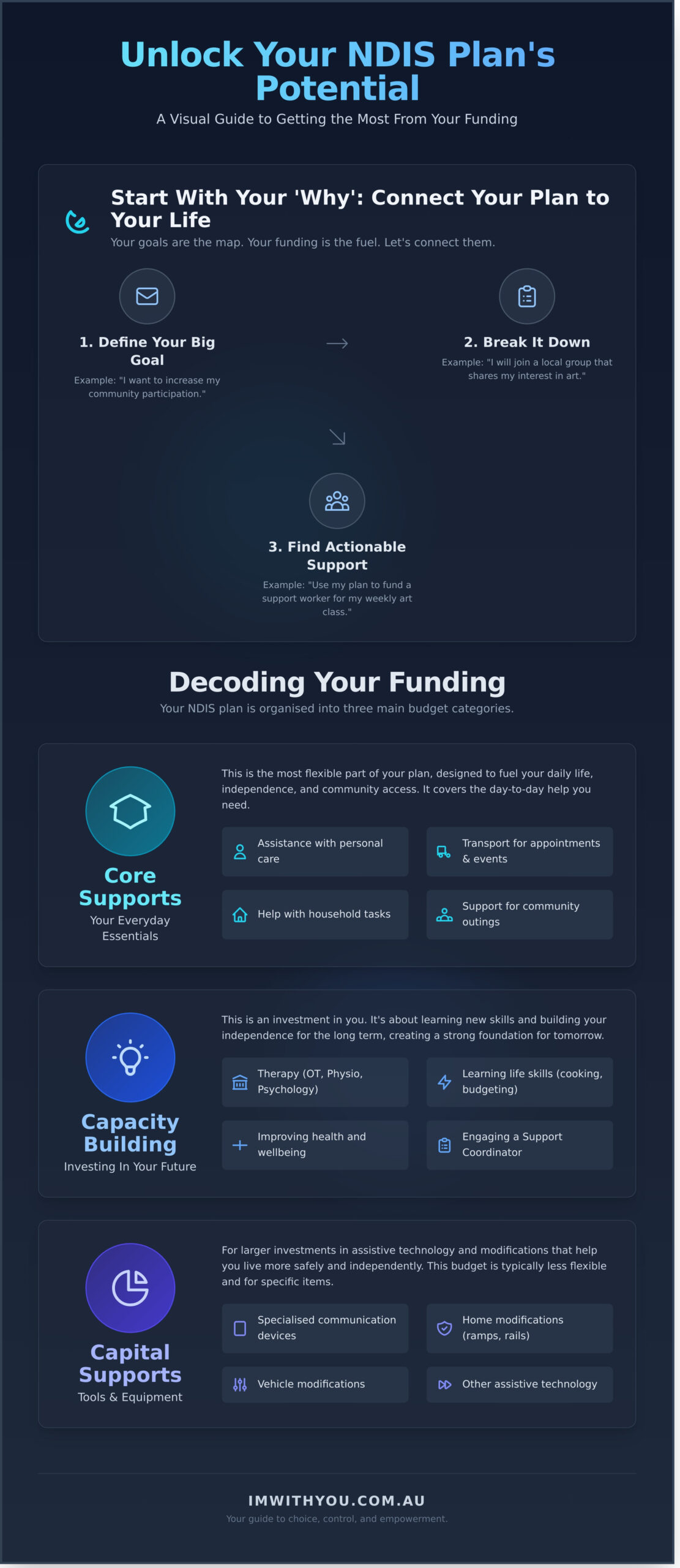
- Big Goal: “I want to increase my community participation.”
- Smaller Step: “I will join a local group that shares my interest in art.”
- Actionable Support: “Use my plan to fund a support worker to attend a weekly art class with me.”
The Power of ‘Choice and Control’
‘Choice and Control’ isn’t just NDIS jargon; it’s a promise that you are in the driver’s seat of your own life. It is a core principle of the National Disability Insurance Scheme, ensuring your plan is built around you. This means your goals should guide the services you choose, not the other way around. You don’t have to fit into a provider’s box; you find providers who fit your vision. Embracing this mindset is the single most empowering step in making your plan work for you, giving you the dignity and independence you deserve.
By starting with your goals, you create a clear roadmap. Every decision, every service, and every dollar spent becomes a deliberate step toward the future you envision. And you never have to map it out alone; we’re right here with you, every step of the way.
Decoding Your Funding: A Simple Guide to NDIS Budgets
When you first open your NDIS plan, seeing the different funding categories can feel a little overwhelming. We want you to know that we’re right here with you, and together, we can make sense of it all. Understanding these budgets is the first step in learning how to get the most out of my ndis plan. Your funding is organised into three main categories, and every support must be considered ‘reasonable and necessary’-meaning it’s directly related to your disability and helps you pursue your goals. For a wider view, you can find excellent tips for getting the most out of your NDIS services that cover everything from goal setting to choosing providers.
Core Supports: Your Everyday Essentials
Think of your Core Supports budget as the fuel for your daily life and independence. This funding is designed to help you with your day-to-day activities and to access your community. It’s often the most flexible part of your plan, giving you choice and control over how you use it to meet your immediate needs. This could look like:
- Assistance with personal care, such as showering and dressing.
- Transport to get to appointments, work, or social events.
- A support worker to help with household tasks or join you on community outings.
Capacity Building: Investing in Your Skills and Future
This part of your plan is a powerful investment in yourself and your future abilities. Capacity Building funding is all about helping you learn new skills and grow your independence for the long term. It’s not just about support for today; it’s about building a foundation for tomorrow. Examples of this empowering support include:
- Therapy sessions with an occupational therapist, psychologist, or physiotherapist.
- Learning important life skills, like cooking, budgeting, or using public transport.
- Engaging a Support Coordinator who can walk beside you and help you implement your plan.
Capital Supports: Resources and Equipment
Your Capital Supports budget is for the larger tools, equipment, and resources that help you live more safely and independently. This funding is for assistive technology or modifications to your home or vehicle. Because these are often significant investments, this budget is typically less flexible and funds are allocated for specific items. These essential tools might be:
- A specialised wheelchair or a custom communication device.
- Modifications to your home, such as installing grab rails or a ramp.
- Vehicle modifications that allow you to drive or travel more easily.
Building Your Team: Finding Providers Who Truly Understand You
Your NDIS journey is a personal one, and the people you choose to walk alongside you can make all the difference. Finding the right providers isn’t just about ticking a box; it’s about building a team of trusted partners who listen to your voice, respect your choices, and are genuinely committed to your goals. This is a key step in understanding how to get the most out of my ndis plan, as the right support network empowers you to bring your vision to life.
What to Look for in a Disability Support Provider
When you meet with potential providers, it’s a chance to see if your values align. Think of it as an interview where you are in control. We believe the best partnerships are built on a foundation of trust and mutual respect. Here’s what to look for:
- A person-centered approach: Do they ask about you-your hopes, your interests, and your goals-or do they just talk about their services?
- Qualifications and safety: Are they NDIS-registered? This ensures they meet strict quality and safety standards set by the Australian Government.
- Relevant experience: Ask about their experience supporting people with needs and goals similar to yours. A good fit means they understand your unique journey.
- Warm communication: You should feel comfortable, heard, and respected every time you interact. Their communication style should empower you, not confuse you.
The Role of a Support Coordinator: Your NDIS Guide
Navigating the NDIS can feel overwhelming, but you don’t have to do it alone. A Support Coordinator is your guide, helping you understand and activate your plan. They connect you with the right providers, help you manage your budget, and are there to solve problems with you. They champion your right to Choice and Control, ensuring your plan truly works for you. Our caring Support Coordinators are here to walk with you.
Creating Service Agreements That Work for You
A service agreement is more than a contract; it’s a promise between you and your provider. This document clearly outlines the supports you will receive, the costs involved (in AUD), and the schedule, so there are no surprises. It’s essential that your service agreement reflects your goals and gives you the flexibility you need. Remember, you should never feel pressured to sign anything you don’t fully understand. A clear agreement is a powerful tool for ensuring you get the support you want, the way you want it.
Activating Your Plan: Practical Steps for Day-to-Day Management
Now that you have your NDIS plan and your trusted team, the journey truly begins. This is where we put all the preparation into action, turning your goals into a lived reality. Understanding the practical side of managing your funds is a crucial step in learning how to get the most out of my NDIS plan, and we’re right here with you to make it feel simple and empowering.
Self-Managed vs. Plan-Managed vs. NDIA-Managed
Your NDIS plan is built on the principle of Choice and Control, and that extends to how your funds are handled. You can choose the method that feels right for you:
- Self-Managed: This option offers you the greatest flexibility, allowing you to use any provider (even if they aren’t NDIS-registered) and negotiate rates. It means you are responsible for paying invoices and keeping records, but it provides ultimate control.
- Plan-Managed: A plan manager acts as your financial partner, handling invoices and tracking your spending for you. You still choose your providers, but without the administrative stress. It’s a wonderful balance of support and independence.
- NDIA-Managed: With this choice, your providers claim payments directly from the NDIA. This is the most hands-off approach, but you are limited to using only NDIA-registered providers for your services.
Simple Budgeting and Spending Tracking
Keeping a gentle eye on your budget ensures your funding is there for you throughout your entire plan. You don’t need complex software; a simple spreadsheet or a dedicated NDIS app can work wonders. We suggest setting a weekly or fortnightly reminder to check in with your spending against your different support budgets. This simple habit prevents surprises and gives you the peace of mind to focus on what truly matters-your well-being and goals.
Preparing for Your Plan Review
Your plan review is an opportunity to celebrate your progress and shape your future support. We recommend starting to prepare about three months before your plan is due to end. This is the time to gather reports from your providers that show how you’ve worked towards your goals. Think about what has brought you joy and what you might like to change. This evidence is so important, as it helps demonstrate why you need certain supports, which is fundamental to ensuring your next plan continues to serve you well.
If navigating these steps feels overwhelming, please remember you are not alone. At Im with you, we stand beside you on this journey, offering support coordination to help make every part of your plan feel manageable and meaningful.
Your NDIS Journey, Guided by You
Your NDIS plan is so much more than a document; it’s a powerful tool for building the life you envision. This guide has shown you how connecting your plan to your deepest life goals, understanding your funding budgets, and building a support team that truly listens are the essential first steps. Answering the question of how to get the most out of my ndis plan always begins with honouring your own aspirations and your right to choice and control.
We understand this journey can feel complex, but you never have to walk it alone. At I’m With You, our award-winning team is dedicated to providing high-quality, person-centered support coordination. We are here to stand side-by-side with you, offering gentle guidance and expert knowledge to bring your plan to life. Feeling overwhelmed? You don’t have to do this alone. Let’s walk this journey together. Your voice matters, your goals are valid, and we are here to support you every step of the way.
Frequently Asked Questions
What is the difference between a Support Coordinator and a Plan Manager?
We understand these roles can seem similar, but they support you in different ways on your journey. A Support Coordinator walks beside you to bring your plan to life, helping you find and connect with the right providers to meet your goals. A Plan Manager is a financial expert who takes care of the administrative side, managing your NDIS budget, paying your provider invoices, and helping you track your spending, giving you peace of mind.
Can I use my NDIS funding to pay for everyday things like groceries or rent?
Your NDIS plan is thoughtfully designed to fund the disability-specific supports that are above and beyond everyday living expenses. While it doesn’t cover costs like groceries, rent, or utility bills that are part of daily life for everyone, it is there to empower you. The funding is focused on providing the tools and assistance you need to pursue your goals, build your independence, and participate more fully in your community.
What does ‘reasonable and necessary’ actually mean in practice?
This is a core NDIS principle that helps ensure your funding is used for supports directly related to your disability. For a support to be ‘reasonable and necessary,’ it must help you pursue your goals, be value for money, and be based on evidence that it will help. It’s the NDIS’s way of making sure the support is right for you and will make a real, positive difference in your life’s journey.
What happens if I spend all my funding before my plan review date?
If you see your funding is running low, please don’t feel stressed. The first step is to talk with your Support Coordinator or LAC. Understanding your spending is a key part of knowing how to get the most out of my NDIS plan. We can help you review your budget, and if your circumstances have changed, we can support you in requesting an early plan review from the NDIA. You are not alone in this.
How can I change providers if I’m not happy with my current service?
Your ‘Choice and Control’ is a promise we hold dear. You have the absolute right to work with providers who make you feel supported and understood. To change, you’ll first need to check your service agreement for the required notice period. You can then let your provider know your intention to end the service and begin engaging a new provider who is a better fit. We are with you to help navigate this transition smoothly.
Can I use my Core Supports funding more flexibly if I need to?
Yes, absolutely. Your Core Supports budget is often the most flexible part of your plan, which is wonderful for putting your ‘Choice and Control’ into action. In most cases, you can use your funding across the different Core categories-like moving funds from Consumables to Social and Community Participation-without needing a plan review. This flexibility is a powerful tool for adapting your supports to your changing needs and priorities throughout your plan.