

You’ve just returned home after a stroke, and the quiet of your living room feels heavier than the hospital’s constant hum. While discharge is a milestone, the sudden absence of a medical team can leave you feeling abandoned, especially when trying to secure ndis support for stroke survivors. I know that cognitive fatigue makes even simple tasks feel like mountains, and the confusion over therapy categories only adds to the weight. You aren’t alone in this transition; I’m here to walk alongside you as a steady companion.
Accessing the right assistance is about more than just managing a plan; it’s about reclaiming your identity. This guide provides a clear roadmap for navigating the NDIS in 2026, helping you access specialized recovery supports that empower your independence and improve your quality of life. We’ll explore how to choose a therapy team that feels like family and use your funding to build a future where you feel supported, capable, and understood.
Key Takeaways
- Learn how a stroke qualifies as a permanent disability under Section 24, providing you with a clear roadmap for transitioning from hospital care to community life.
- Discover how to maximize your funding to access specialized ndis support for stroke survivors, including essential therapies like occupational therapy and speech pathology.
- Explore the role of disability advocacy in overcoming communication barriers like aphasia, ensuring your voice remains central to every decision in your recovery.
- See how a dedicated support coordinator acts as your steady companion, helping you navigate the complexities of the 2026 NDIS landscape and reclaim your independence.
Understanding NDIS Support for Stroke Survivors: Your Recovery Roadmap
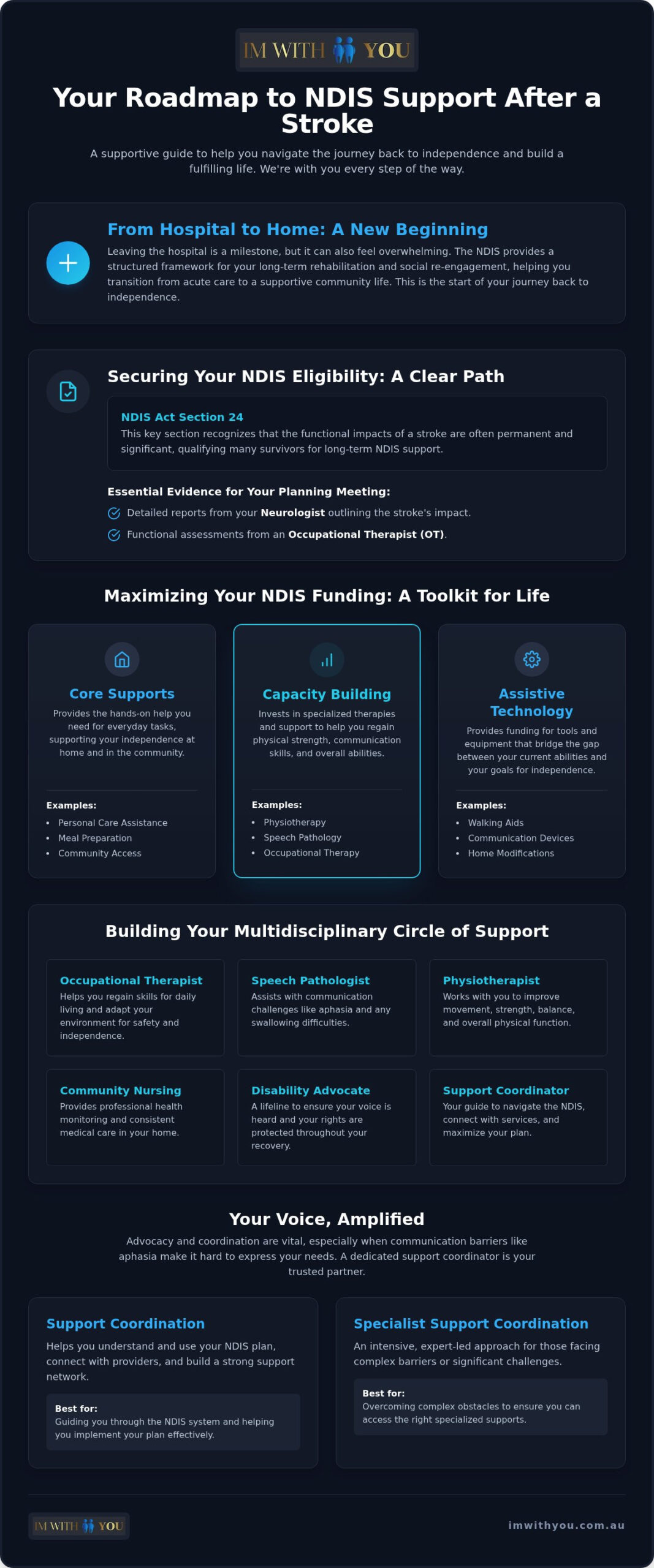
After the immediate medical crisis of a stroke, your focus naturally shifts toward what life looks like back at home. To understand what is a stroke in the context of the NDIS, we look at Section 24 of the NDIS Act. This section recognizes that the functional impacts of a stroke are often permanent and significant, qualifying many individuals for long-term assistance. NDIS stroke support is a holistic framework for long-term rehabilitation and social re-engagement. Moving from acute hospital care to community-based ndis support for stroke survivors can feel like a daunting transition, but it’s actually the beginning of your journey back to independence.
I believe that recovery is most effective when it focuses on your whole life, not just clinical outcomes. This means setting goals that prioritize social inclusion and daily autonomy. Whether you want to return to work, visit local cafes, or simply manage your own personal care, your NDIS plan serves as the bridge to those outcomes. I’m with you as you define what a fulfilling life looks like now.
Navigating Eligibility and the Planning Meeting
Success in your planning meeting depends on clear evidence. Reports from Occupational Therapists and Neurologists are vital; they provide the professional insight needed to justify “reasonable and necessary” supports. When you speak with a planner, try using person-first language to ensure the conversation stays centered on your strengths and goals. This ensures that the ndis support for stroke survivors you receive is tailored specifically to your unique needs and aspirations.
Practical Strategies for Managing Stroke Recovery with NDIS Funding
Managing your recovery effectively means turning your NDIS budget into a toolkit for daily living. Your Core Supports are the foundation; they provide the hands-on help you need for personal care and meal preparation while your energy is low. Meanwhile, Capacity Building funds allow you to invest in specialized therapies. Working with experts in Physiotherapy and Speech Pathology helps you regain physical strength and communication skills. I recommend checking the Stroke Foundation Australia for additional recovery resources that complement your NDIS plan. This holistic approach ensures that ndis support for stroke survivors is about more than just clinical visits; it’s about life.
Don’t overlook the impact of Assistive Technology. From simple walking aids to advanced communication devices, these tools bridge the gap between your current abilities and your goals for independence. Success comes when your family, carers, and providers work in harmony. I’m with you in building this circle of support.
Building Your Multidisciplinary Support Team
A well-rounded team addresses both your physical health and your emotional wellbeing. Integrating Community Nursing ensures your health monitoring is professional and consistent. It’s also vital to maintain safety at home by following the six rights of medication administration. Beyond clinical needs, recovery is about feeling like yourself again. Engaging in leisure activities helps combat isolation and builds social connection. If you’re feeling overwhelmed by the choices, our NDIS support coordination can help you piece this puzzle together.
Moving Forward with Confidence: The Power of Advocacy and Coordination
Advocacy becomes a lifeline when communication barriers like aphasia make it difficult to express your needs. I believe that your recovery journey shouldn’t be a solitary struggle against administrative paperwork. A dedicated provider acts as a steady companion, walking alongside you through the system’s complexities to protect your rights and dignity. Our commitment to this supportive partnership is why we received the 2026 Award for Excellence in care, reflecting our national reach and deep compassion. This award honors our belief that every individual deserves a guide who truly listens. Effective NDIS support is not just about ticking boxes; it is about having a trusted advocate who ensures your voice is heard at every stage of your recovery.
Simplifying Your Journey with NDIS Support Coordination
NDIS Support Coordination helps you understand and maximize your budget allocation, ensuring every dollar works toward your personal independence. While standard coordination is helpful for most, NDIS Specialist Support Coordination is designed for those facing complex barriers that require a more intensive, expert approach. I’m here to help you navigate these options so your support team feels like family. When looking for a partner, follow these tips on how to choose an NDIS provider that aligns with your personal values. This choice is the final piece in securing high-quality ndis support for stroke survivors.
Your Path to a Fulfilling Future
Recovery is a journey of small, meaningful victories. By aligning your NDIS plan with your personal goals, you’ve already taken the most important step toward reclaiming your independence. We’ve explored how a multidisciplinary team and the right assistive technology can transform your daily life. Most importantly, you now know that having a trusted advocate ensures your voice is never lost. As you look for ndis support for stroke survivors, remember that you don’t have to navigate these changes alone. Our national network of expert support coordinators is here to provide the high-quality care that earned us the 2026 Award for Excellence. We’re ready to be your steady companion. Let us walk with you on your recovery journey; connect with our compassionate team today. You have the strength to move forward, and I’m right here with you.
Frequently Asked Questions
Can I get NDIS support immediately after having a stroke?
While hospital staff manage your initial medical care, you can start your NDIS application as soon as the long-term functional impacts are clear. NDIS support for stroke survivors typically begins during your discharge planning to ensure you’re supported the moment you return home. I’m here to help you bridge the gap between clinical treatment and a life of independence in the community.
What types of therapy does the NDIS cover for stroke survivors?
The NDIS funds various therapeutic supports to help you rebuild your skills. This includes Occupational Therapy for daily tasks, Physiotherapy for physical movement, and Speech Pathology for communication or swallowing needs. You can also access Community Nursing for professional health monitoring. These services focus on your long-term social and functional goals, providing a foundation for a fulfilling life beyond the hospital walls.
How does Support Coordination help if I have trouble communicating?
Support Coordination is especially helpful if you’re managing communication barriers like aphasia. Your coordinator acts as a steady companion, helping you communicate your needs to service providers and ensuring your voice is heard. I’ll work closely with you and your family to make sure your plan is implemented correctly, protecting your right to make choices about your own recovery and support.
Is Assistive Technology like wheelchairs or speech apps covered by the NDIS?
Yes, the NDIS covers various forms of Assistive Technology that promote your safety and autonomy. This includes items like wheelchairs, walking frames, or specialized apps that assist with speech. To include these in your plan, an Occupational Therapist will usually provide an assessment. This evidence confirms that the technology is a reasonable and necessary tool for your specific journey toward greater independence.