

What if you never had to walk into another NDIS planning meeting feeling like just a number in a vast, complex system? It’s completely normal to feel a sense of anxiety when you’re trying to communicate your needs, but ndis disability advocacy services ensure you’re never alone in that room. I understand that the weight of recent 2026 legislative reforms and updated pricing schedules can make the process feel even more overwhelming. You deserve respect and empowerment in every decision about your life.
In this guide, I’ll show you how dedicated advocacy transforms your experience into one of steady confidence. We’ll explore how having a partner ensures your choices are respected and your rights are protected. You’ll discover how a strong support network helps you gain fair access to services, ensuring you can focus on your goals and community inclusion with total peace of mind. I’m with you every step of the way.
Key Takeaways
- Understand how advocacy acts as a vital bridge, ensuring your voice is heard and your rights are protected during every stage of the NDIS process.
- Learn practical steps to use ndis disability advocacy services for identifying your unique goals and confidently requesting the supports you truly need.
- Discover the importance of partnering with providers who embrace person-first language to maintain your dignity and agency in all decision-making.
- Explore how a compassionate, award-winning approach to advocacy can replace the anxiety of complex systems with a sense of security and partnership.
What Are NDIS Disability Advocacy Services?
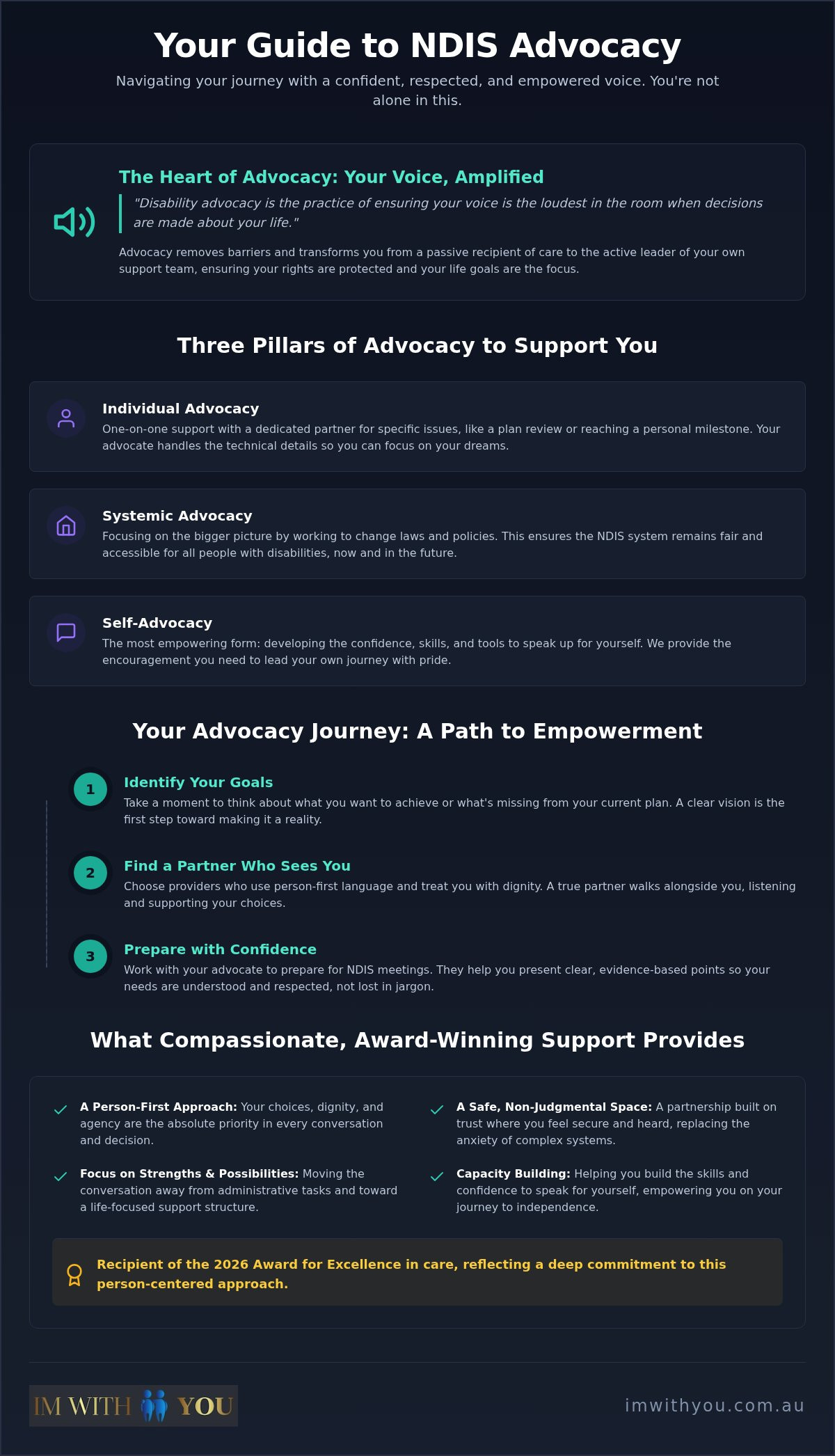
At its heart, advocacy means having someone truly on your side to help you express your wishes and stand up for your rights. While some people view it only as a tool for complaints, I see it as a proactive way to ensure your NDIS journey reflects your actual life goals. The core purpose of ndis disability advocacy services is to remove the barriers that stand between you and full community participation. By ensuring you have equal access to supports, advocacy helps turn the principles of the disability rights movement into your daily reality. It’s about moving from being a passive recipient of care to being the leader of your own support team. Remember this: ‘Disability advocacy is the practice of ensuring your voice is the loudest in the room when decisions are made about your life.’
The Different Types of Advocacy You Can Access
Because every person’s path is unique, ndis disability advocacy services come in different forms to match where you are today. You might need a steady companion for a single meeting or a broader effort to change how services work for everyone.
- Individual advocacy: This involves one-on-one support to help you solve a specific issue, like a difficult plan review, or to reach a personal milestone. It’s about having a partner who understands the technical details so you can focus on your dreams.
- Systemic advocacy: This focuses on the bigger picture. It involves working to change laws and government policies to benefit all people living with disability, ensuring the system remains fair and sustainable for the future.
- Self-advocacy: I believe this is the most empowering form. It’s about developing the confidence and using the right tools to speak for yourself. We provide the encouragement you need to lead your own journey with pride.
How to Use Advocacy to Navigate Your NDIS Journey
Engaging with ndis disability advocacy services is a practical, step-by-step process that puts you back in the driver’s seat. First, I encourage you to identify your goals. Take a moment to think about what’s missing in your current plan or what you’d love to achieve in the coming months. Next, find a partner who truly sees you as a person first. It’s vital to choose providers who use person first language and treat you with the dignity you deserve. Finally, use your advocate to prepare for NDIS meetings. They can help you draft clear, evidence-based points so your needs aren’t lost in technical jargon. This process is reinforced by Australian Government funding for advocacy, ensuring these vital resources are there when you need them most.
Building Your Self-Advocacy Skills for Every Day
While an external advocate is a wonderful resource, building your own inner confidence is a key part of what ndis disability advocacy services aim to achieve. You can start by practicing clear, direct communication with your daily support team. If you need “reasonable adjustments” at work or in your local community, try being very specific about what helps you succeed. Your choice of NDIS provider plays a huge role here. A truly supportive partner won’t just manage tasks for you; they’ll help you build the capacity to speak up for yourself. This transition from needing a voice to being that voice is a beautiful journey toward independence. If you’re feeling unsure about your next meeting, let’s chat about how our supportive advocacy can help you find your feet.
Partnering with ‘Im with you’ for Compassionate Support
At ‘Im with you’, I believe that advocacy is a fundamental part of quality care, not just an optional extra. My 2026 Award for Excellence in care reflects a deep commitment to this person-centered approach. When you choose our ndis disability advocacy services, you’re gaining a steady companion who walks alongside you rather than someone who directs from above. I provide a safe, non-judgmental space where your choices truly lead the way; ensuring your agency is my absolute priority from our very first conversation.
Whether I’m helping you with support coordination or facilitating community participation, the goal remains the same: your dignity and independence. I understand that the NDIS can feel like a vast, clinical system, but I’m here to lower those barriers of stress. By focusing on your strengths and possibilities, we move the conversation away from administrative management and toward a life-focused support structure that feels deeply reassuring. This approach creates an atmosphere of immediate trust and partnership.
Moving Forward Together with Confidence
Our team is here to help you manage your plan effectively while maintaining your sense of self. The thoughtful application of ndis disability advocacy services helps us support your specific goals for supported independent living ndis, ensuring your home life reflects your wishes. While I’m your primary guide, I also recognize when specialized help is needed. I can connect you with independent bodies like the Disability Advocacy Resource Unit if legal or complex complaint support is required. Together, we’ll ensure you have the right support network to live with pride.
Embrace Your Future with Confidence
You now have the practical tools to ensure your NDIS journey is defined by your choices and your dignity. We’ve explored how ndis disability advocacy services act as a vital bridge to community inclusion; helping you navigate complex meetings and reviews with a clear, strong voice. As a 2026 Award for Excellence winner and a national provider, I’m dedicated to offering the compassionate, person-centered care you deserve. My commitment is to walk alongside you, ensuring you’re never just a number in a system but a valued partner. I’m here to help you manage your plan effectively while keeping your dreams at the center of everything we do. Let’s walk this journey together, connect with our supportive team today. Your agency is your greatest strength, and I’m honored to support you as you reach for your goals.
Frequently Asked Questions
Is disability advocacy free under the NDIS?
Yes, independent disability advocacy is free and funded by the Australian Government outside of your plan budget. This ensures that your financial resources are reserved for your daily supports while you still receive the guidance you need. While ndis disability advocacy services are integrated into my quality care approach, these external advocates provide a separate layer of protection to ensure your rights are always upheld.
Can my NDIS provider also be my advocate?
Your NDIS provider can act as a supportive ally, but they cannot be your formal independent advocate. This distinction exists to prevent conflicts of interest and ensure you have an unbiased voice on your side. I focus on walking alongside you to build your self-advocacy skills, but I’ll always encourage you to seek external advocacy if you have concerns about your service delivery.
What happens if I’m not happy with my current NDIS advocate?
You have the right to change your advocate if the partnership doesn’t feel like a good fit. It’s important that you feel safe and understood by the person helping you navigate the system. I recommend speaking directly with the advocacy organization about your feelings first. If you still don’t feel supported, you are free to find a new companion who respects your agency.
How do I find an independent advocate in Australia?
The best way to find support is through the Department of Social Services’ online Disability Advocacy Finder. This tool helps you locate government-funded organizations that offer ndis disability advocacy services across Australia. I can also help you connect with these resources if you’re feeling overwhelmed. Finding a trusted guide is a proactive step toward ensuring your voice is heard in every planning meeting.