
What if the most meaningful connection you ever make doesn’t rely on a single spoken word or a shared glance? You might find yourself wondering, how do deaf and blind people communicate in a world built for sight and sound? It’s natural to feel a bit overwhelmed or even worried about causing frustration when you’re unsure how to reach out. I’m with you in that feeling. I want you to know that bridging the gap of silence and darkness is a beautiful, sensory partnership that’s much more accessible than it first appears.
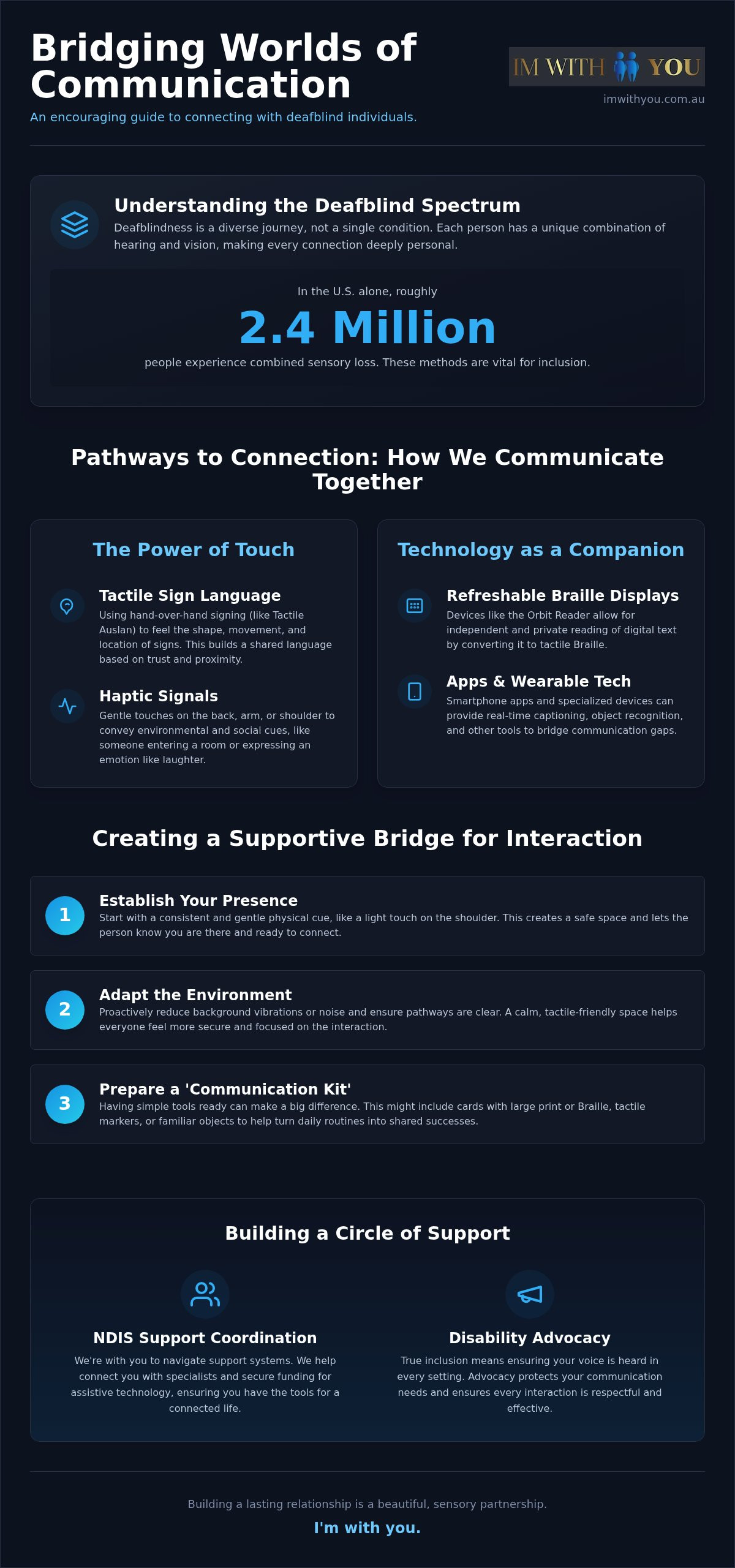
With roughly 2.4 million people in the U.S. experiencing combined sensory loss, these methods are vital for social inclusion. In this guide, I’ll help you understand the practical tools used to foster independence. We’ll explore everything from tactile sign language to the latest 2026 braille innovations; you’ll gain the confidence to start a conversation and build a lasting relationship based on mutual support and genuine partnership.
Key Takeaways
- Recognise that deafblindness is a diverse spectrum where every individual uses a unique, personal combination of sensory methods to connect.
- Discover how do deaf and blind people communicate through simple, tactile cues and ‘communication kits’ that turn daily routines into shared experiences.
- Learn how NDIS Support Coordination can help you access the latest 2026 communication technologies and capacity building skills for greater independence.
- Understand the vital role of disability advocacy in ensuring every person’s unique voice is heard and respected in all community settings.
Understanding the Diverse Spectrum of Deafblind Communication
I’m with you in recognizing that every journey with deafblindness is deeply personal and unique. It isn’t a single, fixed experience. Instead, it’s a vibrant spectrum ranging from total sensory loss to varying degrees of vision and hearing. We see this diversity as a strength. Our approach shifts from simply managing a medical condition to fostering a genuine connection that respects your agency and individual preferences.
Communication is a fundamental human right we’re committed to upholding through every stage of life. When exploring Deafblindness Communication Methods, we find that people adapt beautifully to their environments. You might wonder, how do deaf and blind people communicate when traditional sight and sound aren’t available? It starts with a sensory partnership that prioritizes your dignity and ensures your voice is heard.
To better understand this concept, watch this helpful video:
Tactile Sign Language and the Power of Touch
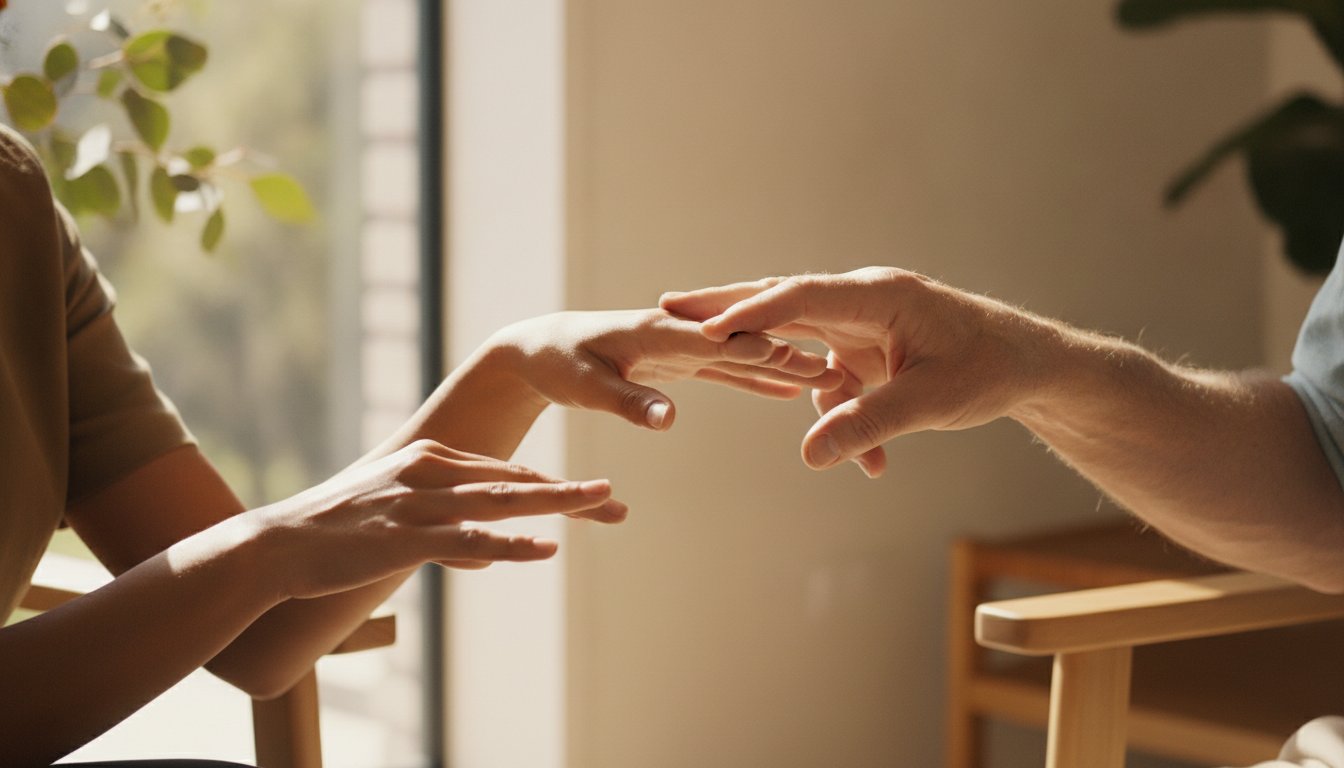
In Australia, Tactile Auslan serves as a powerful tool for companionship. This method involves hand-over-hand signing where you feel the movements and shapes of the signs directly. It creates a shared language built on physical proximity and deep trust.
Haptic signals complement this by using gentle touches on the back or arm to describe the environment or convey social cues. These signals provide a real-time picture of the room, such as someone entering or a person laughing. Tactile signing remains a primary bridge for connection in 2026, ensuring that sensory loss never leads to isolation.
Practical Ways We Can Connect and Communicate Together
Connection begins with a simple sense of presence. I’m with you in understanding that the first step is often the most vital: letting someone know you’re there. Consistent, gentle physical cues, like a light touch on the shoulder, establish a safe space for interaction. When considering how do deaf and blind people communicate, we must remember that patience and active listening through sensory feedback form the foundation of any meaningful bond. It’s about being present in the moment and responding to the subtle cues your partner provides.
You can proactively adapt your environment to make these moments easier and more comfortable. Reducing background vibration or ensuring clear, tactile pathways helps everyone feel more secure and focused. A simple ‘communication kit’ with cards, tactile markers, or even common objects can turn daily routines into collaborative successes. For additional strategies, resources like DeafBlind Online Learning Tools offer excellent guidance on using Haptics and communication cards effectively to foster deeper connections.
Technology and Braille as Modern Companions
Modern devices act as powerful advocates for independence and social inclusion. Refreshable Braille displays, such as the Orbit Reader 20 Plus or the Orbit Reader 40, allow for private, independent messaging in various settings. Smartphone apps and wearable tech, like the NuCaption real-time captioning device, bridge the gap during group conversations. We always prioritize respect by using person-first language to keep the focus on the individual. If you need help navigating these options, our NDIS Support Coordination can guide you through the latest assistive technology to ensure you have the tools needed for a connected life.
Building a Supportive Environment for Meaningful Interaction
True social inclusion is achieved when we walk alongside you as dedicated advocates. I believe your voice deserves to be heard clearly in every setting, from medical appointments to local community gatherings. Advocacy ensures your unique communication needs remain the top priority, regardless of the environment. For those supporting you, utilizing a Guide for Working with DeafBlind Individuals offers the practical steps needed to ensure every interaction is both respectful and effective. We’re here to help you navigate these spaces with confidence and ease.
Community participation is where these communication skills truly flourish. It’s about more than just learning a method; it’s about practicing it in real-world scenarios that bring joy and connection. When families, carers, and support professionals adopt a collaborative approach, we create a safe circle of support. This shared commitment helps simplify the journey of how do deaf and blind people communicate by turning it into a group effort focused on your growth and dignity.
Navigating Support with NDIS Coordination
Our NDIS support coordination helps you connect with the right communication specialists and therapeutic supports. We’ll assist you in securing funding for essential assistive technology and capacity building skills within your NDIS plan. Professional coordination significantly reduces the stress of navigating complex support systems by providing a steady, knowledgeable companion who understands the 2026 funding landscape. I’m with you to ensure your plan reflects your goals for independence and connection.
Building Your Bridge of Connection
Embracing unique ways of connecting is the first step toward a truly inclusive life. We’ve looked at the spectrum of sensory loss and the practical tools, like tactile signing and 2026 braille technology, that empower independent living. Understanding how do deaf and blind people communicate is about more than just a technique; it’s about a partnership built on trust and patience. I’m with you in the belief that every person deserves to be heard and understood.
As the 2026 Excellence Award winner, I’m here to ensure your voice remains central to your care. Our expert NDIS Support Coordination and advocacy services help you navigate complex systems with ease, utilizing a person-centered approach that keeps your dignity at the heart of everything we do. We’re here to walk alongside you—explore our support services today and let’s build a more connected future together. You’re never alone on this journey.
Frequently Asked Questions
What is the most common way deaf and blind people communicate in Australia?
In Australia, many people use the Total Communication approach. This flexible method combines tools like Tactile Auslan and braille to address how do deaf and blind people communicate across different settings. I’m with you in exploring these diverse options to find what works best. It’s about creating a customized bridge that respects your personal history and current sensory preferences.
Can someone who is deafblind live independently with the right support?
Yes, living independently is a goal we’re deeply committed to supporting. With the right Capacity Building Skills and assistive technology, many deafblind individuals manage their homes and community life successfully. It’s about having a steady companion to help set up the right systems. We focus on person-centered care that prioritizes your agency and social inclusion in every aspect of daily life.
How can I learn tactile signing to communicate with a loved one?
I’ll help you find specialized training through your NDIS plan’s Therapeutic Supports or Capacity Building categories. Learning these skills is a beautiful way to strengthen your relationship through sensory partnership. Many families start with basic touch cues before progressing to full signing. I’m here to guide you toward the right specialists who can make this learning process gentle, supportive, and encouraging.
Does the NDIS cover the cost of communication aids for deafblind individuals?
Yes, the NDIS provides essential funding for aids that facilitate how do deaf and blind people communicate within their communities. Funding usually falls under Assistive Technology or Capacity Building budgets. I’ll walk alongside you to ensure your plan includes the latest 2026 devices, such as the NuCaption real-time captioning system. Our Support Coordination makes navigating these funding categories much less stressful for you.