

What if the upcoming NDIS Reforms weren’t a hurdle to your independence, but a chance to build a more secure foundation for your future? I know that hearing about budget reductions for community participation or the transition to new assessment processes can feel deeply unsettling. It’s completely natural to feel anxious when the rules of your support system start to shift; I want you to know that I’m with you through every step of this journey. My goal is to ensure you feel heard, supported, and ready for what comes next.
This guide is here to help you understand the latest legislation changes and discover practical strategies to manage your plan with confidence and care. We’ll look at the new framework planning starting in 2027 and the shift to 90-day claim periods this December. You’ll find clear, actionable steps to prepare for your support needs assessment while ensuring you maintain your choice and control. By focusing on proactive management and advocacy, we can navigate these changes together to ensure your rights and dignity remain the top priority.
Key Takeaways
- Gain clarity on the 2026 NDIS Reforms and discover how the new framework planning aims to provide more flexibility for your daily life.
- Learn the most effective way to document your functional capacity so your unique needs are clearly understood during new assessment processes.
- Discover how to realign your personal goals with updated support definitions to protect your independence and funding.
- Explore how professional advocacy and support coordination act as a steady companion, ensuring your voice remains central to your plan.
- Find peace of mind with practical management strategies designed to lower stress and keep you in the driver’s seat of your journey.
Understanding the 2026 NDIS Reforms: What Is Changing?
The “Securing the NDIS for Future Generations” Bill 2026 might sound like a heavy piece of legislation, but at its heart, it’s about making sure the scheme remains a reliable partner for you. These NDIS Reforms focus on creating a sustainable path forward, ensuring that people with permanent and significant disabilities always have the support they need. I’m with you as we explore these updates together, turning complex legal terms into clear, manageable information you can use to stay in control of your journey.
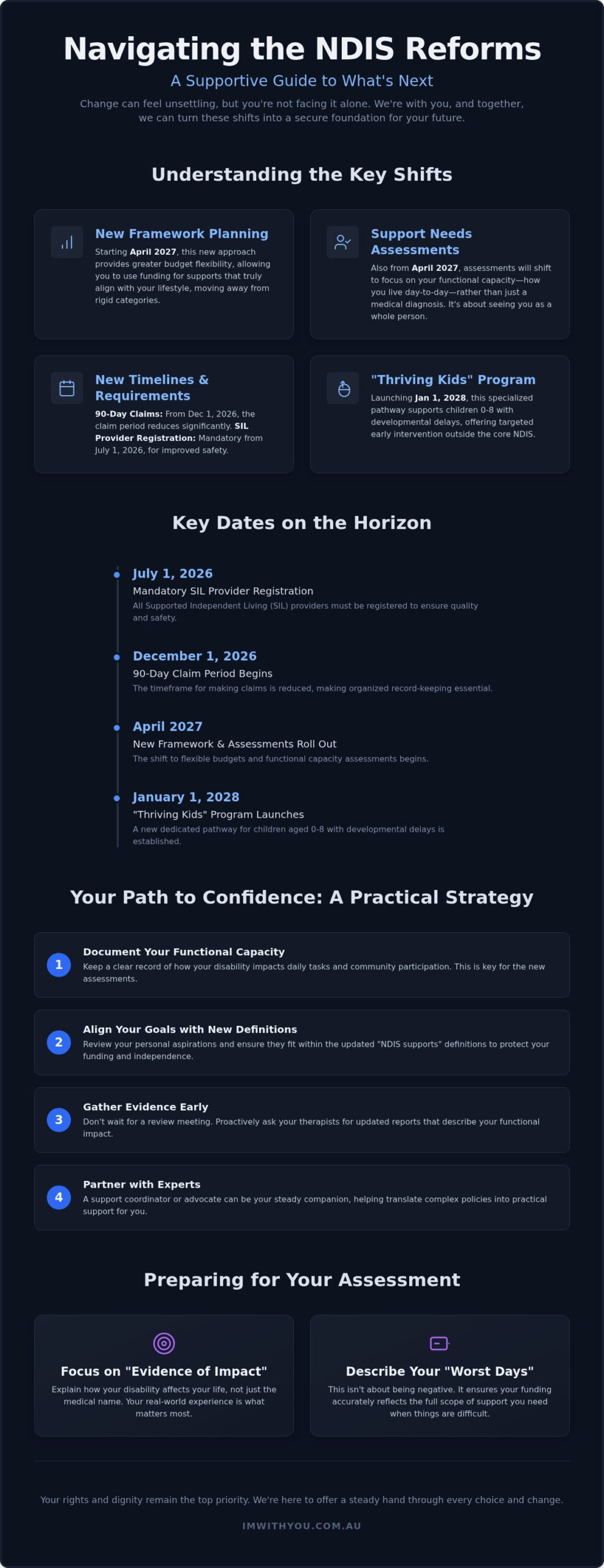
One of the most positive shifts is the move toward New Framework Planning. This new approach, which begins rolling out in April 2027, aims to provide greater budget flexibility. Instead of feeling restricted by rigid categories, you’ll have more agency to use your funding for supports that truly align with your lifestyle. The government has introduced clearer definitions of what can be funded to prevent confusion, keeping the focus on the National Disability Insurance Scheme (NDIS) as a life-focused support system rather than just an administrative process.
The Shift to Support Needs Assessments
Starting in April 2027, the way your support is calculated will change. We’re moving away from older diagnostic models that focus on a medical label and toward functional capacity assessments. These look at how you actually live your day-to-day life. A Technical Advisory Group, established in late 2026, is currently working to ensure these new thresholds are fair and accurate. This shift is designed to see you as a whole person, focusing on your strengths and the specific help you need to participate fully in your community.
Changes to Eligibility and Re-assessments
Transparency is a key part of these changes. The government is refining how they assess if an impairment is permanent to ensure the right people get the right help. For our younger participants, the “Thriving Kids” program will begin on 1 January 2028. This program will support children aged 0-8 with developmental delays or autism through a specialized pathway outside the NDIS. It’s a way to provide targeted, early intervention that helps children reach their potential while keeping the core NDIS available for those who need long-term, intensive care.
Managing the Transition: A Practical Strategy for Participants
I know that change can feel like a heavy weight, especially when it involves the supports you rely on every day. While the NDIS Reforms bring new requirements, they also offer an opportunity to sharpen your management strategy. I’m with you in this process, and together we can turn these legislative shifts into a clear plan of action. Taking small, proactive steps now will help you feel secure and prepared for your next plan meeting.
One of the most important things you can do is document your daily life with fresh eyes. Focus on your functional capacity, describing how your disability impacts your ability to complete tasks or participate in your community. Since the timeframe for making claims will reduce from 2 years to 90 days on 1 December 2026, staying organized with your receipts and reports is more vital than ever. For a broader look at why these shifts are occurring, People with Disability Australia’s guide to the NDIS reforms provides excellent context from a participant-led perspective.
- Review your goals: Ensure your aspirations align with the updated “NDIS supports” definitions to avoid funding delays.
- Gather evidence early: Don’t wait for a review to ask your therapists for updated functional impact reports.
- Partner with experts: A support coordinator can act as your translator, turning complex policy into practical daily supports.
Preparing for Your Support Needs Assessment
When you head into a support needs assessment, focus on the “evidence of impact” rather than just medical diagnoses. It’s helpful to talk openly about your “worst days.” This isn’t about being negative; it’s about ensuring your funding accurately reflects the level of care you need when things are difficult. If you’re looking for a partner to walk this path with you, our guide to finding your perfect provider match can help you find the right fit.
Navigating Home and Living Support Changes
From 1 July 2026, all Supported Independent Living (SIL) providers must be registered with the NDIS Commission. This change is designed to improve safety and quality across the board. If you’re currently accessing these services, now is the time to check your provider’s status and ensure your living arrangements remain stable. You can explore this further in our guide to SIL in the NDIS. If you feel overwhelmed by these choices, the team at Im with you is always here to offer a steady hand.
Advocacy and Partnership: You Are Not Alone in This Journey
Navigating the ripples of the NDIS Reforms can feel like a lonely task, but it’s a journey you don’t have to walk by yourself. When I say “I’m with you,” it isn’t just a phrase; it’s a commitment to being your steady companion through every legislative shift and plan review. My role is to ensure that while the system changes, your dignity and your voice remain at the very center of every decision made about your life.
Professional advocacy is a powerful tool in protecting your rights. Whether it’s representing your interests during Senate inquiries or providing a supportive presence during a complex plan review, having an advocate ensures you aren’t just another number in a data-driven system. Part of this protection involves the way we speak about disability. Using person-first language is a vital management strategy to maintain respect and focus on your identity as a person first, rather than a diagnosis.
The Power of Support Coordination in 2026
As we move toward the new framework, your support coordinator becomes an expert guide who translates complex legislation into a manageable, person-centered plan. They help bridge the gap between high-level policy and the practical supports you need in your home. By working together, we turn administrative requirements into opportunities for growth, ensuring your funding is used in ways that truly enhance your independence and social inclusion.
Staying Empowered and Informed
Your perspective is incredibly valuable. I encourage you to participate in community consultations and offer feedback to the Technical Advisory Group, which was established in late 2026 to refine these new processes. Sharing your lived experience helps shape a better system for everyone. Management is always easier when we walk together, sharing the load and celebrating the wins. You have the strength to handle these changes, and I’ll be right here to provide the security and expert guidance you deserve.
Stepping Forward with Confidence and Care
While the landscape of support is changing, your right to a life of dignity and choice remains constant. We’ve explored how the NDIS Reforms are shaping a new framework focused on functional capacity and long-term sustainability. By documenting your daily needs clearly and aligning your goals with updated definitions, you’re taking powerful steps toward staying in control of your journey. Remember that these administrative shifts don’t have to be navigated alone; I’m with you to ensure your voice is never lost in the process.
As a recipient of the 2026 Award for Excellence in care, our team specializes in providing a compassionate, advocacy-led approach to support coordination. We pride ourselves on being expert guides who walk alongside you, turning complex legislation into a clear, supportive path forward. Let’s navigate these changes together—contact Im with you for expert NDIS support and advocacy. You have the strength to manage this transition, and with the right partnership, you can face the future with a deep sense of security and peace of mind.
Frequently Asked Questions
What is the Securing the NDIS for Future Generations Bill 2026?
This Bill is the legislative heart of the current changes, designed to ensure the scheme remains a reliable partner for people with permanent and significant disabilities. It introduces a new framework for planning and clearer definitions of what constitutes NDIS supports. I’m with you as we navigate these legal updates; it’s designed to keep the focus on life-focused care rather than administrative hurdles, ensuring the scheme’s sustainability for years to come.
Will my NDIS funding be cut because of the 2026 reforms?
The government is adjusting budgets in specific areas to manage the long-term growth of the scheme. From 1 October 2026, budgets for social, civic, and community participation supports will see a 50% reduction, while capacity building daily activity budgets will decrease by 10%. While these NDIS Reforms sound daunting, I’m with you to help realign your goals and document your functional needs clearly to protect the essential supports you rely on.
How does the new Support Needs Assessment work?
Starting on 1 April 2027, the planning process will shift from medical diagnostic labels to functional capacity assessments. This means the assessment looks at how you actually live your daily life and what specific help you need to participate in your community. A Technical Advisory Group is currently setting these thresholds to ensure fairness. I’ll help you prepare by gathering evidence that shows the real-world impact of your disability on your independence.
What are “Foundational Supports” and how do they differ from the NDIS?
Foundational Supports are services provided outside the NDIS for individuals with lower-level support needs, backed by a $10 billion government commitment. They differ from the NDIS because they are delivered through mainstream community systems rather than individualised plans. This includes programs like “Thriving Kids” for children aged 0-8. This shift ensures the NDIS remains a dedicated resource for those with permanent disabilities while ensuring everyone else still receives the care they deserve.
Can I still choose my own providers under the new NDIS rules?
You still have choice and control, but the rules for provider registration are becoming stricter to ensure your safety and quality of care. From 1 July 2026, all Supported Independent Living (SIL) providers must be registered, with higher-risk services following in July 2027. While the market is moving toward more regulation, I’m with you to help you find registered partners who align with your values and provide high-quality, person-centered support.
How do the reforms affect Supported Independent Living (SIL)?
The most immediate change is the mandatory registration requirement for all SIL providers starting 1 July 2026. New SIL-specific NDIS Practice Standards also come into effect on this date to improve safeguarding and service quality in your home. These NDIS Reforms aim to give you more security and peace of mind. If you’re worried about your current living arrangements, we can work together to check your provider’s status and ensure your home remains a safe haven.