

What if the person walking beside you wasn’t just a service provider, but a bridge to the life you’ve been waiting to lead? It’s completely natural to feel a bit of a sting when you’re treated like a case number instead of a person. You might feel a knot of anxiety at the thought of entering a crowded cafe or joining a local club alone, wondering if you’ll truly belong or if people will only see your disability. Understanding the role of support worker in community access is the first step toward changing that narrative from one of isolation to one of genuine connection.
I’m with you in these moments of uncertainty, and I want you to know that you don’t have to face them by yourself. This guide is here to show you how a dedicated support worker acts as your partner. Together, we’ll explore how this relationship helps you build the confidence to try new activities and find a genuine sense of social belonging. We will look at how to navigate NDIS Community Participation funding and, most importantly, how to foster a partnership that celebrates your agency and your place in the world.
Key Takeaways
- Understand how the role of support worker in community access shifts the focus from simple transport to fostering deep social inclusion and a sense of belonging.
- Learn the process for identifying leisure activities that bring you joy and how to use them to set collaborative goals for your community journey.
- Discover gentle management strategies for social anxiety, including how gradual exposure and safe space plans can help you feel secure in new environments.
- Find out why matching with a partner who shares your values is the key to a relationship where you truly feel that I’m with you.
Defining the Role of a Support Worker in Community Access
The role of support worker in community access is often misunderstood as a simple transportation service. While getting from point A to point B is part of the journey, the true heart of this role lies in facilitating a deep sense of social inclusion. A dedicated support worker doesn’t just drive you to a location; they act as a bridge between you and your local community. To understand the foundational duties of this position, it’s helpful to look at the broader definition of What is a Support Worker, which emphasizes the blend of emotional and practical assistance required to help someone lead a fulfilling life.
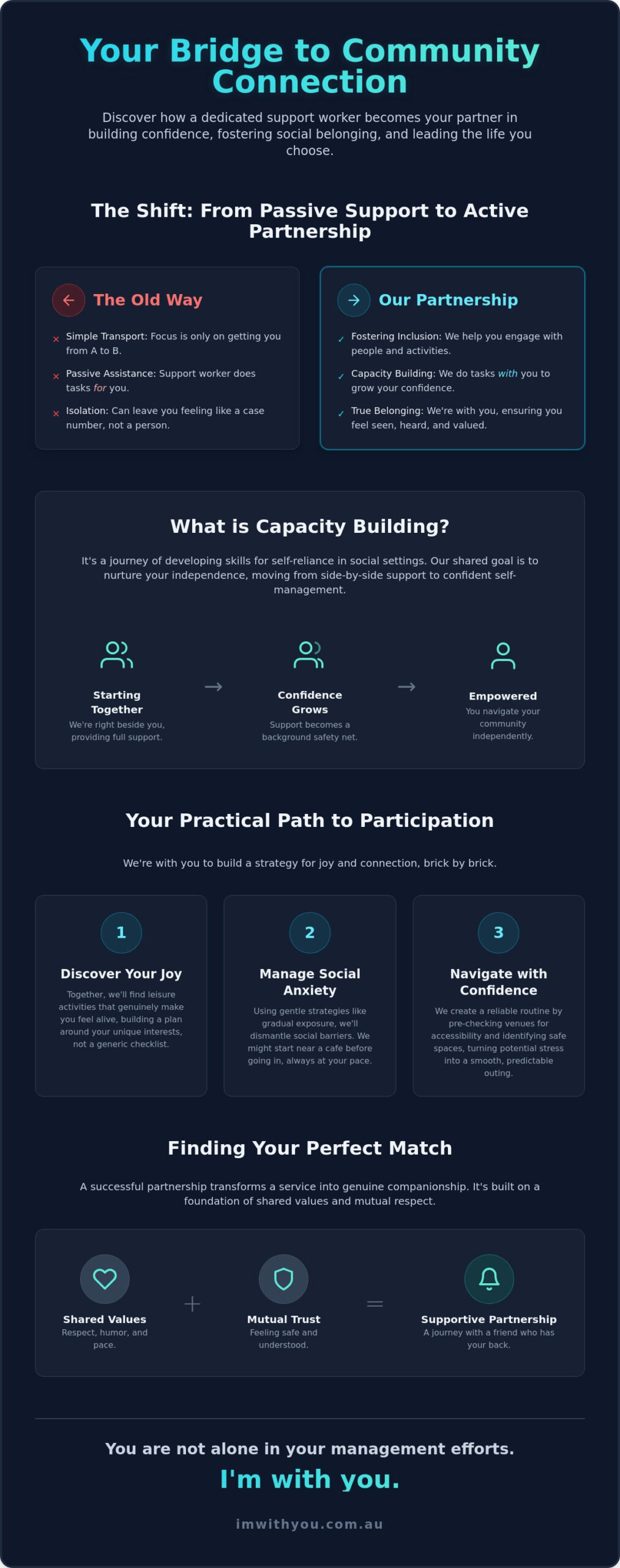
There’s a significant difference between ‘getting there’ and ‘being there’. Passive support might drop you at the front door of a library or a gym, but active community participation involves helping you engage with the people and activities inside. I’m with you as you navigate these spaces, ensuring that you don’t just occupy a seat, but truly belong. This partnership focuses on your comfort and your voice, making sure you feel empowered to interact with your surroundings on your own terms.
To better understand this concept, watch this helpful video:
Advocacy is another vital part of this relationship. In every interaction, I prioritize the use of person first language to ensure that your identity as an individual always comes before any diagnosis. By modeling this respectful communication, support workers help break down the social barriers and stigmas that often lead to isolation. We work together to educate the community through our presence, showing that everyone has a right to participate and be heard.
Capacity Building vs. Passive Support
Capacity building is the process of developing skills for self-reliance in social settings. Unlike passive support, which does things for you, capacity building focuses on doing things with you. The goal is to nurture your independence so you can eventually navigate your favorite local spots with less assistance. As your confidence grows, a support worker’s presence naturally fades into the background, leaving you with the tools and the courage to manage your community life independently.
For those seeking support that aligns with these principles, Mighty Mentors WA provides personalized mentoring and community access designed to foster long-term independence and social connection.
Practical Strategies for Social Participation and Management
Managing your social life shouldn’t feel like a chore. When we talk about the role of support worker in community access, we’re really talking about a strategy for joy. The first step is sitting down together to figure out what are leisure activities that actually make you feel alive. Whether it’s a quiet pottery class or a loud footy match, we’ll build a plan around your interests, not just a generic checklist. This isn’t just about filling time; it’s about finding spaces where you feel seen and valued as a person.
Social anxiety can feel like a heavy wall, but we’ll dismantle it brick by brick. We use Practical Strategies for Social Participation like gradual exposure to help you adjust. This might mean just sitting in a park near a cafe before actually going inside. I’m with you during these moments, acting as a steady presence while you find your feet. Beyond just being there, I can help facilitate introductions to peers or shop owners, acting as a social icebreaker until you’re comfortable taking the lead. We’ll also work together to manage your NDIS funding schedule, ensuring we maximize your community time while staying within your plan’s goals for 2026 and beyond.
Navigating Public Spaces with Confidence
Confidence comes from knowing what to expect. Part of my role is to pre-check venues for accessibility, finding the best routes and identifying safe spaces if you need a break. If a train is delayed or a lift is out of order, we handle it together. This I’m with you approach to problem-solving turns a potential crisis into a manageable bump in the road. It’s about building a reliable routine that fosters long-term community connections and friendships. If you’re ready to start exploring, our Community Participation Support can help you take that first step with confidence.
Finding Your Perfect Match for a Supportive Partnership
A successful connection begins with shared values and interests. When the role of support worker in community access is built on a foundation of mutual respect, the experience transforms from a service into genuine companionship. You deserve a partner who understands your humor, respects your pace, and shares your enthusiasm for the things you love. This alignment makes every outing feel less like an appointment and more like a shared journey with a friend who has your back.
Choosing the right person can feel overwhelming, but you have the agency to decide who walks alongside you. When you’re finding your perfect match, look for providers who prioritize your personal goals over administrative checklists. Ask potential workers about their communication style and how they handle challenges. The goal is to find someone who embodies the ‘I’m with you’ sentiment, ensuring you never feel alone or misunderstood as you explore new spaces. Clear boundaries are equally important; they protect your independence and ensure that the focus remains entirely on your choices and your growth.
The Emotional Safety of a Trusted Companion
Trust is the quiet engine that powers community engagement. When you feel safe with your companion, you’re more likely to take positive risks, like starting a conversation with a neighbor or trying a new skill. Support worker consistency is directly linked to improved well-being for participants because familiar support reduces the stress of navigating unpredictable social environments. By moving away from a clinical ‘service delivery’ model toward a life-focused partnership, we uphold your dignity and celebrate your place in the community. I’m with you in building this trust, one shared experience at a time.
Your Journey Toward Connection Starts Today
Embracing the role of support worker in community access means choosing a life filled with connection rather than isolation. We’ve seen how this partnership moves beyond simple transportation to focus on genuine social belonging and skill-building. By setting collaborative goals and planning for emotional safety, you can navigate public spaces with a newfound sense of confidence. The right companion doesn’t just lead the way; they walk beside you, ensuring your voice is always the one that matters most.
As a national NDIS provider, we’ve built our reputation on a “walking alongside” philosophy that puts your dignity first. Our person-centered advocacy approach was honored with a 2026 Award for Excellence in Care, reflecting our deep commitment to your quality of life. I’m with you as you explore new hobbies, meet new people, and grow your independence. You don’t have to manage these challenges on your own.
Explore our compassionate community support services and find your companion today. Your community is waiting for you, and we’re ready to help you find your place within it.
Common Questions About Community Access
What is the difference between a carer and a community access support worker?
A community access support worker is a professional facilitator who focuses specifically on helping you engage with the world outside your home. These roles often attract individuals with significant life experience; for instance, some professionals use Right Pathway to formally recognize the skills they’ve gained across different industries. While a carer often provides essential daily living assistance or personal care, the role of support worker in community access is centered on social inclusion and skill building. I’m with you to ensure you aren’t just being looked after, but are actively participating in the activities that bring you joy.
How can I use my NDIS funding for community access?
You can typically access these services through the ‘Social and Community Participation’ category within your NDIS Core Supports or Capacity Building budget. This funding allows you to hire a companion to assist with activities like joining a sports club, attending a concert, or visiting a local cafe. It’s designed to help you build the confidence to navigate your community independently over time. We’ll work together to manage these hours effectively.
Does a support worker participate in activities with me or just watch?
A support worker acts as an active partner who participates alongside you based on your preferences and comfort level. We don’t just stand on the sidelines; we engage in the pottery class or the bushwalk with you to facilitate a natural social experience. This “walking alongside” approach ensures you feel supported while interacting with others. I’m with you to bridge the gap between being a spectator and being a participant.
What happens if I don’t feel a connection with my assigned support worker?
You always have the right to request a different worker if the personal connection doesn’t feel right. Finding a match based on shared interests and values is essential for a successful partnership in community access. If you don’t feel that “I’m with you” bond, we’ll support you through the process of choosing someone new. Your comfort and agency are the most important parts of this journey toward social belonging.