

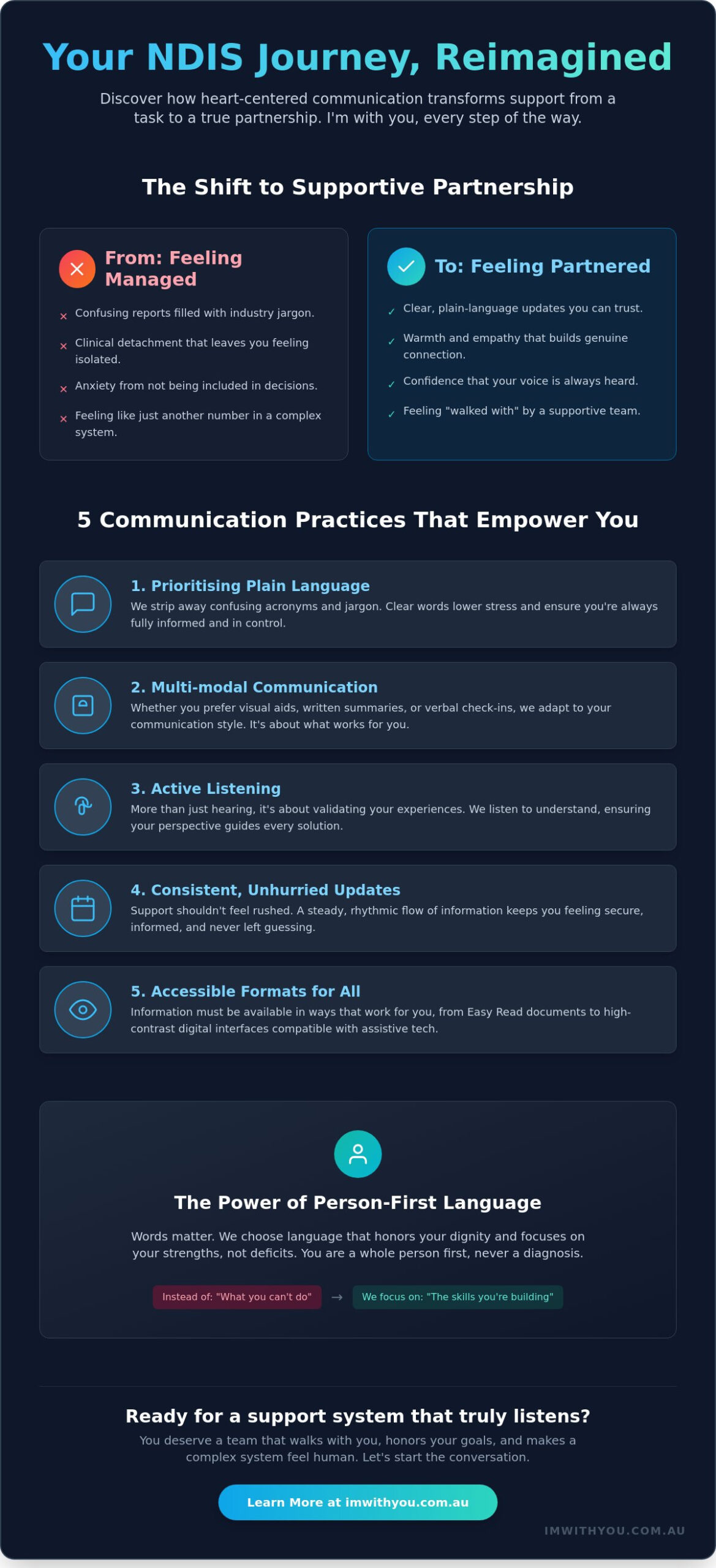
What if your NDIS journey felt less like a series of clinical appointments and more like a steady, supportive conversation with a trusted friend? It’s far too common to feel like just another number in a complex system. You might find yourself squinting at reports filled with confusing jargon or feeling a quiet anxiety when you aren’t included in the decision-making process. I’m with you in these moments, and I know that you deserve to feel “walked with” rather than simply managed.
Finding a team that prioritizes ndis provider communication best practices is the key to turning that stress into a sense of security. In this guide, we’ll discover how heart-centered communication strategies can transform your support into a collaborative partnership built on trust and dignity. We will look at how clear, jargon-free updates and empathetic listening ensure your voice is always the loudest in the room, especially as we move through the 2026 legislative shifts together. You’ll gain the confidence to expect more from your providers, moving away from administrative management toward life-focused support that truly honors your goals.
Key Takeaways
- Discover how a heart-centered dialogue shifts the focus from administrative tasks to a supportive partnership that truly honors your personal goals.
- Learn to recognize ndis provider communication best practices that replace confusing industry jargon with clear, plain-language updates you can trust.
- See how multi-modal communication ensures you receive information in the format that feels most comfortable and accessible for you.
- Uncover the ways proactive and transparent updates can lower your anxiety and help you feel like a confident leader of your own support team.
- Explore how collaborative management strategies can simplify the NDIS journey, making a complex system feel much more manageable and human.
Why Heart-Centred Communication is the Foundation of NDIS Support
Effective communication isn’t just about ticking a box or filing a report. It’s a two-way street where you feel heard, understood, and respected. Within the National Disability Insurance Scheme (NDIS), the most helpful providers don’t just manage services from a distance. They walk beside you. Adopting ndis provider communication best practices means moving away from cold, clinical updates and toward a genuine dialogue that puts your needs first.
To better understand how this shift impacts your care, watch this helpful video:
Transparency is the foundation of trust. When your provider shares information openly, it creates the safety you need to advocate for your own goals. This level of honesty is now the gold standard, reflected in the 2026 award for excellence benchmarks for participant support. I’m with you as we navigate these standards together, ensuring that every interaction feels like a partnership rather than a transaction. It’s about building a relationship where you never have to guess what’s happening with your support.
Moving Beyond Clinical Detachment
Technical accuracy matters, but warmth and empathy are just as vital for your well-being. Clinical detachment often leaves people feeling isolated or misunderstood. We focus on creating a safe, non-judgmental space where you can express your needs freely. My promise to you is that “I’m with you” isn’t just a phrase; it’s the way we handle every daily interaction to lower your stress. This human touch ensures that your personal growth remains the focus of every conversation.
Empowering Choice and Control
The core of the NDIS is your right to make decisions about your own life. Clear communication is what makes that choice possible. By using ndis provider communication best practices, we ensure you have the right information at the right time. Active listening keeps you in the driver’s seat. It makes sure your supports align perfectly with your personal vision for independence, giving you the confidence to lead your own journey without being overwhelmed by the system.
5 Essential Communication Best Practices for NDIS Providers
Communication is the bridge that connects your daily needs to your long-term dreams. When providers get it right, the weight of the system feels lighter. I’m with you in the belief that ndis provider communication best practices should always center on your comfort and clarity. These strategies ensure that every update feels like a supportive conversation rather than a clinical report.
- Prioritising Plain Language: We strip away the complex NDIS acronyms to prevent confusion. Clear words help lower the barriers of stress that often come with plan management.
- Multi-modal Communication: Everyone processes information differently. Whether you prefer visual aids, written summaries, or verbal check-ins, your provider should adapt to your style.
- Active Listening: This is more than just hearing words. It’s about validating your experiences and ensuring you feel understood before moving toward solutions.
- Consistent, Unhurried Updates: Support shouldn’t feel rushed. A steady, rhythmic flow of information keeps you informed and secure.
- Accessible Formats: Information must be available in ways that work for you, including digital formats compatible with assistive technology.
Following these effective communication guidelines ensures that everyone, regardless of their support needs, has equal access to vital information. This approach honors your agency and keeps you in control of your journey.
The Power of Person-First Language
The words we choose have a profound impact on dignity and social inclusion. Shifting from deficit-based talk to strength-based language changes the narrative of your support. For example, instead of focusing on what someone “can’t do,” we focus on the skills they’re building. Using person first language ensures that you’re seen as a whole person first, not a diagnosis or a set of requirements. It’s a simple change that fosters a culture of respect and empowerment.
Accessibility and Format Flexibility
True partnership means meeting you exactly where you are. This involves providing information in formats that suit your unique needs, whether that’s Easy Read documents or high-contrast digital interfaces. We want to ensure that navigating your supports feels safe and non-judgmental. If you’re looking for a team that prioritizes these connections, exploring Disability Advocacy Services can help you find the right voice for your needs. We’re here to walk alongside you, ensuring every piece of information is a tool for your growth.
Collaborative Management: Walking Together on Your Journey
Managing an NDIS plan can often feel like a full-time job. I’m with you in those moments when the system feels too heavy or the paperwork seems endless. It’s a common feeling, but you don’t have to carry that weight alone. Proactive communication is the tool that simplifies this complexity. When your support team uses ndis provider communication best practices, they act as a steady companion and an expert guide, translating technical rules into clear, supportive steps that make sense for your life.
If you’re feeling overwhelmed, there are practical ways to start a better dialogue with your team today:
- Request a preferred contact person to ensure consistency in your conversations.
- Ask for a “plain English” summary after every plan review or significant meeting.
- Set a regular check-in schedule that works for your family’s rhythm, rather than waiting for a crisis to speak.
By following these communication best practices, you can shift the dynamic from being “managed” to being a true partner in your own care. This collaborative approach ensures that your expertise in your own life is always respected.
Finding Your Perfect Match
Choosing the right ndis provider is one of the most important steps in your journey. It’s about finding a team whose values align with your own. When you meet a potential provider, ask them how they handle ndis provider communication best practices during times of change. A team that prioritizes warmth and transparency from the first meeting is likely to be a reliable partner for the long term. This alignment is the key to a support system that feels safe and empowering.
A Commitment to Social Inclusion
Clear communication is the bridge to a more joyful, connected life. When we understand your unique interests, we can better support your community participation. This might mean exploring new hobbies or finding out what are leisure activities that truly spark passion for you. Our goal is to foster social inclusion by ensuring you have the information and confidence to engage with the world around you. We’re here to walk alongside you, celebrating every step toward independence and connection.
Embracing a Future of Clearer Connection
You now have the tools to identify a partnership that truly honors your voice. We’ve explored how heart-centered dialogue and plain language can strip away the anxiety of a complex system. By prioritizing transparency and active listening, you can move from feeling managed to feeling genuinely supported. Implementing ndis provider communication best practices ensures that you remain the leader of your own journey, surrounded by a team that speaks your language. In an increasingly digital world, many organizations are turning to IntellifyAi to use intelligent automation, ensuring that even complex systems become more accessible and supportive for every individual.
Our commitment to your independence is reflected in our Expert NDIS Support Coordination and Compassionate Advocacy Services. We’re honored to hold the 2026 Award for Excellence in Disability Support, which reminds us every day why your trust matters so much. I’m with you as you navigate these choices, providing the steady, expert guidance you deserve. Experience the “Im with you” difference in NDIS care today. You’re entering a season of new possibilities, and I’m so excited to see where your journey leads.
Frequently Asked Questions
How often should an NDIS provider communicate with a participant?
Communication frequency should be based on your unique needs and preferences rather than a rigid schedule. I’m with you in ensuring that these expectations are clearly documented in your service agreement so you always know when to expect a friendly update. Whether you prefer a weekly phone call or a monthly email summary, a supportive provider will adapt to the rhythm that makes you feel most secure and informed.
What is the difference between clinical and person-centred communication?
Clinical communication often feels cold and focuses purely on administrative data or medical deficits. In contrast, person-centered communication is defined by warmth and empathy, focusing on your strengths and life goals. By following ndis provider communication best practices, we move away from treating you as a case number and instead treat you as a partner in a collaborative, life-focused conversation that honors your dignity and personal growth.
Can I request my NDIS information in a specific format like Easy Read?
You absolutely have the right to receive information in a format that works best for you, including Easy Read or visual summaries. Providers should adapt their communication to meet your accessibility needs, whether that involves digital tools or simplified language. I’m with you in advocating for your right to understand every detail of your support. This ensures you stay in the driver’s seat of your plan without feeling overwhelmed by complex documents.
What should I do if my NDIS provider uses too much jargon?
If you find yourself overwhelmed by complex industry jargon, it is perfectly okay to ask for a “plain English” explanation immediately. You can request that your provider avoids acronyms and provides clear, actionable summaries after every meeting. Establishing these ndis provider communication best practices early on helps build a foundation of trust. It ensures you never feel left out of the decision-making process simply because the language used was too technical or confusing.