
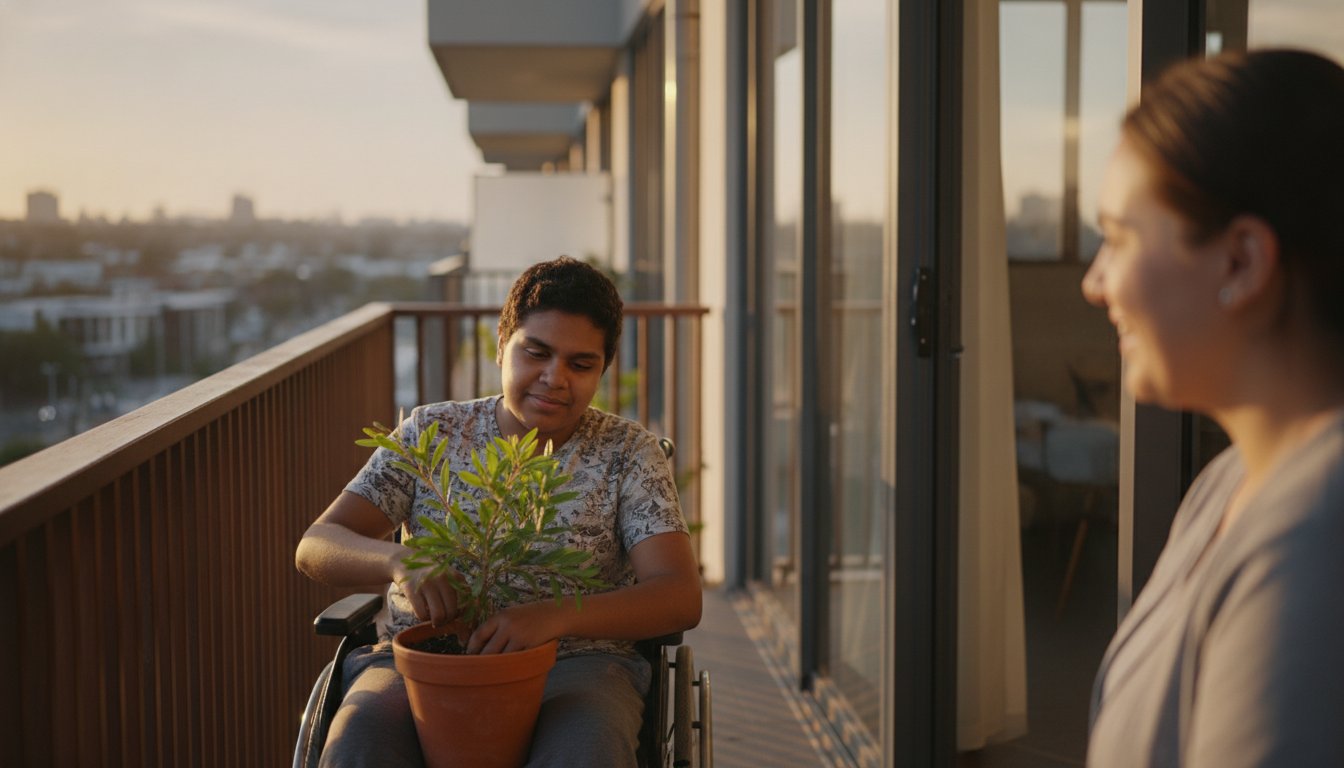
What if independence didn’t mean doing every single thing on your own, but rather having the quiet confidence to know you’ve got the skills to handle whatever the day brings? It’s common to feel a bit stuck at home or to feel a wave of anxiety when you think about managing a budget or cooking a meal for yourself. You’re not alone if the different NDIS categories feel more like a maze than a map. I’m with you in those moments of uncertainty, and I want you to know that your goals for a more self-reliant life are completely within reach.
Finding the right independent living skills program ndis is about more than just checking boxes; it’s about building a foundation for the life you choose to lead. This guide will show you how tailored support can help you master daily tasks and boost your self-reliance. I’ll explain how these programs work within the NDIS framework and what to look for in a provider who treats you as a partner. Together, we’ll explore how you can gain the practical skills needed to move forward with dignity, strength, and the support you deserve.
Key Takeaways
- Learn how an independent living skills program ndis uses your “Capacity Building” budget to help you master the daily tasks that lead to greater freedom.
- Discover why ‘learning by doing’ in real-world environments is the most effective way to build lasting confidence and practical management skills.
- I’m with you as we explore how to break down your big dreams into small, achievable steps that create steady momentum for your future.
- Find out how to choose a supportive partner who walks alongside you, focusing on your strengths and your right to make your own choices.
Understanding the NDIS Independent Living Skills Program
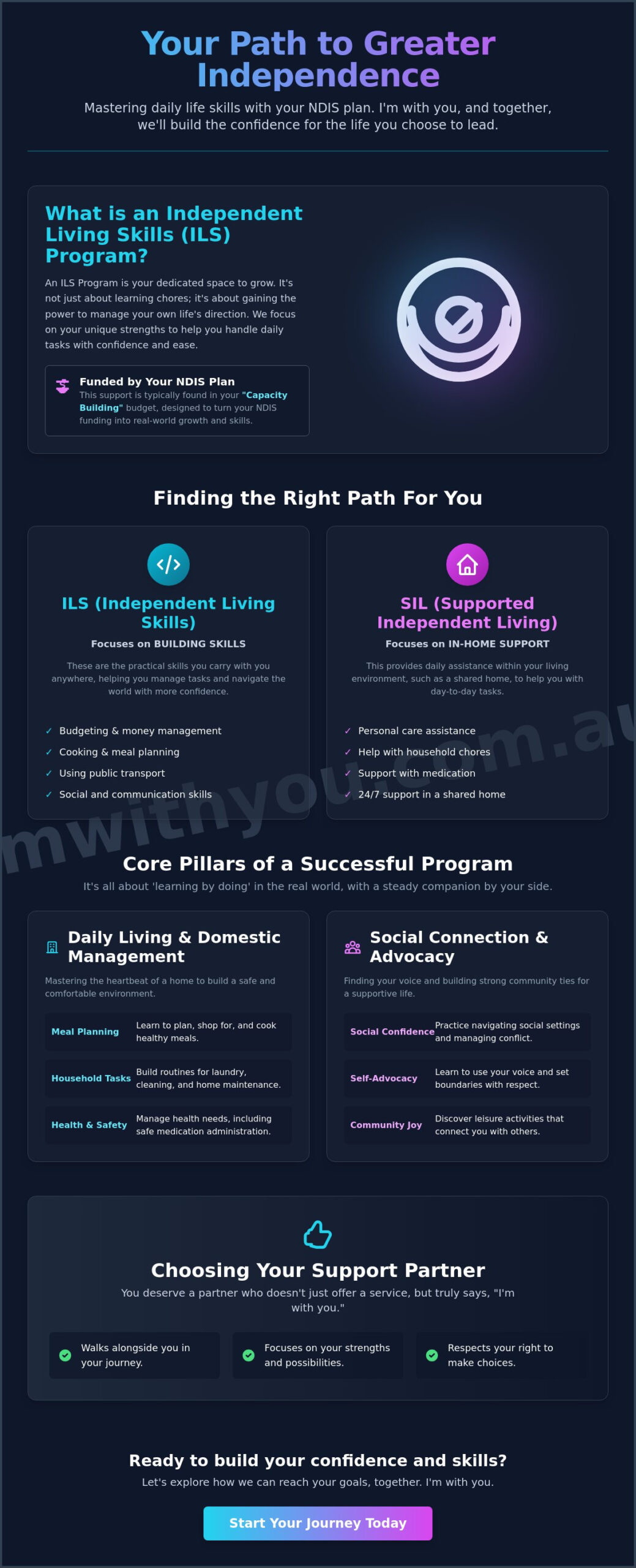
An independent living skills program ndis is a dedicated space for you to grow and thrive. It focuses on your unique strengths and helps you build the capacity to handle daily tasks with ease. While it’s part of the broader National Disability Insurance Scheme (NDIS), it feels much more personal than a government framework. It isn’t just about ‘learning’ how to do a chore; it’s about gaining the power to manage your own life’s direction. True independence is a journey we take together.
To better understand how these supports fit into your life, watch this helpful video:
ILS vs. SIL: Finding the Right Path for You
It’s easy to get confused by the different acronyms. An ILS program is all about the skills you carry with you, like budgeting, cooking, or using public transport. On the other hand, supported independent living ndis focuses on the daily help you receive within your home environment. You don’t have to live in a specific type of house to build your skills. You can access these programs wherever you call home, whether you live with family, in a rental, or in shared accommodation.
The Role of Capacity Building in Your NDIS Plan
Your plan often includes funding for “Increased Social and Community Participation.” This is where many skill-building activities live. Choosing the right ndis provider is a vital part of this journey. A provider who acts as a steady companion will help you turn your NDIS budget into real-world growth and person-centered success. They should look at your possibilities rather than your limitations. This partnership ensures that every hour of support brings you closer to the life you’ve envisioned for yourself.
Core Pillars of a Successful Life Skills Program
A successful independent living skills program ndis isn’t just a curriculum. It’s a living, breathing partnership. I’m with you as we move beyond theory and into the real world. We focus on ‘learning by doing’ because that’s where true confidence is born. When we align these activities with what you actually love doing, the learning feels less like a task and more like a discovery. Having a steady companion by your side helps quiet the anxiety that often comes with trying something new for the first time.
Daily Living and Domestic Management
This covers the heartbeat of a home. We’ll look at meal planning, navigating the grocery store, and finding joy in healthy cooking. It also includes the rhythm of a household, from doing laundry to basic maintenance. Safety is a core promise here, especially when it comes to managing health needs. Following the six rights of medication administration ensures you stay safe while building your independence. For those looking for more intensive home-based support, the official Supported Independent Living (SIL) guide offers deeper insight into how these services are structured.
Social Connection and Advocacy Skills
Independence also means having a voice. We work on building your confidence in social settings and learning how to manage conflict with grace. Using person first language is a powerful tool in self-advocacy. It reminds the world that you are a person first, with your own dreams and boundaries. We also explore what are leisure activities that help you find joy and connect with your community. These social networks are the safety net that supports your growth. If you’re ready to start this journey, you might want to explore our capacity building skills to see how we can walk alongside you as you reach for your goals.
Choosing Your Partner: How to Start an ILS Program
Selecting the right provider is one of the most significant steps you’ll take on your path toward self-reliance. You deserve a partner who doesn’t just deliver a service but truly says, “I’m with you,” through every challenge and victory. An effective independent living skills program ndis should feel like a collaborative effort, where your voice is the most important one in the room. This journey is yours, and your provider is there to walk alongside you as a steady, knowledgeable guide.
A great management strategy is to start with small, achievable goals. This helps you build the momentum and confidence needed for bigger milestones later on. For instance, you might start by mastering a single signature recipe before moving on to full weekly meal planning. We’ll regularly review your progress together to make sure the program still fits your evolving dreams. Remember, independence is a gentle journey, not a race to a finish line. It’s about finding a rhythm that feels safe and sustainable for you.
Step-by-Step: From Goal Setting to Implementation
- Step 1: Identify your specific aspirations during your NDIS planning meeting. Be clear about what independence looks like for you, whether that’s moving out or simply managing your own budget.
- Step 2: Interview potential providers to ensure they align with your values. Ask how they interpret the Official NDIS SIL Guidelines to ensure their approach to skill-building is both professional and person-centered.
- Step 3: Create a collaborative skill-building plan with your support worker. This plan should be a living document that focuses on your unique strengths and possibilities.
The Power of Advocacy in Your Journey
A dedicated provider does more than teach skills; they protect your right to choice and control. This relationship is the bridge between daily skill development and your long-term dignity. When you learn to manage your own life, you’re claiming your place in the community and opening doors to new opportunities. You are never alone in this effort. We’re here to provide the warmth and expertise you need to thrive in your own independent living skills program ndis. Let’s take that first step together and turn your personal goals into your daily reality.
Your Path to a More Independent Future
Building the life you want takes time, patience, and the right support. You’ve seen how a tailored independent living skills program ndis can transform your daily routine into a series of empowering achievements. By focusing on practical capacity building and choosing a partner who values your unique voice, you’re setting a foundation for long-term dignity and choice. I’m with you as you navigate these steps, ensuring you never feel overwhelmed by the process.
At Im with you, we’re proud to have been awarded for excellence in disability support in 2026. Our expertise in NDIS capacity building is matched only by our commitment to person-centered advocacy and premium care. We believe that true independence is a collaborative journey where your goals lead the way. Reach out today and let us walk beside you on your journey to independence. Your future is bright, and it’s built on the skills you master today. You’ve got this, and we’re here to help you every step of the way.
Frequently Asked Questions
What is an independent living skills program in the NDIS?
An independent living skills program ndis is a personalized support plan that focuses on building your capacity to manage everyday life. It helps you master tasks like cooking, budgeting, and using public transport so you can live more autonomously. I’m with you as you explore these new abilities; we focus on your strengths to ensure you feel confident and capable in your own home and community.
Can I use my NDIS funding for a life skills program?
Yes, you can certainly use your NDIS funding for these programs, typically through the “Capacity Building” budget category. Specifically, funding under “Increased Social and Community Participation” or “Development of Daily Living and Life Skills” is often used to support these goals. It’s a practical way to manage your plan’s resources while investing in your long-term independence and personal growth. I’m here to help you navigate those categories.
What is the difference between ILS and SIL?
The main difference is that Independent Living Skills (ILS) focus on teaching you how to do things for yourself, while Supported Independent Living (SIL) provides the daily help you need to live in your home. Think of ILS as building your toolkit of abilities and SIL as the person-to-person support that assists with your daily routine. You can access an independent living skills program ndis regardless of your housing situation; it’s about your growth.
How do I find a provider for independent living skills?
You can find a provider by searching for registered NDIS organizations that offer “Capacity Building” or “Development of Life Skills.” It’s best to interview potential partners to see if they offer the warm, person-centered approach you deserve. Look for a team that treats you as an equal partner and shows a genuine commitment to walking beside you. I’m with you in finding a match that feels safe and supportive.