

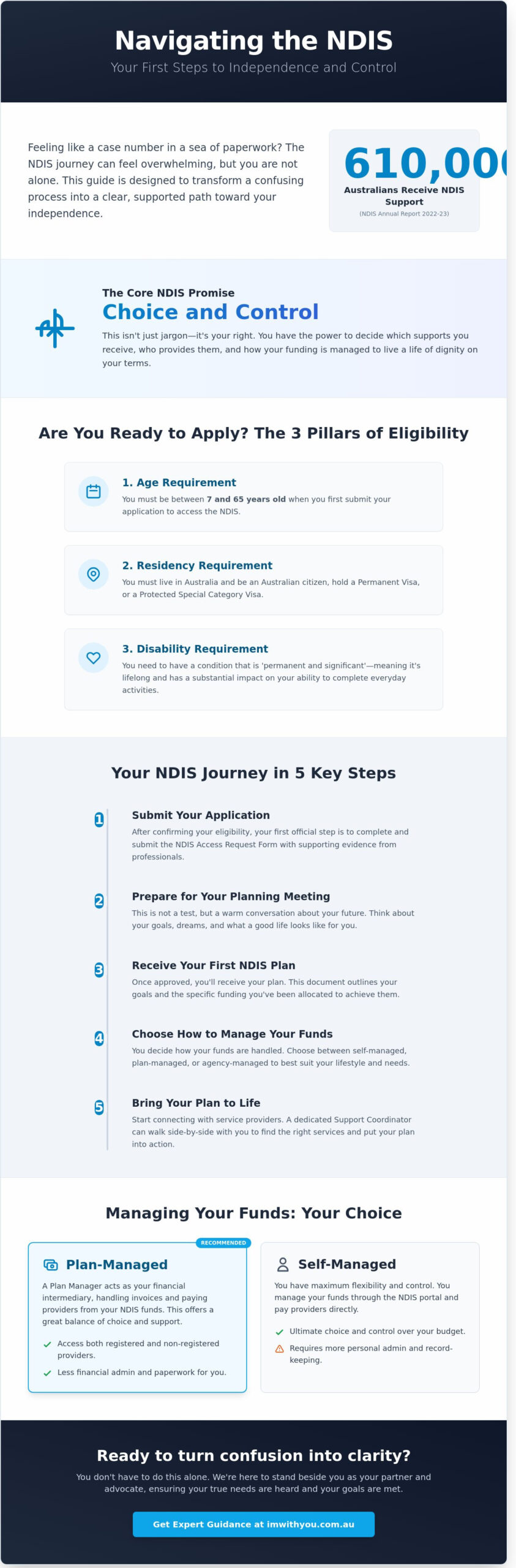
What if the most exhausting part of seeking support isn’t managing your daily needs, but feeling like a faceless case number in a sea of government paperwork? Navigating the NDIS for the first time often feels like trying to solve a puzzle where the pieces keep changing shape. While the NDIS Annual Report 2022-23 shows that over 610,000 Australians now receive support, many still find the initial entry point overwhelming. You likely feel that the system is overly complex, and it’s frustrating when you’re met with clinical jargon instead of a helping hand. We understand the fear of a rejected application or the deep worry that your true needs won’t be heard.
We’re here to help you transform this confusing process into a clear, supported path toward your independence. Our expert guidance ensures you’re treated as a person, not a file, as we work to secure a plan that reflects your real-life ambitions. This guide walks you through the access request process and explains how to turn “Choice and Control” into your daily reality. You don’t have to do this alone; we’re ready to stand beside you as your partner and advocate.
Key Takeaways
- Discover how the core philosophy of ‘Choice and Control’ serves as a sacred promise, empowering you to lead a life of dignity and independence on your own terms.
- Gain clarity on the NDIS access requirements and learn exactly how to gather the evidence needed to begin your journey with confidence.
- Master the art of navigating the ndis for the first time by framing your planning meeting as a warm conversation about your future dreams and goals.
- Explore the different ways to manage your NDIS funds so you can choose the path-whether self-managed or plan-managed-that feels most supportive for your lifestyle.
- Understand how to navigate your first 90 days with a plan in hand, including how a dedicated Support Coordinator can walk side-by-side with you to connect you with the right services.
What is the NDIS? A Gentle Introduction to Your Journey
Stepping into the world of disability support can feel like standing at the base of a mountain. We understand that navigating the ndis for the first time brings a mix of hope and anxiety. At its heart, the National Disability Insurance Scheme (NDIS) isn’t just a government program; it’s a dedicated pathway toward independence. It moves beyond simply managing a medical condition. Instead, it provides the A$42.2 billion in funding budgeted for 2023-24 to help Australians live the life they choose. This scheme is designed to focus on your potential rather than your diagnosis.
To better understand this concept, watch this helpful video:
The Core Principles: Why the NDIS Exists
The NDIS exists to ensure you aren’t just a recipient of care, but an active participant in your community. Before the scheme’s full rollout began in July 2016, disability support often followed a rigid, “one-size-fits-all” welfare model. This old system gave people very little say in who supported them or how they spent their time. The National Disability Insurance Agency (NDIA) now manages this scheme with a focus on social and economic participation. This means the goal is to help you find work, join local groups, and build skills that lead to a fulfilling life. We’re here to walk beside you as you learn that this isn’t about being looked after; it’s about being empowered.
The NDIS Language: Decoding the Jargon
The language used by the agency can sometimes feel clinical or confusing when navigating the ndis for the first time. Let’s break it down into human terms. When you hear “Reasonable and Necessary,” think of it as support that’s fair, directly related to your disability, and likely to help you reach your goals. A “Permanent and Significant” disability refers to a condition that’s likely to stay with you for life and has a major impact on your ability to complete everyday tasks. These terms are the keys that unlock the funding you need to thrive.
Choice and Control means you have the absolute power to decide which supports you receive, who provides them, and how your funding is managed to lead your own life with dignity.
Checking Your Eligibility: Are You Ready to Apply?
Taking the first step toward disability support is a brave and significant move. It marks the beginning of a journey toward greater independence and dignity. We understand that the initial paperwork can feel heavy, but you don’t have to carry it alone. Before you dive into the application, we’ll help you clarify whether you meet the criteria set by the National Disability Insurance Agency (NDIA).
The Three Pillars of NDIS Eligibility
The NDIS is built on three specific access requirements. First, you must be aged between 7 and 65 at the time you submit your application. If you’ve already celebrated your 65th birthday, you’ll likely find the support you need through My Aged Care instead. This ensures that every Australian receives the most appropriate type of care for their stage of life.
Second, residency rules apply. You must live in Australia and be an Australian citizen, hold a Permanent Visa, or hold a Protected Special Category Visa. This foundation ensures the scheme remains sustainable for the local community. You can learn more about these foundational rules by Understanding the NDIS and its core mission to support Australians with permanent disabilities.
The third pillar is the disability requirement. The NDIA looks for conditions that are “permanent and significant.” A permanent condition is one that’s likely to stay with you for your entire life. A significant disability is one that has a substantial impact on your ability to complete everyday activities like walking, talking, or self-care. When navigating the ndis for the first time, it’s helpful to remember that the focus is on your functional capacity rather than just a medical label.
The Access Request Form: Your First Official Step
The Access Request Form (ARF) is your official introduction to the scheme. It’s where you share your story and explain the support you need to live the life you choose. This isn’t just about a doctor’s signature; it’s about painting a clear picture of your daily reality. We recommend working closely with your GP, specialists, or a Local Area Coordinator (LAC) to ensure your evidence is robust.
A common mistake is focusing solely on a diagnosis. While a diagnosis is necessary, the NDIA needs to see how that diagnosis affects your life. For example, instead of just stating a condition, explain how it prevents you from grocery shopping or managing your home independently. About 80% of a successful application depends on these practical details of your daily support needs. We’re here to stand beside you as you gather this information, ensuring your voice is heard and your Choice and Control are protected from day one.
Preparing for Your First Planning Meeting: Turning Goals into Reality
Think of your first NDIS planning meeting as a warm, purposeful conversation about your future. It isn’t a clinical interview or a high-pressure test. We know that navigating the ndis for the first time can feel like learning a new language, but this meeting is simply your chance to tell your story. You are the expert on your own life, and the planner is there to help translate your needs into a supportive framework.
During this session, you’ll talk about two types of goals. Short-term goals are things you want to achieve in the next 12 months, such as joining a local community group or learning to cook basic meals. Medium-to-long-term goals are bigger milestones that might take several years, like finding stable employment or moving into a home of your own. When you speak about these, focus on how they will change your daily life for the better.
If you’re supporting a family member with an intellectual disability, your voice is just as important. We encourage you to prepare a “Carer Statement.” This document explains the support you provide and honestly describes the impact on your own life. It ensures the NDIS understands what’s needed to keep the family unit strong. If you’re still gathering your initial paperwork, it’s helpful to review the official steps on how to apply for the NDIS to ensure no detail is missed before your meeting date.
Pre-Planning: The Homework That Makes a Difference
Success in your meeting often starts at your kitchen table. We recommend keeping a “typical week” diary for seven days. Record every moment where you need help, from physical assistance getting out of bed to emotional support when things feel overwhelming. This helps identify “gaps” where your current informal support from friends or family isn’t quite enough. To make your goals work harder for you, try linking your passions to your plan. For example, if you love gardening, you can frame this as a capacity building goal to improve your physical coordination and community social connection.
What to Bring to Your NDIS Planning Meeting
Being prepared helps lower anxiety and ensures you have the evidence needed for a fair plan. You don’t have to do this alone. You can bring a trusted friend, a family member, or a professional advocate to sit beside you for support. Use this checklist to stay organized:
- Copies of recent medical reports and specialist letters.
- Therapist assessments (Occupational Therapy or Speech Pathology).
- Your typical week diary and pre-planning notes.
- Your Carer Statement if applicable.
Don’t be afraid to ask your Local Area Coordinator (LAC) or planner direct questions. You might ask, “How will this plan give me more choice and control over my daily routine?” or “Can you explain how the funding for transport works in my specific area?” Clear communication at this stage sets the foundation for a plan that truly reflects your identity and your dreams. We’re here to help you feel confident as you take this step toward a more supported life.
Choice and Control: Navigating Plan Management and Service Providers
Once your plan is approved, the focus shifts toward turning those goals into reality. We believe that choice and control are the heart of your NDIS journey. When you’re navigating the ndis for the first time, deciding how to manage your funds is your first big step toward independence. You have three paths to choose from, and each offers a different level of administrative involvement.
- Self-Managed: You have the ultimate flexibility to use any provider, but you’re responsible for paying invoices and keeping records.
- Plan-Managed: A dedicated provider handles the financial side for you. This is a popular choice; the NDIS Quarterly Report from December 2023 shows that 62% of participants now use a Plan Manager to balance freedom with ease.
- NDIA-Managed: The Agency pays your providers directly, but you can only use NDIS-registered providers.
Regardless of the management style you choose, you always have the right to decide who enters your life as a supporter. We’ve put together a how to choose an NDIS provider guide to help you find a team that feels like the right fit. To protect your rights, always insist on a Service Agreement. This document clearly states what support you’ll receive, the A$ hourly rates, and how you can cancel if the service no longer meets your needs.
Understanding the Three Funding Categories
Your budget is usually divided into three specific buckets. Core Supports are the most flexible, covering daily activities, transport, and consumables like continence aids. Capacity Building funds are designed to help you learn new skills, such as therapy sessions or employment coaching. Finally, Capital Supports are for high-cost investments, including assistive technology like wheelchairs or home modifications to make your environment safer.
Interviewing Potential NDIS Service Providers
Finding a team that truly understands you requires a bit of detective work. When you’re navigating the ndis for the first time, it’s easy to feel pressured to say yes to the first person you meet. Watch for red flags, such as providers who talk over you or focus solely on your “deficits” rather than your strengths. If they don’t ask about your dreams and preferences, they likely aren’t person-centered.
Try asking questions that reveal their heart. Ask them, “How do you support my decision-making when things get difficult?” or “Can you give me an example of how you’ve adapted to a participant’s changing needs?” The most important quality in a support team is their willingness to stand beside you. You aren’t just another case number; you’re a person with a life to live. A provider should feel like a steady companion who respects your agency at every turn.
If you’re feeling unsure about your next steps, we’re here to help you find your way. Contact our team today to discuss how we can walk this path together.
Walking the Path Together: Implementing Your NDIS Plan with Confidence
Receiving your approved plan is a moment of celebration, but it’s also the start of a new learning curve. When you are navigating the ndis for the first time, the first 90 days serve as your foundation. During this period, you’ll move from reading your goals on paper to booking the services that make those goals possible. It’s common to feel a bit of “plan paralysis,” but remember that your funding is there to be used for your growth and independence.
Support Coordination plays a vital role during these early months. If this is included in your plan, your coordinator acts as a bridge between you and the complex web of providers. They help you understand your budget categories, vet potential therapists, and ensure service agreements are fair. For those looking toward long-term housing stability, your coordinator can help you explore supported independent living ndis options to find a home that offers both safety and autonomy.
Life doesn’t stand still, and sometimes your plan needs to change with it. If your health circumstances shift or you find that the allocated funding doesn’t meet your actual costs, you can request a Plan Review. The NDIA provides pathways to adjust your supports so they remain relevant to your daily needs. You don’t have to wait for your plan’s end date to ask for a change if your situation becomes urgent.
Making the Most of Your First Plan
Monitoring your budget is the best way to ensure your supports last the full duration of your plan. You can track your spending through the myplace portal or by working closely with a plan manager to avoid overspending in the first few months. It is also highly beneficial to schedule a “Plan Implementation” meeting with your Local Area Coordinator (LAC). They can walk you through the specifics of your funding buckets so you feel confident signing your first service agreements. Im with you supports participants through every milestone by providing a steady, compassionate hand as you learn to manage your new resources.
Advocacy and Your Rights: You Are Never Alone
If your NDIS application is denied or the funding provided is insufficient, you have the right to speak up. You can request a “Review of a Decision” (also known as an Internal Review) within 3 months of receiving your plan approval letter. Advocacy is a powerful tool that ensures your voice remains the loudest in the room. Whether you use a professional advocate or a trusted family member, the goal is to make sure the NDIA sees the person behind the paperwork. Your journey is unique, and you deserve a plan that reflects your true potential.
Ready to take the next step with a team that truly cares? Contact Im with you for a compassionate chat about your NDIS journey and let’s walk this path together.
Your Path to a Brighter Future Begins Today
You’ve taken the first brave step by learning how the NDIS works. From checking your eligibility to preparing for your planning meeting, every stage is about reclaiming your independence and dignity. Remember that choice and control are your rights, not just policy terms. While navigating the ndis for the first time can feel like a lot to handle, you don’t have to do it alone. You’ve now got the tools to turn your personal goals into a sustainable plan for the future.
At I’m With You, we believe in supporting a life, not just managing a case. As a National NDIS Registered Provider and the 2026 Excellence in Care Award Winner, we bring proven expertise to your side. We’re specialists in support coordination and advocacy who prioritize your unique needs. We’ll walk this path with you, ensuring your voice is heard at every turn. You’re capable, you’re ready, and we’re here to help you shine.
Start your NDIS journey with a partner who cares; Connect with I’m With You today
Frequently Asked Questions
How long does it take to get on the NDIS for the first time?
It typically takes 21 days for the NDIA to make a decision on your access request once you’ve submitted your application. If you are navigating the ndis for the first time, the entire journey from your initial application to receiving your first approved plan takes about 90 days on average according to the NDIS Participant Service Guarantee. We’ll stay by your side during this waiting period to ensure you feel supported and prepared.
Can I apply for the NDIS if I am already receiving other government supports?
You can certainly apply for the NDIS while you receive other government supports like the Disability Support Pension or a Carer Payment. These supports serve different purposes; Centrelink provides income assistance while the NDIS focuses on your functional needs and equipment. In 2023, thousands of Australians successfully accessed both systems to create a more stable foundation for their lives. We’ll help you coordinate these different supports so they work together for you.
What happens if my NDIS access request is denied?
You have 3 months from the date of the decision to request an internal review if your access request is denied. This process is known as a section 100 review, where a different staff member at the NDIA looks at your information again. You can submit new evidence or more detailed reports from your doctors during this time. We’re here to help you understand the feedback and gather the right information to move forward confidently.
Do I need a formal diagnosis to apply for the NDIS?
You don’t always need a specific medical label, but you must provide evidence that you have a permanent disability that significantly reduces your functional capacity. The NDIS prioritizes how your condition impacts your daily life in areas like communication, social interaction, or mobility. When you’re navigating the ndis for the first time, focusing on your daily challenges rather than just a diagnosis is key. We’ll walk with you to help document these impacts clearly.
How much does it cost to have an NDIS provider help me?
You don’t pay out of pocket for NDIS provider services if they are included in your plan’s budget. Providers follow the NDIS Pricing Arrangements, which currently sets a limit of A$104.45 per hour for standard support coordination as of the 2023-24 price guide. These funds are specifically allocated to help you manage your supports and reach your goals. We’ll always be transparent about how your funding is used to empower your independence.
What is the difference between a Local Area Coordinator and a Support Coordinator?
A Local Area Coordinator (LAC) is a partner of the NDIA who helps you create your plan, while a Support Coordinator is a provider you choose to help you implement it. LACs focus on connecting you to community services, but a Support Coordinator works more closely with you to manage complex provider relationships. Approximately 40 percent of participants have Support Coordination funded in their plans to help navigate more intricate service needs and exercise their choice and control.
Can the NDIS help me with leisure and community activities?
The NDIS can fund support workers to assist you in attending social groups, sports clubs, or community events that help you reach your goals. While the NDIS doesn’t pay for entrance fees, tickets, or equipment like gym memberships, it covers the cost of the person helping you participate. This support is usually found in your Social and Community Participation budget. We believe these activities are vital for a holistic, inclusive life and will help you maximize this funding.
What should I do if my NDIS plan doesn’t have enough funding?
You should request a plan reassessment or a review of a decision if your current funding doesn’t meet your functional requirements. If your life circumstances change suddenly, you can submit a change of circumstances form to trigger a review before your plan expires. It’s helpful to provide evidence from the last 12 months showing why your needs have increased. We’ll stand beside you to help you articulate these needs and advocate for the support you deserve.