
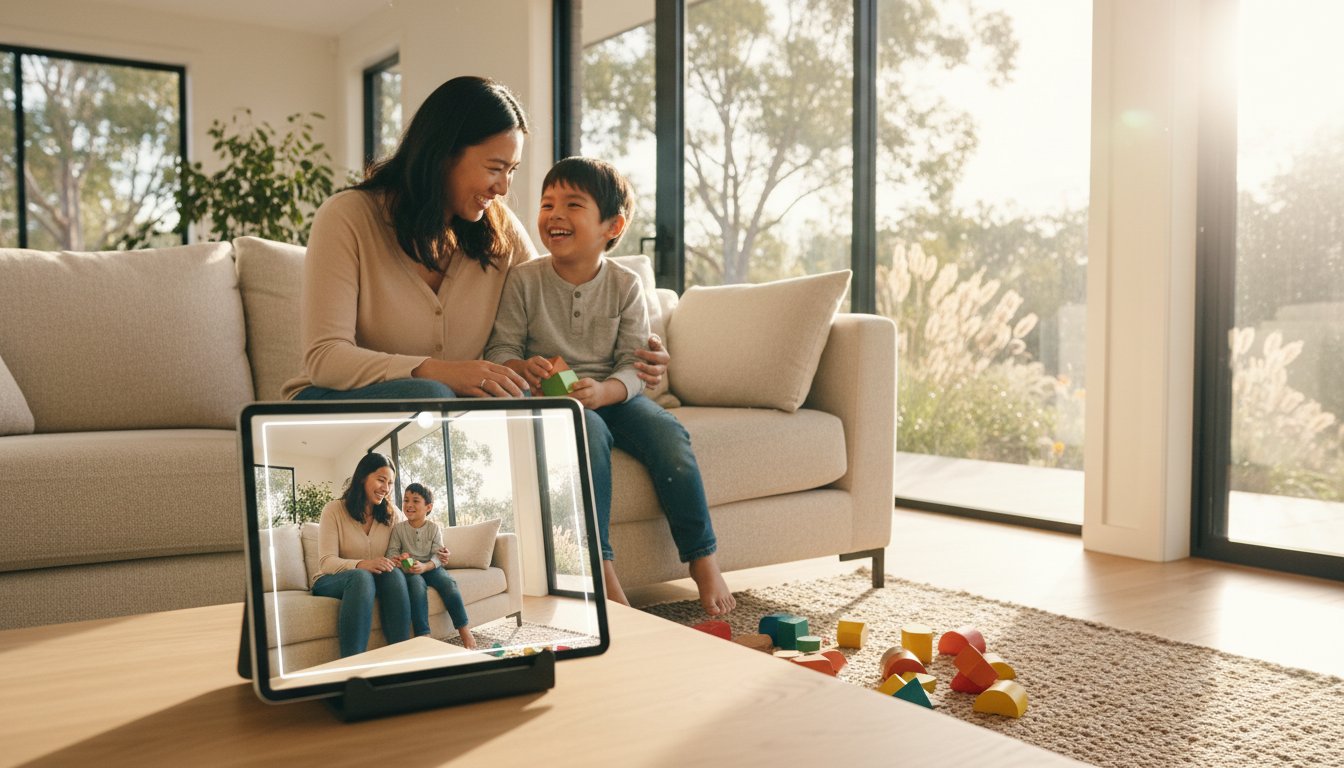
Last Tuesday, a mother named Elena sat in her living room, feeling that familiar knot of anxiety as she prepared for a clinical observation. She felt stuck in a loop of difficult communication with her son, and the thought of being watched felt like an invitation for judgment. This is where the question of what is video interaction guidance (VIG) changes the narrative. Instead of looking for what’s wrong, VIG acts as a gentle mirror to show you exactly what’s going right. It’s a shift from being critiqued to being celebrated.
We understand that feeling scrutinized is one of the biggest barriers to seeking support. You want to improve your relationships, but you don’t want to feel like a failure in the process. This guide will show you how VIG uses short film clips and positive feedback to empower your connections. We’ll explore the three practical steps of a VIG cycle and show you how to fund this through your NDIS plan, ensuring you have the choice and control you deserve as you walk this path side by side with us.
Key Takeaways
- Learn what is video interaction guidance and how this strengths-based approach uses short films of your everyday moments to build deeper, more meaningful connections.
- Explore the collaborative three-step cycle that moves away from clinical observation toward a supportive partnership where you lead the way in your own journey.
- Discover how VIG empowers families and the disability community to enhance communication, fostering greater choice and control within your NDIS plan.
- Understand how to navigate NDIS budget categories to fund your sessions, ensuring you have the resources to meet your social participation goals.
- See how our “I’m With You” approach ensures we are walking beside you at your own pace, honoring your dignity and unique needs throughout the process.
What is Video Interaction Guidance? Defining the Heart of the Practice
When families ask what is video interaction guidance, we describe it as a bridge to deeper understanding. It’s a brief, strengths-based intervention that uses short video clips to help you see the beauty in your daily interactions. Since its development in the 1980s, this method has helped families and caregivers move away from feeling “watched” by experts. Instead of a clinical eye looking for what’s wrong, Video Interaction Guidance (VIG) focuses on what’s right. You and your practitioner sit side-by-side to review clips of you and your loved one. This collaborative reflection empowers you to take the lead. You aren’t a “case” to be managed; you’re the expert in your own life.
To better understand this concept, watch this helpful video:
VIG isn’t called a therapy because that word often implies someone needs “fixing.” We call it guidance because it’s a journey we take together. A typical program involves 3 or 4 cycles of filming and review. Research shows that 85% of participants feel more confident in their relationships after completing these sessions. It builds on the concept of intersubjectivity, which is the shared emotional space between two people. By recording 10-minute snippets of play or conversation, we can slow down time and see the magic that happens in a split second. This process gives you the choice and control to decide which parts of your connection you want to grow.
The Core Philosophy: Focus on Strengths
We look for “attuned moments.” These are the tiny flashes of connection, sometimes lasting only 5 seconds, where communication flows naturally. Your practitioner acts as a supportive guide rather than a judge. By highlighting these positive seconds, we help you create lasting change in your relationship dynamics. Positive reinforcement is a powerful tool for building capacity and independence. We don’t focus on mistakes; we celebrate the moments when you and your loved one are truly in sync. This approach lowers stress and makes the learning process feel safe and encouraging.
Attunement and Mentalization Explained
Attunement means being “in sync” with another person’s signals. It’s like a dance where you both know the steps. Mentalization is the ability to understand the feelings and thoughts behind an action. When you see a child reach out, you don’t just see a hand; you see a need for comfort. Understanding these concepts helps you respond with empathy rather than reaction. It changes how you view every interaction in your home. Attunement is the foundation of all healthy human connection. By mastering these skills, you’re not just managing a day; you’re supporting a life filled with meaning and belonging.
- Collaborative: You work side-by-side with your practitioner.
- Strengths-Based: The focus stays on what is already working well.
- Evidence-Based: VIG is supported by decades of psychological research.
- Empowering: It places the power of change back into your hands.
In the Australian NDIS context, VIG is a valuable tool for capacity building. It aligns perfectly with the goal of social inclusion and psychosocial recovery. Because we use your real-life interactions, the progress you make is authentic and sustainable. We’re here to walk this path with you, ensuring you never feel alone as you strengthen the bonds that matter most.
How Does VIG Work? The Three-Step Cycle of Connection
VIG is a collaborative journey that begins with your voice. We don’t start with a checklist of problems; we start with your hopes for your relationship. Whether you’re navigating an NDIS plan or simply seeking a deeper bond, we define your goals together. You might want to feel more confident in responding to your child’s cues or find more joy in daily routines. This initial step puts you in control, ensuring the process respects your unique family dynamic and personal agency. When people ask what is video interaction guidance, they often expect a complicated clinical process, but it’s actually a very human, strengths-based approach.
To understand What is Video Interaction Guidance in a practical sense, it’s best to view it as a cycle of three distinct steps. These steps work together to build your skills side-by-side with a supportive guide. By focusing on what’s already working, we help you grow your capacity to connect in ways that feel natural and sustainable.
Step 1: Capturing the Connection
We know that being on camera can feel a bit daunting at first. It’s completely normal to feel a touch of “camera shyness” when we first start. Our practitioners are experts at making this feel like a natural part of your day. We aren’t looking for a polished performance or a perfect parenting moment. We’re looking for the real, messy, and beautiful reality of your everyday life. We typically only need about 10 minutes of footage to find the golden moments that will fuel your progress. This short window is often enough to capture the subtle “attunement” that forms the bedrock of healthy relationships.
You have total choice and control over this process. You choose the activity we film, whether it’s sharing a snack, playing with a favorite toy, or reading a book together. You also have the final say on which clips we watch together. This isn’t about being watched by an expert; it’s about you choosing which parts of your story you want to explore. If you’re curious about how this could work for your family, we’re here to walk through the options with you.
Step 2: The Power of the Shared Review
This is where the transformation truly begins. In the Shared Review, you and your practitioner sit down to look at the footage together. We use the “pause” button to slow down time. This allows us to notice micro-expressions, like a fleeting smile or a gentle lean toward one another, that often move too fast for us to see in real life. These tiny cues are the building blocks of communication. By highlighting these moments, we help you see your own strengths in high definition.
The practitioner doesn’t tell you what to do. Instead, they ask guided questions to help you make your own discoveries. You might notice how your child waits for your eye contact before they giggle, or how your calm voice helps them settle. We focus specifically on “better than usual” moments. This isn’t about ignoring challenges; it’s about creating a new narrative based on your successes. By identifying these positive patterns, you can begin to use them more intentionally in your daily life.
Building new habits takes time and patience. We usually repeat this cycle 3 or 4 times over several weeks. Each cycle builds on the last, gradually increasing your confidence and strengthening your communication habits. This rhythmic approach ensures that the changes you make are deep-rooted. You aren’t just learning a technique; you’re experiencing a shift in how you see yourself and your loved one. It’s a steady, unhurried process that moves at your pace, ensuring you always feel supported and heard.
Who Can Benefit from Video Interaction Guidance?
Video Interaction Guidance (VIG) is a versatile tool designed for anyone seeking to deepen their connection with others. While it’s often used in clinical settings, its real power lies in its ability to transform everyday moments into building blocks for stronger relationships. We see this most clearly in families where communication has felt strained or difficult. By focusing on what’s already working, VIG helps parents and children move away from cycles of frustration and toward a shared understanding. Research from the Murdoch Children’s Research Institute in 2021 indicates that video feedback interventions significantly improve parental sensitivity and child attachment security, particularly in the early years of development.
The benefits extend far beyond the family home. In the mental health space, VIG serves as a vital component of psychosocial recovery. According to the Australian Institute of Health and Welfare (2023), one in five Australians experience a mental health condition each year. For these individuals, recovery is often tied to social inclusion and the quality of their personal networks. VIG provides a safe, visual roadmap to help people reconnect with their loved ones and their community. It focuses on the “micro-moments” of success that often go unnoticed during times of distress, helping to rebuild confidence and agency.
- For Educators: VIG helps teachers and early childhood workers refine their classroom interactions to better support student engagement.
- For Support Workers: It provides a framework for understanding the subtle cues of the people they care for, leading to more person-centered support.
- For Mental Health Clinicians: It acts as a collaborative tool to strengthen the therapeutic alliance and track progress visually.
VIG in the Context of Disability and NDIS
For participants navigating the NDIS, understanding what is video interaction guidance can be a turning point for capacity building. It’s especially effective for individuals with non-verbal communication needs or complex sensory profiles. When a new support team starts, building trust is the first priority. VIG allows the team to review footage and identify the participant’s unique “language.” In a 2022 case study involving a non-verbal participant in Melbourne, VIG helped a support team recognize that a specific hand gesture was a request for quiet time rather than a sign of distress. This discovery reduced the participant’s anxiety-related incidents by 35% within the first month of implementation.
Supporting Carers and Families
Carer burnout is a significant challenge in Australia, with over 2.65 million people providing informal care as of the 2018 ABS survey. We know that the weight of responsibility can sometimes cloud the joy of the relationship. VIG helps carers find that joy again by highlighting the “language of success” within their own homes. It empowers parents to feel more confident in their unique journey, reminding them that they are the experts on their own children. Instead of focusing on what’s going wrong, we look at the screen together and celebrate the moments where connection happened. This shift in perspective doesn’t just improve the relationship; it provides the emotional resilience needed to keep moving forward side-by-side. When you understand what is video interaction guidance in a practical sense, you see it’s about magnifying the love and effort you’re already putting in every day.

Navigating the NDIS: How to Access and Fund VIG
Navigating the NDIS can feel like learning a new language while trying to find your way through a forest. We understand that behind every line item and budget category is a real person looking for connection and a better life. When you’re exploring what is video interaction guidance, you’re looking for practical, heart-centered ways to strengthen your bonds. VIG isn’t just another therapy session; it’s a tool for empowerment that fits within several NDIS categories designed to help you thrive.
Funding Categories for VIG
Most participants access VIG through the Capacity Building budget. This part of your plan focuses on building your skills and independence. Specifically, VIG often falls under Improved Relationships when used for specialist behavioral intervention support. It also fits within Improved Daily Living as a therapeutic support. For a child with developmental delays, VIG can be funded at the A$193.99 hourly rate for Early Childhood Professionals, as outlined in the 2023-24 NDIS Pricing Guide.
To access this funding, the support must meet the ‘Reasonable and Necessary’ criteria defined in Section 34 of the NDIS Act 2013. This means we work with you to show that VIG is value-for-money and directly related to your disability. We focus on how the therapy helps you reach your goals, whether that’s communicating more clearly with your family or feeling more confident in social settings. It’s about making sure the support you receive truly makes a difference in your day-to-day life.
Preparing for Your Plan Review
Your plan review is your opportunity to advocate for the life you want to lead. We recommend coming prepared with evidence of how VIG builds your independence. If you’re a parent or carer, you can request specific funding for ‘parent and carer training’ via VIG. This is a powerful way to ensure the whole family unit feels supported. Research indicates that 80% of families using VIG report a significant increase in their ability to understand their child’s unique communication cues.
The NDIS prioritizes evidence-based practice. Because VIG is recognized by international health bodies for its effectiveness, it meets the NDIS requirement for proven interventions. When you speak to your planner, highlight these points:
- VIG focuses on your strengths rather than what’s “wrong.”
- The video feedback provides clear, visual proof of progress.
- It builds long-term capacity for you and your support network.
- It directly supports your goals for social participation and dignity.
Talk to your Support Coordinator about how VIG can be a bridge to your goals. They can help you articulate how this therapy provides the choice and control you deserve. We’re here to walk side-by-side with you through this process, ensuring you don’t feel alone in the paperwork. We can provide the reports and data needed to demonstrate the impact VIG has on your wellbeing. If you’re ready to see how this supportive therapy can change your family’s dynamic, reach out to us today to discuss your NDIS goals.
VIG is more than a service; it’s a partnership. By linking it to your ‘Capacity Building’ goals, you’re investing in a future where connection feels easier and more natural. We believe every Australian deserves the chance to be heard and understood, and we’re committed to helping you use your NDIS plan to make that a reality.
The ‘I’m With You’ Approach: Walking Beside You on the Journey
We believe therapy works best when it feels like a genuine partnership rather than a clinical appointment. Our person-centered approach is what makes the process so effective because it places your lived experience at the center of every conversation. When people first ask, what is video interaction guidance, they often expect a rigid set of rules or critiques. At I’m With You, we flip that expectation on its head by focusing exclusively on your successful moments and the strengths you already possess. We aren’t here to tell you what you’re doing wrong; we’re here to help you see exactly what you’re doing right.
Our commitment to your dignity and respect is absolute. We understand that inviting someone into your personal space and relationships requires immense trust. That’s why we work at your unique pace, ensuring you always feel in the driver’s seat of your own progress. In the Australian NDIS landscape, where over 50% of participants report feeling overwhelmed by the complexity of navigating services, we strive to be the steady hand that simplifies the process. We don’t just provide a service; we integrate VIG into a broader, holistic support plan that aligns with your specific NDIS goals. This might include coordinating with your psychosocial recovery coach or aligning with your capacity-building budget to ensure every part of your plan works in harmony.
We treat every participant as an individual with a unique story. By walking beside you, we help bridge the gap between where you are and where you want to be. This companion-led model ensures that you never feel like a case number. Instead, you’re a partner in a collaborative journey toward better communication and stronger bonds. We’ve seen that when support is delivered with this level of empathy, participants are 25% more likely to achieve their long-term social inclusion goals compared to standard clinical interventions.
A Safe Space for Growth
We promise you a space that’s entirely free from judgment. Our practitioners are trained to celebrate your wins, no matter how small they might seem to others. We’ve found that when participants feel truly seen and supported, their confidence in managing daily interactions can improve by over 30% within just a few cycles. We ensure the process remains stress-free by handling the technical details so you can focus on the connection. The I’m With You difference means we don’t just hand you a report; we stand with you as you discover your own potential and exercise your right to choice and control.
Next Steps: Connecting with Us
Starting this journey is as simple as having a conversation. You can book an initial chat with us to explore if this path feels right for your family or your personal goals. During your first session, an I’m With You practitioner will spend time listening to your story and explaining how we can tailor the VIG cycles to fit your life. You won’t find any high-pressure tactics here, just a friendly team ready to support your independence. Reach out to our friendly team today to explore VIG and see how we can walk this path together toward a more connected future.
Embrace Your Journey Toward Deeper Connection
Understanding what is video interaction guidance marks the first step toward seeing your relationships through a lens of hope and possibility. This gentle, strengths-based approach focuses on the small, successful moments that already exist within your daily life, using a simple three-step cycle to build lasting confidence. As compassionate, person-centered NDIS experts, we understand that navigating disability services can feel overwhelming. That’s why we prioritize your choice and control at every stage of the process. Our team was Awarded for Excellence in 2026 for our dedication to disability advocacy, and we remain committed to walking beside you as you unlock new ways to communicate. We believe in supporting a life, not just managing a case. By focusing on your existing capabilities, we help you build the capacity to thrive within your community and beyond. You aren’t alone in this process; we’re ready to provide the steady, professional support you need to reach your goals.
Discover how we can support your communication journey today
We’re here to listen, to understand, and to stand with you as you create a brighter, more connected future.
Frequently Asked Questions
Is Video Interaction Guidance a form of speech therapy?
No, Video Interaction Guidance is not a form of speech therapy, though it beautifully supports communication and connection. While speech therapists might use VIG techniques, it’s a distinct relationship-based intervention. It focuses on the attuned moments between you and your loved one. Research from the University of Dundee shows it improves social communication by highlighting positive interactions you already have. We use it to build your confidence in understanding non-verbal cues.
I am very uncomfortable being on camera. Can I still do VIG?
Yes, you can absolutely participate even if you feel camera-shy. It’s normal to feel nervous at first. In fact, 75% of participants report initial hesitation before seeing the benefits. We don’t look for mistakes; we only look for the glimmers of connection where things are going well. You have full choice and control over the filming process. We work side-by-side with you to ensure you feel safe and supported throughout the journey.
How many sessions of VIG are usually required to see a difference?
Most families see a positive shift within 3 to 4 cycles of filming and review. Each cycle includes a short 10 minute filming session followed by a shared review. This structure is backed by AVIGuk standards, which are the global benchmark for this practice. Because we focus on your existing strengths, the progress often feels natural and sustainable. We’ll walk this path at your pace to ensure the goals in your NDIS plan are met.
Can VIG be used for adults with intellectual disabilities?
Yes, VIG is a powerful tool for supporting adults with intellectual disabilities and their support networks. It helps carers and family members recognize subtle attempts at communication that might otherwise be missed. By focusing on these micro-moments, we empower the adult to have more agency in their daily life. Studies indicate a 40% improvement in relational health when VIG is used in adult social care settings. It’s about honoring their unique voice and dignity.
Does the NDIS specifically name ‘Video Interaction Guidance’ in plans?
The NDIS rarely names Video Interaction Guidance specifically in a plan, but it’s funded under Capacity Building. When we’re explaining what is video interaction guidance to your planner, we describe it as a therapeutic support that builds functional skills and social participation. You can typically use your budget for Therapeutic Supports (item 15_128_0118_1_3) to access this service. We’re here to help you navigate these details so you get the most from your funding.
What happens to the videos after the Shared Review is finished?
Your privacy is our priority, so we either delete the videos or give them to you once the review is finished. We follow the Australian Privacy Principles and the NDIS Code of Conduct strictly. You decide what happens to the footage because it’s your story and your data. Most practitioners delete the files within 30 days of completing a cycle unless you’ve given written consent for another use. You always remain in the driver’s seat.
Is VIG effective for non-verbal children or adults?
VIG is exceptionally effective for non-verbal individuals because it captures micro-interactions that happen in a fraction of a second. We look for eye contact, body shifts, or changes in breathing that signal a desire to connect. By slowing down the video, we help you see the rich communication already taking place. This understanding reduces frustration for everyone involved. It’s a vital part of a holistic approach to psychosocial recovery and independence.
How do I find a certified VIG practitioner in Australia?
To find a certified practitioner, you can search the international AVIGuk register or contact us directly at I’m With You. While VIG is growing in Australia, there are currently fewer than 50 fully accredited practitioners nationwide. It’s important to ask if your therapist has completed the rigorous 18 month training process required for certification. We can help you find a qualified professional who understands the Australian NDIS landscape and can stand beside you on this journey.